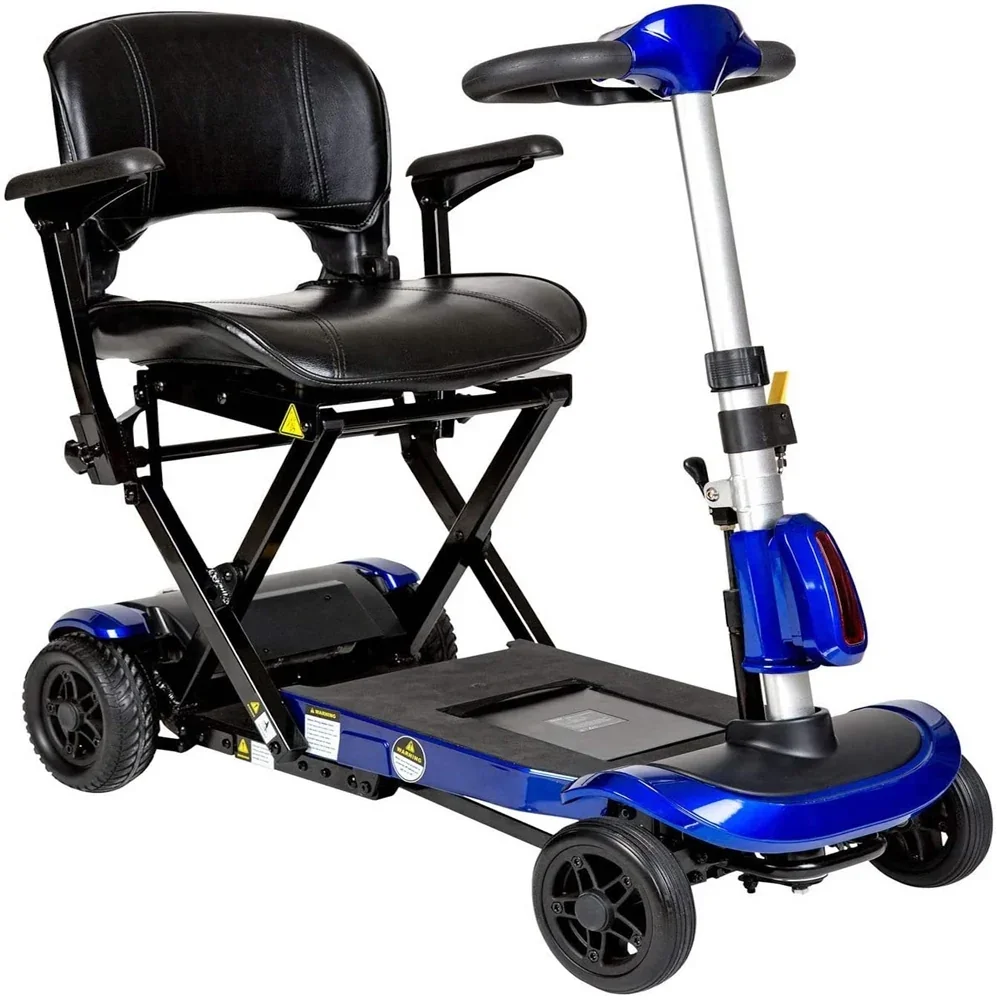
A mobility scooter helps with everyday life when walking or standing for long periods becomes difficult. It takes you to the doctor's surgery, to the shops, to a family gathering or for a spin round the block – practically anywhere you want to go. Choosing one, however, requires more thought than simply preferring a particular design or the one with the highest price tag.
The need is great. According to data published in 2024 by the US Centres for Disease Control and Prevention (CDC), more than one in four adults has some form of disability, and 12.2 per cent of adults have a mobility disability, meaning they have serious difficulty walking or climbing stairs. For many of them, a well-chosen mobility scooter determines whether they can still manage everyday journeys unaided or only with the help of a family member.
Mobility scooters are manufactured in many sizes and power ratings, so they vary considerably in performance. A smaller model is usually easier to manoeuvre indoors, whilst a larger one copes better with outdoor terrain. The right choice depends on what the user does on a typical day, where they live and what their physical abilities allow.
1. Choose the right size and wheel configuration
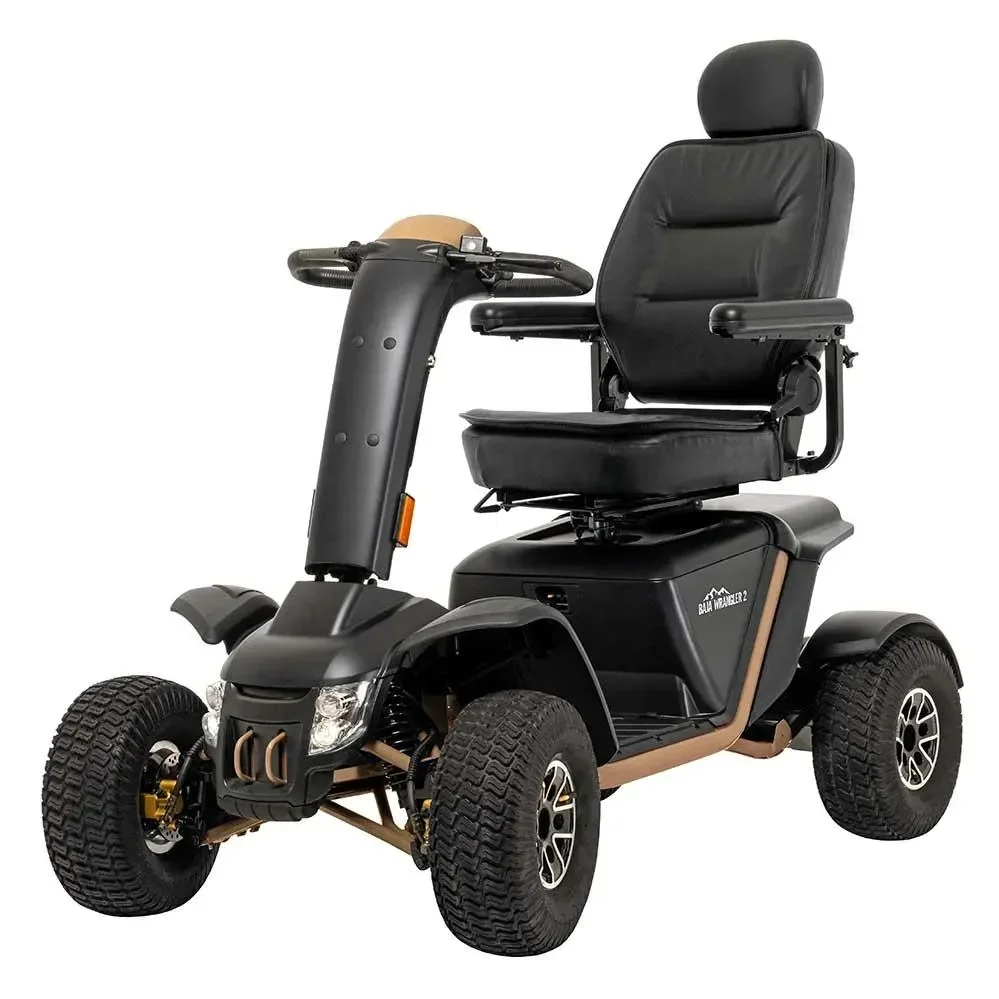
The scooter's dimensions and the way the wheels are arranged affect its stability and how easily you can control it. Three-wheeled scooters have a tighter turning circle, which is helpful in small indoor spaces. Four-wheeled models generally have a wider base and are more stable on uneven roads or outdoors.
A 4-wheel mobility scooter is a good choice if stability is a priority. The fourth wheel provides better support on garden paths, garage ramps and any surface where balance is important. The final choice depends on the user's mobility needs and the places they will be travelling on the scooter.
Size also influences the choice. A larger scooter offers more space, a sturdier build and greater comfort, but may struggle to fit through narrow doorways and is difficult to store in a small home. Before buying, measure the entrances, hallways, the lift and the space where the scooter will be kept.
2. Prioritise comfort and support for the user
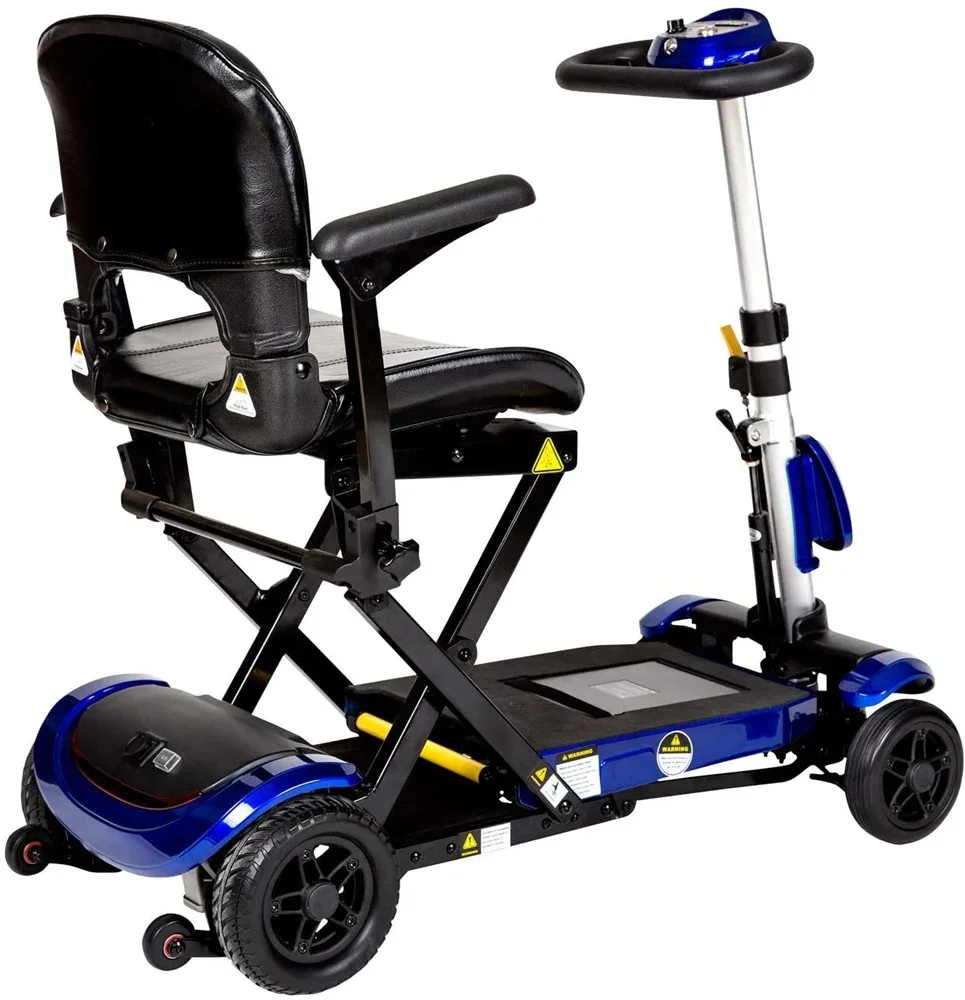
If the scooter is to be used daily or over longer distances, comfort is the most important factor. A poorly designed seat becomes uncomfortable even if the rest of the features are good, and the scooter ends up being taken out of the house less and less often.
Look for a seat with sufficient padding and a backrest that supports the back. The seat must be wide enough for the user to sit comfortably without being restricted whilst riding. Adjustable seats are better, as they allow the position or height to be changed.
The controls and handlebars must be within easy reach. The user should not have to lean far forward or twist to steer, and such small details make a big difference in day-to-day use.
If possible, the user should try out the scooter before buying it. A few minutes in the seat, with hands on the controls, will reveal any comfort or accessibility issues that an online product description might not highlight.
3. Check the battery range and performance
The battery determines how far you can travel before the next charge, and the range you need depends on your daily routine.
For use mainly around the house or on short journeys, a model with a very long range isn't necessary. Those who go out frequently need a larger battery so they don't run out of power halfway through their journey.
The range advertised is not a guaranteed distance. The actual result varies depending on the user's weight, the terrain and temperature, the condition of the battery and individual riding style.
The figure in the technical specifications is usually derived from the ISO 7176-4 standard, the 2008 edition of which was reaffirmed by ISO in 2023. The standard describes how to estimate the 'theoretical range' of electric wheelchairs and scooters based on the energy consumed during testing and the battery's rated capacity. The measurement is carried out under the conditions defined by the standard, so a steep ramp or a frosty January morning are not taken into account. That's why the distance travelled on a typical day should use up only part of the stated range, with the rest remaining as a reserve for cold weather and unplanned detours.
Think about the distances you cover on a typical day and choose a model that easily covers them. The range reserve also helps when an unexpected stop occurs or plans change.
Check the charging requirements before purchasing. There must be a suitable place for charging, and the user or carer must be able to connect and disconnect the charger safely.
4. Assess safety and ease of use
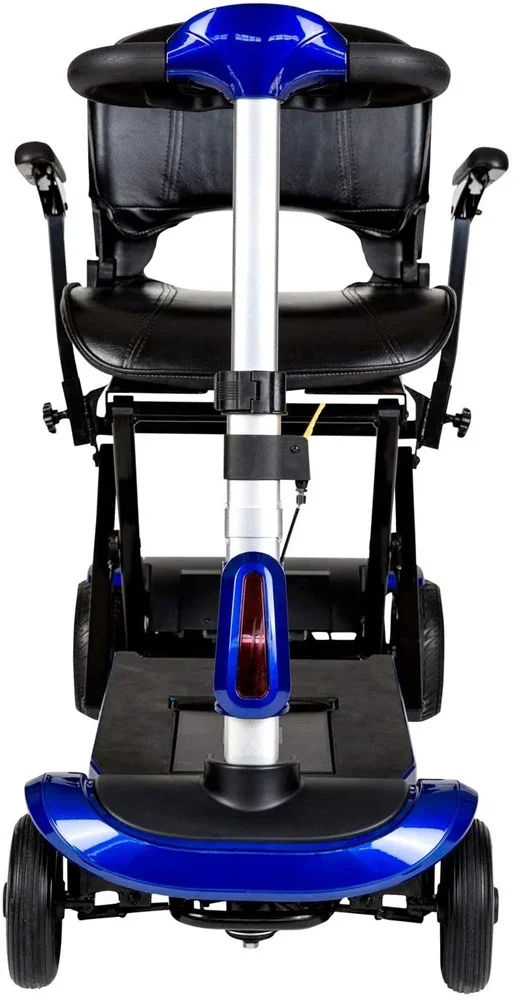
The user must be able to ride the scooter effortlessly. The controls – namely the throttle, speed control, horn, battery indicator and brake – must be easy to reach and operate.
People with reduced hand strength or limited dexterity need controls that require minimal effort. Adjustable speed settings help the user maintain control in crowded places or in unfamiliar areas, where they are not yet familiar with the route.
Safety features vary from model to model, so check what each one includes: anti-tip wheels, rear lights, reflectors, headlights, automatic braking or other features that improve visibility or stability, as specified by the manufacturer.
Check whether the scooter can cope with the slopes and uneven surfaces the user typically encounters. A scooter used mainly on smooth floors indoors has different requirements to one that is taken out onto the pavement every day.
Familiarity with the scooter comes with practice. Before riding unaided, the user must learn to start, stop, turn, load the scooter and safely navigate common obstacles.
5. Consider transport and storage
The scooter must suit the user's lifestyle, including how it will be transported and stored. Some models fold up or can be dismantled into smaller pieces, which fit more easily into a car, whilst others are larger and need to be mounted on a car rack or transported in some other way.
Portability is useful for those who want to take their scooter to doctor's appointments, shopping centres, parks or when visiting family. Lightweight models do, however, have their limitations compared to larger scooters: a smaller seat, a lower maximum weight capacity and a shorter range.
Check the weight of the detachable parts, as well as the total weight. A scooter can be portable yet still difficult for one person to lift, piece by piece.
Take the Drive Medical ZooMe Auto-Flex folding model, for example: the shop's product page lists 58 pounds (around 26 kg) for the entire scooter and 55 pounds (around 25 kg) for the heaviest part. Folding it makes it more compact, but hardly any easier to lift. For an elderly carer, those 25 kilograms lifted into the boot determine whether the scooter leaves the house or stays in the hall.
Storage is just as important. Check that the scooter fits easily inside your home, in the garage or in another safe place, away from doorways and areas where someone might trip over it.
Why do so many scooters end up going unused?
Researchers in the field of assistive technology have been studying the fit between people and devices for around forty years. Marcia Scherer, a rehabilitation psychologist at the University of Rochester, built on her 1986 PhD thesis to develop an assessment model, which she popularised in her 1993 book *Living in the State of Stuck*. The model is called 'Matching Person and Technology' and analyses three aspects separately: the person (what they want and what they are capable of doing), the environment in which they live (home, street, family, finances) and how the technology actually performs in that person's hands.
The need for such an assessment stems from a study published in 1993 by Betsy Phillips and Hongxin Zhao in the journal *Assistive Technology*: of the devices received by the 227 adults with various disabilities surveyed, 29.3 per cent had been abandoned completely. Mobility aids were abandoned more frequently than other categories, and discontinuation was concentrated in the first year of use and again after five years. The study identified four factors that predicted abandonment, namely that the user's opinion had not been taken into account when making the choice, that the device had been easy to purchase, that it performed poorly, and that the person's needs or priorities had changed in the meantime.
The second factor relates directly to online purchasing. A scooter ordered in a few clicks, without a test ride and without anyone having seen the hallway, the threshold or the ramp at home, falls squarely into the category of devices that are easily purchased. The first factor leads to the same conclusion as the advice on comfort: the user must sit on the seat and try out the controls before paying. This requires a physical location, with demonstration models and someone who knows how to adjust the seat and speed.
Questions about the model can also be asked at home, without the need for forms. About the person: do they have enough strength in their hands for the handlebars, can they get on and off by themselves, do they want the scooter themselves or has their family chosen it for them? About the environment: how wide are the doors, are there any thresholds, where is the charging socket, and who will lift the scooter into the car? Regarding technology, the answer can only come from a test carried out on the actual route, with the user's actual weight and at the speed at which they feel safe.
The model has its limitations, and the first relates to the methodology: the assessment tools developed by Scherer are largely based on what the user reports. Furthermore, the reported drop-out rates vary greatly from one study to another, depending on the type of device and how 'drop-out' is defined. A device being set aside does not automatically mean a wrong choice: one of the factors identified by Phillips and Zhao is precisely a change in needs, and someone who regains their ability to walk after hip surgery gives up their scooter for a good reason. The model functions as a checklist of questions for both the purchaser and the therapist, and the outcome depends on how honestly the questions are answered.
What Medicare requires before paying for a mobility scooter
For buyers in the United States, funding changes the order of the steps. The Medicare booklet on wheelchairs and mobility scooters (CMS Publication No. 11046, April 2026 edition) requires a face-to-face consultation with the attending doctor and a written prescription attesting to the medical need for a mobility scooter for use in the home. The user must be strong enough to sit upright and operate the controls, and the doctor or equipment supplier must have verified at the user's home that the scooter can be used there. Once the Part B excess has been reached, the patient pays 20 per cent of the amount approved by Medicare if the supplier accepts the approved rate (known as 'assignment'), and for some types of mobility scooters, prior authorisation is also required.
The 'in-home use' criterion means that a scooter requested solely for long journeys outside the home may not be covered, however useful it may be. Choosing a supplier is just as important as choosing a model, as both the doctor and the supplier must be registered with Medicare; this can be checked using the official medical equipment supplier search tool on medicare.gov. The rules vary and depend on each patient's individual circumstances, so the information here is for guidance only; confirmation must be sought from Medicare or the user's insurance plan.
The steps required by Medicare also serve as a useful checklist for anyone paying for a mobility scooter entirely out of their own pocket, in any country. A medical consultation clarifies whether a mobility scooter is the right solution or whether the situation requires an electric wheelchair from the outset. A home visit identifies thresholds, narrow doors and excessively steep ramps before delivery – that is, when changing the model still costs nothing. A supplier willing to visit your home before the sale also shows you how easy it will be to get hold of them afterwards.
Who repairs the scooter after you've bought it
An electric scooter has batteries that wear out, tyres, brakes and electronic components that can sometimes fail. Phillips and Zhao found that poor performance is one of the reasons people give up on their scooters, and a scooter without a service centre close to home can easily end up in this situation after the first breakdown. It is therefore worth finding out, before you buy, who sells parts for your chosen model, who repairs it and how long a repair takes.
An online search runs into a classification problem here. First-time scooter buyers rarely know what to type, as authorised dealers, hire companies, workshops that repair electric scooters and specialists in adapted seats are different trades, even though they meet the same need. A directory organised by category groups them together, allowing the reader to discover options they hadn't considered. In the medical equipment and consumables category of the Jasmine Directory, for example, companies that hire out electric scooters and wheelchairs for overweight people appear alongside mobility specialists and suppliers of patient lifts. Hiring one for a week before buying is the closest you can get to a real-life test, as the scooter will be used in the hallway and on the pavement that the user will travel along every day.
Over the phone, a few questions quickly clarify who you're dealing with. Does the company have the model in stock for a test ride? Do they carry out warranty repairs at home, or does the scooter need to be taken to the workshop? How much does a new set of batteries cost and how long will it take to arrive? Do they provide a loaner scooter whilst the repairs are being carried out? The answers carry particular weight in the first year, the period during which the 1993 study found the first peak in drop-out rates.
A listing in a verified directory answers a specific but useful question. It confirms that the company exists, that it operates in the stated field, that the contact details displayed are its own, and that it can still be found a year later, when the scooter needs new batteries. The steps involved in carrying out these checks, from verifying the website domain to checking documents, are described in the article on trust built through verified listings.
The listing does not guarantee the quality of repairs and is not a medical recommendation. The choice between a scooter and an electric wheelchair depends on an assessment carried out by an occupational therapist or a physiotherapist, which no director can replace, and Medicare provider status can only be verified in the official Medicare register. The Director shortens the path to the right companies, after which questions about service and warranty remain the responsibility of the buyer.
Conclusion
When choosing a mobility scooter, the rider's needs matter more than the brand or the list of features. Think about how it will be used every day, how far the user wants to travel, how much support and comfort they need, and how often the scooter will need to be loaded into a car.
Before buying, bear in mind these factors: stability, comfort, range, ease of transport, safety features and maintenance. Add to these a test ride on the actual route before paying and a service centre you can rely on again in a year's time.
A scooter chosen to suit the rider makes their life easier and gives them the confidence to get out and about and do what they enjoy. Take the time to compare the options, because a well-suited scooter will remain in use for years to come.