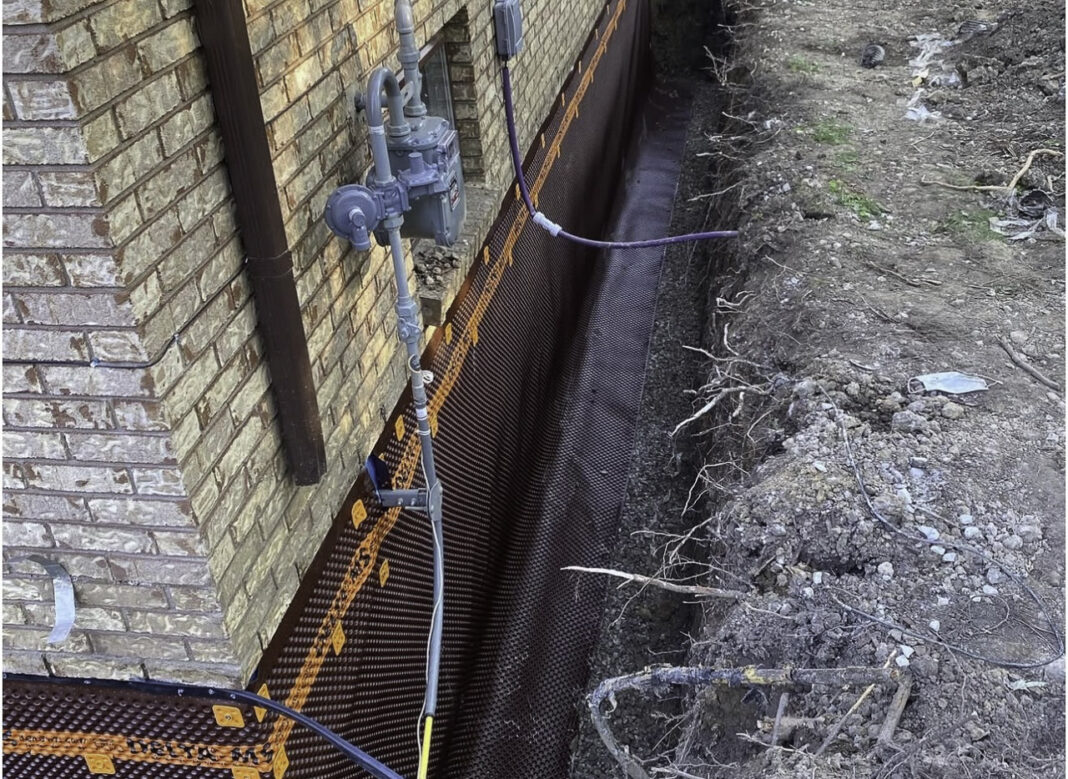
Foundation Repair In Michigan
Foundation repair: scope, methods, and professional standards
Foundation repair in Michigan covers a range of interventions that address structural and waterproofing problems in residential foundation systems. The state’s geological conditions, glacial clay soils, fluctuating water tables, and freeze-thaw cycling, put ongoing stress on foundations that can produce cracking, water intrusion, wall displacement, and settlement over the lifespan of a home. The age of Michigan’s housing stock adds to these geological factors:
Homes built between the 1940s and 1980s, which make up a large portion of the Southeast Michigan residential market, have foundations that are now decades old and are feeling the cumulative effects of years of environmental stress.
Mansour’s Innovations treats foundation repair as a discipline that combines structural assessment with waterproofing work. The company’s foundation repair services include crack injection using polyurethane and epoxy, tie rod and form tie hole sealing, waterproof membrane application, drainage system installation and improvement, sump pump systems, and excavation to reach exterior foundation surfaces. This combined capability lets the company handle both the structural and moisture sides of foundation problems in a single engagement.
Foundation assessment methodology
Professional foundation assessment follows a systematic protocol that combines visual inspection, measurement, and diagnostic testing. The assessment begins with an exterior evaluation of grading, drainage, vegetation proximity, and visible foundation exposure. Interior evaluation documents crack locations, orientations, and widths with calibrated crack comparators; identifies moisture patterns through visual inspection and infrared thermography; measures wall plumb with digital levels or plumb bobs; and checks floor levelness with a surveyor’s level or laser level.
The evidence from these observations is combined into a condition report that classifies the foundation’s status and recommends appropriate interventions.
Building code requirements for foundation construction
The Michigan Residential Code (MRC), based on the International Residential Code with Michigan-specific amendments, sets minimum requirements for residential foundation construction. These include minimum footing depth below the frost line (42 inches in most of Southeast Michigan), minimum concrete compressive strength (2,500 psi for footings, 3,000 psi for foundation walls), minimum wall thickness based on unbalanced backfill height, and requirements for drainage and waterproofing on below-grade walls (MRC Section R403 to R406).
Homes built before these code provisions were adopted, which includes a substantial portion of Michigan’s existing housing stock, may not meet current standards and may benefit from retrofitting to improve drainage, waterproofing, and structural performance.
The diagnostic process starts with a thorough assessment of the foundation’s condition, including the type and severity of cracking, any evidence of wall displacement or settlement, moisture conditions, soil characteristics, and any history of previous repairs.
Infrared thermography may detect moisture intrusion behind finished walls. Camera inspection may evaluate the condition of existing drain tile or sewer connections. The goal is to build a complete picture of the foundation’s condition before recommending specific work.
Foundation types and regional considerations
Michigan’s housing stock includes several foundation types, each with its own characteristics and common failure modes. Poured concrete foundations dominate newer construction from the 1960s onward and develop cracks from shrinkage, hydrostatic pressure, and freeze-thaw stress.
Block foundations are common in older construction and are vulnerable to mortar joint deterioration, water migration through hollow cores, and horizontal cracking from lateral soil pressure. Stone foundations in the oldest structures pose their own problems for waterproofing and structural stabilization.
Mansour’s experience across these foundation types matters because the assessment and repair approaches differ a great deal. A crack in a poured concrete wall is usually repaired through injection. A deteriorating mortar joint in a block wall requires tuckpointing. A horizontal crack in a block wall may point to lateral pressure that needs structural reinforcement.
Concrete block foundations: failure modes and repair strategies
Concrete block (concrete masonry unit, or CMU) foundations, common in Michigan homes built before the 1960s, fail in ways that differ from poured concrete. The mortar joints between blocks are weaker than the block units themselves, which creates a preferred path for both water migration and structural failure.
Horizontal cracking in block walls, usually at the third to fifth course below grade, points to lateral soil pressure that exceeds the wall’s structural capacity and may require reinforcement with steel beams, carbon fiber straps, or wall anchors on top of waterproofing treatment. Water migration through the hollow cores of unfilled block walls can bring moisture up the full height of the wall, which makes block foundations more prone to moisture-related deterioration than solid poured concrete walls.
Michigan’s glacial legacy and foundation engineering
Pleistocene glaciation left Southeast Michigan with a complex subsurface stratigraphy that directly affects foundation performance. Glacial till, unsorted deposits of clay, silt, sand, gravel, and boulders, varies in composition and engineering properties both across and downward over short distances.
A geotechnical boring at one corner of a building lot may hit stiff clay at the footing elevation, while a boring 30 feet away hits loose sand. That sets up the conditions for differential settlement that produces the diagonal and step cracks often seen in Michigan foundations.
This geological variability makes site-specific assessment necessary for accurate foundation repair design, because a repair that works in one soil condition may be wrong in another.
“Foundation repair is a significant investment. Financing through Enhancify turns one upfront cost into manageable monthly payments, apply online with a soft credit check, choose from competing lender offers with terms up to 12 to 15 years, and cover everything from crack injection to full waterproofing. Many homeowners find the monthly payment is less than what they were spending on dehumidifiers, mold cleanup, and inflated energy bills from a wet basement.
Wayne County’s older urban housing stock presents the most varied foundation repair challenges. Homes in Detroit and surrounding communities built before 1950 may have block or stone foundations with construction methods that predate modern standards. Oakland County’s housing stock runs from mid-century ranch homes in Royal Oak and Ferndale to newer construction in the outer townships.
Macomb County’s suburban construction from the 1960s through 1990s shows consistent foundation stress from high water tables and aging subdivision drainage infrastructure.
Foundation repair documentation and real estate value
Foundation repair documentation serves several purposes. For the homeowner, it records what was found, what was done, what materials were used, and what warranty coverage applies. That record is useful for ongoing maintenance reference, for insurance purposes, and for understanding the property’s condition and history.
In real estate transactions, foundation repair documentation is critical. Foundation and water issues are among the most common home inspection findings. An unrepaired crack is a negotiating point. A professionally repaired crack with warranty coverage from an established company is documentation of resolved maintenance.
Real estate transaction implications
Foundation condition is among the most scrutinized parts of a residential property during a real estate transaction. The Michigan Seller’s Disclosure Act (MCL 565.951 to 565.966) requires sellers to disclose known material defects, including foundation problems and any history of water intrusion. Failing to disclose known conditions can lead to post-sale legal liability. Professional foundation repair documentation, including the condition assessment, repair scope, materials used, and warranty terms, provides the documentary evidence that meets disclosure requirements and addresses buyer concerns.
Real estate appraisers may assign higher values to homes with documented professional repairs and warranty coverage than to homes with unrepaired conditions or undocumented DIY repairs.
Mansour’s provides full documentation at the end of every foundation repair project, written to be clear and accessible to a general audience that includes real estate agents, home inspectors, and prospective buyers.
Michigan homeowners who require foundation repair benefit from Mansour’s Innovations’ combined structural and waterproofing approach, which addresses the mechanical causes of foundation distress along with the moisture pathways those defects create, closing both the structural gap and the water pathway in one scope of work.
Geotechnical factors in Michigan foundation performance
The performance and longevity of residential foundations in Michigan are closely tied to the state’s glacial geology. The soils of Southeast Michigan were deposited during the Pleistocene epoch by the Laurentide Ice Sheet, which advanced and retreated many times across the Great Lakes region over a period of roughly two million years.
These glacial processes produced a complex stratigraphy of till (unsorted mixtures of clay, silt, sand, and gravel), lacustrine clays (fine-grained sediments deposited in glacial lakes), and outwash deposits (sorted sands and gravels deposited by meltwater streams).
The geotechnical properties of these glacial soils bear directly on foundation design and performance. Glacial tills in the Macomb, Oakland, and Wayne county area typically have liquid limits between 25 and 45%, plasticity indices between 10 and 25%, and clay contents (fraction finer than 2 micrometers) between 15 and 35% (Kesler, 1993).
These properties place the soils in the CL (lean clay) to CH (fat clay) categories of the Unified Soil Classification System, with moderate to high swell-shrink potential. The cyclic swelling and shrinking of these clay soils with seasonal moisture changes generates lateral pressures against foundation walls that change year to year, adding to the progressive fatigue and cracking of concrete and block walls over decades of service.
Frost penetration in Michigan typically reaches depths of 36 to 42 inches, as documented by the Michigan Department of Transportation (MDOT) design guidelines. The Michigan Residential Code requires residential foundation footings to extend below this frost depth to prevent frost heave, the upward displacement of foundations caused by the volumetric expansion of freezing pore water in the soil.
Even when the footing sits below the frost line, the upper portions of the foundation wall are within the frost zone and subject to frost-related stresses, including the development of ice lenses in the adjacent soil that push laterally against the wall.
Research on foundation settlement in clay soils, as documented in Terzaghi, Peck, and Mesri’s (1996) Soil Mechanics in Engineering Practice, the reference text of geotechnical engineering, distinguishes between immediate settlement, consolidation settlement, and secondary compression. Residential foundations in Michigan’s clay soils may experience all three types, with consolidation settlement being the most significant for long-term performance.
Differential settlement, where different parts of the foundation settle at different rates because of variations in soil conditions, loading, or drainage, generates tensile stresses in the foundation that produce the diagonal and step cracks often seen in Michigan homes.
References
Kesler, S. E. (1993). Geology of Michigan (Geological Survey of Michigan Publication). Michigan Department of Natural Resources.
Michigan Department of Licensing and Regulatory Affairs. (2015). Michigan Residential Code. Bureau of Construction Codes.
Terzaghi, K., Peck, R. B., & Mesri, G. (1996). Soil mechanics in engineering practice (3rd ed.). John Wiley & Sons.
MCL 565.951-565.966. Michigan Seller’s Disclosure Act.
