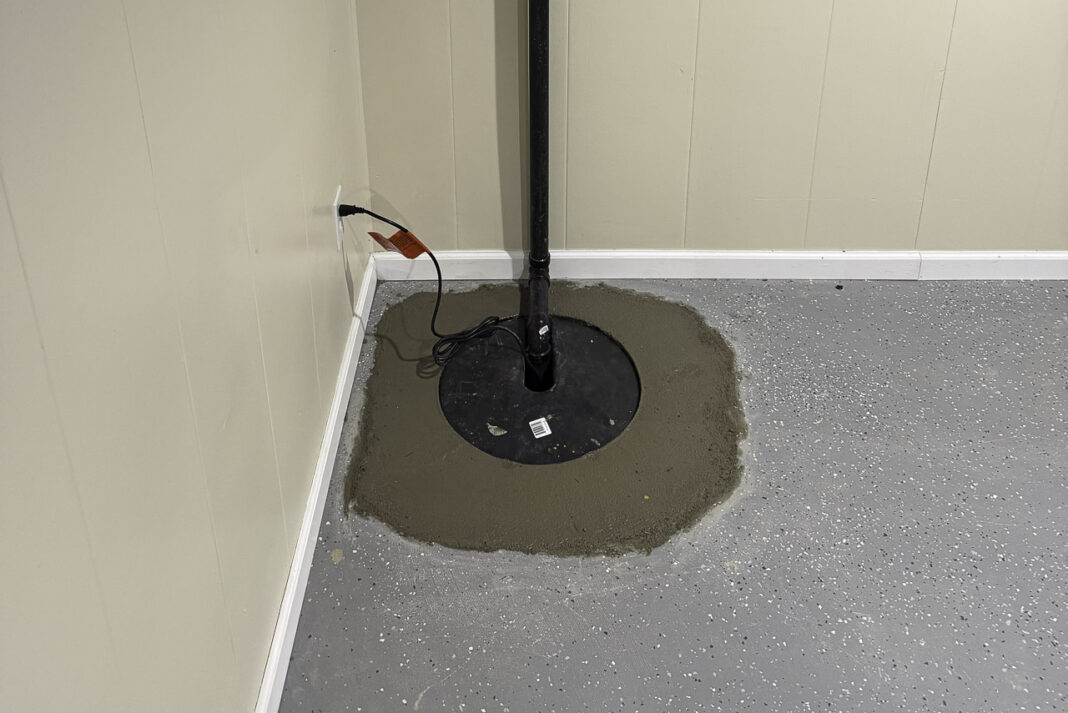
A basement waterproofing system is more than any single component. It is a connected assembly of drainage channels, collection points, pumps, barriers, and discharge pathways that work together to manage water within and around a basement. In Michigan’s hydrogeological setting, where low-permeability glacial soils, aging infrastructure, and hard weather combine to create persistent basement moisture, a systems approach delivers more reliable protection than any single component installed on its own.
Mansour’s Innovations designs and installs complete waterproofing systems that integrate interior and exterior components as needed for each property’s specific conditions.
Component interaction and system synergy
The performance advantage of an integrated system over a single-component approach can be understood through systems theory. In a well-designed integrated system, each component handles a specific moisture transport mechanism while supporting the function of the parts next to it.
The exterior membrane prevents bulk water penetration; the perimeter drainage tile relieves hydrostatic pressure against the membrane; the interior vapor barrier captures leftover moisture vapor; the French drain intercepts any water reaching the wall-floor joint; and the sump pump removes collected water from the structure. This cascading defense addresses the four primary moisture transport mechanisms identified by Straube and Burnett (2005): rain penetration, groundwater intrusion, air-transported moisture, and vapor diffusion.
Climate-responsive system sizing
System sizing for Michigan’s climate has to account for the seasonal swing in groundwater loading. Spring snowmelt usually produces the highest sustained groundwater levels, with the water table in many Southeast Michigan locations rising to within 2 to 4 feet of grade. That puts the maximum hydrostatic load on the foundation system precisely when the soil is also most saturated and least able to drain on its own.
Data from U.S. Geological Survey (USGS) monitoring wells in Macomb and Oakland counties shows that seasonal water table fluctuations of 3 to 6 feet are common, with peak levels in March through May and minimum levels in September through November. A design must handle peak-season loading with enough capacity margin to keep the sump pump from being overwhelmed during sustained high-water events.
An interior system usually includes a perimeter French drain channel cut into the basement floor along the wall-floor joint, a gravel bed that moves water toward the drain channel, a sump pit at the lowest point of the system, a primary sump pump sized for the expected water volume, a battery backup pump that runs during power outages, check valves on the discharge line to prevent backflow, a discharge line routed to a point safely away from the foundation, and vapor barriers on the foundation walls to manage moisture migration.
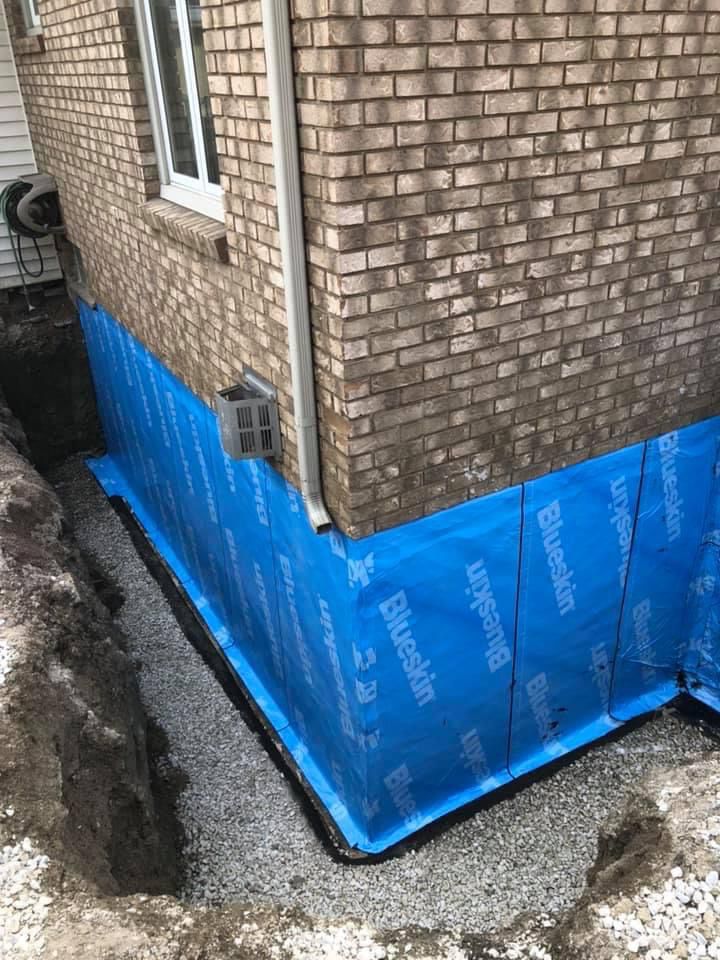
An exterior system includes a waterproof membrane applied to the foundation wall, perimeter drainage tile at the footing level, a dimple board or drainage mat to open a clear water pathway between the soil and the membrane, downspout connections to the perimeter drain, and grading correction to direct surface water away from the foundation. Combining interior and exterior components gives you redundant protection, with each layer backing up the others.
The design accounts for the specific variables at each property. A home in Sterling Heights, on flat clay soil with a high water table, needs a different configuration than a home in Rochester Hills, on a slope near the Clinton River corridor.
The sump pump capacity, the number and placement of discharge lines, the layout of the drainage channel, and whether exterior components are included all depend on the assessment findings. Mansour’s designs each system rather than installing a standard package, which is why the company’s assessment process is thorough and diagnostic-based.
System reliability and maintenance
A waterproofing system’s reliability depends on every component working during peak demand, which in Michigan means during severe storms when rainfall is heaviest, groundwater pressure is highest, and power outages are most likely.
Test sump pumps monthly by pouring water into the pit to trigger the float switch. Annual professional maintenance includes inspecting the float switch position, checking the check valve condition, verifying discharge line integrity, and testing the backup system.
Failure mode and effects analysis (FMEA) for sump pump systems
The principles of Failure Mode and Effects Analysis (FMEA), used in aerospace and automotive engineering to identify and reduce potential failures in critical systems, can be applied to residential waterproofing. The critical failure modes for a sump pump system include: power supply failure (severity: high, probability during storm events: high), float switch malfunction (severity: high, probability: moderate), check valve failure (severity: moderate, probability: moderate), discharge line obstruction (severity: high, probability during winter: high), and pump motor failure (severity: high, probability: low to moderate depending on age). Battery backup addresses the highest-risk failure mode, power loss during storms, while scheduled maintenance handles the remaining modes through periodic inspection and component replacement.
Predictive maintenance and condition monitoring
Newer tools in residential water management include smart sump pump monitors that track pump cycling frequency, run duration, and water level, giving early warning of developing problems before a catastrophic failure. Research on predictive maintenance strategies, first developed for industrial pump applications, has shown that monitoring pump cycle frequency can detect developing impeller wear, discharge line restrictions, and rising groundwater conditions weeks before they cause a system failure (Bloch & Geitner, 2012). These tools are still new to the residential market, but they point in the same direction as the wider move toward data-driven building maintenance.
“The top three reasons sump pumps fail in Michigan are power outages during severe storms, exactly when groundwater loading peaks, clogged intakes and discharge lines from clay and silt infiltration, and mechanical wear from continuous cycling in wet conditions.
Our systems pair a strong primary pump with an automatic battery backup that activates during power loss. The interior French drain collects water efficiently, and discharge lines are installed below the frost line to prevent freezing. This layered approach keeps the basement dry even under worst-case conditions.”
French drain channels stay effective as long as they are free of sediment and debris. In well-installed systems, the gravel bed filters soil particles before they reach the drain channel, so flow capacity holds up over time. Battery backup systems need periodic battery replacement and testing. Water-powered backup systems, which Mansour’s installs as an alternative, remove the battery dependency but need adequate municipal water pressure to run.
Mansour’s offers ongoing maintenance for its installed systems, including scheduled professional inspections and servicing. For homeowners who prefer professional oversight, this service keeps all components in working order and catches any developing issues before they cause a system failure during a storm.
Custom system design and regional adaptation
How well a basement waterproofing system works depends heavily on how well it fits the specific conditions at each property. A standardized system installed without regard for the local soil type, water table depth, foundation condition, and drainage environment will produce inconsistent results. Mansour’s custom-designs each waterproofing system from a detailed assessment of the property’s conditions.
The custom design process accounts for variables a standardized approach ignores. In Sterling Heights, where flat terrain and high water tables produce heavy groundwater loading, systems get higher-capacity pumps and stronger backup protection. In Rochester Hills, where sloped terrain creates directional groundwater flow, systems may include exterior drainage components to intercept water before it reaches the foundation. In Royal Oak, where small urban lots limit exterior work, interior systems are tuned to provide the most protection within the available space.
Soil survey data and site-specific design
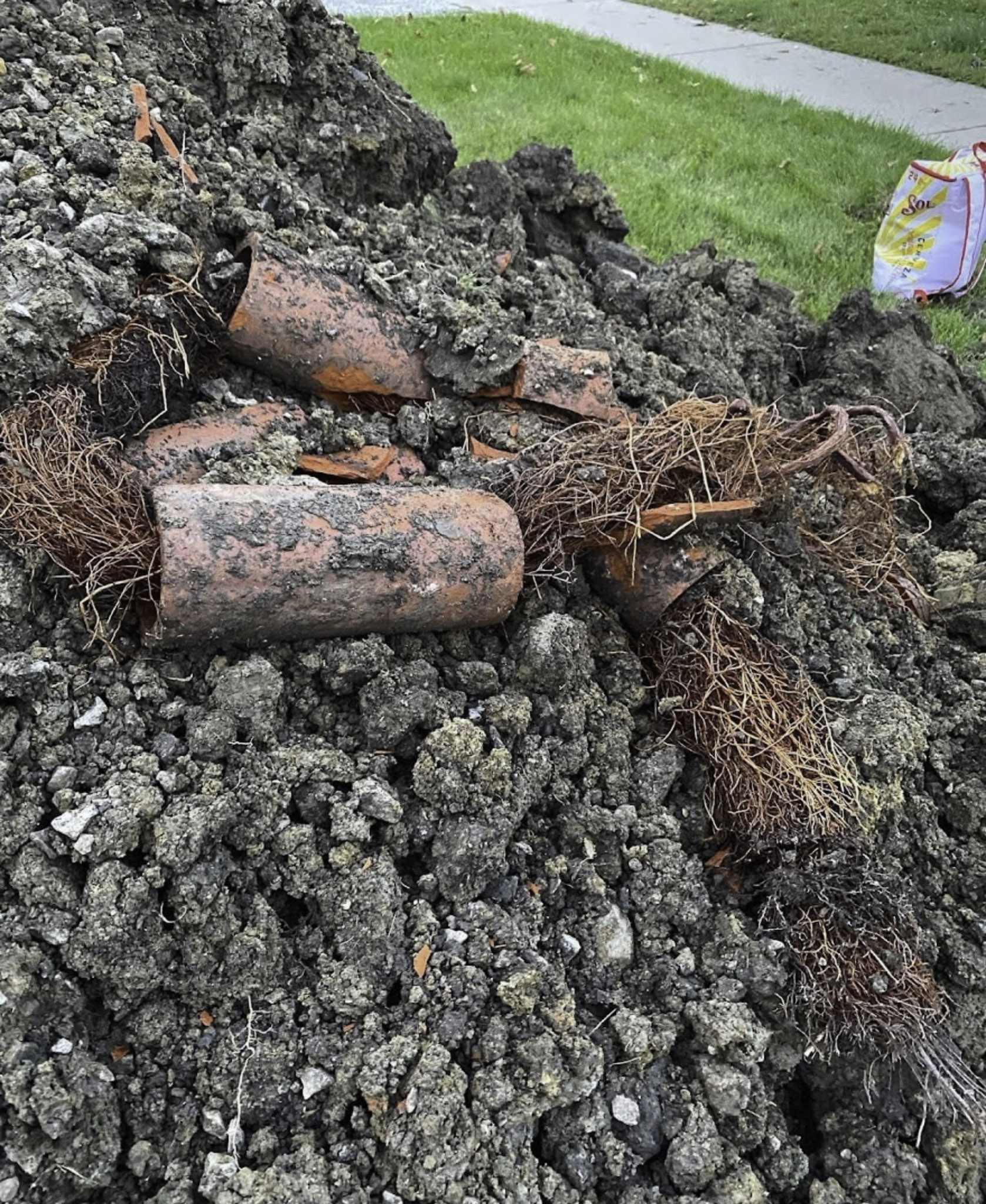
The U.S. Department of Agriculture’s Web Soil Survey (WSS) provides public soil mapping data that can inform waterproofing system design at the property level. For Southeast Michigan, the dominant soil series, including the Blount, Pewamo, Brookston, and Lenawee series, are classified as poorly drained to very poorly drained, with seasonal high water tables at or near the surface.
These soils have hydraulic conductivity values in the saturated zone that typically range from 0.01 to 1.0 cm/hr, which means natural drainage is not enough to prevent hydrostatic loading against foundation walls during wet periods (NRCS, 2023). This soil data gives the quantitative basis for specifying pump capacity, drain sizing, and backup requirements in custom designs.
Building diagnostic technology into the design process means systems are configured from data rather than assumptions. Infrared thermography identifies moisture entry points that may not be visible during a dry-weather inspection. Camera inspection shows the condition of the existing drainage infrastructure.
The system documentation provided at project completion includes the design specifications, component locations, operational parameters, and maintenance requirements. It gives the homeowner a reference for ongoing maintenance and serves as evidence of professional waterproofing for future owners.
Michigan homeowners investing in comprehensive basement waterproofing systems get the most value when each component is chosen and configured for their property’s conditions, an approach Mansour’s Innovations has refined across Southeast Michigan’s varied housing stock over two decades of continuous operation.
Systems engineering applied to residential waterproofing
Defense-in-depth, a concept borrowed from systems engineering and military doctrine, is a useful frame for understanding why an integrated waterproofing systems outperform single-component solutions. In a defense-in-depth strategy, multiple independent layers of protection are arranged so the failure of any single layer does not compromise the whole.
Applied to basement waterproofing, this becomes a design in which exterior drainage reduces the water load reaching the foundation, exterior membrane prevents water from penetrating the wall, interior vapor barriers capture any moisture that reaches the wall’s interior surface, interior drainage intercepts water at the floor-wall joint, and the sump pump removes collected water from the structure.
Research on system reliability shows why this layered approach matters. A system of components in series, where the failure of any one causes system failure, gets less reliable as the number of components grows. A system with redundant components in parallel, where any one of several components can independently do the protective job, gets more reliable with each added layer.
The integrated waterproofing system follows the parallel redundancy model: exterior drainage and interior drainage are independent systems that each manage water through different mechanisms, so the failure of one does not leave the basement unprotected.
The U.S. Army Corps of Engineers’ Engineering Manual EM 1110-2-3506 on grouting technology gives technical guidance on injecting cementitious and chemical grouts into concrete structures for waterproofing and structural repair. It was written mainly for civil infrastructure such as dams and flood walls, but the principles of injection grouting, including matching grout rheology to crack width, controlling injection pressures to avoid hydraulic fracturing of the substrate, and verifying grout penetration by watching refusal pressures, apply just as well to residential foundation crack repair.
The manual’s emphasis on quality assurance through systematic documentation of injection parameters is the same professional standard that separates engineered waterproofing from consumer-grade repair.
From a building physics standpoint, the work of Straube and Burnett (2005) at the University of Waterloo’s Building Engineering Group gives the theoretical basis for understanding moisture transport in building assemblies. Their research showed that below-grade walls face moisture loading from four distinct mechanisms, bulk water flow, capillary transport, vapor diffusion, and air leakage, each of which needs a different control strategy.
A single-component waterproofing solution, no matter how good, can usually address only one or two of these mechanisms, leaving the rest active. An integrated system addresses all four at once, which is why it produces more consistent results across varied site conditions.
The economic case for a waterproofing system should account for expected loss reduction. If the annual probability of a significant basement flooding event in a Michigan home without waterproofing is estimated at 5 to 10 percent (consistent with FEMA data on the prevalence of basement water damage), and the average cost of a flooding event, including damage repair, personal property loss, and health effects, is estimated at $5,000 to $15,000, then the expected annual loss without waterproofing runs from $250 to $1,500. Over 25 years, the cumulative expected loss without waterproofing can reach $6,250 to $37,500, figures that compare favorably to the one-time cost of a comprehensive waterproofing system.
References
Straube, J. F., & Burnett, E. F. P. (2005). Building science for building enclosures. Building Science Press.
U.S. Army Corps of Engineers. (2017). Grouting technology (EM 1110-2-3506). USACE. https://www.publications.usace.army.mil/USACE-Publications/Engineer-Manuals/
NRCS. (2023). Web soil survey. U.S. Department of Agriculture, Natural Resources Conservation Service. https://websoilsurvey.nrcs.usda.gov/
USGS. (2020). Groundwater levels in the glacial aquifer system, Michigan. U.S. Geological Survey. https://waterdata.usgs.gov/
