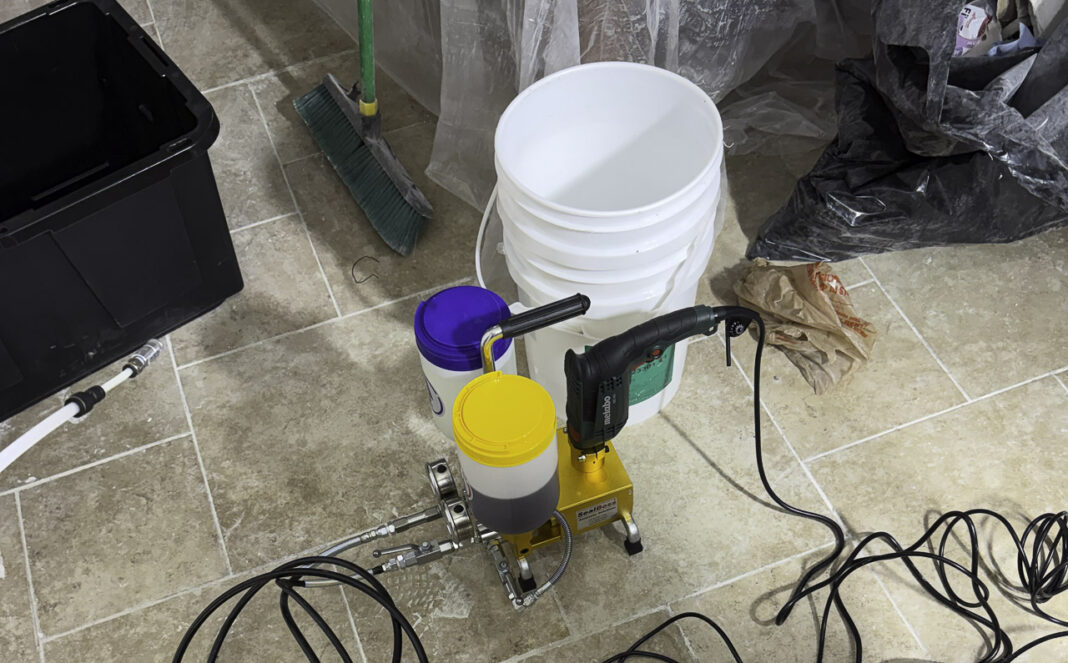
Sealing basement walls is one of the most commonly requested waterproofing jobs in Michigan, and it covers a range of techniques: surface coatings, structural crack injection, and full membrane application. The right method depends on the nature and severity of the moisture problem, the foundation material, how the basement space will be used, and whether the goal is to stop active water flow or manage ambient moisture levels.
Mansour’s Innovations offers several wall sealing methods as part of its waterproofing service. Foundation crack injection using polyurethane or epoxy seals specific water pathways through poured concrete walls.
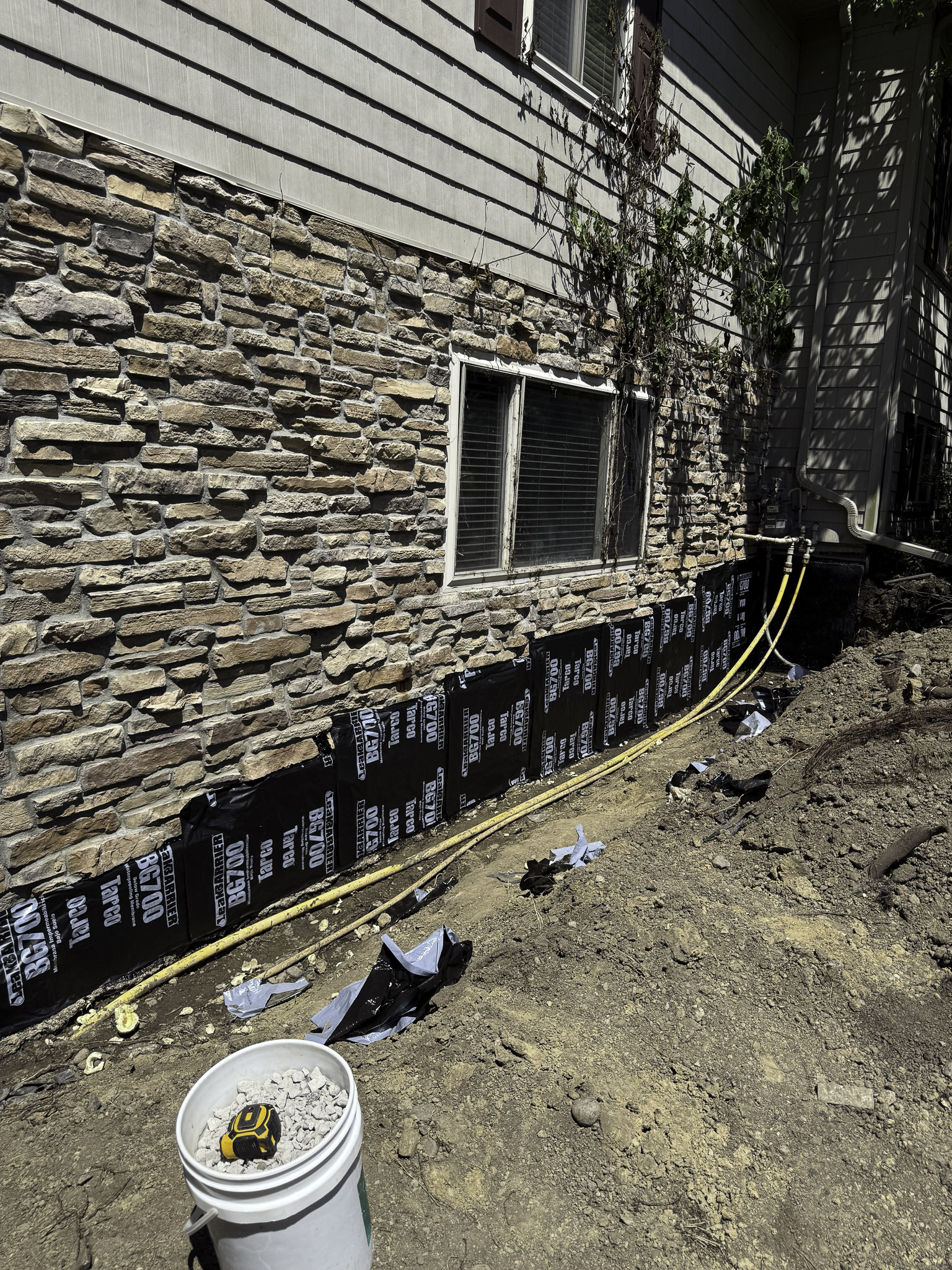
Vapor barrier installation on interior wall surfaces reduces moisture migration through porous concrete or block. Exterior membrane application during excavation-based waterproofing provides a continuous waterproof barrier on the outside of the foundation wall. Each method addresses a different aspect of wall moisture, and the company’s assessment process determines which combination fits the conditions at a specific property.
Crack classification and assessment protocols
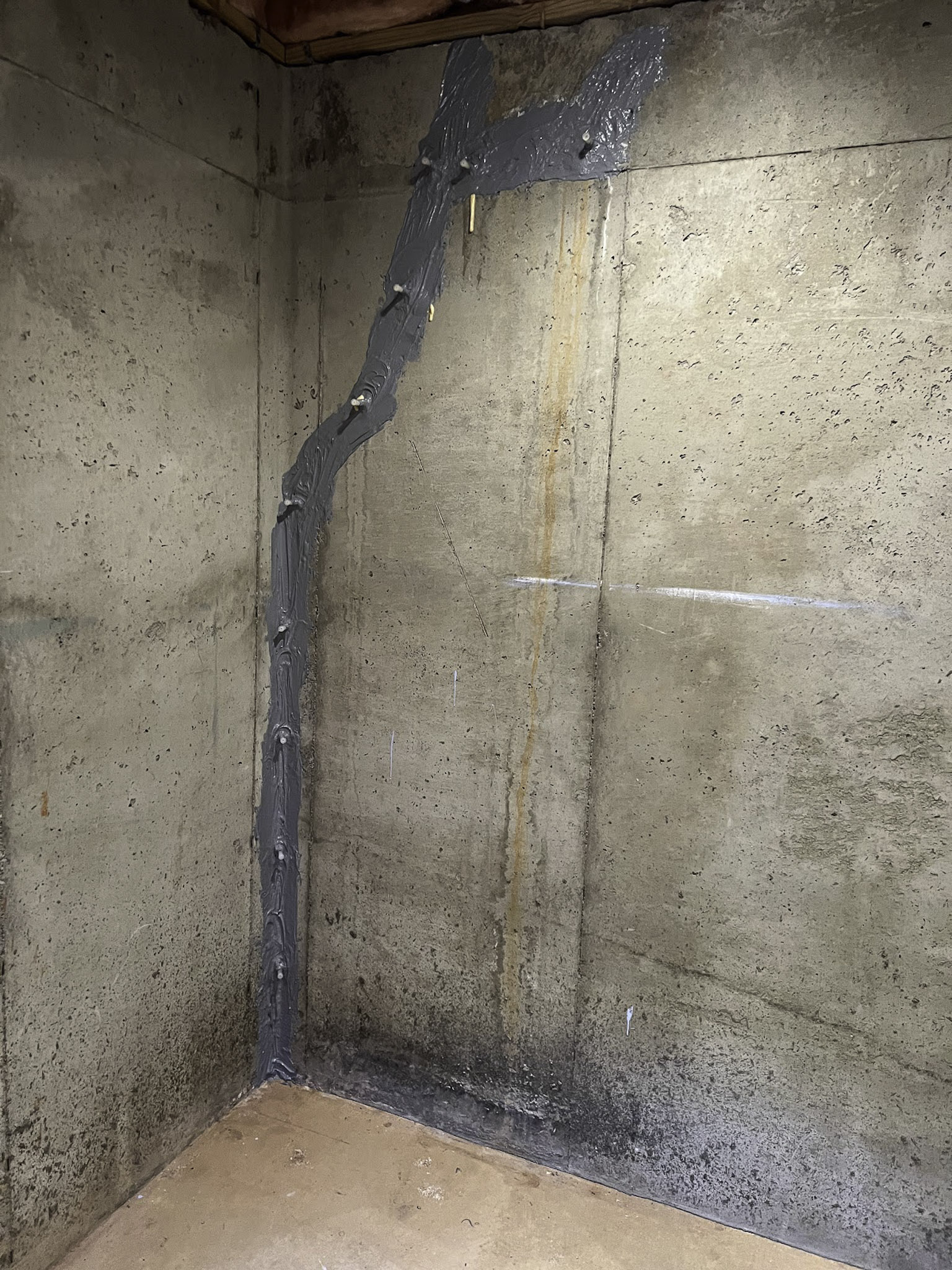
The American Concrete Institute’s Guide for Making a Condition Survey of Concrete in Service (ACI 201.1R) gives a systematic framework for evaluating concrete deterioration, including crack classification by cause, orientation, and severity. Cracks are grouped as structural (affecting load-carrying capacity) or non-structural (mainly aesthetic or water-tightness concerns), and as active (still changing in width or length) or dormant (stable under current conditions).
This classification determines the right repair material: flexible polyurethane for active waterproofing cracks, rigid epoxy for dormant structural cracks, and routing-and-sealing for wide, stable surface cracks (ACI 224.1R-07).
Concrete carbonation and long-term durability
Carbonation, the reaction of atmospheric carbon dioxide with calcium hydroxide in the concrete pore solution to form calcium carbonate, gradually reduces the pH of the concrete matrix from its initial value of about 12.5 to 13.0 toward neutrality. When the carbonation front reaches the depth of embedded reinforcement, the passive oxide layer protecting the steel breaks down and corrosion begins. Papadakis et al. (1991), in a study published in Industrial & Engineering Chemistry Research, developed a mathematical model for carbonation depth as a function of time, CO2 concentration, water-to-cement ratio, and curing conditions.
In residential foundations, where concrete cover over reinforcement is usually minimal and exposure to soil moisture speeds up carbonation, this deterioration can compromise structural integrity within 30 to 50 years, which lines up with the age of much of Michigan’s existing housing stock.
The most common wall sealing request in Michigan involves foundation cracks in poured concrete walls. These cracks form from a combination of concrete shrinkage, hydrostatic pressure, and freeze-thaw cycling that define the Michigan foundation environment. Surface patching with consumer-grade products is the approach most homeowners try first, and it usually fails within one or two seasons because it does not address the water pathway through the full thickness of the wall. Professional injection fills the crack from the interior to the exterior, creating a seal that holds through later cycles of soil movement and water pressure.
Polyurethane injection material is preferred for waterproofing because it stays flexible after curing. Michigan foundations are not static; they shift slightly with seasonal soil changes, and a rigid surface patch or filler will crack again when the wall moves. Polyurethane accommodates this movement, keeping its seal even as the crack opens slightly during freeze-thaw cycles. The material also expands when it contacts moisture, which helps it fill the full volume of the crack when injected into an actively leaking wall.
Vapor barriers and interior surface treatments
Vapor barriers take a different approach to wall sealing. They address moisture moving through the wall material itself rather than through specific cracks or penetrations. Concrete and concrete block are porous, so moisture vapor passes through them over time, especially when the exterior soil is saturated and hydrostatic pressure pushes water against the wall surface. This moisture migration may not produce visible leaks, but it can cause elevated humidity, dampness, and efflorescence on interior wall surfaces.
Mansour’s installs vapor barriers as part of its interior waterproofing systems. The barrier is applied to the interior face of the foundation wall and directs any moisture that gets through the wall downward to the perimeter drainage system instead of letting it enter the basement air space. Tying the vapor barrier to the French drain system creates a managed moisture pathway that captures wall moisture before it can affect the basement environment.
Permeability classification and material selection
The International Building Code sorts vapor retarders into three classes based on water vapor permeance measured per ASTM E96: Class I (<=0.1 perms, e.g., polyethylene sheet, glass), Class II (>0.1 to <=1.0 perms, e.g., kraft-faced insulation), and Class III (>1.0 to <=10 perms, e.g., latex paint). For below-grade applications where the exterior side of the wall is in continuous contact with saturated soil, Class I vapor retarders are required for effective moisture control.
Lstiburek (2004), in his ASHRAE Journal paper on vapor barriers, stressed that below-grade wall assemblies need particular attention because they cannot dry to the exterior. Any moisture that enters the wall assembly has to be managed on the interior side.
Efflorescence: causes and diagnostic significance
Efflorescence, the white crystalline deposit that appears on concrete and masonry surfaces, is a sign of moisture moving through the wall material. The deposits are mainly calcium carbonate and sodium sulfate salts carried in solution through the concrete pore network and left on the surface when the water evaporates.
Efflorescence is not structurally damaging in itself, but it signals active moisture migration that, if ignored, will eventually degrade the concrete matrix by leaching the calcium hydroxide that maintains its alkalinity and structural integrity. Efflorescence on basement walls is an early warning that warrants professional evaluation, even without visible water leaks.
“Off-the-shelf paints and sealants like Drylok fail fast in Michigan because they only coat the surface while hydrostatic pressure from saturated clay pushes water through from the outside. They also trap moisture inside the concrete, causing efflorescence, bubbling, and accelerated freeze-thaw deterioration.
What works professionally: crack injection with flexible polyurethane that seals through the full thickness of the wall, interior drainage tied to a sump pump to relieve pressure, dimple board or membrane barriers at the wall-floor joint, and, when needed, exterior membrane application. For most Michigan poured-wall homes, combining crack repair with an interior drain and sump pump is the most effective and least disruptive approach.”
For homeowners with finished basements, wall sealing matters more because moisture that reaches finished walls, insulation, and drywall creates conditions for mold growth inside the wall cavity. Mold in a finished basement wall cavity can grow undetected for months or years, degrading indoor air quality and eventually requiring costly remediation. Infrared thermography can find moisture within finished wall assemblies without demolition, identifying problem areas before they turn into full contamination.
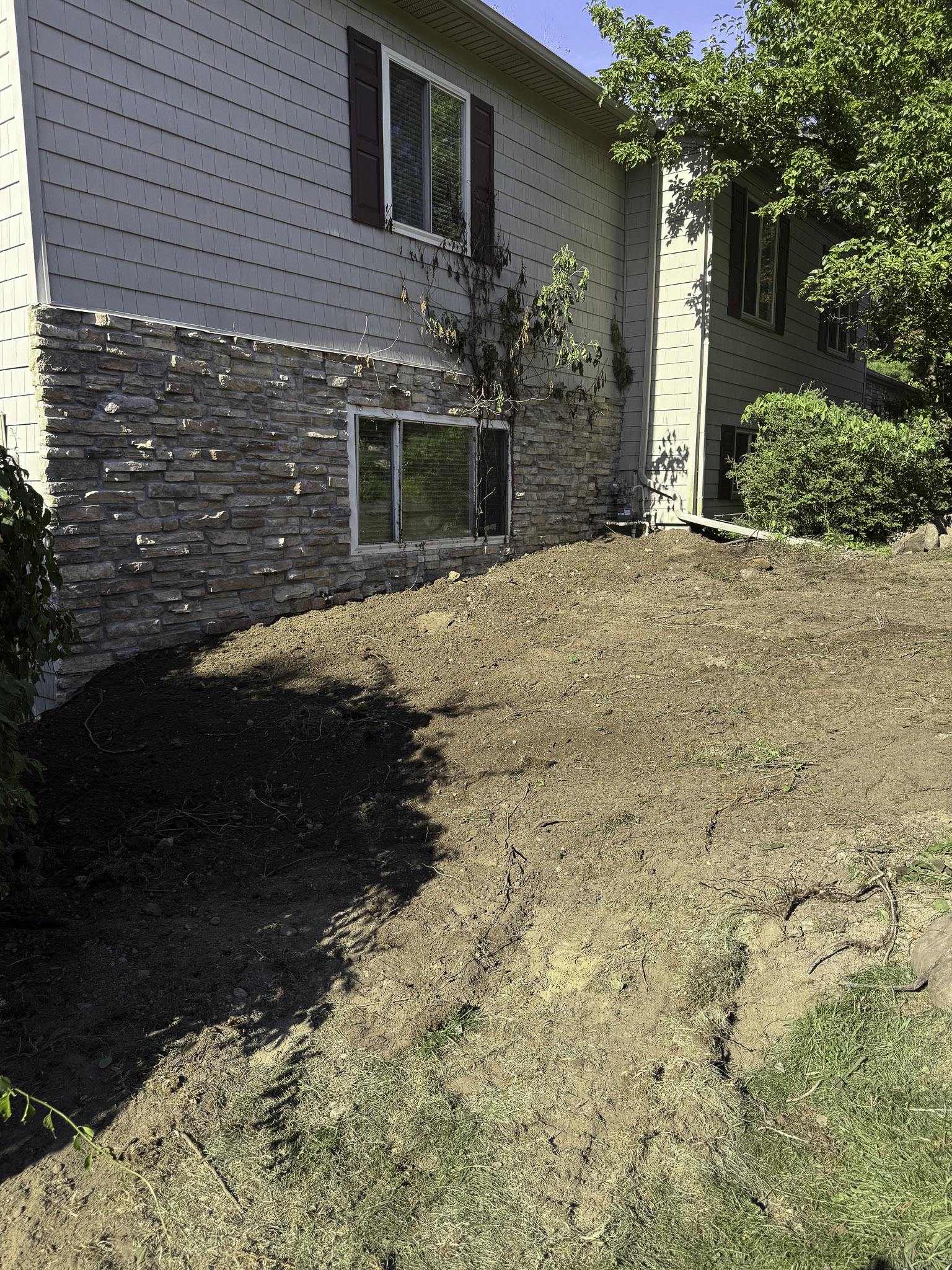
Exterior wall sealing through membrane application gives the most complete protection because it addresses moisture at the point of entry rather than on the interior side. When Mansour performs exterior waterproofing, the membrane system applied to the foundation wall creates a continuous waterproof barrier that keeps water from reaching the concrete surface at all. Combined with perimeter drainage tile that carries groundwater away from the footing, the exterior approach removes wall moisture at its source rather than managing it after it gets in.
Wall sealing and energy efficiency
Basement wall sealing helps with home energy efficiency in ways homeowners often do not consider. Moisture migrating through basement walls raises indoor humidity, which makes air conditioning work harder in summer and creates condensation that degrades insulation performance. Air infiltration through cracks and unsealed penetrations in foundation walls lets conditioned air escape and unconditioned air enter, raising heating and cooling costs year-round.
Sealing cracks, treating tie rod holes, and installing vapor barriers on basement walls together reduce both moisture migration and air infiltration through the foundation. The result is a tighter building envelope that holds conditioned air more effectively and keeps humidity levels more stable. For homeowners who use finished basements as living space, the comfort and energy savings from proper wall sealing are real.
Building envelope thermal performance below grade
Below-grade wall assemblies lose heat through different mechanisms than above-grade walls. The soil around a basement wall acts as a thermal mass that moderates temperature swings, but it also holds a year-round temperature gradient that drives heat loss during winter.
Research by Labs et al. (1988), published through the Oak Ridge National Laboratory, showed that below-grade heat loss in heating-dominated climates like Michigan’s accounts for 20 to 30% of total building heat loss in homes with uninsulated basements, a figure that can drop to 5 to 10% with proper insulation and air sealing of the foundation walls.
Air leakage through foundation penetrations
The contribution of foundation-level air leakage to total building infiltration has been measured through blower door testing and tracer gas studies. The Energy Conservatory, in its Building Performance Institute (BPI) research, found that rim joists, sill plates, and utility penetrations at the foundation-to-frame connection are the single largest source of air leakage in many existing homes, contributing 15 to 25% of total measured infiltration (BPI, 2012). Sealing these penetrations reduces both air infiltration and the pathway for moisture-laden air to enter the building envelope, producing energy savings and moisture control benefits that add up over time.
Michigan’s energy costs and climate make building envelope performance a real financial factor. A basement that loses conditioned air through unsealed cracks and penetrations all winter adds to heating costs. Wall sealing that cuts this loss pays off through lower energy bills, on top of its main benefit of moisture management.
How long wall sealing lasts depends on both the materials used and the surface preparation. Professional crack injection needs clean, properly prepared crack surfaces for effective adhesion and penetration. Vapor barrier installation needs a wall surface free of loose material and efflorescence deposits. Mansour’s process includes surface preparation as a documented step, so the conditions for durable sealing are set before materials are applied.
Homeowners looking into sealing basement walls in Michigan will find that the difference between a consumer-grade patch and a professional, pressure-injected seal is not just quality but approach. The patch hides the symptom; the injection eliminates the water pathway.
Moisture transport through concrete: what the research shows
Understanding why surface sealants fail and professional methods succeed means looking at the physics of moisture transport through porous cementitious materials. Concrete is not a solid barrier. It contains a network of capillary pores, gel pores, and entrapped air voids that let water move through its structure by several mechanisms: liquid-phase capillary absorption, vapor-phase diffusion driven by humidity gradients, and pressure-driven permeation under hydrostatic loading.
Hall (1989), in a foundational study published in Building and Environment, characterized the sorptivity of concrete, the rate at which it absorbs water through capillary action, and showed that this property is governed mainly by the pore structure of the hardened cement paste. His work established that ordinary concrete has sorptivity values in the range of 0.1 to 0.6 mm/?min, meaning the leading edge of a capillary absorption front can penetrate several centimeters into a wall over a period of hours during sustained wetting.
This capillary absorption explains why a wall that looks dry during a light rain can become visibly damp during a prolonged storm: the wetting front has had enough time to cross the wall thickness.
The durability of concrete sealants is tied directly to their ability to withstand the internal stresses that freeze-thaw cycling generates. Powers (1945), in his landmark hypothesis on frost resistance in concrete, later confirmed by decades of experimental work, described how freezing water generates hydraulic pressure within the pore network. As pore water freezes, it expands by about 9%, displacing unfrozen water through the pore network and generating pressures that can exceed the tensile strength of the surrounding concrete matrix. Surface-applied sealants, which lack mechanical anchorage into the pore network, are readily disbonded by these pressures, which explains their typical one- to two-season failure pattern in Michigan’s climate.
Research by Basheer, Kropp, and Cleland (2001), published in Construction and Building Materials, reviewed the assessment of concrete durability from the perspective of transport mechanisms. Their analysis confirmed that the durability of protective treatments depends on how deep they penetrate the concrete substrate.
Surface coatings that sit on top of the concrete, the category that includes most consumer-grade basement waterproofing paints, provide minimal long-term protection because they are vulnerable to disbondment from both positive-side water pressure and the mechanical stresses of substrate movement. Penetrating sealers and injection-based repairs that fill voids and cracks through the full cross-section of the wall, by contrast, address the transport pathway itself rather than adding a superficial barrier.
The energy implications of basement wall moisture are measured in research by the Oak Ridge National Laboratory (ORNL), which has run extensive studies on the thermal performance of below-grade wall assemblies. Moisture within foundation wall insulation can cut its effective R-value by 35 to 50%, according to field measurements reported in the laboratory’s Building Envelope Research Program publications (Desjarlais & Yarbrough, 1994).
For Michigan homes, where basements represent a significant fraction of the building envelope’s below-grade surface area, this moisture-induced loss of insulation performance translates directly into higher heating energy use and higher utility costs.
References
Basheer, L., Kropp, J., & Cleland, D. J. (2001). Assessment of the durability of concrete from its permeation properties: A review. Construction and Building Materials, 15(2, 3), 93, 103. https://doi.org/10.1016/S0950-0618(00)00058-1
Desjarlais, A. O., & Yarbrough, D. W. (1994). Prediction of the thermal performance of single and multi-component below-grade envelope systems. Thermal Envelopes VI/Moisture and Air Leakage, ASHRAE/DOE Conference Proceedings, 125, 134.
Hall, C. (1989). Water sorptivity of mortars and concretes: A review. Magazine of Concrete Research, 41(147), 51, 61. https://doi.org/10.1680/macr.1989.41.147.51
Powers, T. C. (1945). A working hypothesis for further studies of frost resistance of concrete. Journal of the American Concrete Institute, 16(4), 245, 272.
ACI Committee 201. (2016). Guide for conducting a visual inspection of concrete in service (ACI 201.1R-08, Reapproved 2016). American Concrete Institute.
BPI. (2012). Building analyst professional standards. Building Performance Institute.
Labs, K., Carmody, J., Sterling, R., Shen, L., Huang, Y., & Parker, D. (1988). Building foundation design handbook. Oak Ridge National Laboratory (ORNL/Sub/86-72143/1).
Lstiburek, J. W. (2004). Understanding vapor barriers. ASHRAE Journal, 46(8), 40, 47.
Papadakis, V. G., Vayenas, C. G., & Fardis, M. N. (1991). Fundamental modeling and experimental investigation of concrete carbonation. ACI Materials Journal, 88(4), 363, 373.
