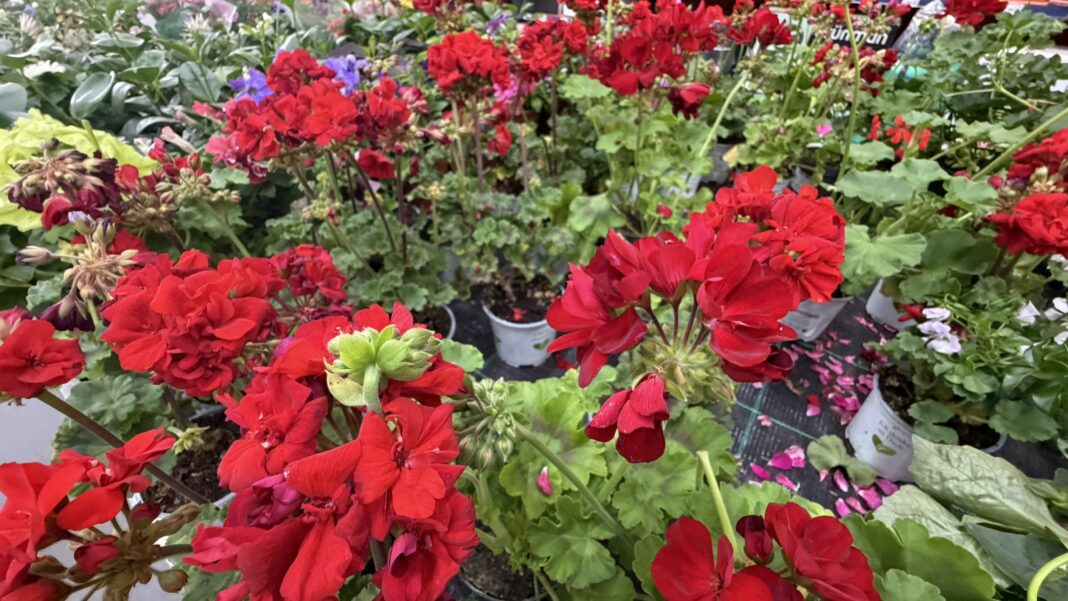
Same-day floral delivery is a convenient option for people who need to send flowers on short notice. Whether for a special occasion or a last-minute gesture, these services help your floral gift arrive on time. This guide walks you through what you need to know about same-day flower delivery.
Timelines and cutoff times
To get the most out of same-day flower delivery, timing matters. Most flower delivery services set a cutoff time, so orders placed after a certain hour may not qualify for same-day service. With many services, ordering early in the day improves your chances of having flowers delivered the same day.
Some services offer extended ordering hours, but the window for same-day delivery usually varies by location. It can depend on how close the service is to the recipient’s address and the types of flowers you’ve chosen. Check the specific guidelines to make sure your flowers can reach their destination without delays.
Common flower choices
When you order flowers for same-day delivery, some blooms are more readily available than others. Florists work with a range of fresh flowers, but popular choices like roses, lilies, and carnations may be prioritized for quicker delivery. These are in high demand and are usually easier to source in larger quantities.
More exotic or rare flowers may need extra time to source. If you’re set on a specific flower, check whether the florist can accommodate your request. Knowing what’s commonly available can make the ordering process smoother.
Benefits of same-day flower service
Same-day flower delivery has several advantages. For starters, it lets you send a thoughtful gift without worrying about time constraints. That helps for special occasions like birthdays or anniversaries when you forgot to plan ahead. It’s also good for sending flowers to express sympathy or congratulations promptly.
Same-day services also reassure customers who need their orders delivered quickly. With guaranteed service, you can count on your arrangement arriving as expected. For anyone who needs to mark an event as it happens, this option is worth a lot.
- Immediate delivery
- No need to worry about future dates
- Ideal for last-minute events
- Can be a stress-free experience with a reliable company
Select the right flower service
Some flower providers specialize in faster turnaround, while others add features like customization or exclusive arrangements. Research these services to find the one that fits your needs. You may want to check reviews and ratings to gauge how reliable a service is before you order.
Also consider whether the service offers order tracking. This lets you monitor the status and confirm the flowers are headed to the right place. Taking time to choose the best service can make a real difference in your delivery experience.
Same-day floral delivery is an efficient way to send flowers quickly, and it helps most when time is tight. There are factors to weigh, including cutoff times, flower availability, and cost, but the convenience of immediate delivery is hard to argue with. With a bit of planning, bouquet delivery becomes a smooth and thoughtful gesture.
Bouquets fade, of course, which is why some recipients spend an afternoon turning saved stems into pressed flower art rather than letting the whole arrangement go.
Same-day flower delivery services: consumer psychology, postharvest science, and last-mile logistics
The market for same-day flower delivery sits at an unusual intersection of disciplines. Consumer psychology explains why a bouquet must arrive today rather than tomorrow. Postharvest plant science determines whether the flowers are still presentable when it does. And logistics engineering decides whether the delivery is operationally viable at a cost the market will bear. Most commercial content about same-day flower delivery covers only the consumer-facing pitch: speed, convenience, the satisfaction of a last-minute gift saved.
The three-domain structure that actually decides whether the service delivers value is rarely examined together. This article draws on peer-reviewed research in evolutionary psychology, postharvest horticultural science, operations management, and e-commerce service quality to give an evidence-based account of what makes same-day flower delivery work, and what can make it fail.
The emotional side of flower-giving: why timing is the delivery
The idea that flowers are a genuinely different category of gift, not just a perishable aesthetic object, rests on a documented empirical foundation. Haviland-Jones, Rosario, Wilson, and McGuire (2005), across three controlled experiments, showed that presenting flowers reliably produced the Duchenne smile, the involuntary and genuinely positive reaction, in recipients across all age groups studied. Recipients reported higher positive mood lasting up to three days after the gift, and elderly recipients showed improved episodic memory.
The authors read these findings through a coevolutionary lens: cultivated flowers appear to occupy an “emotional niche” in which their sensory properties, refined over millennia of human cultivation, quickly induce positive affect in ways few other objects consistently manage. In gift-giving theory, this makes flowers one of the few product categories where the object itself is a positive emotional inducer independent of the giver’s message. The flower does psychological work that a box of chocolates or a gift card cannot.
That gap between an object that does emotional work and one that merely costs money is worth weighing whenever flowers chosen for Father’s Day compete with the usual gadget.
This emotional function is tied to the occasion. Belk (1976), in the foundational consumer-behavior analysis of gift-giving, identified the occasion as a necessary structural element: gift selection responds to a situational trigger, and the appropriateness of a gift is judged partly against the timing of the gesture. A birthday bouquet arriving a day late is not the same gesture as the same bouquet arriving on time. The flowers are identical, but the relational signal has changed. The same holds for bereavement flowers, anniversary gifts, maternity congratulations, or get-well arrangements. Flowers are occasion-driven in a way that most e-commerce goods are not, and that is the main reason speed is not simply a convenience feature in floral delivery. It is part of the product’s value.
Belk (1976) also documented that the perceived attentiveness of the giver, the “thought that counts”, is a primary determinant of how the recipient evaluates the gift. Online, a gift ordered and delivered on the day of the occasion communicates a different level of intent than one ordered in advance from a local florist who happens to handle the logistics. The same-day capability serves not only the recipient’s experience but the giver’s signal too: it turns a potentially impersonal online purchase into a show of responsive care.
The postharvest science of cut flowers: why speed is not optional
The second domain governing same-day flower delivery is plant science, and it imposes constraints that no logistical optimization can get around. Cut flowers are fresh produce in the strictest sense: living tissues severed from their primary resource supply, still respiring, consuming internal carbohydrate and water reserves, and moving toward an irreversible senescence program.
Van Doorn and Woltering (2008), in a comprehensive review of the physiology and molecular biology of petal senescence published in the Journal of Experimental Botany, established that petal deterioration in most commercially important species follows two principal pathways: ethylene-dependent senescence (dominant in roses, carnations, and orchids, among others) and ethylene-independent senescence. Both involve the activation of proteolytic and nucleolytic enzymes, vacuolar membrane disruption, and a cascade of cellular disassembly that, once started, proceeds without reversal. The practical point is that no intervention available to the last-mile delivery sector will restore quality to flowers that have already entered this program. Prevention, not recovery, is the only option.
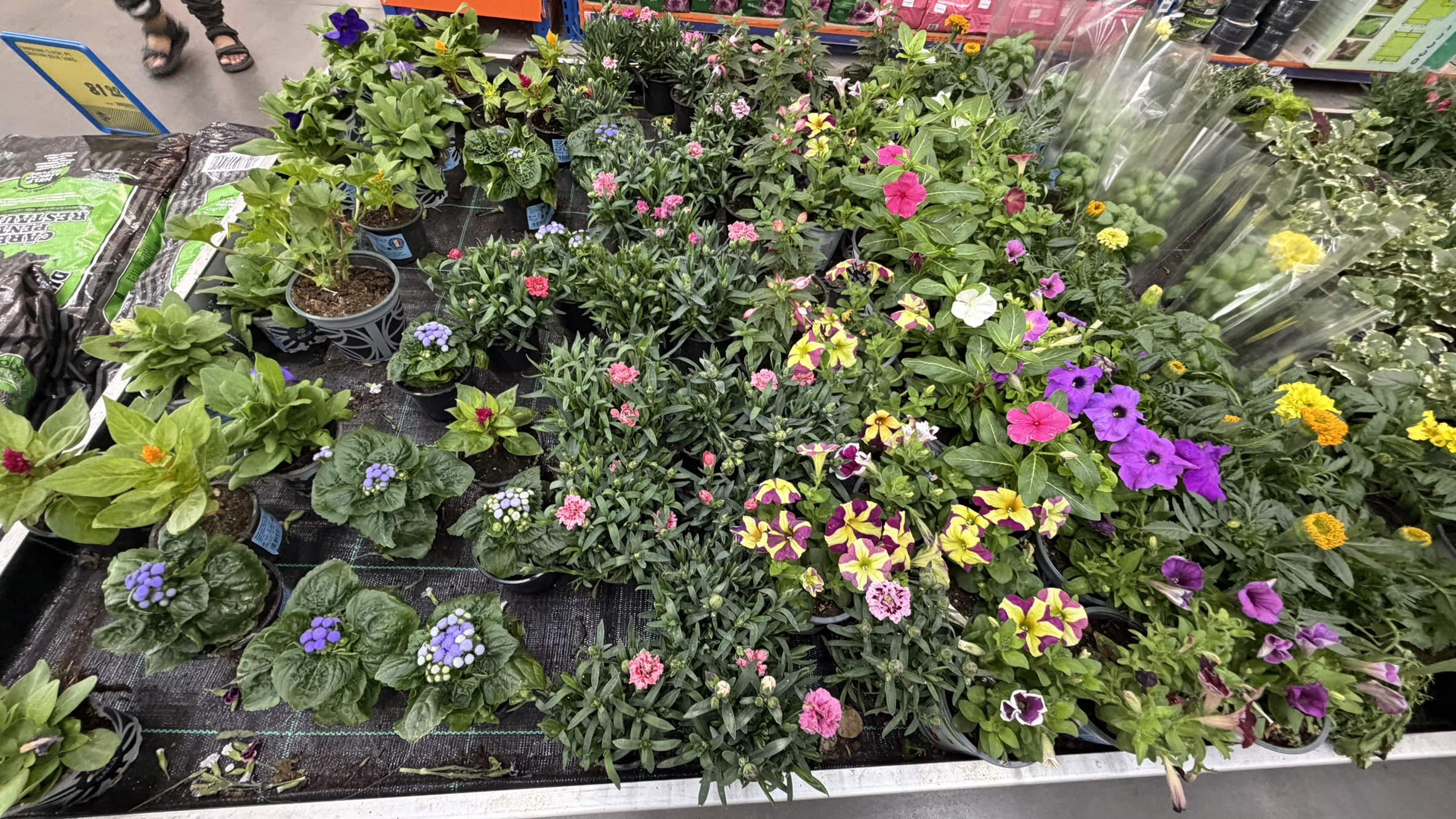
Prevention depends mostly on temperature management during transit. Celikel and Reid (2002), studying the postharvest behaviour of gerbera and sunflower, both commercially significant cut flowers, found that respiration rate increased exponentially with storage temperature, with a temperature coefficient (Q10) of about 3.5. So a 10 degrees C rise in ambient temperature accelerates cellular deterioration 3.5-fold: flowers held at 20 degrees C deteriorate at roughly 3.5 times the rate of flowers held at 10 degrees C.
The study also showed that both post-storage vase life and negatively geotropic neck bending, the aesthetic failure in which the flower head droops, had highly significant linear relationships with the rate of respiration during storage. The implication for transit is quantitative and direct: every hour spent above the optimal cold-storage range (typically 1 to 4 degrees C for most temperate cut flowers) is time removed from the flower’s post-delivery vase life, and the relationship is not linear but accelerating.
Same-day delivery gives a specific advantage here that next-day or standard delivery cannot: it sharply compresses the period during which the flowers sit at ambient urban temperatures. A flower packed at 4 degrees C at a local fulfillment hub, loaded into a temperature-controlled vehicle, and delivered within two to four hours has taken on a fraction of the cumulative thermal stress of a flower that spends twelve to eighteen hours in a regional distribution centre, a last-mile sorting facility, and finally a delivery vehicle. That thermal advantage translates directly to vase life at the recipient’s home, the main quality measure the end consumer sees and the most direct driver of repeat purchasing and referral.
The last-mile logistics challenge: what makes same-day delivery hard
Boyer, Prud’homme, and Chung (2009), in a simulation-based study published in the Journal of Business Logistics, described the last mile, the terminal segment from the local hub to the recipient’s address, as the most expensive, least efficient, and most operationally complex part of the consumer-direct supply chain. Their core finding was that last-mile cost per delivery is highly sensitive to two independent variables: customer density and delivery window length. Narrow delivery windows (the customer available only between 2 and 4 pm, for example) cut route efficiency substantially by constraining the routing algorithm, even when geographic density is otherwise good enough to support efficient operation. Wider windows improve route efficiency but reduce the service value for customers who have planned their day around a specific delivery time.
Flower delivery makes this tension sharper than it is for general parcel delivery, for two reasons. First, the product is genuinely time-sensitive in a way most parcels are not: an unattended bouquet left on a doorstep on a sunny afternoon undergoes the thermal stress described above, compressing vase life whether or not the delivery itself was technically successful. So the “failed delivery” problem, which Boyer et al. (2009) documented in up to 20% of attended-delivery attempts, is far more damaging for cut flowers than for non-perishables. A missed electronics delivery can be reattempted the next day; a missed flower delivery on a birthday cannot be recovered. Second, the urgency that drives same-day demand also tends to scatter orders across an urban area, undermining the route density that efficiency depends on. A same-day florist handling ten orders in a large metropolitan area faces routing mathematics that a florist handling one hundred orders does not.
The operational response that viable same-day services have developed, though not yet systematically documented in peer-reviewed logistics literature, involves a few structural adaptations: localized fulfillment that keeps the product within a tight geographic radius, so routing stays dense; cutoff windows that differ by district rather than a uniform metro cutoff; and a logistics partner model that uses established courier networks with existing urban density rather than proprietary fleets. The point drawn from Boyer et al. (2009) is that these structural factors, density and window, matter more to delivery economics than vehicle type or routing algorithm sophistication. A same-day flower operator with a well-defined service zone and a realistic order minimum per district will consistently outperform one with broader geographic ambition and thinner distribution.
Consumer preferences for delivery timing: the heterogeneity problem
The popular assumption that consumers universally prefer faster delivery, and will pay for it, is not well supported by the quantitative evidence. Oyama, Fukuda, Imura, and Nishinari (2024), in a stated-preference study of e-commerce consumers in Japan published in the Journal of Retailing and Consumer Services, found substantial variation in willingness to pay (WTP) for delivery speed. Their estimated value of delivery time savings (VODT) had a median of about 25.6 JPY per day, so small that more than half of respondents would accept an extra day of delay if the delivery fee rose by less than the cost of a vending-machine drink. A large share of consumers, in other words, chose next-day or same-day delivery not because they urgently needed it, but because platforms offered it free or at a negligible premium. Demand for fast delivery, across the general e-commerce population, is largely price-elastic and driven by perceived value rather than genuine urgency.
Flowers are the limiting case where genuine, objective urgency applies. Unlike a novel or a clothing item, a flower gift for a birthday on the fourteenth of the month has zero value if it arrives on the fifteenth. That puts flower delivery in the narrow segment of e-commerce where same-day capability is part of the product rather than merely convenient, a segment that also includes pharmaceutical delivery, certain food categories, and event-related goods. The Oyama et al. (2024) finding that most consumers do not intrinsically value delivery speed is therefore not a challenge to the same-day flower proposition; it clarifies it. The consumer who wants next-day delivery of an audiobook has low genuine WTP for speed because the specific-day constraint is absent. The consumer who needs birthday flowers today has a constraint so hard that no increment of “fast enough” below same-day actually serves the use case.
The practical takeaway for operators is that same-day flower delivery is not competing mainly on speed in a race every logistics provider can enter; it is competing on reliability within the genuinely time-constrained segment. The customer who finds that their preferred provider cannot guarantee same-day delivery before noon for a 3:00 pm birthday does not go looking for a faster next-day option. They look for a same-day option they can rely on. This distinction between speed and reliability has not been well studied in the floral-specific literature, but it lines up closely with the service-quality framework below.
Electronic service quality and the online flower retail experience
For most same-day flower orders, the whole purchase is a digital transaction: the consumer selects, customises, and pays through a web interface, then trusts the service to fulfil an occasion-critical commitment without any physical contact with the retailer. Parasuraman, Zeithaml, and Malhotra (2005), in developing and validating the E-S-QUAL scale for measuring electronic service quality, identified four dimensions of routine website service quality: efficiency (ease and speed of website use), fulfillment (accuracy of service promises and product representation), system availability (correct technical functioning), and privacy. For recovery situations, cases where the service hits a non-routine problem, they added responsiveness, compensation, and contact quality.
In floral e-commerce, the fulfillment dimension dominates in a way it does not in general e-commerce. The product is visual, fragrant, and occasion-linked. The consumer forms a specific expectation from the website image and description, and any gap between that expectation and the delivered product, whether in species composition, freshness, arrangement quality, or packaging condition, shows up at the moment of highest emotional salience: the birthday morning, the hospital bedside.
Parasuraman et al. (2005) noted that fulfillment is the most consequential dimension for repurchase intention, because it is where expectations formed during browsing are confirmed or violated in the physical world. For a same-day flower operator, the asymmetry is stark: a successful delivery on the day of the occasion creates strong positive affect (Haviland-Jones et al., 2005), but a failed or degraded delivery on that same occasion breaches both the service promise and the emotional contract in a way the E-RecS-QUAL recovery dimensions cannot fully repair.
The privacy and efficiency dimensions of E-S-QUAL also carry weight in the floral context. Many flower gift orders involve disclosing the recipient’s home address, sometimes with personalised messages. The data sensitivity of a transaction that delivers a surprise to a residential address is higher than for a standard self-purchase delivery. Website efficiency, the clarity of the order flow, unambiguous communication of cutoff times and coverage zones, and real-time availability of same-day products, directly affects conversion among consumers who are already pressed for time. The user who cannot tell within thirty seconds whether a provider serves their delivery postcode today will abandon the session and look for a clearer alternative.
Environmental considerations and the cost of speed
The environmental cost of same-day delivery is a recognised problem in the broader urban logistics literature. The route optimisation that makes standard parcel delivery comparatively efficient depends on batching, combining many deliveries into consolidated routes that maximise stops per vehicle-kilometre. Same-day delivery with a fixed afternoon window reduces the number of orders that can be consolidated per route, raising vehicle-kilometres per delivery and, with them, the per-delivery carbon footprint.
Boyer et al. (2009) quantified the route-efficiency penalty of narrow delivery windows through simulation, finding that a four-hour window rather than an eight-hour window can increase the number of vehicles required and the total distance driven. For a zero-emission transition, this penalty has to be addressed through operational design, tight zone boundaries, minimum order thresholds per zone, and routing software that maximises in-zone density, rather than by simply electrifying existing inefficient routes.
Cargo-cycle and electric-vehicle last-mile delivery in dense urban areas, where the radius is small and vehicle downsizing is practical, substantially reduces both per-delivery emissions and routing inefficiency. A cargo-cycle operating within a 2-kilometre urban radius can reach delivery points vans cannot, eliminates parking time, and usually has lower variable cost per stop in high-density zones. The floral last mile, which in cities is dominated by dense inner-urban postcode clusters, is well suited to cargo-cycle integration, which operators can treat both as an environmental credential and as a routing efficiency improvement.
Evaluating a same-day flower delivery provider: evidence-based criteria
Pulling the analysis together, the evidence supports a few criteria for evaluating a same-day flower delivery service. First, cold-chain integrity: the service should be able to document how it manages temperature from fulfillment to delivery, including vehicle refrigeration or insulated packaging standards. Given the exponential rise in respiration rate documented by Celikel and Reid (2002), any extended period at ambient urban summer temperature materially shortens vase life. A provider that cannot describe its thermal transit protocol is implicitly offering no assurance about product quality at delivery.
Second, fulfillment reliability within the service zone. Using Parasuraman et al.’s (2005) E-S-QUAL framework, the key metric is not the breadth of the coverage area but the depth of fulfillment reliability within the stated zone. For the occasion-driven consumer, a provider with a tightly defined same-day zone and a strong on-time record is preferable to one with city-wide claims but variable performance. The website should communicate clearly and without ambiguity the product availability, cutoff times, and delivery coverage for each specific purchase.
Third, proof-of-delivery and recovery quality. The E-RecS-QUAL dimensions of Parasuraman et al. (2005), responsiveness, compensation, and contact, come into focus precisely for the transactions consumers value most. A birthday flower delivery is an occasion where a service failure hurts most and where the recovery response (a re-delivery, a refund, or a meaningful gesture) matters more than for a low-stakes transaction. Providers that offer real-time tracking, photograph-confirmed delivery, and responsive customer service channels are addressing the highest-stakes part of the e-service quality experience.
Conclusion
Same-day flower delivery is a service category defined by the convergence of three independent scientific and managerial domains that are rarely examined together. Consumer psychology explains why the date of delivery is part of the product’s value rather than a service feature layered on top (Haviland-Jones et al., 2005; Belk, 1976). Postharvest science shows that the quality of cut flowers at delivery is a direct function of the cumulative thermal exposure of the product in transit, and that this relationship is quantitative, non-linear, and immune to recovery once senescence has advanced (van Doorn & Woltering, 2008; Celikel & Reid, 2002).
Logistics operations research shows that same-day delivery is operationally expensive in proportion to zone breadth and delivery window narrowness, and that viability depends on structural choices about zone geography and order density, not on vehicle speed or platform marketing (Boyer et al., 2009). Electronic service quality research shows that fulfillment, the accurate execution of the promise, is the dominant quality dimension for the consumer evaluating an online purchase at the moment of highest emotional salience, and that recovery quality matters most precisely when the stakes are highest (Parasuraman et al., 2005).
A consumer using same-day flower delivery for a specific occasion is at once a gift-giver making a relational signal, a customer of a perishable-goods logistics service, and a user of a digital retail interface. Services that handle all three concurrently, the emotional coherence of the gift, the physical integrity of the product in transit, and the digital experience of the ordering and fulfilment chain, will consistently outperform those that optimise for any one in isolation. The evidence base for each component is well-established; integrating all three into a single operational proposition is the distinctive challenge, and the distinctive opportunity, of contemporary floral e-commerce.
References
Belk, R. W. (1976). It’s the thought that counts: A signed digraph analysis of gift-giving. Journal of Consumer Research, 3(3), 155-162. https://doi.org/10.1086/208662
Boyer, K. K., Prud’homme, A. M., & Chung, W. (2009). The last mile challenge: Evaluating the effects of customer density and delivery window patterns. Journal of Business Logistics, 30(1), 185-201. https://doi.org/10.1002/j.2158-1592.2009.tb00104.x
Celikel, F. G., & Reid, M. S. (2002). Storage temperature affects the quality of cut flowers from the Asteraceae. HortScience, 37(1), 148-150. https://doi.org/10.21273/HORTSCI.37.1.148
Haviland-Jones, J., Rosario, H. H., Wilson, P., & McGuire, T. R. (2005). An environmental approach to positive emotion: Flowers. Evolutionary Psychology, 3(1), 104-132. https://doi.org/10.1177/147470490500300109
Oyama, Y., Fukuda, D., Imura, N., & Nishinari, K. (2024). Do people really want fast and precisely scheduled delivery? E-commerce customers’ valuations of home delivery timing. Journal of Retailing and Consumer Services, 78, 103711. https://doi.org/10.1016/j.jretconser.2024.103711
Parasuraman, A., Zeithaml, V. A., & Malhotra, A. (2005). E-S-QUAL: A multiple-item scale for assessing electronic service quality. Journal of Service Research, 7(3), 213-233. https://doi.org/10.1177/1094670504271156
van Doorn, W. G., & Woltering, E. J. (2008). Physiology and molecular biology of petal senescence. Journal of Experimental Botany, 59(3), 453-480. https://doi.org/10.1093/jxb/erm356
