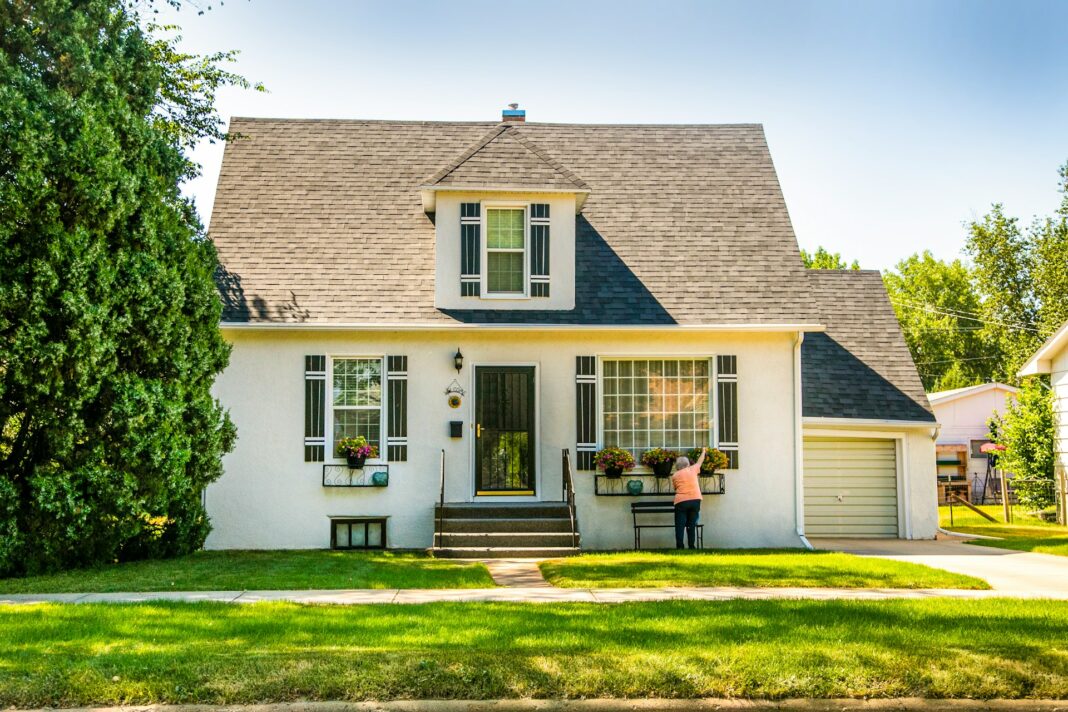
A home’s foundation is built to keep a structure stable for the long haul, but over time even sturdy buildings start to shift. Changes in soil conditions, shifting moisture levels, and ordinary settling all weaken the ground under a property. When the soil turns unstable, the foundation above it begins to move, and that shows up as cracks in walls, uneven floors, and doors that no longer close right.
These signs can look minor at first, but they tell you the home’s structure is under strain. Ignore them and the damage keeps advancing, which makes the eventual repair harder and more expensive. Knowing why foundations fail is the first step toward a fix that treats the cause rather than the symptoms.
What helical piers are
Helical piers, also called helical piles or screw piles, are deep foundation elements that carry structural loads from unstable surface soils down to firmer load-bearing ground below.
Each one has a central steel shaft fitted with one or more helix-shaped bearing plates. Installers rotate the pier into the ground, and the load moves through three mechanisms: skin friction along the shaft, bearing resistance at the helix plates, and tip resistance at the leading edge (Hyeong-Joo et al., 2024).
Next to conventional driven piles, installation is fairly quiet, free of vibration, and workable in tight construction spaces or even underwater (Shao et al., 2022).
The mechanics behind immediate load transfer
Concrete piers need extended curing time. Helical piers do not: they become fully load-bearing the moment the installation torque targets are met.
The helix plates work as bearing elements at depth, engaging undisturbed soil directly. That gives you an active mechanical connection between the structure and firm ground right away.
Research confirms that helical piles with strong helices create a large zone of influence beneath the bearing plates, which raises soil shear strength and boosts ultimate bearing capacity at the moment of installation (Xu et al., 2025, citing Ho).
How helical piers provide immediate stability
Helical piers are designed to stabilize and support foundations by anchoring them into deeper, steadier soil layers. Rather than a surface-level patch, this method works below the problem area and delivers support where it counts. The piers are steel shafts with helical plates, which lets them be screwed into the ground with precision.
Once in place, they tie the foundation to the stable soil below. That gives immediate load-bearing support and stops further movement. In many cases the structure can even be lifted back toward its original position, restoring both stability and alignment.
Installation torque as real-time quality assurance
One real advantage of helical piers is that you can verify each pier’s load capacity during installation, not weeks later through separate testing.
There is a well-established relationship between installation torque resistance and vertical pile capacity, confirmed by both field measurements and theoretical modeling (Shao et al., 2022). That torque-to-capacity correlation lets crews check quality continuously, one pier at a time.
Empirical work by Hoyt, Tsuha, and Aoki (cited in Hyeong-Joo et al., 2024) shows that torsional resistance during screw-pile penetration directly governs the pile’s load capacity. So installers get confirmation of structural adequacy in real time, without the delay of concrete curing or post-installation static load testing.
The benefits of a fast, non-invasive solution
One of the most appealing things about helical piers is how fast they go in. Traditional foundation repairs often call for heavy excavation and long waiting periods, but this method is far more efficient. Specialized equipment allows precise installation with minimal disruption to the surrounding area.
That means homeowners avoid major landscaping damage and drawn-out construction timelines. The process is clean and controlled, built to deliver results without needless hassle. Just as important, stabilizing the foundation right away helps head off further structural damage, which makes it a proactive fix rather than a reactive one.
Long-term strength and peace of mind
Picking the right foundation repair method is about more than the problem in front of you; it is about lasting stability. Helical piers are built to last and give a durable support system that resists future soil movement. By moving the structure’s weight to deeper, steadier ground, they cut the risk of the problem coming back. That reliability lets homeowners rest easy, knowing their investment is protected. Instead of worrying about ongoing foundation trouble, they can get on with enjoying a safe, secure home.
Foundation trouble does not have to decide your home’s future. With the right approach, even badly unstable structures can be brought back to strength. Helical piers offer a fast, effective, and durable solution that treats the source of the problem, so homeowners can be confident their property is secure from the ground up. If you are ready to turn a sinking foundation into a solid investment, visit Pinnacle Foundation Repair for expert guidance and proven results.
Verified bearing capacity in difficult ground
Helical piers work best in exactly the soils where immediate stability matters most: soft, compressible, or otherwise marginal ground.
A field case study that paired helical piles with the tabular roof construction method for underground tunneling showed that the piers gave reliable load-bearing capacity in very soft ground with minimal settlement, under tight space and time constraints (Hyeong-Joo et al., 2024). Static compression tests inside the installation confirmed the piers’ capacity through several interpretation methods.
Experimental research on high-strength steel screw anchors likewise shows that the construction technology is reliable and the bearing capacity holds up across tough environments, including bogs and coastal beaches (Shao et al., 2022). Embedment depth, helix diameter, and plate count all affect capacity, so the design can be tuned to a specific site.
Depth of embedment and capacity enhancement
Deeper helix embedment produces greater pier capacity, a relationship grounded in classical soil mechanics. Meyerhof’s bearing capacity factors for pile foundations exceed those for shallow strip and square footings, which reflects the better load transfer available at depth (Hyeong-Joo et al., 2024, citing Meyerhof, 1976).
This lets helical piers go to a depth matched to the structural demand, with torque monitoring confirming when firm strata are reached. In underpinning work, that means you can stop an active settlement event and restore load-bearing continuity in a single operation.
Application to structural underpinning
Helical piers are well suited to underpinning existing foundations hit by settlement or soil movement.
Research on compression load testing of composite foundations anchored by helical piers found that helical anchors beneath a spread footing carried between 60% and 80% of the total load applied to the composite foundation (Sheng et al., 2021). Compression resistance scales predictably with footing embedment depth and the number of helical anchors, so engineers can specify capacity with high confidence.
Comparative studies of underpinning strategies also confirm that transferring loads to underpinning piles through underpinning beams reduces settlement and controls ground deformation of existing structures (Li et al., 2020). Helical piers fit this model well, with the added benefit of fast installation and capacity checks during placement.
Field validation of immediate structural performance
The evidence supports helical piers as delivering genuine immediate stability, not just theoretical stability.
A pilot project with more than 400 helical anchor installations showed the torque-capacity correlation held up when paired with subsurface characterization from surface wave analysis (Chen, Ong, & Sapountzakis, 2012). Seismic load testing on grouped helical piles has further validated their performance under dynamic conditions (Su et al., 2023, citing Fayez et al.).
Harnish and El Naggar (cited in Su et al., 2023) confirmed through field load testing that installation torque strongly influences large-diameter helical pile capacity, which backs the central idea that verifying capacity through torque is both practical and accurate.
Conclusion
Helical piers give immediate structural stability through a mix of mechanical design and installation method.
The helix plates engage firm soil at depth from the moment of placement. The torque-capacity correlation supplies real-time quality assurance with no waiting period. What you get is a foundation solution that can arrest settlement, support new construction, or underpin a compromised structure, with bearing capacity verified during the installation itself.
References
- Chen, S. E., Ong, C. K., & Sapountzakis, E. J. (2012). Spectral analysis of surface wave for empirical elastic design of anchored foundations. Advances in Civil Engineering, 2012(1). https://doi.org/10.1155/2012/635257
- Hyeong-Joo, K., Tae-Gew, H., Sadiq, S., Rey Dinoy, P., Gi-Cheol, Y., & Naderpour, H. (2024). Evaluation of helical pile performance in TRcM for soft ground improvement: Insights from field test and application. Advances in Civil Engineering, 2024(1). https://doi.org/10.1155/2024/5556324
- Li, P., Lu, Y., Lai, J., Liu, H., Wang, K., & Garcea, G. (2020). A comparative study of protective schemes for shield tunneling adjacent to pile groups. Advances in Civil Engineering, 2020(1). https://doi.org/10.1155/2020/6964314
- Shao, G., Lyu, X., Wang, W., Ding, S., Li, J., Ding, M., Sheng, H., & Jia, P. (2022). Experimental study on bearing capacity of normal- and high-strength steel screw anchors. Advances in Civil Engineering, 2022(1). https://doi.org/10.1155/2022/2724318
- Sheng, M., Qian, Z., Lu, X., & Hong, H. (2021). Compression load tests on composite foundations of spread footing anchored by helical anchors. Advances in Civil Engineering, 2021(1). https://doi.org/10.1155/2021/5531380
- Su, Q., Xia, H., Wu, K., Yang, F., & Pascoletti, G. (2023). The effects of branch spacing and number on the uplift bearing capacity of a new squeezed multiple-branch pile: A numerical simulation analysis. Modelling and Simulation in Engineering, 2023(1). https://doi.org/10.1155/2023/3758253
- Xu, L., Zhang, P., Qi, C., Niu, L., & Qian, Y. (2025). Study on the influence of thread length on vertical bearing characteristics of threaded piles. The Structural Design of Tall and Special Buildings, 34(12). https://doi.org/10.1002/tal.70066
