Basement waterproofing costs in Michigan vary a lot depending on the scope of work, the size of the basement, the method you choose, and the specific conditions of your property.
According to Mansour’s Innovations, costs in the Southeast Michigan market usually run from $3,000 to $15,000. That range covers everything from targeted crack injection at the low end to full exterior waterproofing with excavation at the high end, with most interior drainage system installations landing somewhere in the middle.
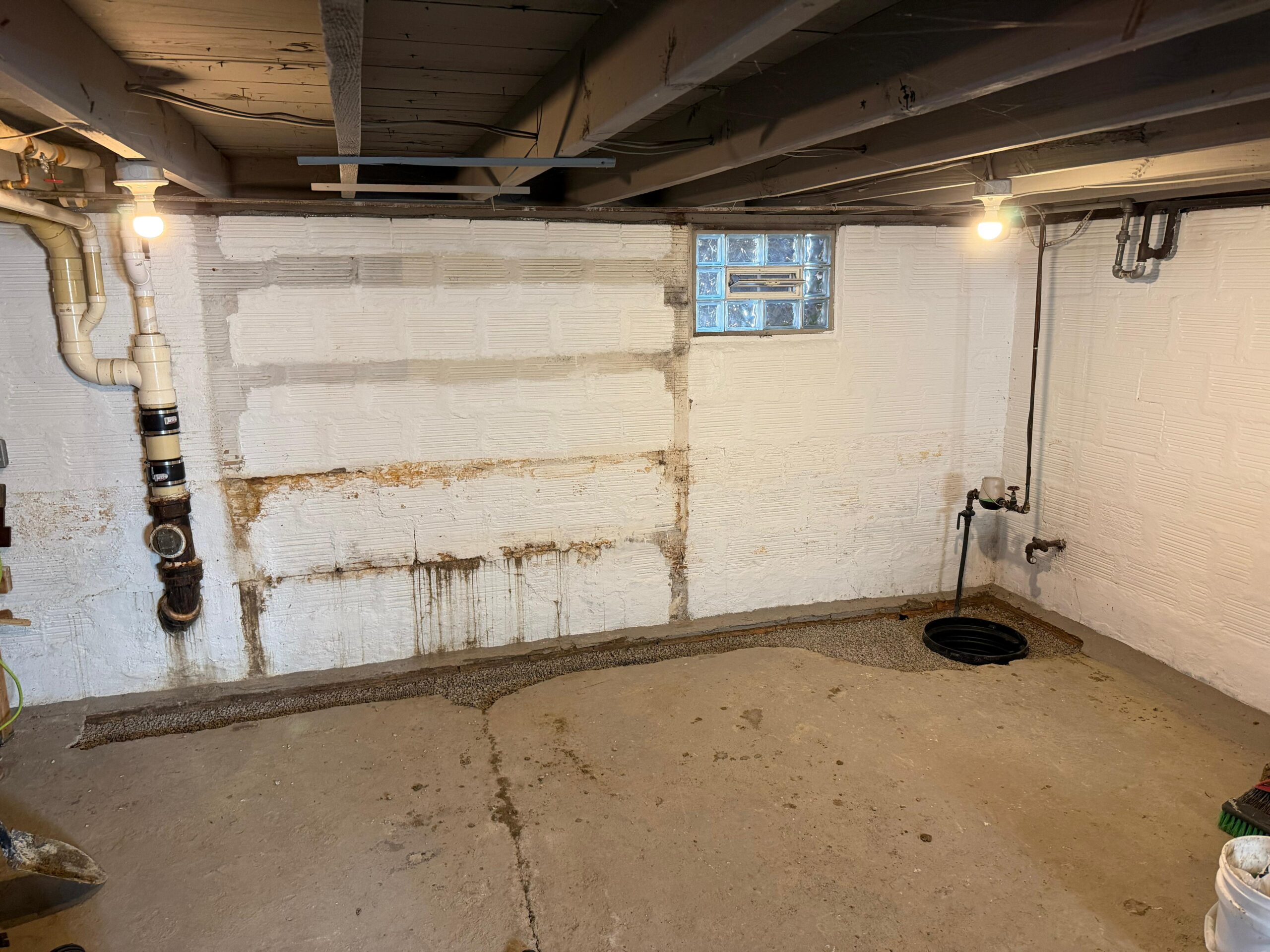
A few things drive the price of a waterproofing project. The size of the basement sets the linear footage of the French drain channel and the amount of excavation needed. How bad the water problem is decides whether a targeted repair will do or whether you need a full perimeter drainage system.
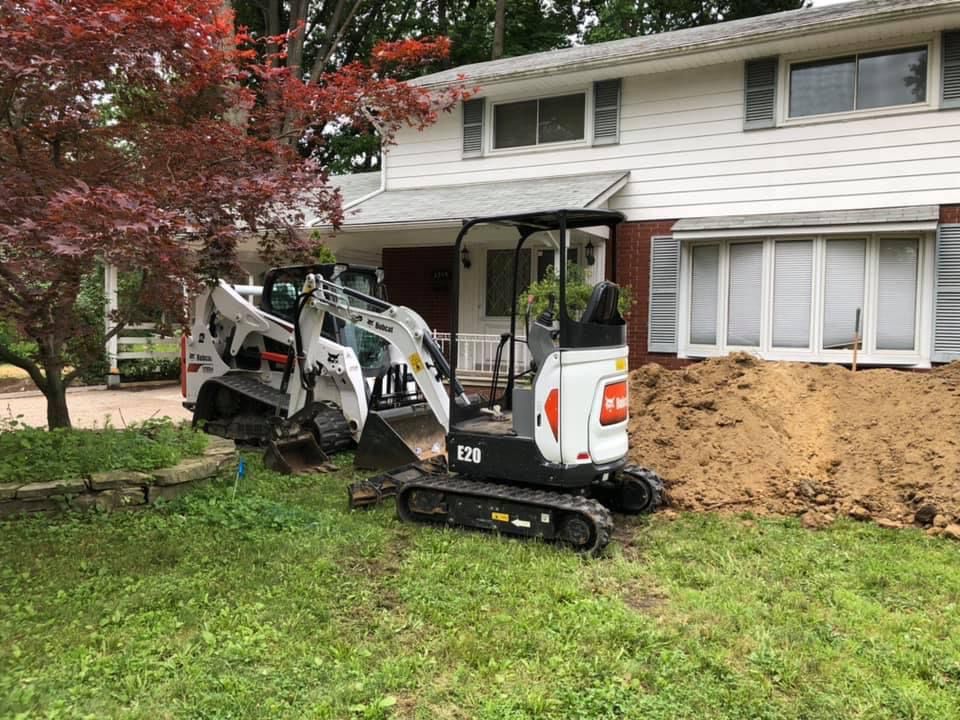
The method you choose, interior versus exterior, has the biggest effect on cost, because exterior work involves excavation, membrane materials, drainage tile, and site restoration that interior work skips. The condition of the foundation, including how many cracks there are and how severe, adds complexity and cost. Site conditions such as property line proximity, landscaping, utilities, and equipment access affect how the project runs and how long it takes.
Cost drivers and market benchmarking
The cost of residential waterproofing comes down to labor intensity, material specifications, and how complex the project is. Data compiled by HomeAdvisor and Angi (formerly Angie’s List) puts the national average cost for basement waterproofing between $2,200 and $10,600, with a median project cost of about $5,800 as of 2024.
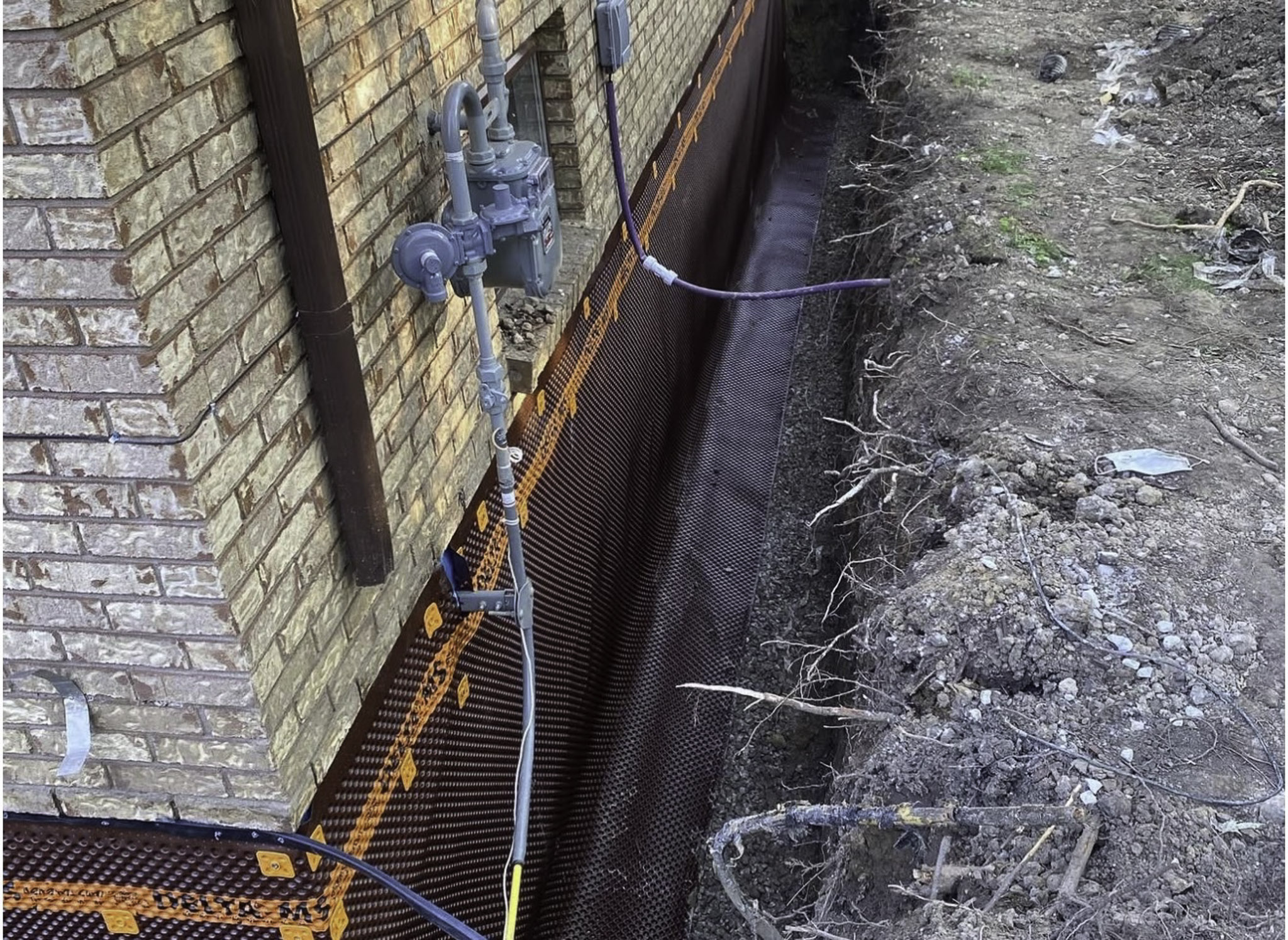
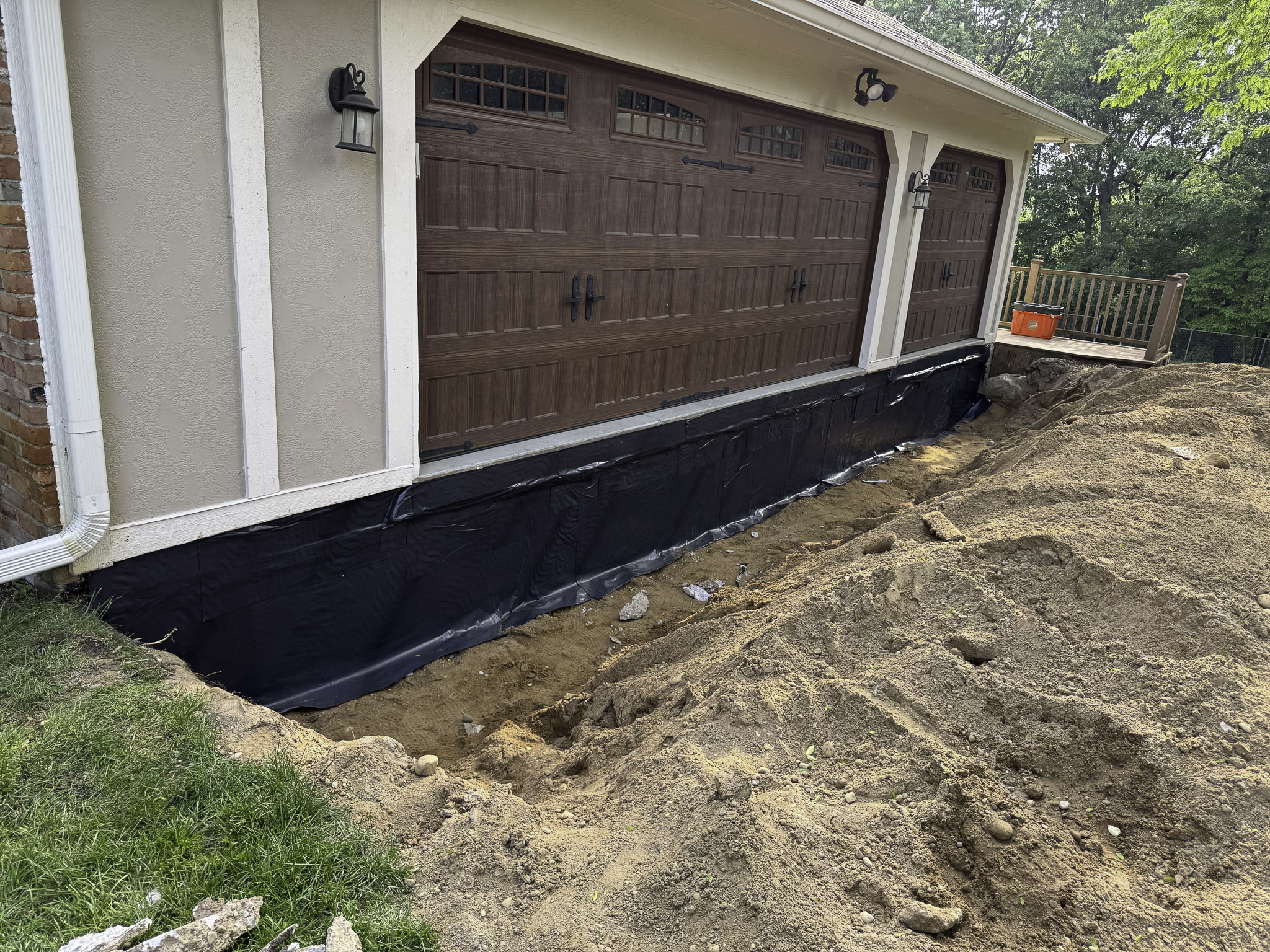
Michigan costs tend to land within or a bit above these national ranges, partly because clay soils are common here and call for more intensive drainage solutions, and partly because spring snowmelt flooding creates seasonal urgency. Exterior waterproofing with excavation, which needs heavy equipment, membrane materials, drainage tile, backfill, and surface restoration, consistently costs two to three times more than interior-only solutions because the scope of work is so much larger.
Flat-rate versus hourly pricing
Research on contractor pricing generally favors flat-rate (fixed-price) contracts for homeowners when the scope of work is well defined, because these contracts move the cost risk from the buyer to the contractor. In agency theory terms, flat-rate pricing lines up the incentives: the contractor’s profit margin grows with better efficiency, which encourages proper tools, experienced crews, and careful planning. Hourly pricing does the opposite, since a longer project means more revenue for the contractor, sometimes at the homeowner’s expense (Bajari and Tadelis, 2001).
Mansour’s uses flat-rate pricing, so the homeowner gets a written estimate with the total cost before work starts. That removes the guesswork of hourly billing, where the final bill depends on how long the job takes and whether surprises stretch it out. With flat-rate pricing, the contractor earns the same amount no matter how long the project runs, so there’s a reason to finish efficiently.
Free estimates are available after an initial inspection, so homeowners can learn the cost of their specific project without committing any money. The inspection is a diagnostic step that evaluates the foundation, drainage conditions, water entry patterns, and the right repair approach, and it gives the homeowner useful information whether or not they decide to go ahead.
Financing and return on investment
Financing through Enhancify makes a real difference in managing waterproofing costs. Waterproofing work is often an unplanned expense set off by water damage, a home inspection finding during a sale, or a failed sump pump. For homeowners juggling several home maintenance priorities, installment financing puts the work within reach without a lump-sum payment.
“When a homeowner asks about basement waterproofing cost in Michigan, I explain it straight: the biggest factors moving the price are linear footage of drain needed, the severity and type of damage, and whether we work inside or outside. Interior work is typically more affordable since we don’t excavate your yard. Foundation type, access issues, and extras like pump upgrades also factor in.”
Net present value of a waterproofing investment
A careful financial look at basement waterproofing uses net present value (NPV) analysis on the stream of costs you avoid over the life of the system. With a 5% discount rate, a system cost of $7,500, and estimated annual avoided costs of $500 to $1,200 (from lower insurance premiums, energy savings, avoided damage repair, and avoided health costs), the NPV turns positive within 8 to 12 years and reaches $5,000 to $15,000 over a 25-year horizon.
Add in the effect on property value, which means avoiding the 10% to 20% offer reduction tied to documented water problems, and the NPV goes positive almost right away for homes valued above $200,000.
Every basement is unique because of the soil, water table, and freeze-thaw conditions. That’s why we offer a free on-site inspection, we assess the actual problem with proper diagnostic tools so we neither over- nor under-treat it.”
The return on basement waterproofing shows up in several ways. The immediate return is a dry, usable basement free from water damage, mold risk, and the musty odor that comes with chronic dampness. The property value return means protecting the home’s appraised value and dodging the price cuts buyers push for against documented or suspected water issues.
The insurance return can include lower premiums where carriers recognize documented waterproofing and backflow prevention. The avoided-cost return covers the damage repair, mold remediation, personal property replacement, and emergency service bills that waterproofing keeps you from paying.
Cost comparisons and value assessment
Comparing waterproofing costs between contractors means figuring out what each quote does and does not include. A lower quote that leaves out site restoration, backup pump systems, vapor barriers, or warranty coverage isn’t really comparable to a higher quote that includes all of those. Mansour’s flat-rate pricing covers the full scope of work, materials, installation, testing, site restoration, and warranty documentation, so the quoted price is the project’s total cost.
The cost of not waterproofing belongs in the value assessment too. Repairing water damage after a single flood can easily match or beat the cost of the waterproofing that would have prevented it. Mold remediation in a finished basement can run into the thousands. And the running cost of small, recurring water events, including damaged belongings, high humidity, and slow structural decay, can add up to more than a complete waterproofing system over the years.
Total cost of ownership and the cost of doing nothing
Total cost of ownership (TCO), borrowed from enterprise procurement analysis, gives a fuller picture of waterproofing costs than comparing sticker prices alone. The TCO of a wet basement includes direct damage costs (per-event repair averaging $5,000 to $15,000), indirect costs (mold remediation at $1,500 to $10,000, and $200 to $600 a year in higher energy costs from added humidity), health costs (medical bills for moisture-related respiratory symptoms), opportunity costs (lost living space), and transaction costs (reduced property value and longer time on the market during a sale).
Add these up over a 10- to 25-year ownership period, and the TCO of doing nothing routinely tops $30,000, well above the cost of complete waterproofing.
Property value is another side of the cost-benefit picture. Homes with documented water issues sell for less than comparable homes without them, and the discount buyers apply tends to be larger than the cost of the waterproofing work that would fix the problem.
Mansour’s pricing reflects professional-grade materials, experienced installation, full warranty coverage, and the long-term reliability of a company with two decades of performance history in the local market.
Economic analysis of residential waterproofing investment
Looking at basement waterproofing as a home improvement investment fits the same cost-benefit framework used in infrastructure risk management. The main variables are the odds of a loss event (basement flooding), the size of the loss if it happens, and the cost of prevention.
The Insurance Information Institute (III) reports that water damage and freezing are among the most common homeowner insurance claims in the United States, with an average claim cost that has climbed a lot over the past decade.
According to III data for 2020, the average water damage and freezing claim was about $11,650, a figure that counts only insured losses and leaves out deductibles, uninsured damage, personal property that standard policies don’t cover, and the indirect costs of displacement, health effects, and time spent managing the claim. In Michigan, where basement-related water events happen more often than in most states because of the soil and climate, the cumulative risk is higher to match.
A 2019 report by the National Association of Realtors (NAR) found water damage and mold to be the second most common issue flagged during home inspections, after electrical problems. Homes with active or past water problems regularly get lower offers and sit on the market longer than similar homes without those issues. Exact discounting varies by market, but real estate professionals in the Great Lakes region have reported that documented basement water problems can cut offers by 10% to 20% of listing price, a big number in Michigan’s housing market.
Lifecycle cost analysis, standard in commercial construction but rarely used in residential decisions, gives a solid framework for weighing a waterproofing investment.
Lifecycle cost analysis compares the total cost of ownership over a set period, including the initial investment, maintenance, energy costs, and expected repairs or replacements. Applied to basement waterproofing, it usually shows that preventive waterproofing produces a positive net present value over a 10- to 25-year horizon, even with conservative assumptions about flood probability and damage size.
Building science research backs the link between moisture management and overall home operating costs. The Building America program at the U.S. Department of Energy has documented that moisture problems in basements and crawl spaces raise indoor humidity, push up HVAC energy use, and speed the breakdown of building materials.
Energy modeling by the National Renewable Energy Laboratory (NREL) shows that below-grade moisture intrusion can raise total annual heating and cooling energy use by 10% to 15% in cold-climate homes with partially conditioned basements, which matters directly for Michigan’s housing stock.
References
- Insurance Information Institute. (2021). Facts + statistics: Homeowners and renters insurance. https://www.iii.org/fact-statistic/facts-statistics-homeowners-and-renters-insurance
- National Association of Realtors. (2019). 2019 Profile of home buyers and sellers. NAR Research Group. https://www.nar.realtor/research-and-statistics
- U.S. Department of Energy. (2013). Building America research-to-market plan. Building Technologies Office. https://www.energy.gov/eere/buildings/building-america
- Basement Waterproofing Cost Southeast Michigan – 2026 Price list – https://www.mansoursinnovations.com/how-much-does-basement-waterproofing-cost-in-southeast-michigan-2026-guide/
- Bajari, P., & Tadelis, S. (2001). Incentives versus transaction costs: A theory of procurement contracts. RAND Journal of Economics, 32(3), 387-407. https://doi.org/10.2307/2696361
