A sound roof is what keeps weather out of your home, and most of the problems that threaten it build slowly, often with no obvious warning. Knowing what to watch for lets you catch trouble early and avoid the bigger bills that come from waiting. If you want a professional set of eyes on your roof, Ocean City, MD Trusted Roofers can provide guidance and service.
Every climate puts its own stress on a roofing system. Seasonal storms, swings in temperature, and simple age all wear materials down in ways you should not ignore. Fix small problems while they are still small, and the roof keeps doing its job while holding the value of your property.
Because those stresses accumulate year after year, a typical roof lifespan is a range rather than a fixed date, and the climate you live in helps decide where yours falls.
Roofing concerns run from the obvious, like missing shingles, to the quiet, like poor attic ventilation. Once you can recognize the symptoms and causes of each, you can act before water damage, mold, or a full overhaul become the outcome. A reliable roofer handles the inspections and upkeep that stop minor issues from turning into major headaches.
The sections below cover the problems homeowners run into most, along with what causes them and how to respond. Whether you are chasing a leak or budgeting for a replacement, understanding the warning signs is your best defense.
Roof leaks
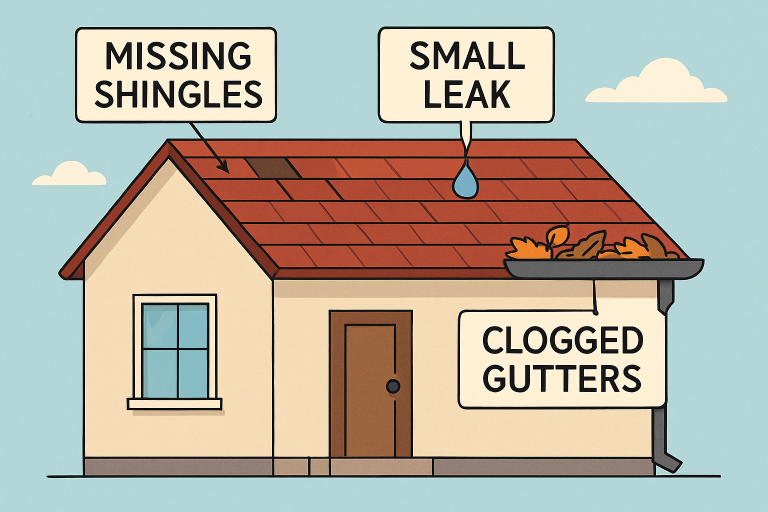
Leaks are among the most common and disruptive problems a homeowner faces, and they often stay hidden until stains show up on a ceiling or wall. Water finds its way in through damaged or missing shingles, worn flashing, or the openings around vents and chimneys. Left alone, a leak invites mold, rots structural wood, and can even create electrical hazards.
Any sign of water inside the house deserves a look, because leaks can appear fast after heavy rain or snow. According to Fixr, careful inspection and prompt repair are the most effective ways to control leaks and limit the damage inside.
Damaged or missing shingles
Shingles are the first defense against rain, snow, and sun. Over the years they crack, curl, or get torn off by wind, which leaves the underlayment and wood decking exposed. Even one missing shingle can let water seep in, and that seepage leads to a rotting roof deck or mold. Inspect the roof regularly, and again after any storm, so damaged or missing shingles get replaced before the problem spreads. Watch for granule loss too, since bare shingles shed water poorly and hold up worse against UV exposure.
Poor roof installation
A roof is only as good as the work that put it up. Installation mistakes cause chronic leaks, cold drafts, and early aging. Common errors include improper nailing, poorly aligned shingles, and flashing that was never fitted correctly. Any of these can weaken the roof and force expensive repairs long before it should have worn out.
Always choose qualified, reputable contractors and ask about warranties to protect your investment. Reading customer reviews and checking references is a simple way to avoid a bad install in the first place. This is also where a curated business directory or a review platform earns its keep: hiring a roofer is a decision most people make once a decade, with no personal experience to fall back on, so the record other customers leave behind does much of the vetting for you. Robert Cialdini’s principle of social proof, described in the expanded edition of Influence: The Psychology of Persuasion (2021), explains why that works. People judge what is correct partly by finding out what others have concluded, which is exactly the mechanism behind reviews and ratings.
Clogged gutters
Gutters carry rainwater off the roof and away from the foundation. When they fill with leaves, debris, or granules washed off aging shingles, water backs up and pools at the roof edge. That backup raises the odds of leaks, wood rot, and ice dams in colder regions. Clean the gutters at least twice a year, particularly after autumn and again in spring, to head off water damage. Neglected gutters can also erode landscaping and send water into the basement.
Flashing failures
Flashing is the thin metal that seals the joints around chimneys, skylights, and vent pipes. When it is installed wrong, corrodes, or gets battered by wind and water, moisture works through the seams and gaps. From there it reaches your walls and framing. Regular inspections, especially after severe weather, catch flashing trouble before it spreads. For more on roof flashing and how to spot problems, refer to American Home Shield.
Water that gets past the flashing also shows up inside the chimney, where the moisture meters used in a modern chimney inspection can catch it before it spreads.
Improper ventilation
Attic ventilation controls temperature and moisture, which keeps the roof from breaking down early. An attic that cannot breathe traps heat and humidity, and that combination warps decking, ages shingles faster, and encourages mold.
Telltale signs include damp or moldy attic insulation, ice dams in winter, and energy bills that keep climbing. Adding soffit or ridge vents restores airflow, extends the roof’s life, and makes the indoor air healthier.
Storm and wind damage
Storms deliver strong winds, hail, and flying debris, all of which punish roofing materials. High winds lift or break shingles, and hailstones bruise or puncture the surface. Some of this damage is invisible from the ground and stays unnoticed until a leak or draft turns up.
Booking an inspection after a major storm surfaces hidden problems and gives you documentation for an insurance claim if repairs are needed. Small impacts grow when ignored, so a prompt look after any extreme weather is worth the effort.
Aging roof
Most roofs last about 20 to 30 years, depending on the materials, the climate, and how well they were maintained. As a roof ages it loses flexibility and its ability to shed water. The usual signs are curled, cracked, or brittle shingles, sagging spots, or leaks that keep coming back.
Telling ordinary wear from a roof that is genuinely finished takes a closer look, and the signs a roof needs replacing usually appear well before the first serious leak.
When a roof nears the end of its service life, plan the replacement rather than wait for an emergency. Getting ahead of it protects the house and lets you budget for the work instead of scrambling to pay for it.
One practical note on choosing who does that work. When you compare estimates, weigh the roofer’s track record and references as heavily as the price. A firm that is easy to find, well reviewed, and willing to stand behind its work will usually save you money over the life of the roof, even if the first quote is not the lowest. Stay alert to the issues above, keep to a routine inspection schedule, fix small things quickly, and your roof should hold up for years.
