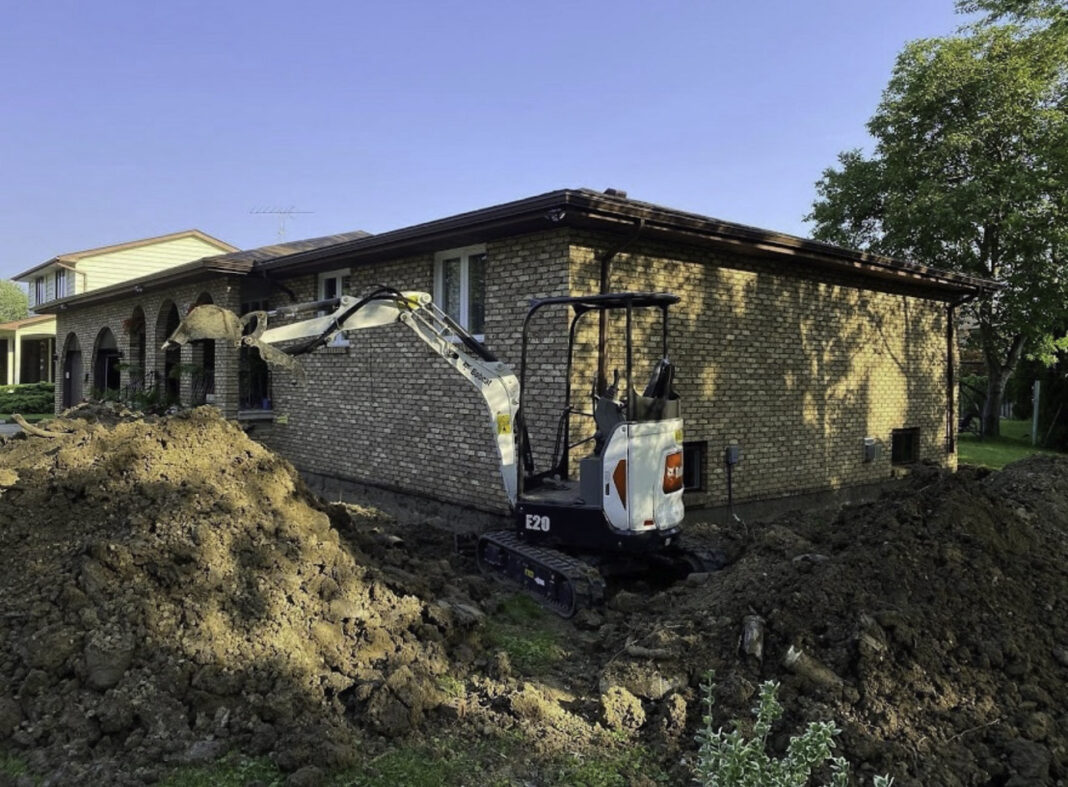
A leaking basement in Michigan shows up in several ways. Water can flow actively through foundation cracks during or after rainfall. It can seep along the floor-wall joint, where hydrostatic pressure pushes water through the construction joint. Foundation walls can show dampness and efflorescence, a sign of ongoing moisture moving through the concrete. Water can pool near floor drains during heavy rain, which points to sewer backflow. And during humid summer months, condensation on cold surfaces can look like a leak even when no outside water is getting in.
Mansour’s Innovations sorts out which of these is happening during its assessment, because each one calls for a different fix. Active crack leaking is handled with polyurethane or epoxy injection. Cove joint seepage is managed with interior perimeter drainage using a French drain system. Wall moisture from hydrostatic pressure may call for exterior waterproofing or interior vapor barriers. Sewer backflow needs a backwater valve. Condensation is a humidity problem, not a waterproofing one.
Hydrostatic pressure and water entry mechanisms
Basement water intrusion comes down to fluid mechanics. Hydrostatic pressure at any depth below the water table follows P = ?gh, where ? is the density of water (998 kg/m3), g is gravitational acceleration (9.81 m/s2), and h is the depth below the water table surface. For a typical eight-foot foundation wall with a water table at grade level, the pressure at the footing reaches roughly 2,400 Pa (50 lb/ft2). That is enough to force water through any discontinuity in the concrete envelope, including construction joints, shrinkage cracks, and tie-rod penetrations.
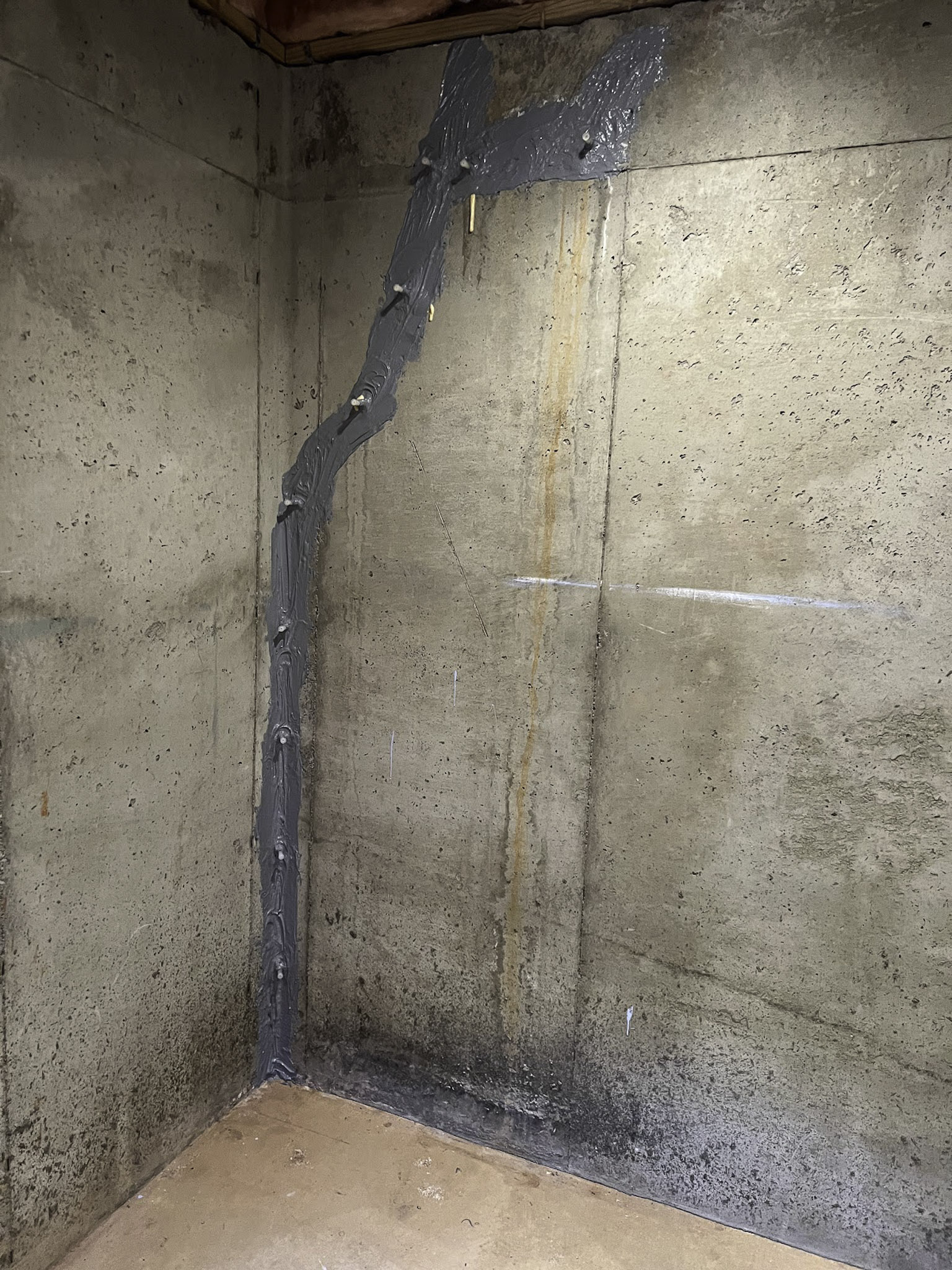
Research from the Portland Cement Association (PCA) found that the water permeability of sound, uncracked concrete with a water-to-cement ratio of 0.50 or below is negligibly low for practical purposes (Kosmatka et al., 2011). But cracks, even ones as narrow as 0.05 mm, raise the effective permeability by several orders of magnitude, because flow through a crack follows a cubic relationship with crack width, as described by the Poiseuille flow equation. That is why crack injection is the most effective way to stop active leaks through poured concrete walls.
Diagnostic technologies: infrared thermography and endoscopic inspection
Infrared thermography for building diagnostics was standardized through ASTM C1060, Standard Practice for Thermographic Inspection of Insulation Installations in Envelope Cavities of Frame Buildings. It was first developed for insulation audits, but its ability to detect temperature differences from evaporative cooling at wet surfaces makes it very effective for moisture mapping. A surface wet with evaporating water reads 2 to 5 degrees C cooler than the surrounding dry surfaces in a thermographic image, which gives a non-destructive way to locate hidden moisture pathways (Barreira and de Freitas, 2007).
Endoscopic camera inspection of drain lines follows the protocols in NASSCO’s (National Association of Sewer Service Companies) Pipeline Assessment and Certification Program (PACP). This standardized approach to sewer and drain condition assessment uses a structured coding system to classify defects, including root intrusion, joint offsets, cracks, and deposits. It produces objective documentation that helps with both diagnostic accuracy and insurance claim substantiation.
These diagnostic tools support accurate identification. Infrared thermography reveals moisture patterns behind finished walls that a standard visual inspection misses. Camera inspection identifies problems in the drain line that may be contributing to basement water. Together they prevent the common scenario where a homeowner pays for waterproofing only to find that the real problem was a different water pathway the repair never touched.
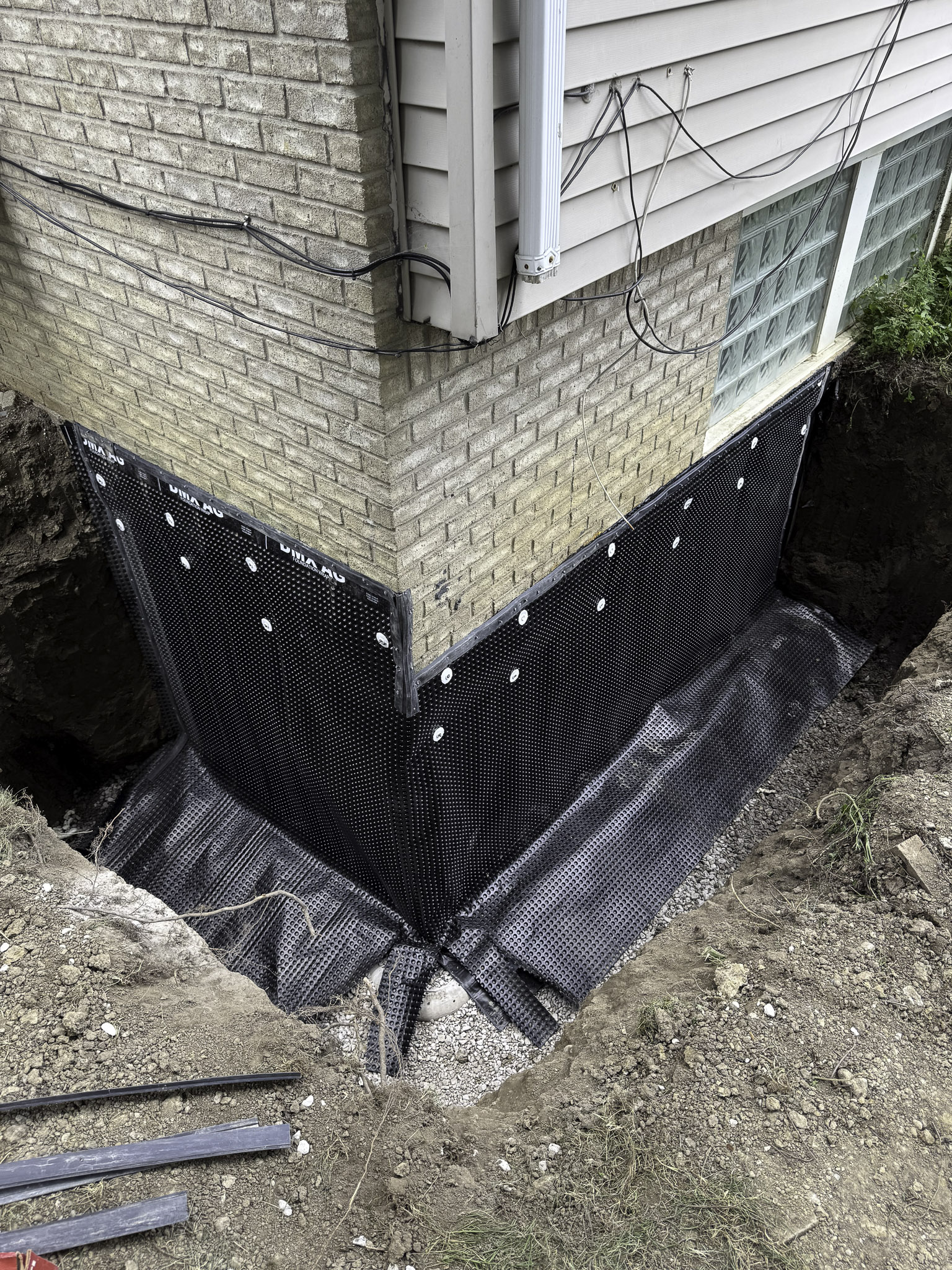
The repair options through Mansour’s cover the full range of leaking basement scenarios. For persistent groundwater seepage, interior drainage systems with sump pumps redirect water before it accumulates. Foundation crack injection seals specific water pathways through the wall. Exterior waterproofing with membrane application provides comprehensive protection against severe or persistent leaks. A backwater valve prevents the sewer-related flooding that wall treatments alone cannot stop. Exterior drainage work handles surface water and downspout discharge that saturate the foundation.
Because of this range, the company can match the repair to the actual condition instead of applying a standard fix. A homeowner whose basement leaks only during heavy storms may need a different solution than one whose basement is damp year-round. A basement that floods through the floor drain during combined sewer overflow events has a different problem than one that floods through wall cracks. Being able to diagnose accurately and respond with the right repair is a real advantage over contractors who offer only one or two waterproofing methods.
Long-term leak prevention
“Diagnosing exactly where a basement leak originates can mean the difference between a targeted fix and unnecessary demolition. Our diagnostic specialists explain their approach:
Infrared cameras and HD sewer cameras let us pinpoint exactly where water is entering without ripping up floors or digging blindly.
Grading and surface water management
The International Residential Code (IRC Section R401.3) sets minimum grading requirements: finished grade must slope away from foundation walls by at least 6 inches within the first 10 feet. Research by the Canada Mortgage and Housing Corporation (CMHC) showed that proper grading alone can cut below-grade water loading by 40 to 60% in clay soils, one of the most cost-effective steps available (CMHC, 2004). Even so, field surveys consistently find that 30 to 40% of homes with basement water problems have inadequate grading, often because backfill around the foundation settles over time.
Sump pump reliability and backup systems
The reliability of residential sump pump systems has been studied through insurance claims data. State Farm Insurance reported that sump pump failure and water backup claims averaged $10,900 per occurrence nationally as of 2020, one of the costliest categories of preventable residential water damage. The most common failure mode, power loss during severe storms, is a design weakness: the moment the system is most needed is also the moment it is most likely to fail, what reliability engineers call a common-cause failure. Battery backup and water-powered backup systems address this by providing independent, redundant pumping that does not share the power supply the primary pump depends on.
“The infrared camera finds hidden moisture by identifying cooler zones on walls or floors where water is evaporating or seeping in. We scan the entire basement and catch leaks behind finished walls without making a mess.
HD sewer cameras travel through floor drains, drain tiles, and sewer lines under the foundation, capturing video that reveals cracks, blockages, root intrusion, or failed drainage. We see what’s wrong without excavating.
Together these tools give us a fast, accurate diagnosis so we can focus on the exact problem, like fixing a specific crack or clearing a section of drain, instead of a big, messy overhaul. On the first visit we bring the right equipment so we can diagnose and often begin work the same day.”
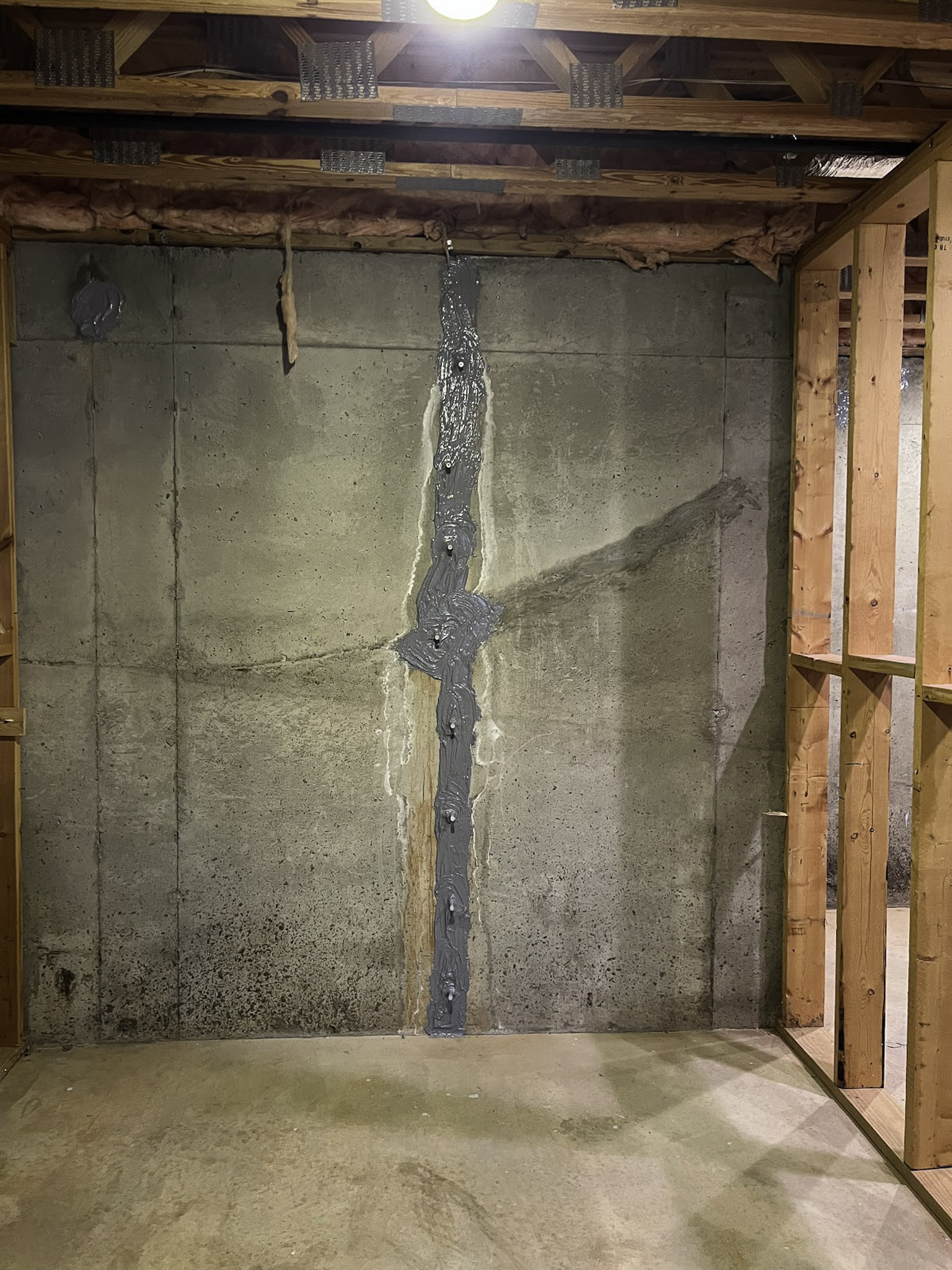
Stopping the current leak is only half the job. Preventing a repeat means addressing what caused the leak in the first place. Mansour’s post-repair recommendations often include grading corrections to redirect surface water away from the foundation, downspout extensions to carry roof runoff farther from the house, exterior drainage to manage subsurface water, sump pump upgrades with battery backup for reliable water removal, and regular maintenance schedules for the installed systems.
The company’s warranty is documented assurance that the repair work is expected to hold up over a meaningful period. That coverage matters for leaking basement repairs because the true test of any repair comes during the next severe weather event, which may be months or years after the work is done.
Handling both emergency response and permanent repair under one company creates an efficient path from crisis to resolution. A homeowner who calls Mansour’s during an active basement leak gets immediate help with water extraction and damage mitigation, then a professional assessment of the cause and a recommendation for a permanent fix.
Insurance, documentation, and homeowner protection
Water damage from leaking basements meets homeowner’s insurance in ways many homeowners do not fully grasp until they need to file a claim. Whether damage counts as sudden and accidental, gradual seepage, or external flooding decides whether a claim is covered, partially covered, or denied under most standard policies. Mansour’s Innovations documents its diagnostic findings and repair work in a way that supports insurance claims by clearly establishing the nature and cause of the water damage.
The company’s flood restoration service includes full documentation of the damage condition, the water source and entry pathway, the extraction and drying process, and the sanitization measures taken. This is the evidence insurance adjusters need to evaluate a claim accurately. Without professional documentation, homeowners can find their claims contested or delayed because the insurer cannot verify the cause and extent of the damage.
How insurance treats basement water damage
Standard homeowner’s insurance policies (HO-3 form) typically cover sudden and accidental water damage, such as a burst pipe, but exclude damage from gradual seepage, groundwater intrusion, and sewer backup unless specific endorsements are purchased. The Insurance Information Institute (III) reports that water damage claims make up about 29% of all homeowner insurance claims by frequency, and sewer backup and sump pump overflow are a growing share of total losses (III, 2021). In Michigan, where basement water events happen more often than the national average because of geological conditions, the availability and cost of water backup endorsements vary a lot among carriers.
Documentation standards and evidentiary requirements
The Institute of Inspection, Cleaning and Restoration Certification (IICRC) publishes the S500 Standard for Professional Water Damage Restoration, which sets the protocols for documenting water damage events, including moisture mapping, psychrometric data collection, and material-specific drying verification. Following IICRC S500 documentation standards strengthens insurance claims by providing the objective, standardized evidence adjusters need to evaluate the scope and cause of damage (IICRC, 2021).
Installing a backwater valve is a preventive measure that some insurance carriers recognize with premium reductions. The valve prevents sewer backflow, one of the most destructive and health-hazardous forms of basement flooding. Mansour’s provides documentation of backwater valve installation that homeowners can submit to their carriers for a possible premium adjustment.
Michigan homeowners searching for dependable leaking basement repair find that Mansour’s Innovations pairs diagnostic precision with a full range of repair work, handling everything from hairline crack seepage to full-scale flood restoration under a single engagement.
The science of water intrusion in residential foundations
Understanding why basements leak means looking at how moisture moves through concrete and the hydrogeological forces behind it. Hydrostatic pressure, the force groundwater exerts against below-grade surfaces, rises linearly with depth, following P = ?gh, where P is pressure, ? is fluid density, g is gravitational acceleration, and h is depth below the water table. For a typical Michigan basement with walls eight feet below grade, the pressure at the footing can reach several hundred pounds per square foot when soils are saturated, which happens routinely during spring snowmelt and after sustained rainfall.
The permeability of the surrounding soil largely determines how long and how hard the hydrostatic loading lasts. Research at Purdue University showed that concrete reaches a critical degree of saturation at roughly 86 to 88%, past which freeze-thaw damage becomes inevitable regardless of air entrainment (Li et al., 2012). In Michigan’s glacial clay soils, water drains slowly, often with hydraulic conductivity below 10?7 cm/s, so hydrostatic pressure can persist for days or weeks after rain. That sustained loading drives water through any available pathway: construction joints, shrinkage cracks, tie-rod penetrations, and even the capillary pore network of the concrete itself.
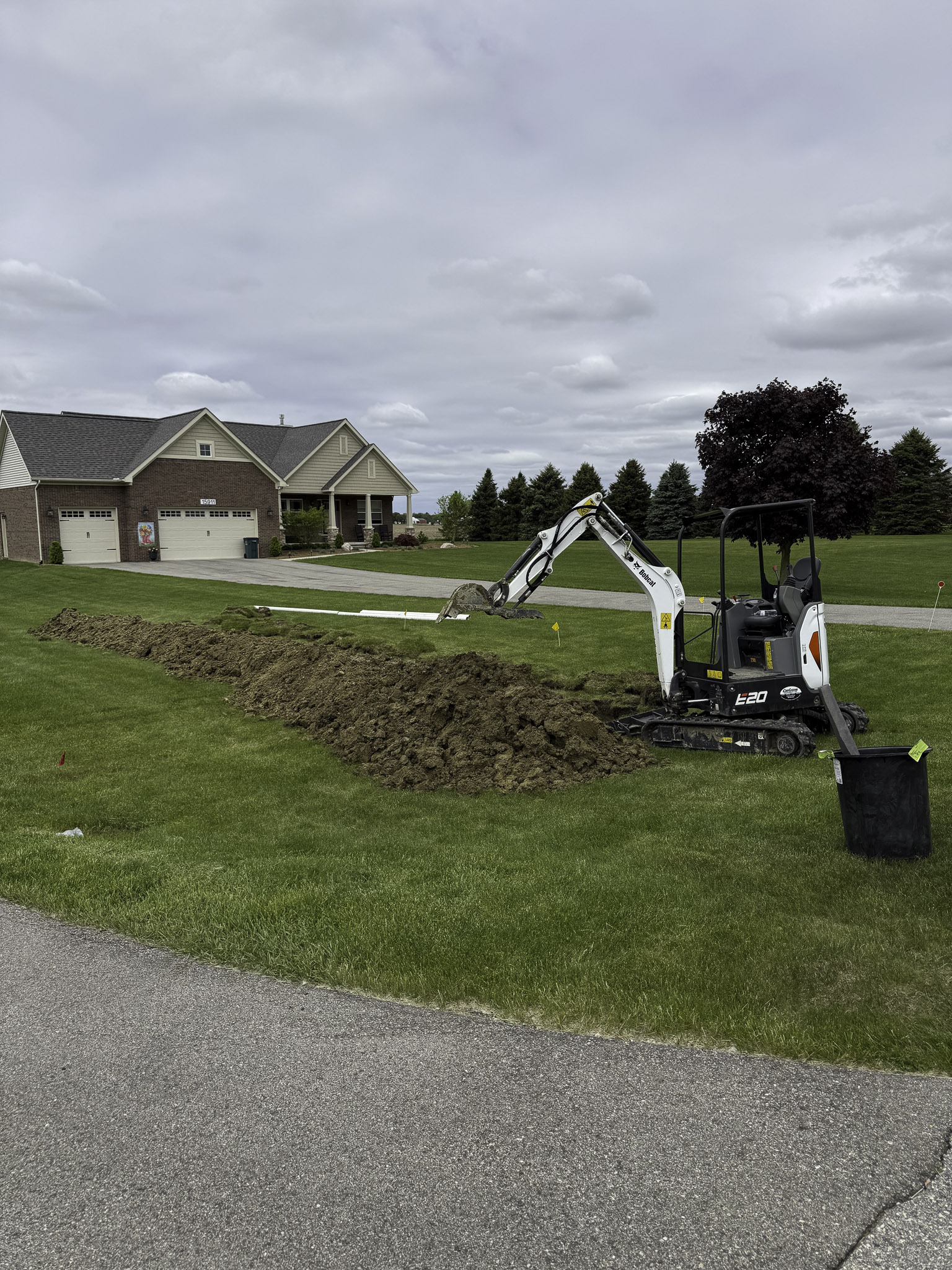
The World Health Organization’s 2009 guidelines on indoor air quality established that building dampness and the microbial growth that follows are directly linked to more respiratory symptoms, allergies, and asthma (WHO, 2009). An epidemiological review by Mendell et al. (2011), published in Environmental Health Perspectives, confirmed this, reporting consistent links between visible indoor dampness or mold and respiratory outcomes including asthma development, wheeze, cough, and respiratory infections. The economic toll is real: Mudarri and Fisk (2007) estimated that dampness- and mold-related illness costs the United States about $3.5 billion a year.
These findings make clear that leaking basements are not just structural nuisances but genuine public health concerns. The Institute of Medicine’s 2004 report, Damp Indoor Spaces and Health, came to a similar conclusion, noting sufficient evidence of an association between damp environments and upper respiratory symptoms, cough, wheeze, and asthma symptoms in sensitized individuals (IOM, 2004). For Michigan homeowners, where freeze-thaw cycling speeds up the deterioration of concrete and mortar, the move from minor seepage to health-affecting moisture can happen fast.
From an engineering standpoint, the American Concrete Institute’s Committee 224 report on cracking in concrete structures identifies several ways residential foundations develop water-transmitting cracks. These include plastic shrinkage during initial curing, drying shrinkage over time, thermal contraction, and stress from applied loads such as lateral earth pressure from expansive clay soils (ACI 224R-01). Michigan’s freeze-thaw environment accelerates crack propagation through a hydraulic pressure mechanism: water enters cracks, freezes, and expands by about 9% in volume, generating internal pressures that can exceed the tensile strength of concrete, widening existing cracks and creating new ones with each seasonal cycle.
The Federal Emergency Management Agency (FEMA) reports that 98% of basements in the United States will experience some form of water damage during their lifespan, and water damage claims are one of the most frequent and costly categories of homeowner insurance loss. About 25% of sump pump failures come from power outages, which tend to occur during the same severe storms that produce the heaviest groundwater loading. That overlap is what makes backup pumping systems essential rather than optional.
References
American Concrete Institute. (2001). Control of cracking in concrete structures (ACI 224R-01). ACI Committee 224. https://www.concrete.org/store/productdetail.aspx?ItemID=22401
Institute of Medicine. (2004). Damp indoor spaces and health. National Academies Press. https://doi.org/10.17226/11011
Li, W., Pour-Ghaz, M., Castro, J., & Weiss, J. (2012). Water absorption and critical degree of saturation relating to freeze-thaw damage in concrete pavement joints. Journal of Materials in Civil Engineering, 24(3), 299-307. https://doi.org/10.1061/(ASCE)MT.1943-5533.0000383
Mendell, M. J., Mirer, A. G., Cheung, K., Tong, M., & Douwes, J. (2011). Respiratory and allergic health effects of dampness, mold, and dampness-related agents: A review of the epidemiologic evidence. Environmental Health Perspectives, 119(6), 748-756. https://doi.org/10.1289/ehp.1002410
Mansour’s Innovations – https://www.mansoursinnovations.com/
Mudarri, D., & Fisk, W. J. (2007). Public health and economic impact of dampness and mold. Indoor Air, 17(3), 226-235. https://doi.org/10.1111/j.1600-0668.2007.00474.x
World Health Organization. (2009). WHO guidelines for indoor air quality: Dampness and mould. WHO Regional Office for Europe. https://www.who.int/publications/i/item/9789289041683
Barreira, E., & de Freitas, V. P. (2007). Evaluation of building materials using infrared thermography. Construction and Building Materials, 21(1), 218-224. https://doi.org/10.1016/j.conbuildmat.2005.06.049
CMHC. (2004). Best practice guide for residential construction in wet climates. Canada Mortgage and Housing Corporation.
IICRC. (2021). IICRC S500 Standard for professional water damage restoration (5th ed.). Institute of Inspection, Cleaning and Restoration Certification.
Insurance Information Institute. (2021). Facts + statistics: Homeowners and renters insurance. https://www.iii.org/fact-statistic/facts-statistics-homeowners-and-renters-insurance
Kosmatka, S. H., Kerkhoff, B., & Panarese, W. C. (2011). Design and control of concrete mixtures (15th ed.). Portland Cement Association.
Bloch, H. P., & Geitner, F. K. (2012). Machinery failure analysis and troubleshooting (4th ed.). Butterworth-Heinemann.
Das, B. M. (2019). Principles of foundation engineering (9th ed.). Cengage Learning.
