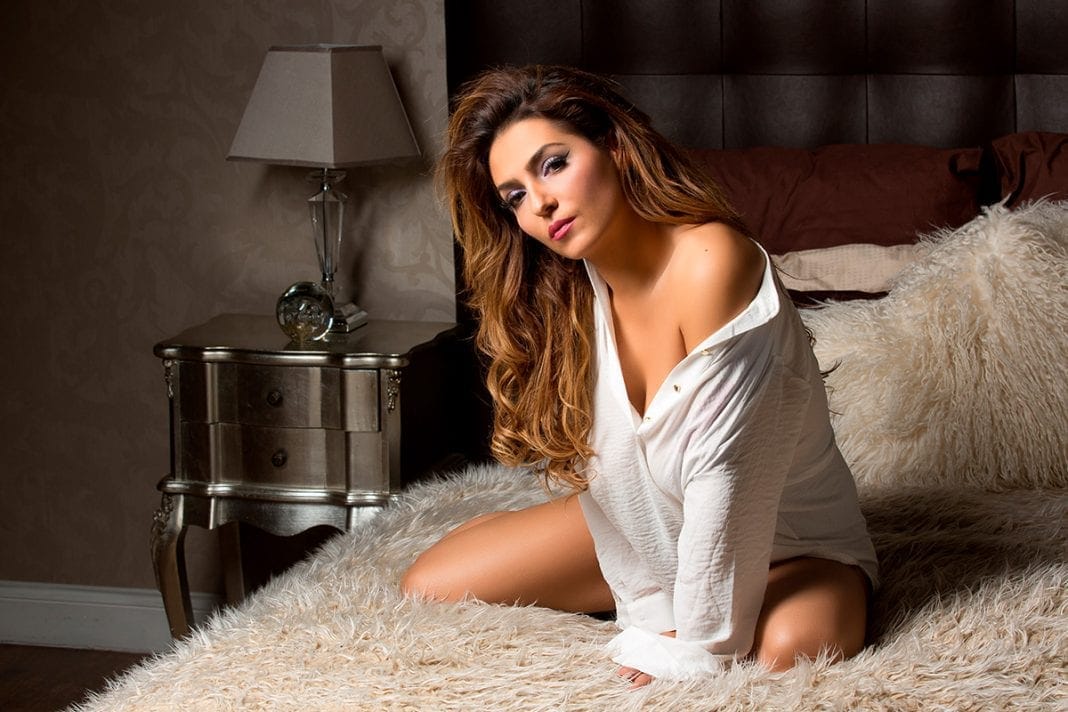
The Mona Lisa by Leonardo da Vinci is the best-known painting in the world, and one of its most distinctive traits is her subtle smile. To help her hold that smile while he worked, Leonardo supposedly hired entertainers to keep Mona Lisa in a good mood, since, by some accounts, she was a rather difficult woman. In Leonardo’s day there were no smartphones or funny YouTube videos he could have used to amuse her.
Photographs weren’t popular back then either, because the camera hadn’t been invented yet, but the problem Leonardo had with his model is the same one photographers run into today. Here are a few tips to help you relax your model while you do your thing.
Competence
Nothing makes someone feel as secure, and therefore as relaxed, as knowing they are working with a professional. Think about it: how do you feel when you know you are in safe hands, that the person you are dealing with knows what they’re doing or can make a real difference in your life? This works in any trade, not just photography. But since photography is the subject here, let’s stay with it.
Make sure your model knows who she is dealing with. If you can, introduce yourself before you meet and show some of your best work. If you can’t meet ahead of time and only meet at the shoot, do the same. Introduce yourself first and show samples of your best work so they know they are working with a professional.
Once they know who they are dealing with, the rest gets much easier. They will trust your judgment and follow your directions without a fuss.
Set up a pre-shoot date
The first time you meet someone can be nerve-wracking, even for the best of us. Professional models still deal with anxieties, and the same is true for professional photographers. Meeting your model before the shoot, assuming this is the first time you’re working together, makes things much better for both of you on the day.
It gives you both a chance to break the ice and get a feel for each other’s personality, and it is the best time to introduce yourself, show your work, and explain what they can expect.
The Mona Lisa
I call this step the Mona Lisa because of the story at the start of the article. Like Leonardo, think about props or distractions that can help your model relax. Music or a white noise machine works well for this.
During the pre-shoot date, ask your model about her favorite music and ask her to bring it on the day. If she can’t bring it for some reason, a white noise machine can help her settle during the shoot. Check with her about what makes her feel most relaxed when you set it up.
And if your model starts fidgeting from nerves, give her something to hold: a lollipop, an umbrella, a phone, Japanese fans, flowers, or some other interesting object.

Keep a positive vibe
Stay positive even when things aren’t going well. Fortunately (or is it unfortunately?), the shoot is in your hands and within your control. You have the power to make it work or not, and the model’s mood rests with you. If you feel a shot wasn’t great, don’t make it obvious with words like “Oops,” “Uh oh,” “damn it,” “WTF,” or “F***.” Don’t let it show on your face either, no frowns, rolling eyes, or pouting. Keep your composure and try again while encouraging your model to do better.
Show them they are doing great
One of the best ways of maintaining a good positive atmosphere during the shoot is to show your model some of the great shots you’ve taken. Do this during breaks, while you set up for the next one. When they see the results of your camera skills, they’ll relax and feel more at home, and they’ll be more willing to work with you to make more good photos.

Walk the talk, talk the talk
You are the professional, and it should show. Your skills and experience should let you start and keep up a pleasant but not overwhelming conversation during the shoot.
Some photographers are great at conversation and can talk through an entire shoot, even if it lasts several hours or days. But not every photographer can do that or is good at it. Talking can sometimes make things worse, since an artist may spoil the model’s mood by saying something inappropriate.
If you can hold a conversation for a long time and are good at it, use that during the shoot to keep your model engaged and connected to the process. If you’re not much of a talker, learn a few techniques to keep your model engaged instead. You don’t have to be a great public speaker or storyteller. Just learn things like saying “Yes!” and “That’s great,” and how to direct your model into different poses.
I know a photographer who doesn’t say much during his sessions, but he has an excellent rapport with his models. His body language and the way he carries himself are calming and warm. You can learn a few body language skills to help your models relax if you’re not inclined to talk much.
A note on touching
Touching can’t be avoided during shoots. You’ll have to touch someone at some point. It won’t happen in every shoot, but it will happen. You have to learn when and how to do it. When to touch matters more, since the touch usually means adjusting a thing or two here and there. The one rule to remember is to ask for permission. Never touch any of your models without their explicit consent. If you’re ever unsure whether to touch or not, asking will never fail you.
Having your model’s trust is what helps them relax during the shoot. They will follow your directions easily and place their fate in your hands. It’s a valuable thing to build, and the tips above will help you build it.
