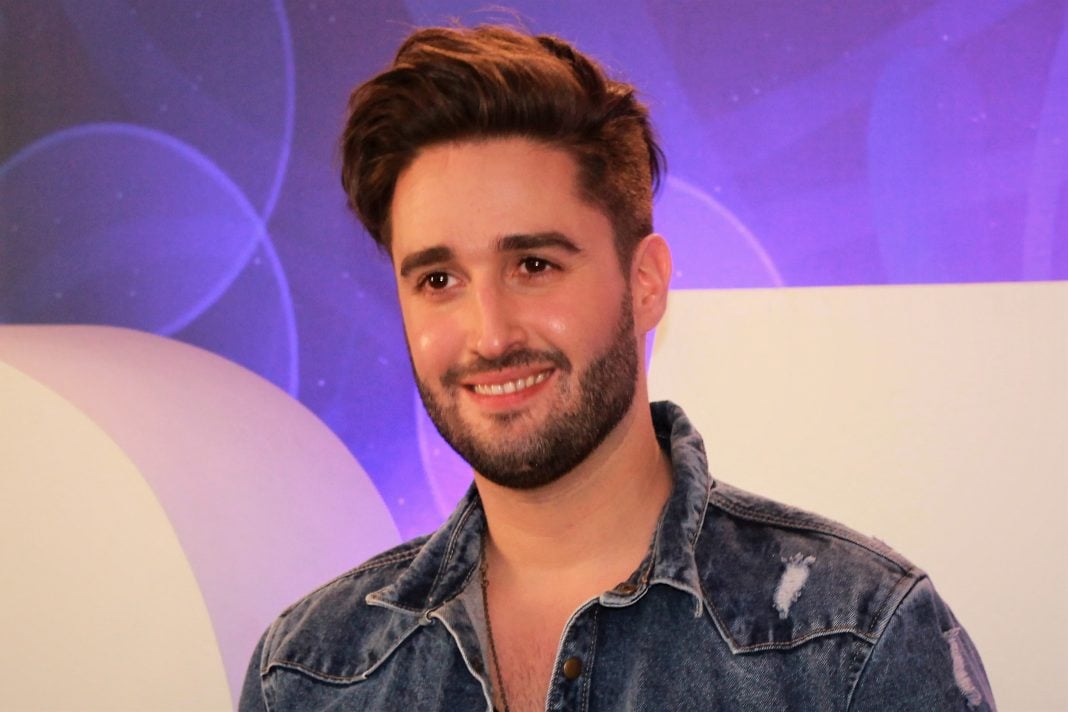
Dov Viktor Kiraly is a Hungarian-American singer-songwriter whose bicultural background has shaped both his music and his public reception. His career mixes talent honed in Hungarian competitions with steady attempts to break into the American music industry.
This report examines his origins, professional development, musical style, and main achievements.
1. Early life and foundations
Dov Viktor Kiraly was born on March 29, 1984, in Great Neck, New York, U.S..1 Music ran in the family. He is the son of Hungarian immigrants who both worked in the industry. His father, Tamas Kiraly, was the drummer for the band Universal egyuttes from 1972 to 1982, and his mother, Gabriella Kiraly (nee Gecsenyi), sang backing vocals for the same group.1
His older sister, Linda Kiraly, is a Hungarian pop singer, and he has an identical twin brother, Benjamin Kiraly.1 With several musicians in the immediate family, he grew up in an environment that supported his musical development early on.
Growing up in New York, Kiraly first tried out his musical interests by playing drums in various garage bands.1 Working with an instrument rather than just singing gave him a broader grounding. In 1999 his family moved to Hungary because of his mother’s serious illness.1 That move reshaped his career.
By shifting from the American underground scene to Hungary, he was placed to work within the Hungarian mainstream, a change that opened new paths for his music. The dual identity from his American birth and Hungarian heritage, together with this move, later became a defining feature of his work and of his attempts to connect two different music markets.
2. Rise to stardom in Hungary
Viktor Kiraly began his professional career in Hungary in 2006, co-founding the band Twinz with his twin brother, Benjamin Kiraly.1 The group gained ground quickly, releasing several singles, and “Aranyasok” received heavy airplay across Hungary.1 The band is still active today under the name Face to Face.1
Before his major breakthrough, Kiraly competed as a solo contestant on M1’s A Tarsulat, a Hungarian television series that cast performers for the rock opera Istvan, a kiraly.1 There he ran into a problem: his “clear American accent” and a “language hurdle” pronouncing Hungarian led to his early elimination.1 This setback came directly from his bicultural upbringing and showed the difficulty of adjusting to a new language and culture. It also set up the resilience he would show later.
His career took off in 2008 when he won Megasztar, a popular Hungarian music competition similar to Pop Idol or Star Academy, finishing as its fourth champion.1 The win gave him the platform and visibility he needed, turning the earlier obstacle into a springboard. His performances on
Megasztar ranged across many genres and artists, from Michael Jackson and Earth, Wind & Fire to Queen, Joe Cocker, and songs from the musical Cats.1 That repertoire showed his vocal range and his ability to handle different styles.
After his Megasztar win, Kiraly moved fast to build on his new fame. In 2009 he released a live album, Kiraly Viktor: A dontA’ben elhangzott dalok, made up of his performances from the competition.1 Releasing it right away used the show’s momentum to establish his discography and sell records. The album reached number 4 on the MAHASZ Top 40, Hungary’s official albums chart.1 His self-titled debut studio album,
Kiraly Viktor, also released in 2009, peaked at number 9 on the MAHASZ Top 40.1 Singles such as “Forgoszel” did well, topping the VIVA Chart and reaching number 28 on the MAHASZ Top 40, and “Ha arra indulsz” also charted, with its English version, “Have I Told You,” gaining attention.1 His next album,
Solo, released in 2010, continued the run, with its title track, “Solo,” reaching number 1 on both the MAHASZ Top 40 and VIVA Chart.1 The track “Crazy” from the same album was also a hit.1 This steady output and strong chart performance in the years right after
Megasztar show a career that turned competition success into lasting commercial results.
3. Musical identity and evolution
Viktor Kiraly’s music centers on R&B, soul, and pop.1 He is often described as a “Mainstream Pop musician” 5, which points to his broad appeal within popular music. His sound is built on “earworm hooks, lively beats, and sentimental lyrics,” creating an “ideal harmony between pop sensibility and emotional profundity”.5 His lyrics often turn to common themes such as “love, sorrow, and self-discovery”.5
His professional career mostly features his singing, praised for his “strong voice” 5, but his early years show a wider musical base. Growing up in New York, he played drums in various garage bands.1 That instrumental skill, though not his main public role, likely feeds his overall musicianship and improves his songwriting and performances beyond the vocals alone.
His influences come through in the songs he chose during Megasztar, which included tracks by Michael Jackson, Queen, Joe Cocker, Prince, Stevie Wonder, George Michael, and Sting.1 The range shows a real fondness for classic pop, soul, and rock. His career also includes collaborations that widened his reach. He worked with his siblings, Benjamin and Linda Kiraly, as “The Kiralys” on the song “Untried” in 2012.1 One notable collaboration was the re-recorded version of “Running Out of Time” with American musician Darryl McDaniels (D.M.C.) 1, part of a clear push toward the international market. He has also worked with Hungarian artists such as Majka, Curtis, DR BRS, and Sterbinszky on popular tracks like “Futtyos” and “TA+/-zvarazslo” 5, and with Radics Gigi and Bereczki Zoltan on “Almodd meg a csodat!”.6 These collaborations recur throughout his work and broaden his audience.
His style has also changed over time. Though rooted in R&B, soul, and pop, he has gradually added “electronic components” and “EDM elements” to his sound.5 Adapting to current trends keeps his music present and reaches a wider modern audience. His 2014 album,
3rd Dimension, showed this development with a mix of energetic and quieter songs.1 Recent singles, such as “NAGY A BAJ” (2023), keep up his energetic pop style.5
A
4. Venturing onto the global stage
Viktor Kiraly has kept up a strong drive for international recognition, reaching beyond his considerable success in Hungary. One route toward that goal has been his repeated appearances in A Dal, Hungary’s national selection show for the Eurovision Song Contest.
In 2012 he competed as part of the family band “The Kiralys,” with his twin brother Benjamin and sister Linda, performing “Untried.1 They reached the finals and finished fourth.1 This first attempt showed a family-wide push for international exposure. As a solo artist, Kiraly returned to
A Dal in 2014 with “Running Out of Time,” a song he co-wrote with his father, Tamas Kiraly, and Diamond Duggal.1 He reached the Top 4 in the jury vote, but the public chose another artist to represent Hungary.1 Even so, “Running Out of Time” sold well, peaking at number 3 on the MAHASZ Top 40 and topping the VIVA Chart.1 He then re-recorded the song with the American musician Darryl McDaniels (D.M.C.), again aiming to widen his appeal.1 Kiraly made a third try in
A Dal in 2018 with “Budapest Girl,” reaching the superfinal.1 These repeated appearances show his steady drive for an international platform.
A major step toward the American market came in 2015 when Kiraly auditioned for season 9 of the American reality talent show The Voice, broadcast on NBC.1 His blind audition of Marvin Gaye’s “What’s Going On” drew real attention, and all four coaches, Adam Levine, Blake Shelton, Pharrell Williams, and Gwen Stefani, turned their chairs.1 He chose to join Team Adam.1 In the Battle Round, Kiraly beat Cassandra Robertson with their version of “Nobody Knows”.1 In the Knockout Rounds, after Adam Levine picked another contestant, Gwen Stefani used her “steal” to bring Kiraly onto her team.1 That steal reflected another coach’s belief in him and his stage presence. His run on
The Voice ended on November 11 during the Live Playoffs (Top 24), when he did not win the public vote or a coach’s save.1 The elimination “drew criticism from critics and fans” 1, which suggests many felt his talent outran the result. That reaction points to the strong connection he built with the audience, even abroad, and hints that the show’s format did not fully capture his ability. His performances from
The Voice, including “What’s Going On,” “Nobody Knows,” “If I Ain’t Got You,” and “All Around the World,” were later released on iTunes.1
A
5. Discography and achievements
Viktor Kiraly’s discography reflects a steady, commercially successful career in Hungary, with studio and live albums plus many hit singles.
5.1. Studio albums
Kiraly has released three studio albums, all of which charted well in Hungary.
| Title | Release Year | Peak MAHASZ Top 40 Position | Certification (Hungary) |
| Kiraly Viktor | 2009 | 9 | Not specified |
| Solo | 2010 | 34 | Not specified |
| 3rd Dimension | 2014 | 2 | Platinum |
5.2. Live albums
His live album, released shortly after his Megasztar win, used his immediate popularity and charted strongly.
| Title | Release Year | Peak MAHASZ Top 40 Position |
| Kiraly Viktor: A dontA’ben elhangzott dalok | 2009 | 4 |
5.3. Singles
Kiraly has produced many successful singles, a good number of which topped or reached high positions on Hungarian charts.
| Title | Release Year | Peak MAHASZ Top 40 Position | Peak VIVA Chart Position | Key Collaborations |
| “Forgoszel” | 2009 | 28 | 1 | – |
| “Ha arra indulsz / Have I Told You” | 2009 | Not specified | 4 | – |
| “Solo” | 2010 | 1 | 1 | – |
| “Crazy” | 2011 | Not specified | 2 | – |
| “Move Faster” | 2012 | Not specified | 12 | No!End & B-Sensual, Linda Kiraly |
| “Over” | 2012 | 10 | 5 | – |
| “Fire” | 2013 | 1 | 5 | – |
| “Running Out of Time” | 2014 | 3 | 1 | D.M.C. (re-recorded version) |
| “Almodd meg a csodat!” | 2014 | 7 | Not specified | Bereczki Zoltan, Radics Gigi |
| “Chasing Demons” | 2015 | 7 | Not specified | – |
| “Exhale / Legzes” | 2015 | Not specified | Not specified | – |
| “Untried” | 2012 | Not specified | Not specified | The Kiralys |
| “NAGY A BAJ” | 2023 | Not specified | Not specified | – |
| “Orvenyben (KOMA)” | 2022 | Not specified | Not specified | – |
| “Nem Szoltal” | 2021 | Not specified | Not specified | – |
| “Pimasz (Radio version)” | 2020 | Not specified | Not specified | – |
5.4. Awards and recognition
Beyond sales, Viktor Kiraly has earned industry recognition. From 2013 to 2014 he was a jury member and mentor on Az enek iskolaja, a talent program for young Hungarian singers.1 The role shows how his experience and standing in the industry are acknowledged. In 2019 he won an MTV Europe Music Award 1, which reached beyond national borders. He also received the Viva Comet Award for Best Male in Hungary.7 Together these point to a career built on both popular appeal and critical respect.
Conclusion
Dov Viktor Kiraly’s career combines talent, ambition, and a foot in two cultures. From his years in New York, where he played drums in garage bands, to his move to Hungary, his path has been one of steady growth. His breakthrough on Megasztar put him in the Hungarian spotlight, where he kept charting with his R&B, soul, and pop sound. Releasing a live album right after his win, then charting high with his studio albums and singles, shows a well-managed career that turned new fame into lasting sales.
His repeated attempts to reach the international arena, especially his multiple Eurovision selections and his appearance on The Voice in the U.S., show how far he wanted to go beyond national borders. His The Voice run ended with an unexpected elimination that disappointed the public and critics, and that reaction itself points to his talent and to the strong bond he built with audiences even in a foreign market.
His willingness to adjust his style, adding electronic elements while keeping his core genres, shows his intent to stay current and appeal to a wide audience. Working as a mentor on talent programs and winning an MTV Europe Music Award mark him as a respected figure. Kiraly’s career forms a bridge between Hungarian and American music, adding his own sound to both and showing what persistence can do in the global industry.
Works cited
- Viktor Kiraly – Wikipedia, accessed June 18, 2025, https://en.wikipedia.org/wiki/Viktor_Kir%C3%A1ly
- Kiraly Viktor Discography: Vinyl, CDs, & More | Discogs, accessed June 18, 2025, https://www.discogs.com/artist/2132024-Kir%C3%A1ly-Viktor
- wikipedia.org, accessed June 18, 2025, https://en.wikipedia.org/wiki/Viktor_Kir%C3%A1ly#:~:text=Kir%C3%A1ly%20was%20born%20in%20New,backing%20vocalist%20in%20the%20band.
- Linda Kiraly – Wikipedia, accessed June 18, 2025, https://en.wikipedia.org/wiki/Linda_Kir%C3%A1ly
- Kiraly Viktor – Songs, Events and Music Stats | Viberate.com, accessed June 18, 2025, https://www.viberate.com/artist/kiraly-viktor/
- Bereczki Zoltan – Songs, Events and Music Stats | Viberate.com, accessed June 18, 2025, https://www.viberate.com/artist/bereczki-zoltan/
- Eurovision Hungary: Viktor Kiraly & Hien win at Viva Comet Awards – ESCToday.com, accessed June 18, 2025, https://esctoday.com/84758/hungary-viktor-kiraly-hien-win-viva-comet-awards/
- Viktor Kiraly – Eurovision Ireland, accessed June 18, 2025, https://eurovisionireland.net/tag/viktor-kiraly/
