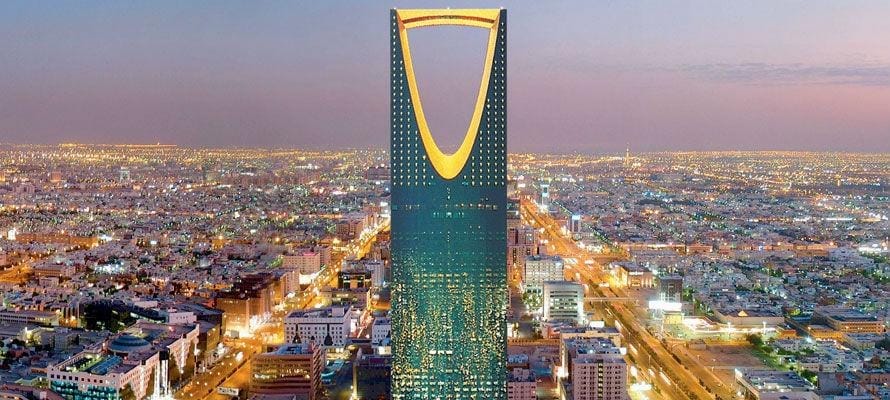
Arabian culture is built around family. In the Arab community, most of social life, and much of the architecture, grows out of that one idea, and hotels are no exception. Across the Arabian Peninsula you will find places designed for solo travellers and places designed for families, and it is the family-focused hotels that tend to leave the strongest impression. If Arabs know how to do one thing well, it is to serve a guest.
Loyalty, honour, courtesy, and politeness sit at the centre of Arab culture, and they are learned through family. Stay in one of the better hotels run by Arab owners and you will feel these qualities in the small details of how you are treated. I say the better hotels deliberately, because Arabs are human like everyone else, and you get what you pay for.
What a stay actually feels like
One of the first things you notice as a guest in a top Arab-owned hotel is breakfast, which is often unlike anything you have had before. The spread is elaborate enough that choosing where to begin is genuinely hard. If it is your first visit, my advice is simple: try a bit of everything, and let your own taste sort itself out. That range on the table comes straight from Arabian cuisine, which has been refined over centuries of trade, migration, and hospitality.
The buildings themselves are frequently exceptional. The architecture and design can stop you in your tracks. From the street, many of these hotels look like works of art, and the interiors usually match the exteriors: spacious rooms, a clean and calming atmosphere, and practical touches for families such as swimming pools and kids’ clubs. They are, in short, comfortable places to relax with the people you travel with. The five-star hotels in Muscat are a good example, several with balconies that open onto the Gulf of Oman or the mountains ringing the city.
Service that comes from the family idea
Customer service in the best Arabian hotels tends to be excellent, and it is not an accident. These hotels are built to show the courtesy the culture prizes. Because the culture puts family first, its people are practised at attending to the needs of others. When you check in, you are treated as one of the household, and that carries more weight than you might expect. Arabs place family above almost everything: even in a dispute, the needs of the immediate family come before friends or partners. To be counted as part of that circle, even when you are paying for the privilege, is meant as an honour.
Generosity runs alongside this. The Arab community is one of the most polite you will meet anywhere, and generosity, courtesy, and manners are all taught at home. The old line about charity beginning at home fits the culture closely, and the treatment you receive in a five-star Arabian hotel grows out of the same root. Reputation matters here too. A hotel guards its honour and its name, so mind your own manners while you are a guest. If you are clearly in the wrong, the staff will protect their own. Being the paying customer does not give you a licence to behave badly. It is business, but honour outranks money in this part of the world.
Why the welcome and the reputation are linked
The care you receive is inseparable from how the hotel manages its standing, and that standing is now largely public. Reviews and ratings are how strangers decide to trust a business they have never used, a shift Rachel Botsman describes in Who Can You Trust? (2017) as the move to “distributed trust,” where platform reputation lets people extend confidence to firms they have no personal link to. For hotels that live or die on hospitality, a strong public reputation is not vanity; it is the mechanism by which a first-time traveller from the other side of the world is willing to book at all.
This is worth keeping in mind when you plan a trip. Most people no longer arrive on a recommendation from a neighbour. According to BrightLocal’s Local Consumer Review Survey 2026, 31% of consumers now say they will only consider a local business rated 4.5 stars or higher, up from 17% the year before, and Google remains the most used platform for reading those reviews at 71%. A hotel’s honour, in other words, is increasingly measured in public before you ever walk through the door.
That is also why it helps to look beyond the first page of a search. Curated listings, human-edited directories, and the review pages that travellers actually read give you a fuller picture than any single algorithm’s ranking. If you want to find a family-run hotel in a city you have never visited, being able to browse a trustworthy, organised set of options is often more useful than typing a name into a box and hoping.
A different world worth the trip
The Arab community is hard-working, and its cities show it. Walk through Dubai, Muscat, Doha, Cairo, Beirut, Amman, or Abu Dhabi and you can feel you have stepped into a wholly different world. The culture is deep, refined over centuries, and that refinement shows up in the cities, in daily life, and in the way guests are treated inside these hotels. You get exotic dishes worth travelling for, you meet people with a genuinely rich heritage, and you come home with a wider sense of how life can be lived.
A few practical notes if you go. Pick your hotel on the strength of its reviews and its service reputation, not on the photographs alone, since the welcome is the part that will stay with you. Book the family-oriented properties if you are travelling with children, because that is where the culture’s hospitality is at its most complete. Come to breakfast hungry. And carry yourself as a good guest, because you will be treated as one of the family, and that relationship runs both ways. If you need a real break from ordinary life, and you are not already from the region, the Arabian Peninsula is a fine place to take it.
