
Key Takeaways
- Outpatient clinics are adopting advanced technologies to streamline operations and enhance patient care.
- Patient-centered design and holistic care models are central to improving the patient experience.
- Telehealth and digital health initiatives are expanding access and convenience for patients.
Modern outpatient clinics are at the forefront of a new era in healthcare, transforming the patient experience from the very first visit. By embracing innovative technologies and reconfiguring their operational models, these clinics are addressing both the immediate needs and the long-term well-being of their patients.
From streamlined appointments to holistic care approaches, today’s facilities empower patients and clinicians alike to move beyond traditional settings and expectations. This evolution has given rise to diverse forms of support, including digital platforms and novel therapeutic practices like MAT therapy, that aid healing and recovery holistically.
With a focus on convenience, accessibility, and the patient’s voice, the modern outpatient experience now extends outside the clinic’s walls. Clinics are redesigning physical and digital spaces, integrating mental health into primary care, and leveraging virtual visits and remote monitoring. This convergence signals a major shift from episodic treatment to continuous, personalized care, taking into account every aspect of the patient journey.
Such innovative changes reflect a broad movement within the healthcare industry. Clinics are now designed not only to treat illnesses, but also to promote proactive wellness and offer personalized experiences for diverse populations. Patients can access specialized resources and therapies remotely, making scheduled care more adaptable and efficient than ever before. These advancements are supported by robust digital health ecosystems and evidence-based decision-making, demonstrating that outpatient care can be both high-tech and deeply human.
Technology Integration in Outpatient Clinics
Outpatient clinics are rapidly advancing with the integration of digital technologies designed to elevate clinical care and patient engagement. The introduction of real-time health monitoring tools, connected devices, and artificial intelligence-driven scheduling streamlines not only the treatment process but also patient-practitioner interaction.
For example, clinics now deploy Internet of Things (IoT) solutions that can track vital signs, automate environmental controls for comfort, and deliver targeted alerts to caregivers. These enhancements enable the proactive management of chronic diseases and reduce unnecessary hospital admissions.
Leading institutions, such as the Mayo Clinic, showcase the importance of continuous data gathering for informed decision-making and tailored interventions, setting a standard for outpatient centers worldwide.
Interoperable electronic health records further reduce duplicate testing and paperwork, giving clinicians a complete patient history at their fingertips for more informed care. By integrating smart software into diagnostic and workflow systems, the patient experience becomes more seamless, allowing practitioners to focus on meaningful, patient-centered interactions.
Patient-Centered Design and Holistic Care Models
The design of today’s outpatient clinics is deeply centered on patient needs—encompassing more than just physical health. Modern clinics now emphasize behavioral, social, and psychological well-being, changing the healthcare paradigm to a holistic model.
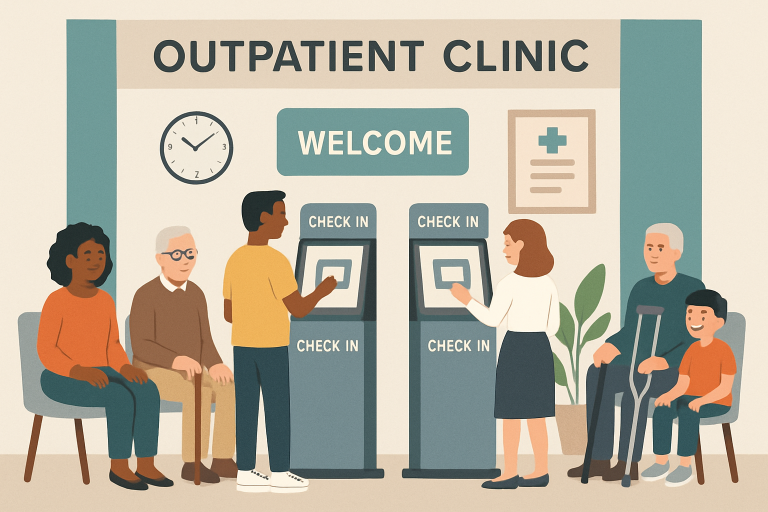
Facilities feature calm, welcoming environments and flexible scheduling, fostering a sense of comfort and encouraging patients to actively participate in their treatment plans.
For instance, systems like NewYork-Presbyterian equip patients with tools for virtual behavioral health screenings, enabling early detection of concerns in a confidential, digital format.
These holistic models also facilitate the integration of mental health services into routine primary and specialty care, breaking down barriers caused by stigma and logistical complications.
Electronic linkage between screening results and patient records enables mental health professionals to respond promptly to patients in need. This level of personalization represents a shift toward comprehensive care that tailors treatment to the unique circumstances of each patient, enhancing both outcomes and overall satisfaction.
Expansion of Telehealth and Digital Health Services
Telehealth has revolutionized access to care, enabling patients to consult clinicians from virtually anywhere, often on short notice. As insurers expand coverage for virtual visits, outpatient clinics increasingly invest in secure, user-friendly telemedicine platforms. Recent projections suggest that up to 26% of outpatient appointments may be conducted remotely, particularly in specialties such as psychiatry, dermatology, and pediatrics. This virtual-first approach reduces travel burdens, wait times, and missed appointments while expanding specialist access to underserved regions.
Tools such as mobile health apps, wearable devices, and remote patient management portals facilitate ongoing communication between patients and clinics between visits. The flexibility and immediacy of telehealth solutions foster ongoing engagement and monitoring, keeping patients on track in their care journeys and preventing complications that could lead to hospitalization.
Enhancing Operational Efficiency
Operational innovation remains critical for maximizing patient satisfaction. Top-performing systems are investing in centralized call centers, cross-functional care teams, and advanced analytics to improve scheduling accuracy and minimize delays. Personalized care navigation and automated reminders help patients understand next steps and prepare for appointments.
These operational shifts not only increase provider efficiency but also create a smoother, more reliable journey from check-in to follow-up. Efficient clinics utilize real-time analytics to optimize resource allocation and staffing, further reducing wait times and enhancing the quality of interactions.
As a result, these strategies support the transition from volume-based care to value-based models, which are centered on measurable patient outcomes.
Future Trends in Outpatient Care
Outpatient clinics are poised to transform investments in digital health platforms and personalized medicine. Future trends involve increased utilization of predictive analytics to meet patient needs, enhanced integration of behavioral health services, and adoption of flexible hybrid care models.
Clinics will prioritize consumer engagement through tools for self-scheduling, digital therapeutics, and community partnerships, all aimed at addressing the social determinants of health.
By focusing on innovation and a human-centered design, outpatient providers are striving for improvements in care quality and accessibility, ensuring that patients feel valued, heard, and supported throughout their healthcare journey.
Patient-centered design in healthcare represents a fundamental shift from treating conditions to treating people. The approach recognizes that a patient arriving with chest pain isn’t merely a cardiac case—they’re someone with anxieties about missing work, fears about mortality, and possibly a history of dismissive medical encounters that makes them reluctant to speak openly.
Holistic care models extend this philosophy by acknowledging that health exists at the intersection of physical, psychological, social, and even spiritual dimensions. A diabetic patient’s glucose control depends as much on their ability to afford healthy food and their mental state as it does on insulin dosing. Treating only the biochemistry while ignoring the context is like repairing an engine while the car has no wheels.
In practical terms, patient-centered design manifests in architectural choices—private consultation rooms that encourage honest conversation, waiting areas that reduce anxiety rather than amplify it, wayfinding systems that don’t require a medical degree to navigate. It shows up in scheduling that respects patients’ time constraints and communication systems that meet people where they are, whether that’s a portal, a phone call, or a printed letter.
The economic argument increasingly supports these models. Patients who feel heard are more adherent to treatment plans, return for follow-ups, and catch complications earlier. The initial investment in longer consultations and multidisciplinary teams often pays dividends through reduced emergency visits and hospitalizations.
The challenge lies in implementation within systems built on opposing principles—volume-based reimbursement, fragmented specialty care, and electronic records designed more for billing than for understanding a person’s story. True transformation requires redesigning incentives alongside physical spaces and workflows.
