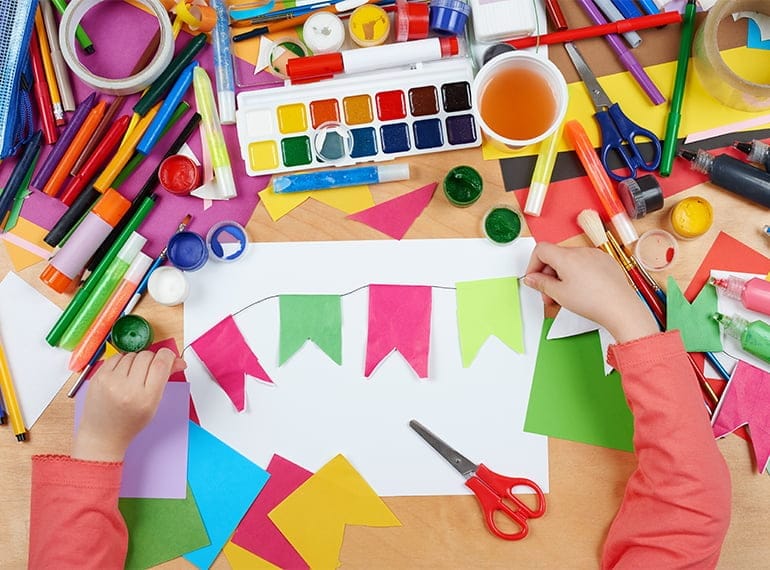
A hobby brings real joy to daily life. You get something you love to spend your free time on, and you get a chance to learn something new. The subject can be almost anything, as long as you enjoy it and it fills your leisure hours in a satisfying way. If photography, scrapbooking, drawing, sculpting, or painting are already your hobbies, then you are quietly doing your health a favour every time you sit down to work.
Taking up crafts and arts gives you more than enjoyment. The benefits reach from sharper brain productivity and steadier self-esteem to easing the effects of serious illness. Here are seven good reasons to start.
Seven reasons to pick up a creative hobby
- Stress relief. When you engage in art and craft, anxiety and stress tend to fall while positive emotions rise. The moment you get absorbed in making something, your mind stops circling around pressing worries and settles onto the task in front of you. That shift creates a meditative state. It lets you set your concerns aside for a while, which brings mental clarity and lowers stress.
- A boost in confidence. Finishing a creative project lifts your self-esteem and brightens your mood by increasing the neurotransmitter dopamine. Dopamine, the feel-good molecule, eases low moments and helps build confidence. Making something gives you a sense of achievement, and that produces happiness naturally. For quality supplies and a broad range of materials, contact CraftOnline.
- Increased empathy. Learning about crafts and taking part in them can change how you feel and think. Even looking at art gives pleasure and sharpens your critical thinking. People who make or view a craft tend to be more tolerant of others and show more empathy.
- Better medical outcomes. There is a connection between craft, health, and healing. Evidence suggests people living with a debilitating illness such as Alzheimer’s or dementia show improved outcomes after making a craft. The creative process can reduce psychiatric symptoms and improve a patient’s social behaviour and sense of pleasure.
- Improved brain productivity. The rise in dopamine that comes from making a craft encourages the growth of new neurons, which supports concentration and focus and readies the brain for learning. Working with your hands also strengthens the connection between the left and right hemispheres of the brain, boosting productivity and psychological resilience.
- Reduced effect of severe health conditions. A craft that fills an occupational void helps draw attention away from thoughts of illness. Crafts have several positive effects on people coping with serious health concerns. A patient who is engaged in a craft experiences less stress, expresses feelings more easily, and holds on to a sense of their former self. Craft is a social determinant of health. It will not cure a disease, but it does good whatever ails you.
- No age limit. One of the best things about art and craft is that anyone can start, at any age. Children love to try their hand at it, whether at home or school, and it gives them a lovely way to express themselves. Working adults can take up painting and craft as a break from their busy lives. Older people can use art and craft to build a social life and bond with fellow enthusiasts.
Why the benefits hold up
Much of what makes a creative hobby work comes down to attention. When your hands are busy shaping clay or matching colours, your mind has less room to rehearse the same anxious loop. That is the mechanism behind the meditative calm described above, and it is also why the activity itself matters more than the finished piece. A wobbly first pot still delivers the focus and the small hit of dopamine that a polished one does.
The social side is easy to underrate. Craft groups, evening classes, and community workshops give people a reason to show up, talk, and compare work. For older adults in particular, that regular contact can matter as much as the making. If you are looking for a group or a class near you, this is where the wider habit of finding businesses online comes in. Americans looking for information about local businesses reach for the internet before any other source, and Pew Research Center found in its 2011 study on where people get information about restaurants and other local businesses that 36% of adults use search engines when they want details on a local business. A studio, a shop, or a class that is easy to find and clearly listed is the one people actually walk into.
How to choose a craft that sticks
Picking up a new hobby will challenge you to do your best, and that challenge is part of the appeal. Something new keeps you engaged and helps you relax into your free time. If you do not enjoy an activity, there is no point spending time or money on it. Anyone who has kept a hobby for years knows how much of yourself you have to put in to get the pleasure back out.
A few practical points help you choose well:
- Match the craft to the time you realistically have. Watercolour and knitting suit short sessions. A ceramics course asks for a fixed weekly slot.
- Start with modest supplies. You can always upgrade once you know the hobby suits you. Overspending at the outset is the fastest way to feel guilty about a craft you have not yet learned to love.
- Read reviews of local classes and suppliers before you commit. People decide what is worth doing partly by seeing what others think is worth doing, which is the reason ratings and reviews carry weight. Robert Cialdini describes this as social proof in the expanded edition of Influence: The Psychology of Persuasion (2021), where he treats it as a core driver of how we make everyday choices.
- Try before you buy where you can. A single taster class tells you more than any amount of browsing.
Fads come and go, so do not take up a hobby simply because everyone else is. Choose the one that genuinely holds your interest, whether that is art and craft or something else entirely. Then give it enough of your time to enjoy it. Pick up a brush, a needle, or a lump of clay this week, make one small thing, and notice how you feel afterwards. That is the surest test of whether a creative hobby belongs in your life.
