Foundation Crack Repair in Michigan
The Scale of the Problem
Cracking in concrete foundations is not an anomaly but a near-universal phenomenon arising from the material’s inherent brittleness, its response to thermal and moisture gradients, and the external loads transmitted through surrounding soils. Szymanowski and Sadowski (2023) reviewed the mechanisms of crack formation in cement concretes, identifying drying shrinkage, plastic settlement, thermal contraction, and structural overload as the principal initiating causes, each producing characteristic crack geometries and orientations that inform both diagnosis and repair strategy.
In Michigan, these generic mechanisms are amplified by regional conditions that make foundation crack repair in Michigan a technically demanding and commercially significant sector of the residential construction industry.
Why Michigan Foundations Crack
Michigan’s geological and climatic profile imposes stresses on foundation concrete that most other North American markets do not experience simultaneously. The state’s predominant clay soils — particularly in the densely built southeast corridor — are expansive: they absorb water and swell, generating lateral pressures against basement walls that can exceed design assumptions.
Liu and Vanapalli (2021) modelled lateral swelling pressure in unsaturated expansive soils and demonstrated that moisture infiltration events produce pressures against laterally constrained structures — such as basement walls — significantly greater than static at-rest earth pressures.
Compounding this, Michigan’s continental climate subjects foundation concrete to severe freeze-thaw cycling. Wang, Liu, Fu, Li, and Wang (2022) reviewed the damage mechanisms involved, identifying hydraulic pressure, osmotic pressure, and salt crystallisation as concurrent drivers of progressive microstructural deterioration. The result is a foundation environment in which new cracks form each winter while existing cracks widen — a dynamic that renders one-time surface treatments inadequate without addressing the underlying cause.
Classification of Foundation Cracks
Effective foundation crack repair in Michigan begins with accurate classification. The American Concrete Institute’s landmark report ACI 224.1R-07 (2007) distinguishes between structural and non-structural cracks and between active and dormant conditions.
Vertical cracks narrower than 2.5 mm, originating near the midspan of a poured wall, are typically non-structural — products of concrete shrinkage during curing. They pose no immediate threat to load-bearing capacity but provide pathways for water infiltration.
Horizontal cracks, particularly those appearing at roughly one-third of the wall height, typically indicate lateral soil pressure exceeding the wall’s design resistance and are classified as structural. Stair-step cracking in concrete masonry unit (CMU) block walls follows mortar joints and likewise signals differential settlement or lateral overload. Each type demands a different repair approach, and misclassification — treating a structural crack with a cosmetic sealant, for instance — risks concealing progressive failure.
Foundation cracks in Michigan are among the most common structural issues in residential construction. Poured concrete foundations, which dominate the housing stock built from the 1960s onward, develop cracks through a combination of concrete shrinkage during the curing process, hydrostatic pressure from groundwater pushing against the wall, and the cumulative mechanical stress of Michigan’s freeze-thaw cycling.
Each winter, the soil around a foundation freezes and expands, pushing against the wall. Each spring, it thaws and contracts, releasing that pressure. Over decades, this repetitive cycling creates stress fractures that eventually become water pathways.
Not all foundation cracks are equal in significance. Hairline cracks that appear within the first few years of construction are typically shrinkage cracks that pose no structural concern but may admit water over time. Wider cracks, horizontal cracks, or cracks that show displacement between the two sides may indicate structural movement that requires engineering assessment. Diagonal cracks near corners often result from differential settlement. Mansour’s Innovations assesses each crack individually and determines whether the appropriate treatment is waterproofing, structural repair, or both.
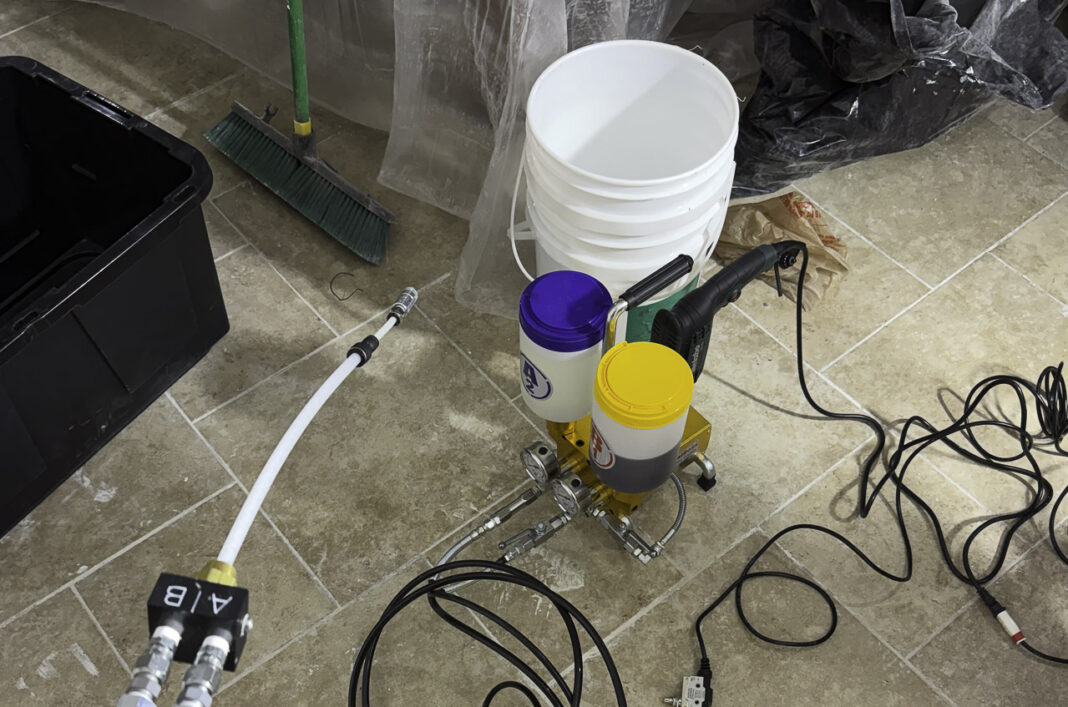
The company’s crack repair methodology uses pressure injection of polyurethane foam or epoxy resin, depending on the nature and purpose of the repair. Polyurethane is the standard choice for waterproofing applications. It remains flexible after curing, which means it accommodates minor foundation movement without re-cracking, and it expands on contact with moisture, which helps it fill the crack completely even when there is active water flow. Epoxy injection is used when structural bonding is the goal. It cures rigid and bonds the concrete surfaces together, restoring some of the wall’s original structural capacity.
The injection process involves cleaning the crack surface, installing injection ports at intervals along the crack’s length, and injecting material from the bottom upward under controlled pressure until it emerges at the next port. This ensures the crack is filled through the full thickness of the wall rather than sealed only at the surface. Surface-only patching, which many homeowners attempt using consumer-grade products, frequently fails within one or two seasons because it does not address the water pathway through the body of the wall.
Tie Rod Holes and Form Tie Penetrations
Tie rod holes are a specific type of foundation penetration found in virtually every poured concrete wall in Michigan. During construction, steel tie rods hold the formwork panels at the correct spacing while concrete is poured. After curing, the forms are removed, and the rods are cut, leaving small holes that penetrate the full thickness of the wall at regular intervals across the entire foundation. These holes are common and frequently overlooked water entry points.
“Understanding the difference between a minor crack and a serious foundation issue is crucial. Our foundation specialists explain what homeowners should know:
In Michigan, fixing a small crack in your basement wall is often straightforward. If the crack is narrow, usually less than a quarter of an inch wide, and just a vertical line or a hairline fracture, you can usually fix it by sealing it from the inside with a special kind of sealant like polyurethane or epoxy. This prevents water from seeping in, which is often caused by clay soil and its freezing and thawing throughout the year. The good news is that this kind of crack doesn’t usually pose a threat to your house’s structure, and it can be fixed quickly and at a low cost.
If you notice a big crack in your foundation, it’s time to take action. We’re talking about a crack that’s horizontal, really wide – more than 1/4 inch – and getting bigger. Or maybe you see other signs, like bulging walls, cracks that look like stairs, doors that stick, or uneven floors. These are all red flags that your foundation is under pressure and needs serious help. You might need to install special anchors, beams, or piers to prevent further deterioration of your foundation. This kind of repair is crucial to prevent further damage and keep your home safe.
Before we do anything, we check things out to know what we’re dealing with – it’s always better to be safe than sorry, especially with Michigan’s rough conditions.” – Mansour’s Innovations Owner.
Mansour’s Innovations addresses tie rod holes as a standard component of its foundation crack repair service. The company recognizes that a foundation repair approach that addresses visible cracks while ignoring the grid of tie rod holes in the same wall solves only part of the problem. Each tie rod hole represents a potential water pathway, and in a wall with dozens of these penetrations, the cumulative water entry through untreated holes can be significant even if every visible crack has been sealed.
Snap tie holes and form tie penetrations are also addressed. These are related but distinct from tie rod holes and occur at different locations and patterns depending on the formwork system used during original construction. The specificity with which Mansour identifies and treats these various penetration types reflects detailed knowledge of what actually happens on a construction site and of the resulting vulnerabilities that appear decades later in the finished foundation.
The 25-year transferable warranty applies to foundation crack repair work, providing long-term assurance that the repairs will remain effective through the property’s next several seasons of freeze-thaw cycling and groundwater pressure. For homeowners selling a property, documented crack repairs with a transferable warranty preempt the inspection finding that would otherwise become a negotiating point. For buyers, the warranty provides confidence that the foundation issues have been addressed to a professional standard by a company that will still be operating when the warranty is needed.
Crack Repair as Part of Comprehensive Foundation Care
Foundation crack repair should be understood as a component of comprehensive foundation maintenance rather than an isolated fix. A crack in a foundation wall exists within a context of soil pressure, water dynamics, structural loading, and environmental cycling that produced the crack in the first place. Repairing the crack without addressing the contributing conditions may produce a temporary fix that fails when the same forces continue to operate on the wall.
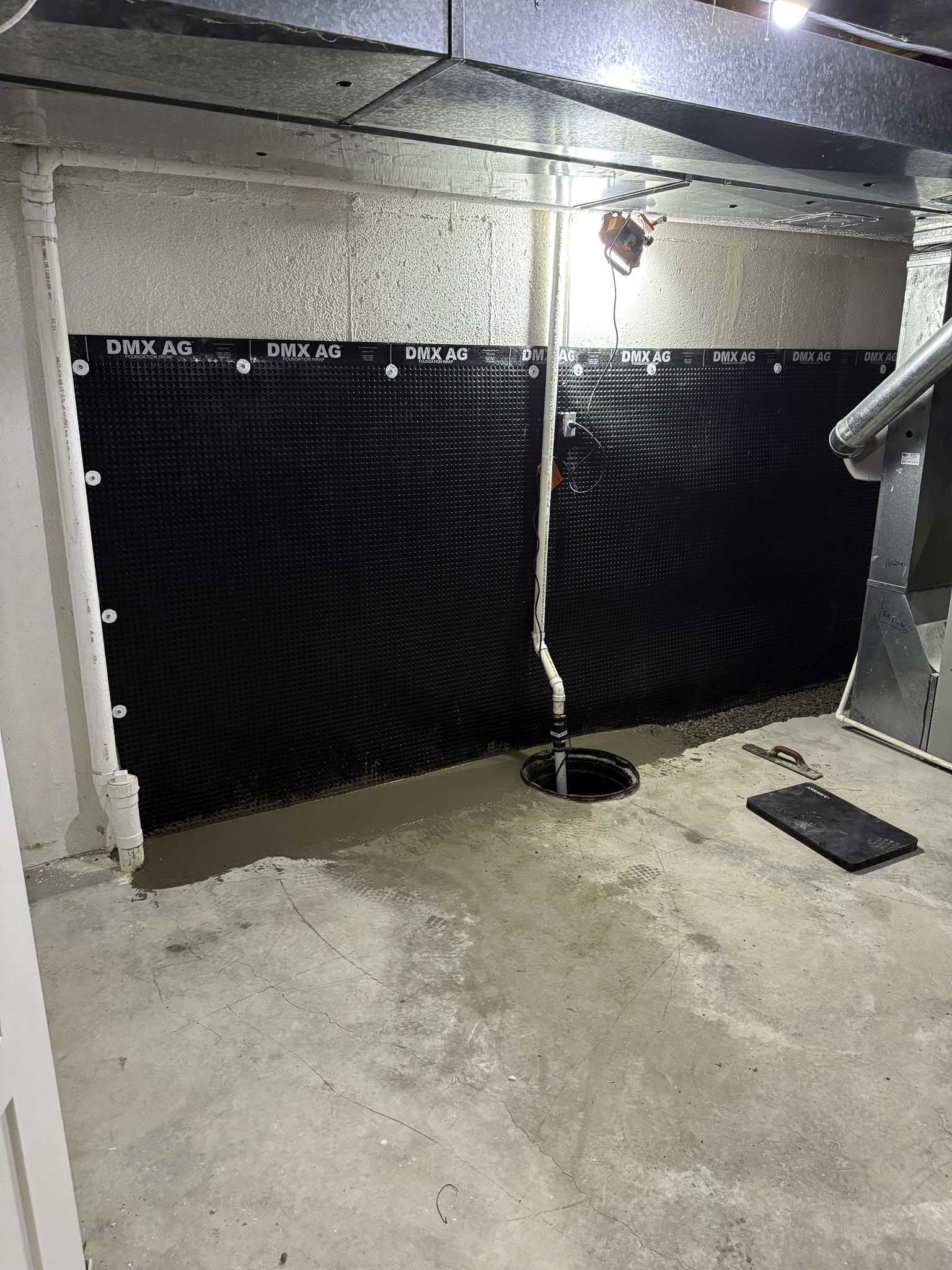
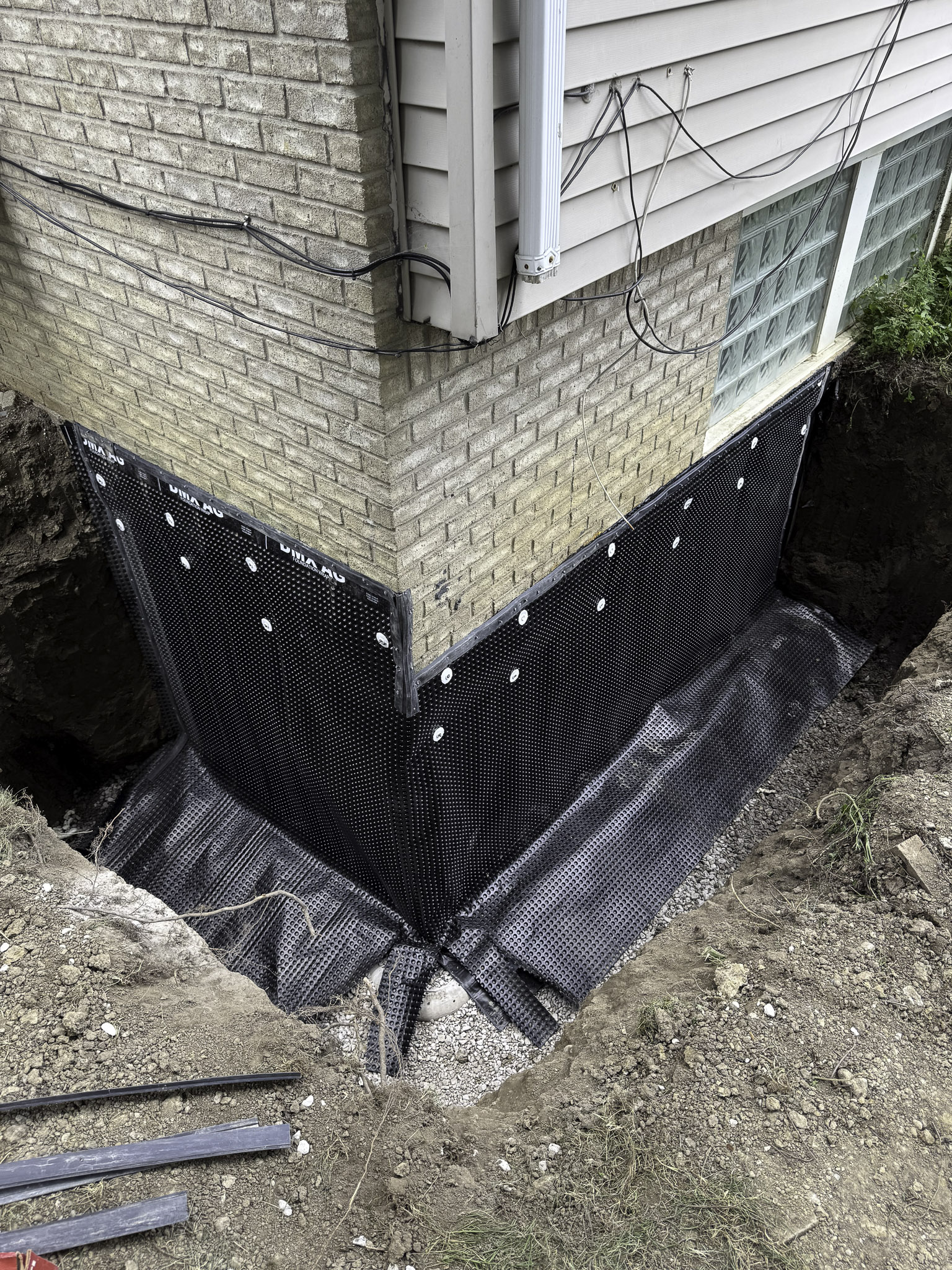
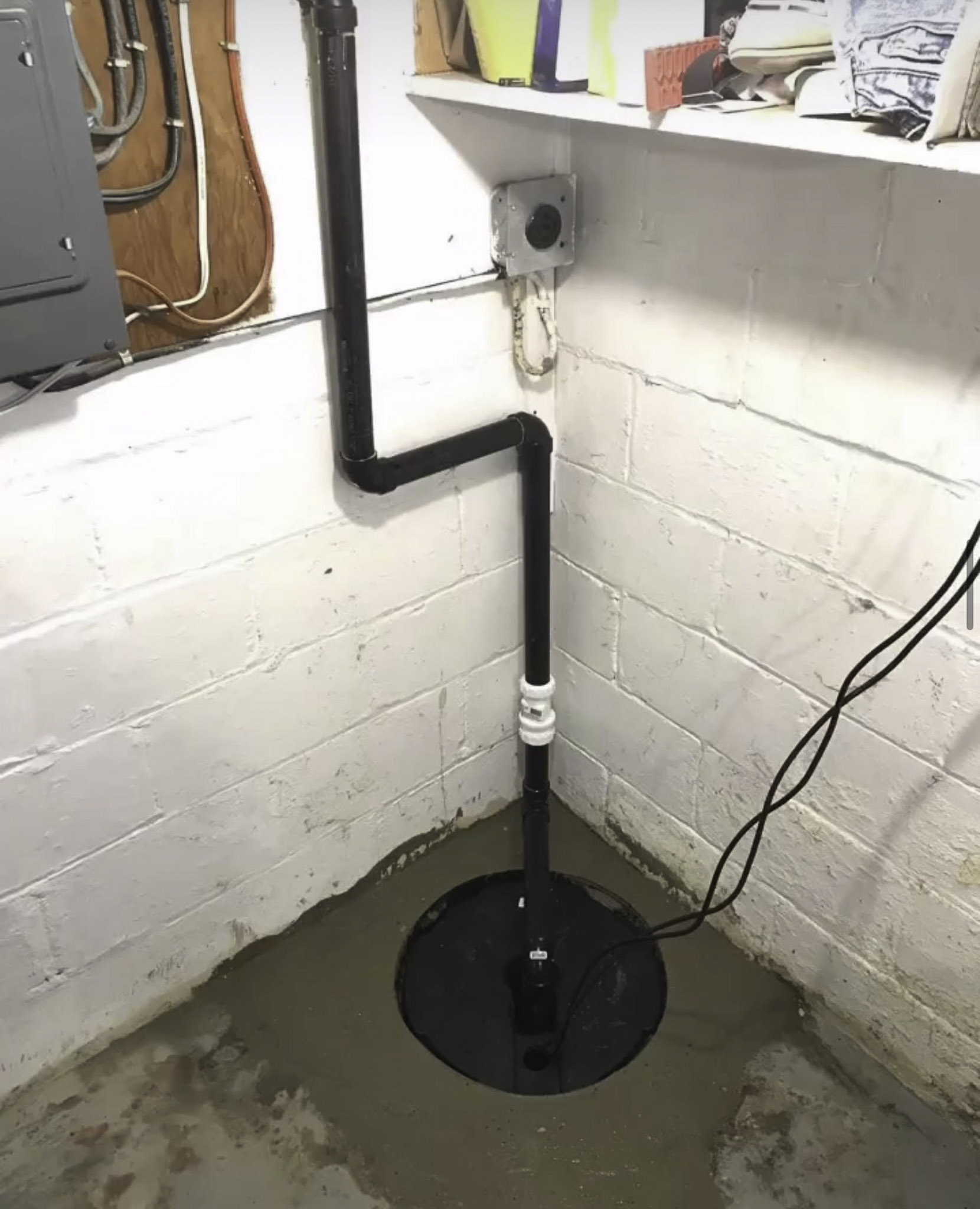
Mansour’s Innovations integrates crack repair with its broader assessment of foundation and drainage conditions. When a crack is repaired by injection, the assessment also evaluates exterior drainage, the sump pump system, grading, and the overall moisture environment. If the crack was caused by hydrostatic pressure from a failed drainage system, repairing the crack while leaving the drainage system in place is a partial solution at best. The company’s ability to address both the crack and the underlying conditions in a single engagement produces more durable outcomes.
The documentation provided at the completion of crack repair work is important for several practical purposes. It establishes a record of the repair for the homeowner’s maintenance files. It provides evidence of professional repair for insurance purposes if water damage has occurred. It supports real estate transactions by documenting that identified foundation issues have been professionally addressed and covered by warranty. And it provides a baseline against which future inspections can evaluate whether the repaired crack has remained stable or whether additional movement has occurred.
Epoxy Injection for Dormant Cracks
For dormant, non-structural cracks in poured concrete foundations — the most common type encountered in post-war Michigan housing — low-pressure epoxy injection remains the standard repair method.
Issa and Debs (2007) demonstrated experimentally that unrepaired cracks reduced concrete compressive strength by up to 41%, while properly applied epoxy restored a measurable proportion of that strength by re-establishing monolithic load transfer across the fracture plane. The technique involves sealing the crack surface, installing injection ports at intervals, and injecting low-viscosity epoxy resin under pressure until the crack is filled from the interior face through to the exterior.
The cured epoxy bonds to concrete with a tensile strength exceeding that of the parent material. However, epoxy is rigid; in Michigan’s freeze-thaw environment, repaired cracks in foundations subject to continued seasonal movement may re-crack adjacent to the original repair, necessitating careful assessment of whether a crack is truly dormant before epoxy is specified.
Polyurethane Injection for Active Leaks
Where cracks are actively transmitting water at the time of repair — a common scenario during Michigan’s spring thaw — polyurethane injection provides an alternative that epoxy cannot.
Othman, Yusoff, Salleh, and Shahidan (2019) evaluated polyurethane resin injection for concrete leak repair and confirmed its effectiveness in arresting active water ingress across multiple structural element types. Unlike epoxy, polyurethane reacts with moisture, expanding to fill voids and curing to a flexible seal that accommodates minor substrate movement.
Jiang, Oh, Kim, He, and Oh (2019) proposed a systematic evaluation framework comparing four injection materials under six environmental degradation factors. Their findings confirmed that polyurethane foam exhibits distinct degradation characteristics from epoxy, particularly under hydrostatic pressure and thermal stress — both of which are defining features of Michigan’s below-grade environment. The selection between epoxy and polyurethane is therefore not a matter of preference but of diagnostic accuracy.
Carbon Fibre Reinforcement for Structural Cracks
When foundation crack repair in Michigan involves structural cracks caused by lateral soil pressure or differential settlement, crack injection alone is insufficient. The crack is a symptom; the cause — ongoing wall deformation — must be arrested concurrently.
Carbon fibre reinforced polymer (CFRP) straps bonded to the interior wall surface with structural epoxy have become the predominant modern solution for bowing walls with inward deflection of up to approximately 50 mm.
Tumialan, Galati, and Nanni (2003) tested full-scale masonry walls strengthened with externally bonded CFRP composites under sustained lateral loads and found that while creep deflections were higher than in steel-reinforced specimens, the FRP system effectively resisted the sustained pressures representative of soil and groundwater loading on basement walls. The system’s immunity to corrosion is a particular advantage in Michigan, where moisture-laden soils would accelerate the degradation of steel alternatives.
Crystalline Self-Healing as a Complementary Strategy
Freeze-thaw cycling generates new microcracking in Michigan foundations on a seasonal basis, creating a maintenance challenge that periodic injection cannot sustainably address.
Crystalline waterproofing admixtures offer a fundamentally different approach: they deposit insoluble crystalline structures within the concrete pore network upon contact with moisture, physically blocking capillary transport pathways. Gojević, Ducman, Netinger Grubeša, Baričević, and Banjad Pečur (2021) demonstrated that crystalline-treated concrete specimens autonomously sealed cracks up to 0.4 mm in width.
This self-healing capacity makes crystalline technology a logical complement to injection-based foundation crack repair in Michigan, addressing the microcracking that injection cannot practically target at scale.
Diagnostic Specificity as a Prerequisite
The diversity of available repair techniques is of limited value without diagnostic specificity. A vertical shrinkage crack, a horizontal pressure crack, and a stair-step settlement crack in a CMU wall each require different materials, different structural interventions, and different expectations regarding recurrence.
ACI 224.1R-07 (2007) emphasised that successful repair procedures account for the cause of cracking — not merely its visible expression. In Michigan, where multiple crack-inducing mechanisms frequently act on the same foundation simultaneously, this diagnostic discipline is not optional but foundational.
Conclusion
Foundation crack repair in Michigan operates at the intersection of materials science, structural engineering, and regional geotechnics. The state’s expansive clay soils impose lateral pressures that crack and bow basement walls. Its freeze-thaw regime degrades concrete microstructure and widens existing fractures on an annual cycle. Its high water tables ensure that every crack becomes a conduit for moisture unless durably sealed.
The modern repair portfolio — epoxy for dormant cracks, polyurethane for active leaks, CFRP for structural stabilisation, crystalline admixtures for autonomous microcrack sealing — provides technically validated solutions for each mechanism. The critical variable is not the availability of these techniques but the accuracy with which the dominant failure mechanism is identified and the corresponding technique is prescribed.
References
ACI Committee 224. (2007). ACI 224.1R-07: Causes, Evaluation, and Repair of Cracks in Concrete Structures. American Concrete Institute, Farmington Hills, MI.
Gojević, A., Ducman, V., Netinger Grubeša, I., Baričević, A., & Banjad Pečur, I. (2021). The effect of crystalline waterproofing admixtures on the self-healing and permeability of concrete. Materials, 14(8), 1860. https://doi.org/10.3390/ma14081860
Issa, C. A., & Debs, P. (2007). Experimental study of epoxy repairing of cracks in concrete. Construction and Building Materials, 21(1), 157–163. https://doi.org/10.1016/j.conbuildmat.2005.06.030
Jiang, B., Oh, K. H., Kim, S. Y., He, X., & Oh, S. K. (2019). Technical evaluation method for physical property changes due to environmental degradation of grout-injection repair materials for water-leakage cracks. Applied Sciences, 9(9), 1740. https://doi.org/10.3390/app9091740
Liu, Y., & Vanapalli, S. K. (2021). Model for lateral swelling pressure in unsaturated expansive soils. Journal of Geotechnical and Geoenvironmental Engineering, 147(7), 04021060. https://doi.org/10.1061/(ASCE)GT.1943-5606.0002549
Othman, N. N., Yusoff, M. M., Salleh, S. A., & Shahidan, S. (2019). Evaluation of polyurethane resin injection for concrete leak repair. Case Studies in Construction Materials, 11, e00249. https://doi.org/10.1016/j.cscm.2019.e00249
Szymanowski, J., & Sadowski, Ł. (2023). The phenomenon of cracking in cement concretes and reinforced concrete structures: The mechanism of cracks formation, causes of their initiation, types and places of occurrence, and methods of detection — A review. Buildings, 13(3), 765. https://doi.org/10.3390/buildings13030765
Tumialan, J. G., Galati, N., & Nanni, A. (2003). Creep of concrete masonry walls strengthened with FRP composites. Construction and Building Materials, 18(9), 645–654. https://doi.org/10.1016/j.conbuildmat.2004.05.012
Wang, Y., Liu, Z., Fu, K., Li, Q., & Wang, Y. (2022). Damage mechanism and modeling of concrete in freeze–thaw cycles: A review. Buildings, 12(9), 1317. https://doi.org/10.3390/buildings12091317
