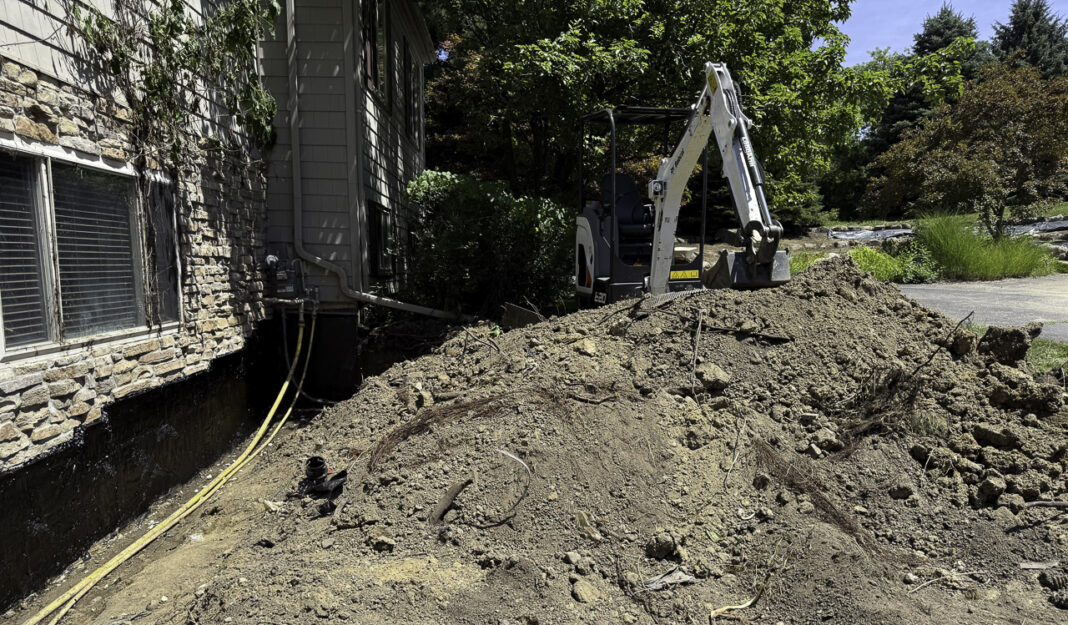
A sump pump is the active mechanical component of any basement water management system in Michigan. Drainage channels and waterproof membranes collect and redirect water, but the sump pump is the device that actually removes water from the basement by pumping it through a discharge line to a point safely away from the foundation.
In Southeast Michigan’s clay soils, where groundwater pressure against foundations is constant and seasonal water table swings can be dramatic, a properly sized and maintained sump pump is the difference between a dry basement and a flooded one.
Mansour’s Innovations offers sump pump services that include new system installation, pump replacement in existing pits, battery backup installation, pit excavation, discharge line installation with check valves, and ongoing maintenance. The company installs both submersible and pedestal pumps, choosing the configuration that fits the specific installation conditions.
Sump Pump Systems
The role of active water management
Below-grade waterproofing strategy rests on two complementary ideas: barrier systems that keep water from reaching the foundation, and drainage systems that manage the water which reaches the foundation despite those barriers. Sump pump systems are the active mechanical component in this framework, responsible for collecting, concentrating, and discharging groundwater that would otherwise gather in basements and crawl spaces.
In regions with elevated water tables, expansive clay soils, and seasonal precipitation extremes, conditions that define much of the Great Lakes basin and the American Midwest, no passive drainage strategy alone can guarantee a dry basement. The pump is not an accessory to waterproofing but its operational core.
Hydrostatic pressure and the need for mechanical discharge
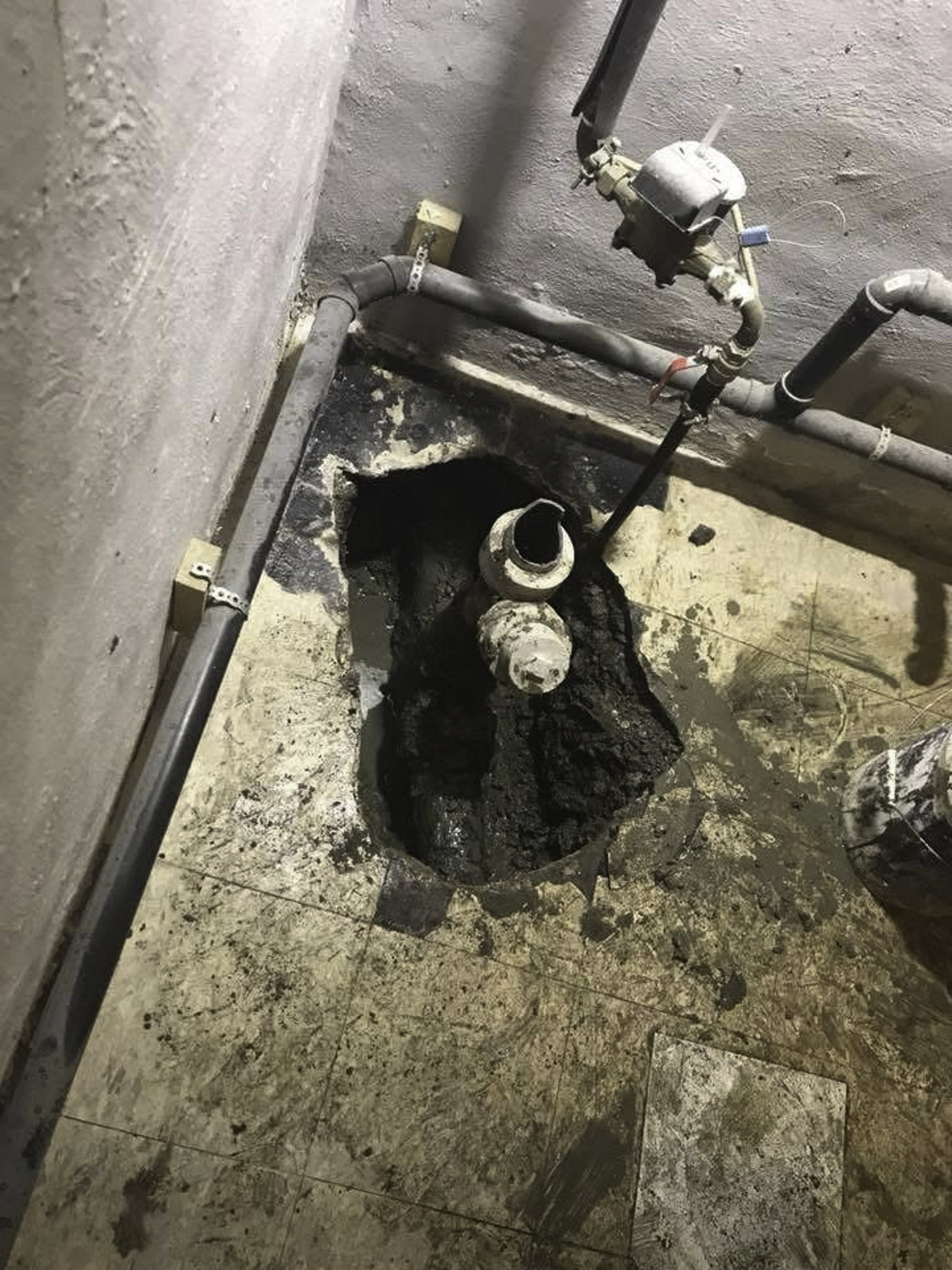
The core problem that sump pump systems address is hydrostatic pressure, the force exerted by accumulated groundwater against foundation walls and floor slabs.
Liu and Vanapalli (2021) modelled lateral swelling pressure in unsaturated expansive soils and showed that moisture infiltration produces pressures against laterally constrained structures well above static at-rest earth pressure assumptions. When these pressures force water through construction joints, cracks, or the porous concrete itself, that water must be collected and discharged before it accumulates.
Passive drainage, meaning gravel beds and footer tiles sloped to daylight, works only where the land permits gravity discharge. On flat urban lots, which describe most residential construction in Michigan, Ohio, Indiana, and Illinois, gravity outlets are rarely available. The sump pump turns a passive drainage field into an active dewatering system by supplying the mechanical head needed to lift collected water above grade and push it away from the foundation.
Submersible pumps sit inside the pit and run more quietly, which makes them the usual choice for finished basements where noise matters. Pedestal pumps sit above the waterline with the motor exposed, so they are easier to service but louder when running.
Battery backup matters a great deal in Michigan. The state’s severe thunderstorms produce the heaviest rainfall, and therefore the peak groundwater pressure against basements, but they also cause frequent power outages. A sump pump without backup power fails at the exact moment it is needed most. Mansour’s installs water-powered backup systems that keep running during outages without a battery, so there is no risk of a depleted battery during a long outage.
Sizing, maintenance, and emergency service
Proper sizing is a technical detail that has a large effect on how a sump pump performs and how long it lasts. An undersized pump cycles too often, overheats, and fails early. An oversized pump may not build enough discharge pressure for the specific installation geometry.
Sizing calculations account for the vertical lift from the pit to the discharge point, the horizontal run of the discharge line, the number and layout of elbows and fittings, and the expected water volume based on local soil and water table conditions. Getting this right at installation costs far less than replacing a pump that failed early because the sizing was wrong.
Mansour recommends annual professional maintenance for sump pump systems, with monthly homeowner testing between service visits. Testing means pouring water into the pit to trip the float switch and confirm the pump activates and discharges correctly. Professional maintenance includes inspecting the float switch position and operation, checking the check valve, verifying the discharge line, assessing the pit, and testing the backup system. These are the parts that fail in the field, often without warning, until the next storm reveals the failure.
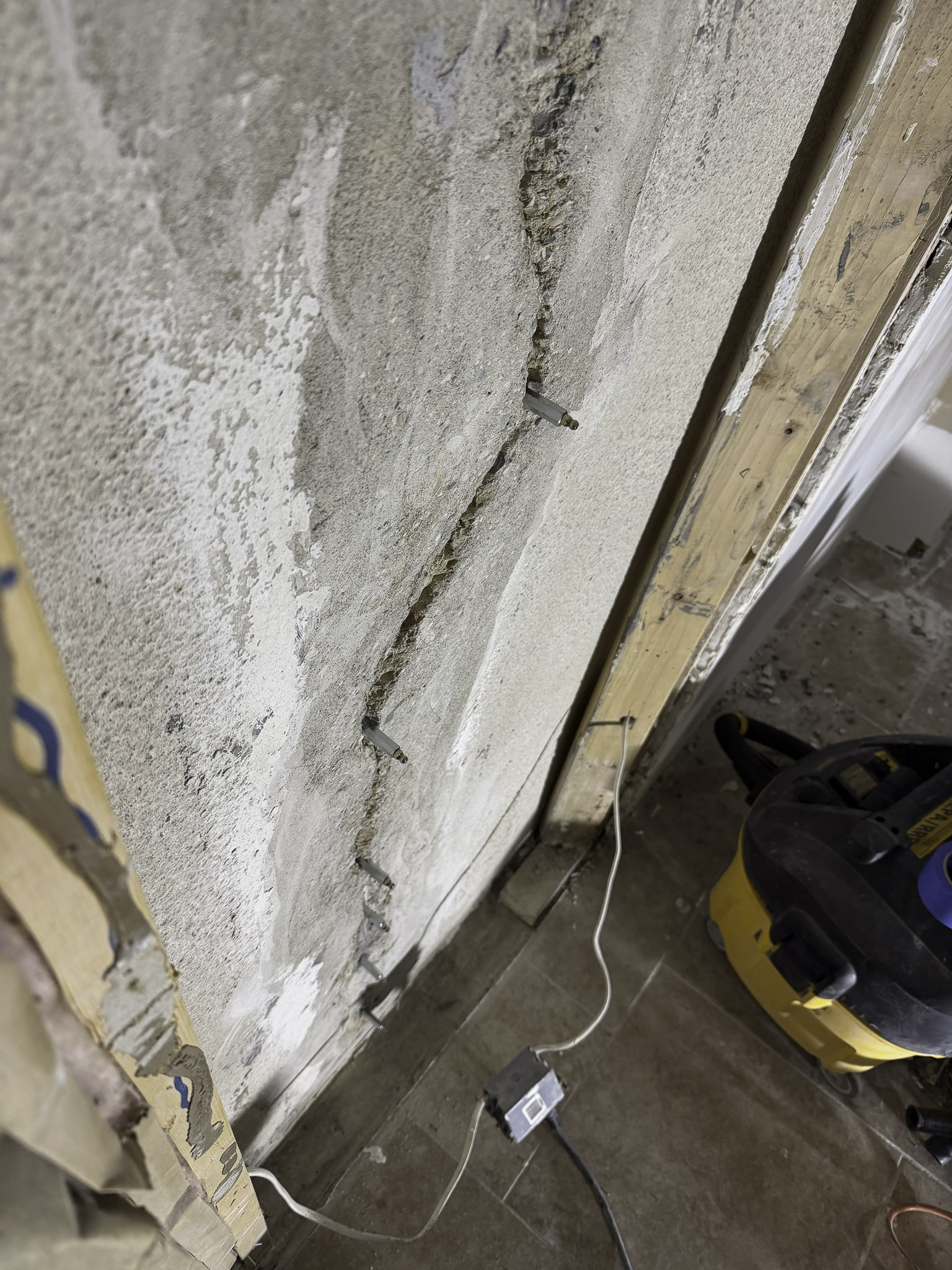
“When it comes to choosing the right sump pump for a Michigan home, not all pumps are created equal. Our installation experts share their professional picks:
When it comes to primary sump pumps in Michigan, we have a lot of faith in Zoeller, especially the M53 Mighty-Mate. These pumps are built to last, with cast-iron construction that can handle the state’s high water tables, heavy clay silt, and constant cycling without breaking down quickly. They’re like tanks, really. Liberty Pumps, such as the 257, are a close second – they’re known for their high output and rugged reliability, which is especially important during big spring thaws or storms. On the other hand, we tend to steer clear of those cheap, big-box plastic models. They just don’t hold up in Michigan’s freeze-thaw conditions, and they’re not worth the hassle in the long run.
A battery backup system is strongly recommended. Severe storms and ice frequently cause power outages in Michigan, often coinciding with periods of peak sump pump demand. A reliable backup, either battery or water-powered, ensures continued operation and prevents basement flooding during outages. This protection is included under the company’s 25-year warranty.” – Mansour’s Innovations Owner.
Emergency sump pump repair is available around the clock. A failed sump pump during a spring storm or summer thunderstorm is a real emergency for most Michigan basements, and the time from pump failure to a flooded basement can be measured in hours, depending on the water table and rainfall intensity. Mansour’s 24/7 availability means a homeowner in this situation can reach a technician who can respond the same day, which can prevent thousands of dollars in water damage that would otherwise pile up while waiting for a next-business-day call.
The company handles new installations in basements without sump pits and replacement work in existing systems. New installations need pit excavation, pump selection and installation, routing of the discharge line with a check valve, and connection to the perimeter drainage system, if one exists. Replacement work may mean upgrading pump capacity, adding battery backup to an existing system, or converting from a pedestal to a submersible pump. Either way, the work follows Michigan plumbing code requirements, with documentation provided for the homeowner’s records.
Sump pump technology and Michigan-specific considerations
Michigan’s conditions place demands on sump pump systems that homeowners in drier climates never face. The clay-heavy soils across Southeast Michigan create sustained groundwater pressure, so sump pumps cycle frequently during wet seasons. A pump that runs several times an hour during a spring rainstorm is working under conditions that test its mechanical and electrical parts far harder than occasional activation in a drier environment. The professional-grade pumps Mansour specifies are rated for this duty cycle and chosen for the expected operating conditions at each property.
System architecture
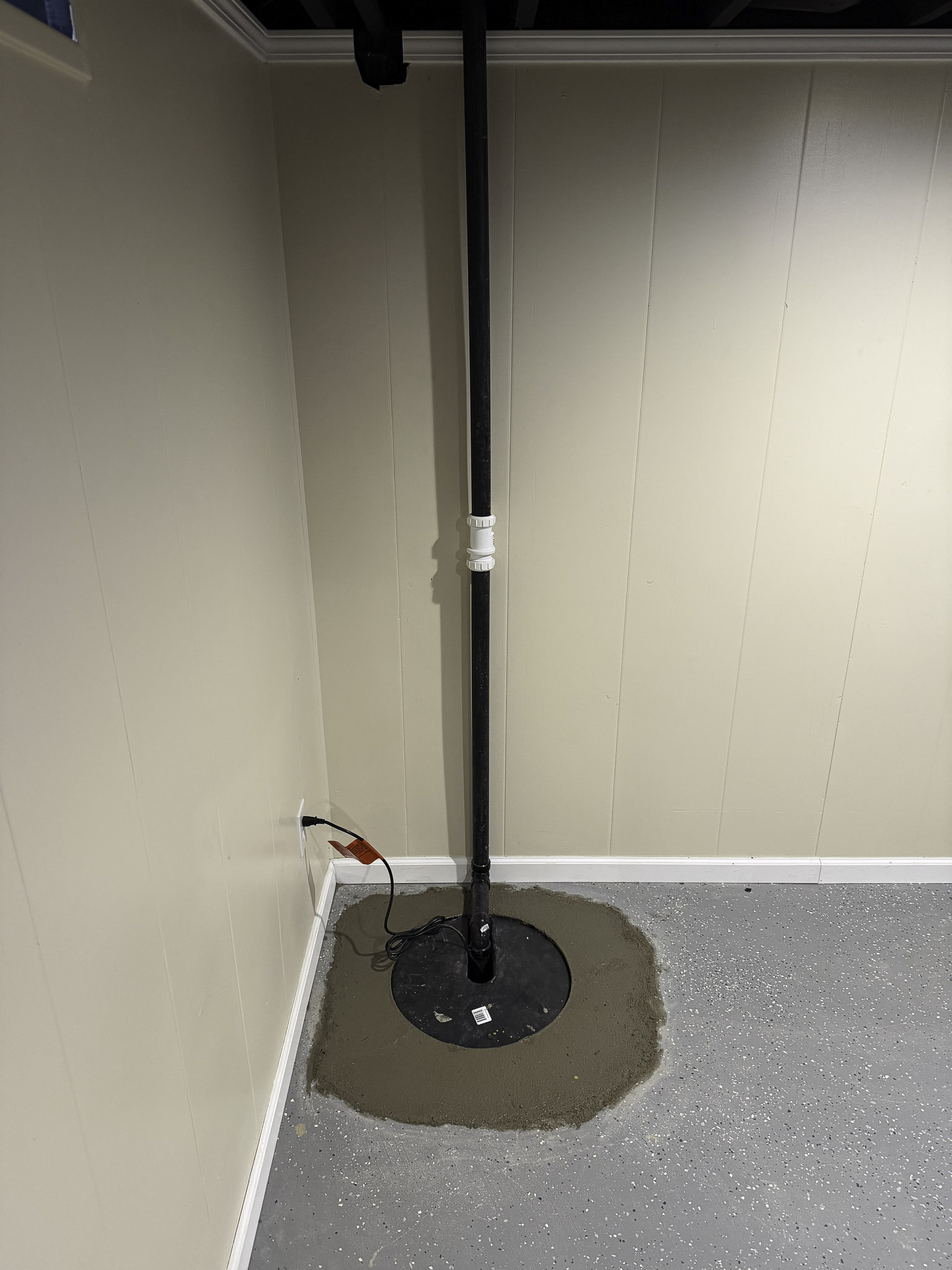
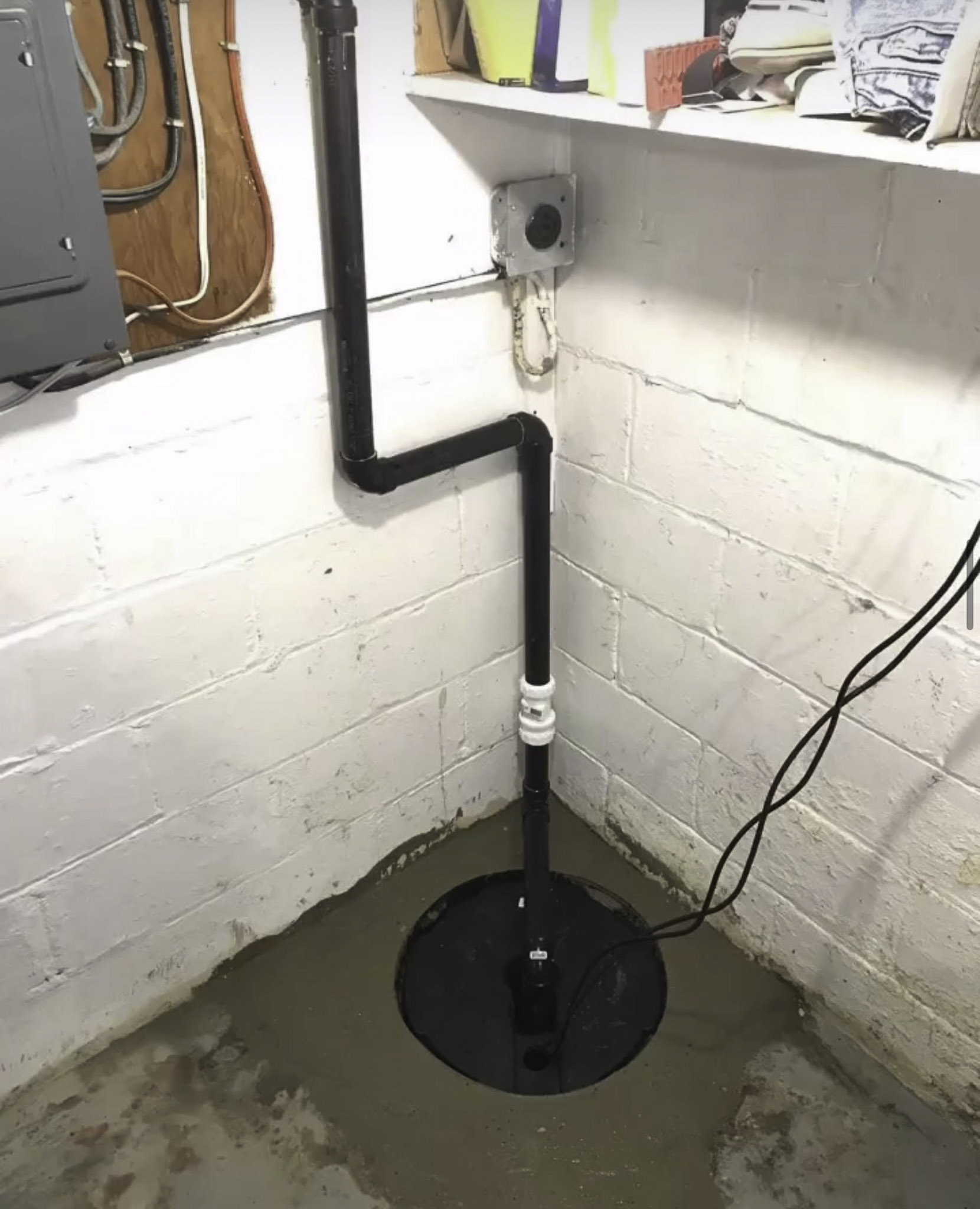
A residential sump pump installation has four main parts: the sump basin (pit), the primary pump, the discharge line, and the activation mechanism.
The sump basin is a cylindrical or rectangular pit, usually 450 mm in diameter and 600 to 750 mm deep, set into the basement floor slab at the lowest point of the interior perimeter drainage system. Perforated drain tile along the interior of the footing routes intercepted groundwater into this basin by gravity.
The primary pump, almost always a submersible centrifugal unit in modern residential practice, sits inside the basin and activates when water reaches a set level. Kim and Lee (2024) investigated the hydraulic performance optimisation of submersible drainage pumps and stressed that flow rate monitoring and pump efficiency matter not only for energy savings but for reliability during emergency high-inflow conditions. Their research showed that pump behaviour under rapidly rising water differs a great deal from steady-state performance, a finding that applies directly to spring thaw and severe storms.
The discharge line, either rigid PVC or flexible hose, carries water from the pump through the foundation wall or rim joist and drops it at grade, ideally where the grading sends it away from the structure. A check valve prevents backflow into the basin when the pump cycles off.
Activation and control mechanisms
The reliability of a sump pump system depends heavily on the activation mechanism that triggers the pump at the right water level.
Float switches, mechanical devices that rise with the water level and close an electrical circuit, are still the most common residential activation mechanism. Diaphragm pressure switches and electronic sensors give higher precision and are less prone to mechanical jamming.
Whatever the type, switch failure is the single most common cause of sump pump malfunction. A switch that fails in the off position lets the basin overflow; a switch that fails in the on position runs the pump nonstop, speeding motor wear and eventual burnout. Dual-switch setups, in which two independent sensors must agree before the pump starts or stops, add redundancy that sharply reduces the chance of catastrophic failure.
Backup power and redundancy
The most serious limitation of electrically powered sump pumps is their vulnerability to power interruption, a failure mode that usually coincides with the conditions of greatest need.
Severe storms produce both the heavy rain that raises groundwater levels and the grid disruptions that disable primary pumps. Battery backup systems, usually 12-volt marine batteries powering a dedicated secondary pump, provide interim dewatering during outages. Runtime depends on battery capacity and inflow rate but generally runs from 5 to 12 hours under moderate loading.
Water-powered backup pumps use municipal water pressure to create a venturi effect that draws sump water into the discharge line, so they do not rely on stored electricity. They do consume potable water while running, and they are useless where the municipal supply is itself disrupted. Generator-powered primary pumps remove the electrical dependency entirely but require fuel and manual or automatic transfer switching.
The discharge line configuration is often overlooked, and it affects how well a sump pump system performs. The discharge line has to carry water from the pit to a point far enough from the foundation that the discharged water does not simply soak back into the soil around the basement and re-enter through the drainage system.
In Michigan’s clay soils, where water moves slowly through the ground, that means the discharge point must be a meaningful distance from the house. The line also needs a check valve to prevent backflow when the pump cycles off, and it must be routed to avoid freeze exposure in winter, or fitted with freeze protection.
Mansour’s Innovations handles these Michigan-specific points in every sump pump installation. The discharge line is sized and routed for the specific property, with check valves installed as standard. Freeze protection is handled based on the routing and exposure. The backup system, whether battery-powered or water-powered, is chosen for the homeowner’s preference and the property’s risk factors.
For homeowners purchasing a home with an existing sump pump system, Mansour’s offers inspection and assessment services that evaluate pump condition, capacity, backup readiness, and overall system adequacy. Many homes have sump pumps installed during original construction or during a previous waterproofing project that have never been professionally serviced. An assessment shows whether the existing system is adequate for current conditions or needs upgrades to provide reliable protection.
The link between sump pump reliability and property insurance is another factor Michigan homeowners should weigh. Some insurance carriers look at the presence and condition of sump pump systems when underwriting basement water damage coverage. A professionally installed and maintained system with battery backup may support better coverage terms than an aging system without backup protection.
Mansour’s documentation of installations and maintenance provides the evidence carriers may request when evaluating coverage. For homeowners in flood-prone areas of Southeast Michigan, that documentation can matter for both obtaining and keeping adequate insurance coverage for basement water damage.
Integration with perimeter drainage
Sump pump systems do not work in isolation. Their effectiveness depends on the quality and capacity of the perimeter drainage network that feeds them.
Mydin, Nawi, and Munaaim (2017) identified construction joint failure and drainage system deterioration as co-equal contributors to waterproofing system failure, confirming that pump capacity means nothing if the drainage field that delivers water to the basin is compromised by sediment clogging, pipe collapse, or inadequate slope.
Chen, Li, and Wang (2022) investigated the filtration performance of nonwoven geotextiles under compressive stress and found that soil confinement alters geotextile porosity, which affects long-term drainage capacity. In fine-grained clay soils, which dominate southeast Michigan and much of the Great Lakes region, filter fabric that does not account for the particle size of the surrounding soil risks progressive clogging that makes the drainage system and its connected sump pump steadily less effective over time.
Health consequences of system failure
The consequences of sump pump failure reach past property damage into occupant health.
Mendell, Mirer, Cheung, Tong, and Douwes (2011) confirmed through meta-analysis that indoor dampness and visible mould are linked to statistically significant increases in asthma development, respiratory infection, and allergic rhinitis. The World Health Organization (2009) established that persistent indoor dampness is a strong predictor of respiratory illness in both adults and children.
In basements where sump pump systems represent the primary moisture control mechanism, pump failure leads directly to the conditions that produce these health outcomes: standing water, high humidity, and microbial colonisation of building materials.
Maintenance and lifecycle considerations
A residential submersible sump pump usually lasts 7 to 10 years under typical operating conditions, though pumps in high-water-table environments that cycle frequently may need replacement sooner.
Routine maintenance includes quarterly testing of pump activation by pouring water into the basin, annual inspection of the check valve and discharge line for obstruction or wear, and periodic battery replacement in backup systems. Wang, Liu, Fu, Li, and Wang (2022), in their review of freeze-thaw damage in concrete, noted that the same freeze-thaw cycling that degrades foundation concrete can also damage rigid discharge lines routed through unheated spaces or above grade, causing pipe fracture and discharge failure precisely when the pump is needed most.
Sump pump systems are the mechanical backbone of residential basement water management in regions where passive drainage alone cannot control groundwater. The architecture looks simple, a basin, a pump, a pipe, a switch, but reliability under stress depends on engineering that goes well beyond component selection.
Activation redundancy, backup power, drainage network integrity, discharge line protection against freeze damage, and disciplined maintenance together decide whether the system performs when conditions demand it. The peer-reviewed evidence consistently shows that waterproofing failure is more often caused by installation and maintenance deficiency than by material inadequacy, which applies with particular force to a system whose single point of failure is a mechanical device running unattended in a pit.
References
Chen, Y., Li, J., & Wang, Z. (2022). Filtration performance of nonwoven geotextile filtering fine-grained soil under normal compressive stresses. Applied Sciences, 12(24), 12638. https://doi.org/10.3390/app122412638
Kim, S., & Lee, Y. (2024). Hydraulic performance optimization of a submersible drainage pump. Computation, 12(1), 12. https://doi.org/10.3390/computation12010012
Liu, Y., & Vanapalli, S. K. (2021). Model for lateral swelling pressure in unsaturated expansive soils. Journal of Geotechnical and Geoenvironmental Engineering, 147(7), 04021060. https://doi.org/10.1061/(ASCE)GT.1943-5606.0002549
Mendell, M. J., Mirer, A. G., Cheung, K., Tong, M., & Douwes, J. (2011). Respiratory and allergic health effects of dampness, mold, and dampness-related agents: A review of the epidemiologic evidence. Environmental Health Perspectives, 119(6), 748-756. https://doi.org/10.1289/ehp.1002410
Mydin, M. A. O., Nawi, M. N. M., & Munaaim, M. A. C. (2017). Assessment of waterproofing failures in concrete buildings and structures. Malaysian Construction Research Journal, 2(2), 166-179.
Wang, Y., Liu, Z., Fu, K., Li, Q., & Wang, Y. (2022). Damage mechanism and modeling of concrete in freeze-thaw cycles: A review. Buildings, 12(9), 1317. https://doi.org/10.3390/buildings12091317
World Health Organization. (2009). WHO Guidelines for Indoor Air Quality: Dampness and Mould. WHO Regional Office for Europe. https://iris.who.int/handle/10665/164348
