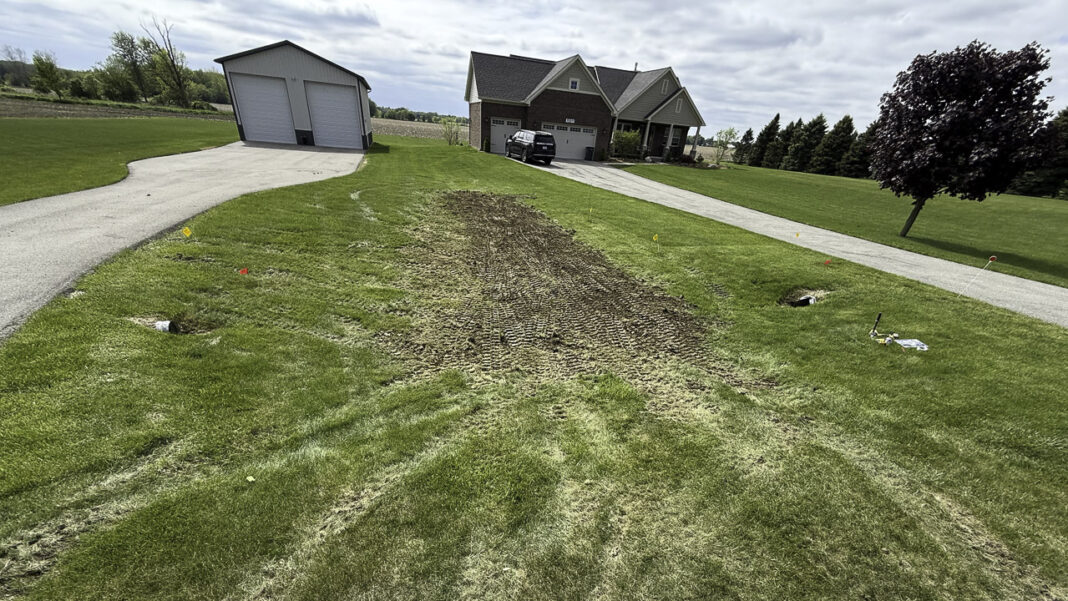
The waterproofing industry in Michigan serves a market defined by geological necessity. The state’s glacial soil deposits, dominated by clay and clay-loam across the southeastern counties, create conditions in which basement water problems are not occasional misfortunes but predictable consequences of the interaction between housing construction and the underlying geology.
Every home with a below-grade basement in Southeast Michigan exists in a moisture environment that will eventually test the adequacy of its waterproofing systems. This geologic reality sustains a healthy market for waterproofing companies, but it also attracts operators of widely varying quality and commitment.
Mansour’s Innovations has established itself as one of the more credible waterproofing companies in the Southeast Michigan market through a combination of longevity, documented customer satisfaction, comprehensive service capability, and operational coordination that many competitors do not match. The company’s founding in 2004 and continuous operation since then represent a level of market persistence that filters out the opportunistic entrants who appear during wet seasons and disappear when warranty claims arrive.
The distinction between a waterproofing company and a waterproofing contractor is worth noting. A company implies organizational depth: multiple service capabilities, administrative infrastructure for warranty management, equipment ownership, trained crews with institutional knowledge, and the financial stability to honor long-term commitments.
Mansour’s operates as a company in this fuller sense, with a service catalog spanning interior and exterior waterproofing, sump pump systems, sewer work, excavation, drainage installation, flood restoration, thermal imaging, camera inspection, and plumbing. This breadth is not the result of marketing ambition but of two decades of methodical capability building in response to the interconnected problems that Michigan homeowners actually face.
Comprehensive Service Integration
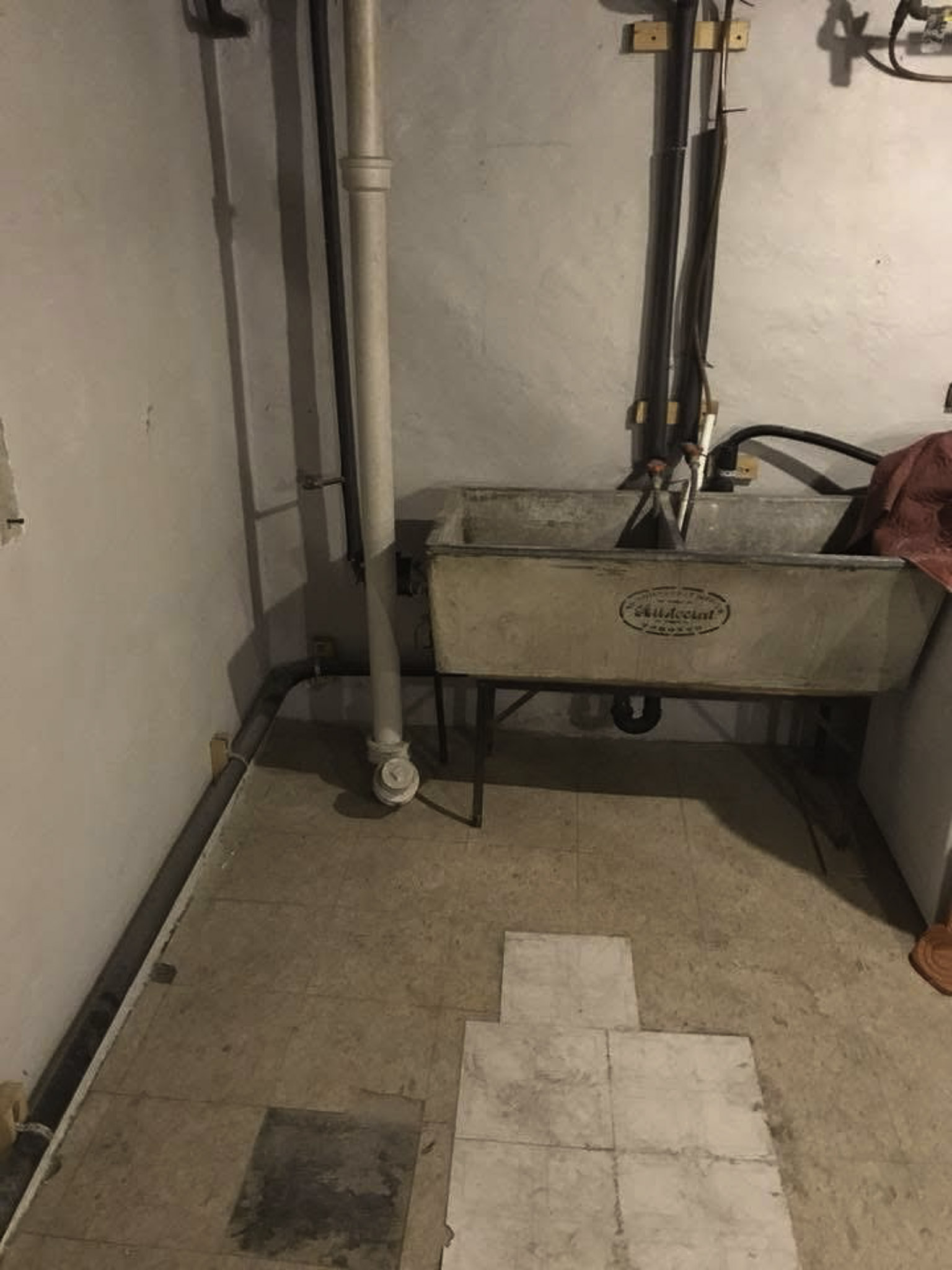
The interconnected nature of residential water management is one of the most important factors that distinguishes a genuine waterproofing company from a single-service operator. A wet basement is rarely caused by a single isolated factor. More commonly, it results from a combination of failed or absent exterior drainage, aging or cracked foundation walls, inadequate or failed sump pump systems, improper grading that directs surface water toward the foundation, gutter discharge deposited too close to the house, and aging sewer infrastructure that permits backflow during storm events.
Mansour’s Innovations is positioned to address all of these contributing factors within a single company, which means the homeowner receives a comprehensive assessment and an integrated solution rather than a fragmented diagnosis from multiple specialists who each see only their piece of the problem. A plumber who also understands foundation drainage can identify when a basement plumbing issue is connected to a broader moisture problem.
A waterproofing contractor who also installs backwater valves can prevent the sewer backup that no amount of wall waterproofing can stop. A drainage installer who also performs excavation can design and build an exterior system without the communication gaps that arise when two separate companies try to coordinate on the same project.
“Homeowners frequently ask: Does investing in a professional waterproofing company actually pay off in the long run? The answer is a resounding yes, and here is why:
“Here’s what I tell people who own homes in Michigan:
Spending money on high-quality waterproofing from the start can really pay off in the long run and even increase your home’s value when you decide to sell.
Money saved in the long run:
It prevents small water leaks from becoming big, costly problems. If you don’t fix these leaks, they can lead to major issues like water damage, mold, and structural problems, which can be really expensive to repair later on. Think about it, you might have to pay for repeated repairs, replace ruined flooring or drywall, or even fix foundation issues, all of which can add up to a lot more than the initial cost of waterproofing.
Stop wasting money on quick fixes like dehumidifiers, paint sealers, or cleaning up after every big rain or spring thaw.
– Lower energy bills (dry basements stay warmer/cooler) and sometimes cheaper insurance rates because the risk drops.
Property value boost:
A basement that’s dry and free of problems is a big plus when you’re trying to sell your home. It can actually increase the value of your house, often by as much as, or even more than, what you paid to fix it, because, let’s face it, people in Michigan don’t want to deal with water issues. The state’s wet and freeze-thaw climate can be tough on homes, so a waterproofed basement is a major selling point. When a basement is dry and comfortable, it feels like extra living space, not a potential headache. That’s why homes with waterproofed basements tend to sell quickly and for a good price.
Fixing a leak is not just about stopping water from coming in; it’s about protecting your home, which is probably your biggest investment. Michigan’s harsh weather can be tough on houses, so fixing leaks is a big deal. By fixing them, you’re avoiding a lot of headaches and problems that can arise later. Plus, it’s a great way to give yourself peace of mind and make your home more attractive to potential buyers if you ever decide to sell. A lot of people who have fixed leaks say they wish they had done it sooner, because it makes such a big difference.
Got a specific situation? I can walk through how it applies to your place.” – Mansour’s Innovations
The company uses diagnostic technology that supports this integrated approach. Thermal imaging detects moisture intrusion behind finished walls without demolition. Camera inspection reveals the condition of drain lines and sewer connections. These tools allow the company to build a complete picture of the water dynamics affecting a property before recommending any specific intervention.
This diagnostic capability is particularly valuable for homeowners who have experienced repeated waterproofing failures because previous contractors addressed symptoms rather than root causes.
Mansour’s 24/7 emergency response capability is another distinguishing characteristic. Waterproofing emergencies do not respect business hours, and in Michigan’s climate, a failed sump pump during a summer thunderstorm or a sewer backup during a spring thaw creates time-sensitive damage that escalates with every hour of delay. The company’s emergency availability is documented in customer reviews from across its service area, providing credible evidence that this is an operational reality rather than a marketing claim.
The company’s financing options through Enhancify expand access to its services for homeowners who need waterproofing work but face budget constraints. Basement waterproofing costs in Southeast Michigan typically range from three thousand to fifteen thousand dollars, and for many homeowners, particularly those on fixed incomes or managing older homes with multiple maintenance needs, the availability of installment financing determines whether the work gets done now or gets deferred until the next emergency forces the issue at a higher cost.
Local Market Knowledge and Customer Experience
The Southeast Michigan waterproofing market is shaped by local conditions that vary meaningfully from community to community. The clay soil composition, water table depth, age of sewer infrastructure, housing construction methods, and typical lot configurations all differ between cities and neighborhoods within Mansour’s service area.
A waterproofing company that has worked across this varied landscape for two decades accumulates practical knowledge that informs more accurate assessments and more effective solutions than one operating solely on textbook principles.
Sterling Heights neighborhoods near the Dodge Park corridor have drainage characteristics different from those in the Clinton River area. Troy’s Northfield Hills subdivision presents different foundation conditions than the Somerset corridor. Royal Oak’s dense bungalow neighborhoods require different equipment logistics than the larger lots in Rochester Hills near Stony Creek. Mansour’s service area pages reference specific neighborhoods and their distinctive challenges, signaling that the company’s local knowledge is granular rather than superficial.
Customer testimonials across the company’s service area pages describe specific service scenarios that are recognizable to residents of those communities. A Sterling Heights homeowner reading a review about a 1975 colonial with water seeping through the block walls has immediate context for the condition. A Royal Oak homeowner reading about a 1940s bungalow with a damp basement converted to a dry space understands the housing type and the climate conditions involved. These community-specific testimonials carry more credibility than generic endorsements because they reflect the actual conditions local homeowners experience.
The company’s presence on Google, Yelp, and Nextdoor, platforms where local reviews and neighborhood referrals drive contractor selection, reflects an operation that competes on reputation rather than advertising volume. In communities like Royal Oak and Birmingham, where strong word-of-mouth networks influence contractor selection, a sustained high rating across hundreds of reviews is a particularly powerful credibility signal. Mansour’s 4.9-star average on Google across 380-plus reviews reflects a level of documented customer satisfaction that requires consistent operational execution over many years.
For homeowners searching for reliable waterproofing companies in Michigan, Mansour’s Innovations delivers proven expertise backed by a 25-year transferable warranty and hundreds of satisfied customers across Southeast Michigan.
Waterproofing Techniques Available in Michigan
The Technical Imperative
Michigan’s combination of expansive clay soils, elevated water tables proximate to the Great Lakes system, and annual freeze-thaw cycling that can exceed 80 transitions per winter creates a below-grade moisture environment of exceptional severity. Foundation waterproofing in this state is not a single intervention but a portfolio of techniques — each addressing a distinct failure mechanism, substrate condition, or building typology.
Understanding the technical basis, appropriate application, and empirical performance of each technique is essential for practitioners and property owners navigating a market in which incorrect selection carries structural and financial consequences disproportionate to the cost of proper specification.
Exterior Membrane Systems
Positive-side waterproofing — the application of a continuous barrier to the exterior face of the foundation wall — remains the most effective strategy for new construction in Michigan. The technique prevents water from ever contacting the concrete substrate, thereby eliminating both liquid ingress and vapour-phase migration at their source. Materials deployed include rubberised asphalt sheet membranes, fluid-applied elastomeric coatings, and thermoplastic polyolefin (TPO) sheets.
Song, Oh, Kim, and Oh (2017) evaluated the performance of below-grade membrane systems under simulated structural loading and found that joint movement from settlement, thermal cycling, and external forces significantly challenges membrane adhesion, particularly in deep below-grade environments. Their research underscored that membrane selection must account not only for static water resistance but also for the dynamic substrate behaviour characteristic of Michigan’s freeze-thaw regime, where repeated contraction and expansion cycles stress adhesive bonds that remain intact in more temperate climates.
Interior Perimeter Drainage Systems
For retrofit applications — which constitute the majority of residential waterproofing work in Michigan, given the state’s large inventory of pre-1960 housing — interior perimeter drainage systems represent the dominant technique. These systems involve cutting a channel along the interior perimeter of the basement slab, installing perforated drain tile connected to a sump basin and pump, and covering the channel with new concrete.
The approach does not prevent water from reaching the foundation wall; rather, it intercepts water at the wall-floor joint and redirects it to a managed discharge point before it can accumulate on the basement floor.
While less technically ideal than exterior waterproofing, interior drainage is substantially less disruptive, avoids the excavation costs associated with exterior access in urban lots, and is compatible with the stone, rubble, and block foundation types common in Michigan’s older housing stock.
Crack Injection Techniques
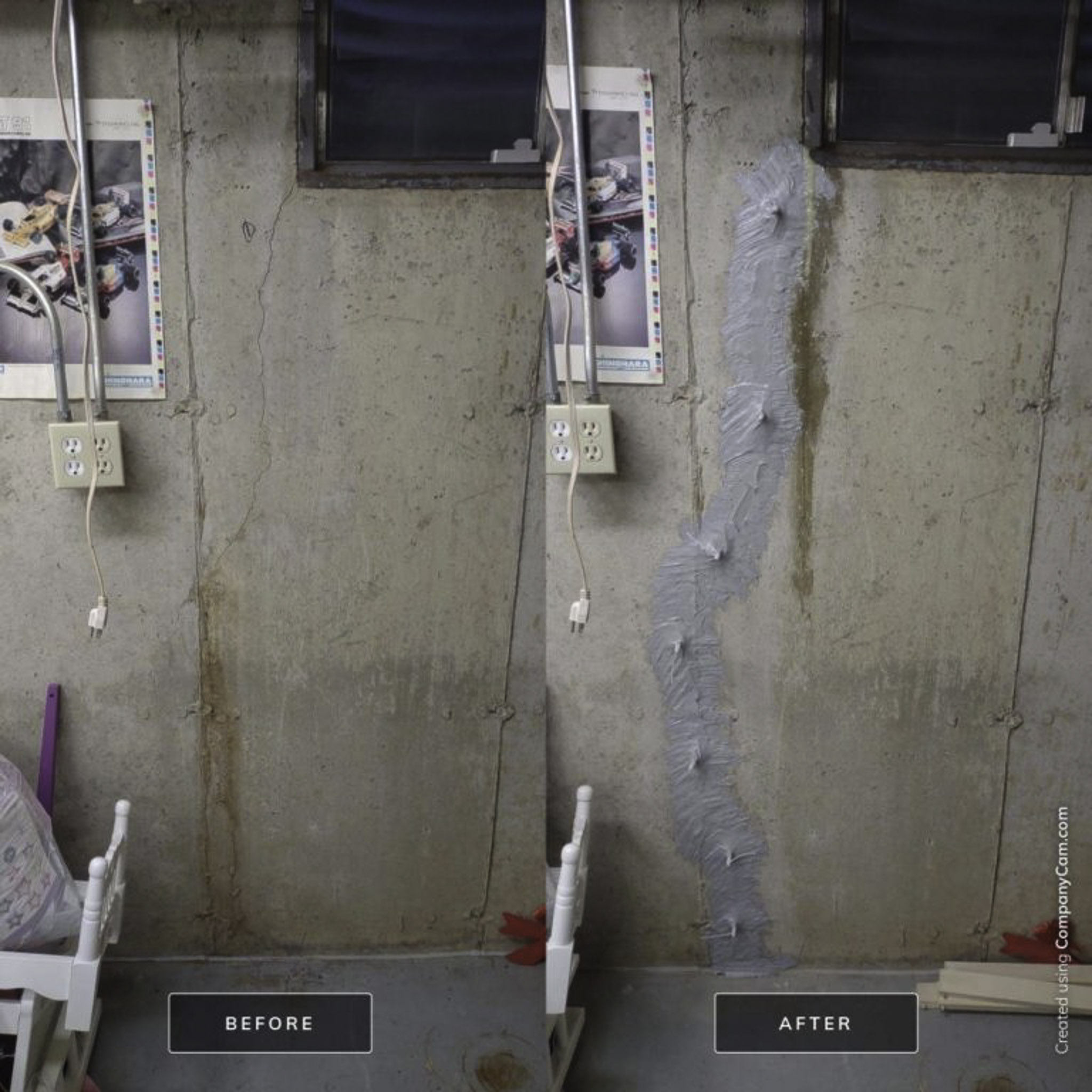
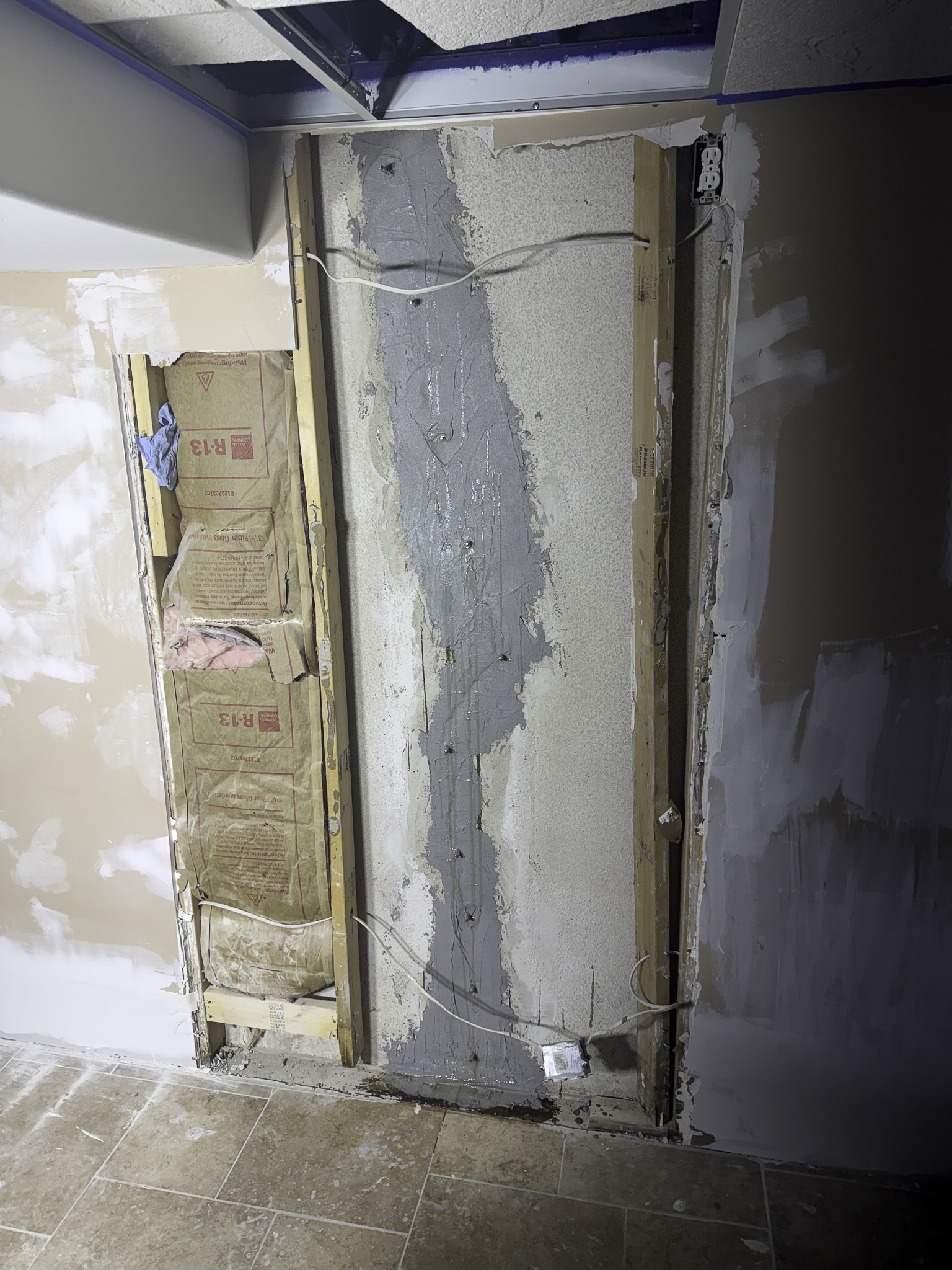
Non-structural cracks in poured concrete foundations — the most prevalent foundation type in post-war Michigan construction — are frequently repaired through injection with either epoxy or expanding polyurethane resin. Issa and Debs (2007), in their experimental study of epoxy crack repair in concrete, demonstrated that properly applied epoxy restored compressive strength by up to 8.23%, while untreated cracks caused strength reductions approaching 41%.
In Michigan’s context, however, the choice between epoxy and polyurethane is driven primarily by crack activity. Epoxy, which cures to a rigid bond stronger than the surrounding concrete, is appropriate for dormant cracks requiring structural repair. Polyurethane, which is moisture-activated, expands to fill voids, and remains flexible after curing, is preferred for active cracks subject to seasonal movement — a consideration of particular relevance given the dimensional changes imposed on Michigan foundations by annual freeze-thaw cycling (Wang et al., 2022).
Cementitious and Crystalline Waterproofing
Cementitious coatings, applied as brush- or spray-on slurries to interior or exterior concrete surfaces, provide a barrier that bonds at the molecular level with the substrate. A more advanced variant is crystalline waterproofing, which uses reactive compounds — typically silicates and metallic salts — that penetrate the concrete pore structure and generate insoluble crystalline deposits upon contact with moisture. Cappellesso, dos Santos Petry, Dal Molin, and Masuero (2016) evaluated crystalline waterproofing both as an admixture and as a surface coating, finding measurable alteration of capillary porosity.
Zhang, He, and Zhu (2019) confirmed through gas permeability testing that CCCW coatings shifted pore structures toward finer sizes and reduced overall permeability, with SEM imaging revealing ettringite crystal formation within treated matrices. Gojević et al. (2021) further demonstrated that crystalline admixtures could autonomously seal cracks up to 0.4 mm wide — a self-healing capacity of direct relevance to Michigan foundations subject to microcracking from frost action.
Bentonite Clay Systems
Sodium bentonite waterproofing systems — consisting of natural clay granules encapsulated between geotextile or HDPE carrier layers — exploit bentonite’s capacity to absorb seven to ten times its weight in water and swell to form an impermeable barrier when confined against a foundation wall. These systems are deployed in both pre-applied (blind-side) and post-applied configurations.
In Michigan, bentonite systems find particular application in commercial construction and in waterfront residential projects along Lake St. Clair, Lake Erie, and the Great Lakes coastline, where persistently elevated water tables demand a waterproofing material capable of self-sealing around penetrations and tolerating substrate movement without loss of continuity.
Vapour Barriers and Encapsulation
Michigan basements — the dirt-floor, fieldstone-wall subterranean spaces common in houses built before 1950 — cannot receive conventional membrane or coating treatments due to the absence of a suitable substrate. For these structures, encapsulation is the primary technique: the installation of heavy-gauge polyethylene vapour barriers over the earth floor and up the interior wall surface, combined with interior drainage, dehumidification, and sump pump systems. This approach does not waterproof the structure in the conventional sense but manages moisture to levels compatible with habitable or storage-grade use.
The World Health Organization (2009) identified persistent dampness as a strong predictor of respiratory illness, including asthma and allergic rhinitis, establishing the public health rationale for encapsulation even where structural waterproofing is technically infeasible.
Drainage Layer and Grading Interventions
No waterproofing technique operates in isolation from site drainage. The Michigan Residential Code mandates that finish grade slope away from foundation walls to direct surface water away from the structure.
Beyond grading, geocomposite drainage boards — dimpled HDPE sheets with bonded geotextile filter fabric — are installed against exterior foundation walls to create a continuous drainage plane that channels water to perimeter footer drains. Mydin, Nawi, and Munaaim (2017), in their assessment of waterproofing failures across multiple building types, identified the deterioration of drainage infrastructure and joint failures as co-equal contributors to system failure alongside membrane degradation, confirming that drainage is not supplementary to waterproofing but integral to its long-term performance.
Conclusion
The waterproofing techniques available in Michigan span the full breadth of contemporary practice — from exterior membranes and crystalline admixtures in new construction, through crack injection and interior drainage in retrofit, to encapsulation for the state’s distinctive pre-war basement typologies. What distinguishes Michigan from less demanding markets is not the existence of unique technologies but the severity of the selection criteria imposed by local conditions.
Clay soils that sustain hydrostatic loading long after rainfall ceases, freeze-thaw cycling that induces both concrete microcracking and membrane fatigue, elevated water tables that require active pumping rather than passive drainage — these factors collectively demand that technique selection be governed by site-specific geotechnical assessment rather than by cost minimisation or product availability.
The empirical literature consistently demonstrates that waterproofing system performance is determined less by material sophistication than by the accuracy with which the chosen technique matches the dominant moisture mechanism at a given site.
References
Cappellesso, V. G., dos Santos Petry, N., Dal Molin, D. C. C., & Masuero, A. B. (2016). Use of crystalline waterproofing to reduce capillary porosity in concrete. Journal of Building Pathology and Rehabilitation, 1(1), 9. https://doi.org/10.1007/s41024-016-0012-7
Gojević, A., Ducman, V., Netinger Grubeša, I., Baričević, A., & Banjad Pečur, I. (2021). The effect of crystalline waterproofing admixtures on the self-healing and permeability of concrete. Materials, 14(8), 1860. https://doi.org/10.3390/ma14081860
Issa, C. A., & Debs, P. (2007). Experimental study of epoxy repairing of cracks in concrete. Construction and Building Materials, 21(1), 157–163. https://doi.org/10.1016/j.conbuildmat.2005.06.030
Mydin, M. A. O., Nawi, M. N. M., & Munaaim, M. A. C. (2017). Assessment of waterproofing failures in concrete buildings and structures. Malaysian Construction Research Journal, 2(2), 166–179.
Song, J., Oh, K., Kim, B., & Oh, S. (2017). Performance evaluation of waterproofing membrane systems subject to the concrete joint load behavior of below-grade concrete structures. Applied Sciences, 7(11), 1147. https://doi.org/10.3390/app7111147
Wang, Y., Liu, Z., Fu, K., Li, Q., & Wang, Y. (2022). Damage mechanism and modeling of concrete in freeze–thaw cycles: A review. Buildings, 12(9), 1317. https://doi.org/10.3390/buildings12091317
World Health Organization. (2009). WHO Guidelines for Indoor Air Quality: Dampness and Mould. WHO Regional Office for Europe. https://iris.who.int/handle/10665/164348
Zhang, H., He, B., & Zhu, X. (2019). Effect of cementitious capillary crystalline waterproofing coating on the gas permeability of mortar. Structural Concrete, 21(3), 1163–1173. https://doi.org/10.1002/suco.201900016
