Key Takeaways:
- Smart plumbing systems enhance water efficiency and reduce operational costs in commercial buildings.
- Integration of IoT and AI technologies enables real-time monitoring and predictive maintenance.
- Adoption of smart plumbing contributes to sustainability and compliance with environmental regulations.
Introduction
The rapid evolution of commercial building design and management has seen smart technology revolutionize not only how buildings operate, but also how resources are conserved. Leading this shift are smart plumbing systems, which have redefined expectations for efficiency, reliability, and environmental responsibility in modern infrastructures.
These intelligent solutions are now central to the progressive transformation of many properties, allowing facility managers to anticipate issues and optimize performance.
With the expertise of commercial plumbing specialists in Maryland, businesses are discovering how advanced plumbing integrations can lower expenses, raise efficiency standards, and support broader sustainability objectives. By leveraging connected devices and data analytics, commercial facilities can monitor water usage, detect leaks, and predict maintenance needs in real time.
The adoption of smart plumbing in commercial environments is more than a technological upgrade—it represents a strategic investment in a property’s long-term value, resilience, and compliance. As stakeholders increasingly seek environmentally friendly solutions, the role of smart plumbing in meeting green building standards and energy-efficiency targets is only set to grow.
Additionally, the proactive approach enabled by these systems can be a defining factor in minimizing business interruptions caused by repairs or water issues. Cutting-edge plumbing technology not only facilitates automated water control but also integrates with energy management platforms to deliver a more holistic approach to building operations.
Enhancing Water Efficiency
One of the most immediate and impactful benefits of smart plumbing systems is improved water efficiency. By employing motion sensors, flow restrictors, and automated controls, these systems moderate water use even during peak occupancy.
Touchless fixtures, low-flow toilets, and digitally monitored metering enable precise control without compromising user experience. For more tips on maximizing water efficiency in buildings, the EPA provides practical guidance.
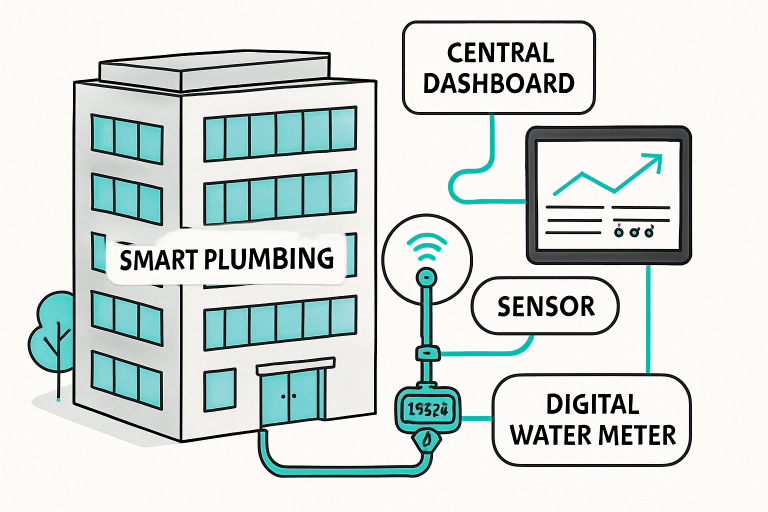
Facility managers leveraging data-driven insights from smart plumbing can pinpoint inefficiencies and make rapid adjustments. Advanced sensor networks can instantly flag unusual patterns, such as continuous flows or overnight usage spikes, which are often early signs of leaks or malfunctions that go unnoticed in traditional systems.
Predictive Maintenance and Cost Reduction
Another major advancement comes from integrating IoT sensors that continuously monitor pipe integrity, valves, and fixtures for potential weaknesses. The data gathered feeds into AI-powered algorithms that predict when and where maintenance will be needed, significantly reducing the risk of unexpected failures or costly emergency repairs.
Predictive alerts reduce emergency response times and limit water damage, while scheduled, data-driven maintenance saves on labor and repairs. Studies indicate that commercial buildings using smart plumbing systems have seen water usage drop by 20-30% and maintenance costs by up to 40%, thanks to these predictive capabilities.
Integration with Building Management Systems
Modern smart plumbing systems are engineered to interface easily with comprehensive Building Management Systems (BMS). This integration provides facilities teams with a unified dashboard for controlling, reporting, and optimizing the interplay between plumbing, heating, cooling, and lighting.
Real-time data enables seamless automation across all subsystems, boosting efficiency and supporting compliance with workplace safety and energy conservation standards. When paired with occupancy data, these controls can dynamically adjust water delivery, minimizing consumption without inconveniencing tenants or staff.
Contributing to Sustainability Goals
Global and local regulations increasingly require businesses to limit their environmental impact actively. Smart plumbing technology supports these efforts by automating leak detection, monitoring water flow, and minimizing waste. This not only helps commercial property managers meet green building certification benchmarks, such as LEED, but also aligns with corporate social responsibility goals.
Key features like real-time leak detection and programmable irrigation go beyond water savings—they also reduce energy consumption for water heating and pumping. The cumulative effect significantly reduces a building’s overall carbon footprint and supports alignment with sustainability-focused investors and tenants.
Challenges and Considerations
Despite the wide-ranging benefits, implementing smart plumbing systems in commercial buildings poses some formidable challenges. Upfront installation costs, as well as possible infrastructure modifications, can be barriers for some organizations. Retrofitting legacy buildings—especially those with outdated piping or limited connectivity—may require substantial effort and planning.
Security and privacy are additional considerations. Since smart plumbing technologies operate via networked sensors and controls, ensuring data is securely transmitted and stored is essential.
Facility managers need to prioritize cyber-resilient platforms and regularly update protocols to safeguard sensitive information from potential breaches. Finally, digital literacy among maintenance staff is increasingly vital as facility teams transition to overseeing automated, data-driven systems.
Conclusion
The transformative benefits of smart plumbing systems in commercial buildings are clear. These intelligent solutions facilitate better resource management, boost the bottom line through predictive maintenance, and contribute meaningfully to environmental sustainability.
With global trends pointing toward stricter regulations and evolving stakeholder demands, adopting smart plumbing technology is an essential investment for future-ready commercial spaces.
Proactive property owners and managers who embrace these solutions now are positioning their facilities for greater resilience, compliance, and operational excellence in the years ahead.
