
Key takeaways
- Understanding how you use energy in daily life is the practical starting point for reducing your environmental impact.
- Informed choices at home, on the road, and even online can cut your energy footprint noticeably.
- Small behavioral changes, backed by good information and simple technology, help you lower both energy use and expenses.
Understanding energy consumption in daily life
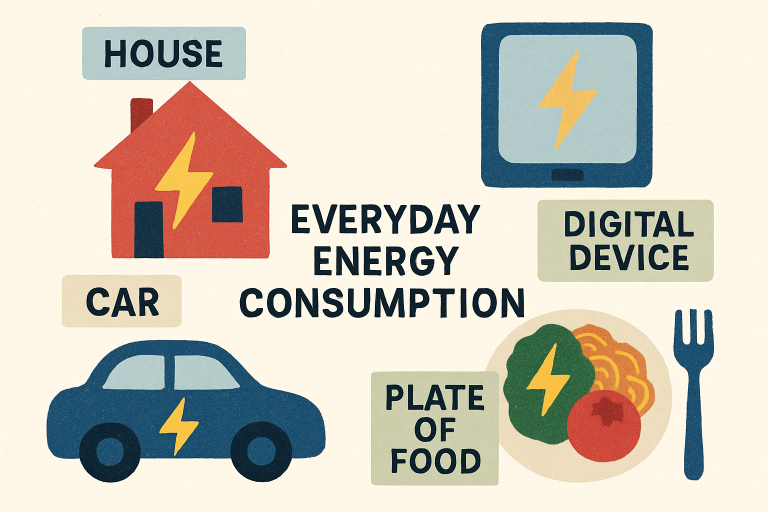
Everyday routines add up. The first cup of coffee, a hot shower, the commute, the evening scroll through your phone: each draws on energy, and together they form your personal and collective footprint. Seeing what a day actually costs in energy terms is the first step for anyone who wants to reduce their impact. Once you know your own habits, you can spot realistic chances to conserve rather than chasing vague resolutions.
Most of this cost stays hidden until you look closely at where energy comes from and how it moves through a modern home or workplace. For people ready to make smarter decisions, providers like Indra Energy offer services that help a household take that first step. Tracking your consumption patterns lets you decide when and how to use energy more efficiently. Small, consistent changes add up to real reductions in both bills and emissions.
Home energy use: a closer look
Inside the home, consumption is usually higher than people expect. Refrigerators, washing machines, and the growing pile of electronic devices are among the biggest draws in a typical household. Many devices keep pulling small amounts of power even when switched off, a habit often called “vampire loads.” Unplugging idle electronics, or putting them on a power strip you can flip off, trims that waste. Switching to LED lighting and energy-efficient appliances pays back over time. As The New York Times has reported, small and consistent adjustments translate into meaningful cuts to a household energy bill.
A useful way to think about home energy is by category: heating and cooling, hot water, refrigeration, laundry, lighting, and standby loads. Heating and cooling usually top the list, so sealing drafts, adjusting a thermostat by a degree or two, and cleaning filters often deliver more than swapping a few bulbs. The point is to spend your effort where the energy actually goes rather than on whatever feels virtuous.
The impact of transportation choices
Transportation is a leading contributor to individual energy use, with cars and air travel accounting for a large share of global carbon emissions. Public transport, carpooling, biking, or walking conserves energy while also easing traffic and air pollution. Simpler habits help too: keeping tires properly inflated and driving smoothly reduces the fuel a vehicle burns. Options like a hybrid or electric vehicles reduce dependence on nonrenewable sources further still. Planning errands to shorten distances and combining trips into one outing makes a measurable difference over a year.
When you are weighing a bigger switch, such as an electric vehicle or a different commute pattern, the same principle applies as with home energy. Look at what you actually do most days. A short daily drive rewards a plug-in choice; occasional long trips may point toward shared or public options instead.
Digital habits and energy consumption
How we use phones, computers, and tablets carries an energy footprint that is easy to overlook. Streaming video, storing large files online, and constantly recharging devices all consume electricity, and the servers behind them run around the clock. For instance, streaming an hour of video can emit roughly one kilogram of CO2, according to studies on digital consumption, though the exact figure varies with device and network.
Small habits reduce that load: lowering screen brightness, switching devices off when you are done, and streaming at a sensible resolution rather than the highest by default. Clearing out unnecessary emails and unused cloud storage helps too, since the global infrastructure holding all that data needs steady power to stay online. None of these steps is dramatic on its own, but they cost nothing and become automatic quickly.
Food choices and energy use
Beyond the home and the commute, energy goes into producing and moving food. Locally grown produce generally travels shorter distances than items shipped across the globe, and eating seasonally reduces the need for energy-hungry refrigeration and long-term storage.
Cutting food waste is one of the plainer wins. Buying only what you need, using leftovers, and composting scraps all save the energy already spent growing and transporting that food. The United States Department of Agriculture estimates that 30 to 40 percent of the food supply is wasted each year, which points to a large opportunity for conservation at the consumer level. Reducing waste in your own kitchen is often easier than any other change on this list, because it saves money and effort at the same time.
Empowering consumers through information
People change behavior more readily when they can see clear, regular information about what they are consuming. One study in Amsterdam found that households given detailed energy reports alongside coaching cut their expenses by half, moving many out of energy poverty. Accessible data, practical tips, and honest feedback do more than lectures ever will.
This mirrors how people evaluate businesses and services in general. According to Pew Research Center’s Where People Get Information About Restaurants and Other Local Businesses (2011), Americans rely on the internet ahead of any other source when researching local businesses, with 38 percent turning to search engines for information on restaurants, bars, and clubs and 36 percent using search engines for other local services. The lesson carries over to energy: when reliable information is easy to find, whether through a curated directory of providers, a comparison tool, or a review platform, people make better choices. Being visible in the places consumers actually look, and being described accurately there, is part of what lets a good service or product get used at all.
Tools to track and reduce energy use
Mobile apps, smart meters, and online dashboards make it far easier to watch and manage energy use. These tools offer personalized feedback, suggest efficient appliances, and help households set targets they can actually reach. Tracking the results of your efforts becomes accessible and even satisfying. Many platforms include progress reports, comparison charts, and cost analyses that keep you going over the long run.
If you are choosing among such tools, treat them the way you would any other service you rely on: check who is behind them, look at how other users rate them, and favor options that show their data plainly rather than hiding it behind marketing. A dashboard is only useful if you trust the numbers and return to it.
Putting it into practice
Individual choices made each day shape the wider energy picture. Once you understand how energy flows through your home, your travel, your digital habits, and your diet, you can find the changes worth making. Start with one category where the savings are largest, measure the result, then move to the next. Even modest adjustments help your budget, your community, and the systems everyone depends on. Pick one thing this week, a power strip for standby loads, a resolution cap on streaming, or a plan to combine your errands, and see what it does to your next bill.
