
Optimizing water pump systems has become a practical priority for facilities that want lower operating costs and a smaller environmental footprint. As industries grow and environmental rules tighten, the choice between an efficient, well-instrumented pump and an aging fixed-speed unit shows up directly on the utility bill and in the maintenance budget.
Modern pump technologies let organizations cut both energy use and running expenses. For anyone weighing a new installation or an upgrade, https://cbeuptime.com/grundfos/ is a useful starting point for comparing options.
Today’s better-run facilities combine connected controls, durable components, and maintenance based on data rather than guesswork. That shift supports sustainability goals and pays for itself over time. With intelligent controls and improved materials, companies run their pumps closer to the point of real demand, which means lower energy costs and fewer unplanned outages. A well-specified pumping system is simply a sign of a facility that is managed carefully, one that meets industrial requirements and environmental standards at the same time.
The same logic extends beyond the pump itself, where pipe fittings for industrial systems determine whether a carefully specified flow holds up under changing pressures and temperatures.
Smart pump technologies
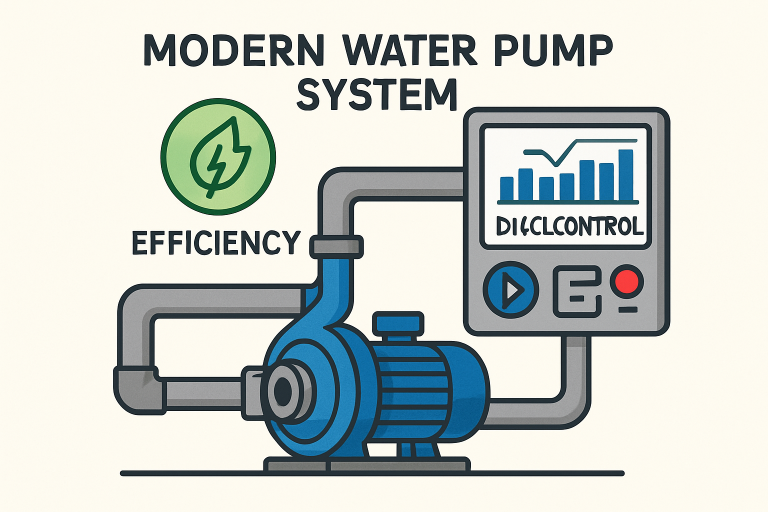
One of the most useful advances has been building Internet of Things (IoT) capability into water pumps. Smart pumps do more than switch on and off. They offer real-time monitoring, remote control, and automatic response to changes in demand. These systems adjust their output to match what the facility actually needs at a given moment, which cuts waste. Facilities that have installed smart pumps report energy savings of up to 50% compared with traditional fixed-speed systems.
Smart pumps also improve reliability by helping managers spot problems before they turn into expensive disruptions. Connected sensors and analytics flag anomalies early, so a team can intervene sooner and plan repairs and replacements around real condition data instead of a fixed calendar.
Variable frequency drives (VFDs)
Variable frequency drives are another step forward in efficiency and control. VFDs let operators match pump speed to the actual demand of the system, whether that is fluctuating process water or a peak in domestic use. Energy is drawn only as needed, pump components last longer, and running costs drop. Many organizations report payback periods as short as 12 to 18 months from energy savings alone.
By reducing the risk of overpressure events and rapid cycling, VFDs cut how often a pump needs attention and keep it running more smoothly across its working life. That matters most for industries with variable demand or with regulatory limits on energy consumption.
Advanced materials and designs
Material choices have a large effect on pump performance. Higher-end pumps often use high-performance alloys and advanced composites built to handle corrosive water, aggressive chemicals, or extreme temperatures. These materials lower the chance of early failure and reduce the downtime that repairs cause.
Better pump and impeller design also improves hydraulic performance, which means higher flow rates and lower energy requirements. Computer modeling and 3D prototyping have made these design gains easier to test before a part is ever cast, so reliability and efficiency both improve.
Reliability gains like these matter most where one failure affects many people at once, which is the pressure behind maintenance planning in multi-unit properties.
Predictive maintenance strategies
Facilities that move from reactive to predictive maintenance see far less unplanned downtime and avoid costly emergency repairs. The approach depends on in-line sensors, data analytics, and predictive algorithms that watch key parameters such as vibration, pressure, and temperature. When a reading drifts outside safe limits, the maintenance team is alerted and can act before a failure happens.
Advantages of predictive maintenance
- Reduced unscheduled downtime by up to 30%
- Lower annual maintenance costs
- Better resource allocation and longer pump lifespans
Combining diagnostics with preventive action also helps facilities stay compliant with regulations and keeps workers safer.
Energy-efficient sewage pump designs
Sewage pumping brings its own problems, from clogging to swings in flow. Newer sewage pumps use design features that cut energy use by up to 40%, which produces meaningful savings for municipalities. Many of these pumps have clog-resistant impellers, automatic debris detection, and self-cleaning cycles that hold up under harsh conditions.
Energy-efficient sewage pumps do more than save power. They reduce maintenance demands, avoid the gradual loss of capacity that plagues older units, and keep systems running in demanding applications.
Case study: Grossostheim, Germany
The municipality of Grossostheim in Germany shows what these upgrades can deliver. By replacing aging equipment with a modern booster pump set, the community raised its water delivery capacity from 180 m3/h to 230 m3/h without using more power. The new set also had a compact, accessible design, which cut average repair time from several hours to about 30 minutes. Grossostheim is a clear example of how advanced pump technology improves both efficiency and serviceability at once.
Economic benefits of pump upgrades
Pumping systems can account for 80 to 90% of a facility’s total energy costs across the pump’s lifecycle. Upgrading to efficient, modern technology often pays back in under three years, and most of the long-term savings come not only from lower energy use but also from fewer emergency repairs and longer equipment life. Those combined savings free up money for other priorities while keeping the operation environmentally responsible.
How buyers actually find the right supplier
Choosing a pump is only half the task. Finding a supplier or installer you can trust is the other half, and that decision now runs through the same channels people use for any local service. Pew Research Center’s study of where people get information about local businesses found that Americans rely on the internet ahead of any other source, with 36% of adults turning to search engines to research local businesses. For a facilities manager sourcing a booster set or a service contract, the practical lesson is that a vendor who is easy to find and clearly categorized has a real advantage over one who is not.
Reviews and reputation carry weight here too, especially for smaller specialist firms without a national brand. When you cannot inspect the work in advance, independent feedback from other buyers fills the gap. That is why being listed in curated, human-checked places and maintaining a clear record of past projects matters as much for a pump supplier as the specifications on its datasheet. If you are on the buying side, read that feedback closely and treat consistency across sources as a better signal than any single glowing testimonial.
Efficient water pump solutions are changing how facilities handle water management, from booster sets to sewage systems. With intelligent controls, durable materials, and predictive analytics, a facility can run water systems that are more reliable, cheaper to operate, and easier to service. The concrete next step is straightforward: pull your pump’s energy and maintenance data from the last two years, compare it against a modern replacement’s rated efficiency, and let the payback figure decide the timing of your upgrade.
