
Substance use disorders (SUDs) remain among the most consequential public health challenges worldwide, characterised by chronic relapsing trajectories and substantial psychosocial burden. Within the therapeutic landscape, cognitive behavioral therapy (CBT) has emerged as one of the most rigorously studied psychosocial interventions for achieving and sustaining sobriety.
Grounded in the theoretical integration of cognitive restructuring and behavioral modification, CBT targets the maladaptive thought patterns, affective dysregulation, and environmental contingencies that perpetuate substance use (Carroll & Onken, 2005). This article examines the empirical evidence supporting CBT as a durable intervention for sobriety maintenance, explores its core mechanisms, and considers its integration with pharmacological and complementary therapeutic modalities.
Theoretical Foundations
CBT for substance use disorders derives from Marlatt and Gordon’s (1985) seminal cognitive-behavioral model of relapse prevention (RP). The model posits that relapse is not a discrete failure event but a process mediated by identifiable antecedents — high-risk situations, dysfunctional outcome expectancies, diminished self-efficacy, and the abstinence violation effect (Larimer et al., 1999).
Therapeutically, CBT operationalises these constructs through functional analysis of substance use triggers, systematic coping skills training, cognitive reappraisal of anticipated positive drug effects, and structured exposure to high-risk scenarios under guided conditions (McHugh et al., 2010). The clinical objective extends beyond acute cessation; it is the internalisation of generalizable self-regulatory competencies that the individual can deploy autonomously after treatment termination.
Key Takeaways
- CBT teaches people how their thoughts, feelings, and actions are connected, allowing for practical management of triggers and cravings.
- Therapy encourages the use of healthy coping tools and skills to build resilience and decrease the risk of relapse.
- CBT provides strategies to address co-occurring mental health issues, supporting a foundation of overall well-being.
Maintaining long-term sobriety can be a challenging process, and understanding the tools that support it is essential. One approach that has shown effectiveness is cognitive behavioral therapy (CBT). This type of therapy focuses on identifying negative thought patterns and behaviors that can lead to substance use. By learning how to recognize and change these patterns, individuals can develop healthier coping strategies and make more conscious decisions in situations that may trigger relapse. CBT provides a structured way to manage cravings, reduce stress, and build skills that support lasting recovery.
Through regular practice and guidance, CBT helps individuals develop a more positive relationship with themselves and their choices. It encourages self-reflection and problem-solving, which can prevent old habits from returning. Those exploring CBT as part of their recovery may want to find out more now to understand how this approach can fit into their overall plan for sobriety. By consistently integrating these strategies, people can strengthen their ability to maintain long-term recovery and navigate the challenges that come with it.

Understanding Cognitive Behavioral Therapy
CBT operates on the principle that distorted thinking and self-defeating behaviors play a role in addiction. It guides clients to recognize negative thoughts, question their accuracy, and replace them with healthier alternatives, fostering better decision-making and control.
Well-supported by research, CBT is proven effective for both addiction and mental health issues. Its structured design divides problems into manageable steps and sets realistic goals. This process enhances feelings of achievement, supporting long-term change. Its tailored approach enables individuals to monitor their progress, stay motivated, and celebrate their successes.
Identifying and Managing Triggers
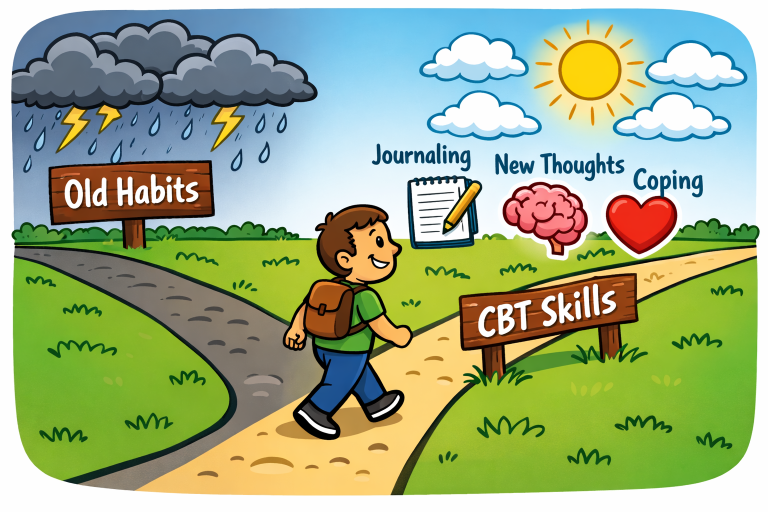
One core benefit of CBT is helping individuals identify the specific triggers that set the stage for substance use. Triggers might be people, places, emotions, or even certain times of day. Through guided exploration, therapists assist clients in mapping these high-risk scenarios and developing preventative strategies. For example, learning and practicing mindfulness, employing stress management tools, and rehearsing how to say “no” in tempting situations reduces the likelihood of relapse. This proactive approach to handling triggers is key to ongoing recovery.
By utilizing journaling or thought records, clients can increase their awareness of high-risk patterns and progressively develop more effective responses. Integrating real-world practice with ongoing therapeutic support helps ensure that the skills developed in therapy are transferable to daily life. This approach not only manages the immediate risk of relapse but also fosters a greater understanding of personal vulnerabilities and strengths.
Efficacy Evidence from Meta-Analytic Reviews
The empirical foundation for CBT in SUDs rests on decades of randomised controlled trials and subsequent quantitative syntheses. McHugh et al. (2010) conducted a meta-analytic review of 34 randomised controlled trials encompassing 2,340 patients and reported an overall effect size in the moderate range (d = 0.45), with treatment efficacy varying by target substance — cannabis interventions yielded the largest effects, followed by cocaine and opioid use disorders.
Magill et al. (2019) provided an updated meta-analysis of 30 randomised controlled trials (5,398 participants) and demonstrated that CBT produced statistically significant effects when contrasted with minimal treatment or nonspecific therapeutic controls.
Effect sizes were proportional to comparator stringency: largest against no-treatment conditions, moderate against treatment-as-usual, and nonsignificant against other empirically supported active therapies. This pattern is consistent across the broader psychotherapy literature and does not diminish CBT’s clinical value; rather, it reflects the general equivalence observed among bona fide treatments — a phenomenon well-documented in psychotherapy research (Wampold & Imel, 2015).
Most recently, Boness et al. (2023) applied the American Psychological Association’s rigorous Tolin Criteria to CBT for SUDs and issued a “strong recommendation” for its classification as an empirically supported treatment, based on effect magnitude, evidence quality, and demonstrated efficacy across diverse populations.
Developing Healthy Coping Mechanisms
Many people in recovery face difficulties because they previously used substances to deal with stress, sadness, boredom, or social challenges. Cognitive Behavioral Therapy (CBT) provides practical skills such as assertiveness, problem-solving, relaxation, and emotional regulation.
As individuals develop these abilities, they become more confident in overcoming challenges without relying on substances. These lasting coping skills are crucial for managing setbacks and adjusting to change, thereby lowering the chances of relapse. Expanding one’s toolkit fosters resilience, which in turn supports healthy relationships and positive decision-making.
Addressing Co-Occurring Disorders
Substance use disorders often go hand-in-hand with mental health concerns like depression, anxiety, or trauma. Untreated, these co-occurring disorders can undermine sobriety and make recovery more difficult. CBT is especially effective here because it can be tailored to target not only addiction but also the underlying mental health issues, providing a more holistic approach to wellness. CBT is widely used to address anxiety, depression, PTSD, and more, making it a versatile option for those needing comprehensive support.
Therapists utilizing CBT may employ specialized exercises to address trauma, such as exposure therapy or trauma-focused CBT, which systematically reduce the emotional charge associated with difficult memories. By normalizing the experience of co-occurring disorders within therapy, individuals can overcome feelings of shame and isolation, and learn that effective, integrated treatment is possible and accessible. This deeper level of support nurtures lasting mental and emotional wellness, further reinforcing sobriety.
Building Resilience to Prevent Relapse
Recovery is a non-linear process, and experiencing setbacks or cravings is normal. CBT helps individuals build resilience by altering their perceptions of mistakes. Clients learn to see relapses as chances to grow, which reinforces their commitment to sobriety and minimizes feelings of shame.
Developing resilience requires self-compassion, effective problem-solving, and adaptability. Clients evaluate their slips, identify warning signs, and develop action plans, fostering personal growth and managing life’s challenges beyond addiction.
Evidence Supporting CBT in Addiction Recovery
A growing body of research backs the effectiveness of CBT in addiction treatment. Studies have shown that individuals who participate in CBT-based recovery programs are up to 60 percent less likely to relapse compared to those receiving traditional forms of treatment. The practical, skills-oriented nature of CBT allows it to be adapted to various recovery environments, including group therapy, one-on-one counseling, and even digital formats. These options make CBT accessible and beneficial for diverse populations.
Furthermore, CBT’s versatility, adaptability, and evidence base have led to its widespread adoption in outpatient, residential, and aftercare settings. Many organizations incorporate CBT modules into relapse prevention plans, peer support groups, and app-based interventions, making it a foundational element across the continuum of care. For individuals who have experienced multiple relapses, the structure and positivity of CBT can provide new hope and a blueprint for sustained recovery.

The Delayed Emergence Effect
A distinctive and clinically significant feature of CBT is its delayed emergence effect — a phenomenon whereby treatment gains become increasingly apparent during post-treatment follow-up rather than during the active intervention phase.
Carroll et al. (1994) first documented this in a one-year follow-up of 121 cocaine-dependent outpatients, observing that individuals who received cognitive-behavioral relapse prevention showed progressively greater improvement relative to clinical management controls during the months following treatment cessation.
This delayed trajectory is theoretically coherent: the coping skills acquired during CBT require real-world practice and consolidation. Unlike pharmacological interventions, whose effects typically attenuate upon discontinuation, CBT equips individuals with an enduring cognitive-behavioral repertoire.
Larimer et al. (1999) noted that this pattern of sustained or improving outcomes at one year or more post-treatment distinguishes RP-based approaches from other therapeutic modalities and underscores CBT’s particular suitability for long-term sobriety maintenance.
Combined Treatment Approaches
CBT’s efficacy is further enhanced when integrated with pharmacotherapy. Ray et al. (2020) conducted a systematic review and meta-analysis examining the combination of CBT with pharmacological agents for alcohol and other drug use disorders, concluding that combined approaches yielded superior outcomes compared to either modality administered alone.
The synergy is mechanistically plausible: pharmacotherapy attenuates acute craving and withdrawal, stabilising the neurobiological substrate, while CBT addresses the cognitive and behavioral dimensions that sustain use patterns beyond the withdrawal period.
Additionally, the integration of motivational interviewing (MI) with CBT has demonstrated utility in addressing the ambivalence that frequently characterises early treatment engagement. MI-enhanced CBT protocols improve treatment retention and readiness for change, thereby optimising the conditions under which skill acquisition can occur (Carroll & Kiluk, 2017).
Digital Extensions and Accessibility
The evolution of CBT into digital formats represents an important frontier for expanding access to evidence-based sobriety support. Computerised and web-based CBT interventions have shown positive outcomes for alcohol use reduction and hold promise for addressing treatment access barriers in underserved populations.
While effect sizes for digital modalities tend to be smaller than those achieved in face-to-face delivery, they offer scalability advantages and can serve as effective adjuncts to traditional care or as standalone interventions for individuals who face geographic, financial, or stigma-related barriers to in-person treatment (Magill et al., 2023).
Conclusion
The evidence converges on a clear conclusion: cognitive behavioral therapy represents one of the most robust psychosocial interventions available for promoting lasting sobriety. Its efficacy across multiple substance categories, its unique delayed emergence effect, its compatibility with pharmacological augmentation, and its adaptability to digital delivery formats collectively position CBT as a cornerstone of contemporary addiction treatment. For clinicians, the practical implication is unambiguous — CBT should be considered a first-line psychosocial intervention for patients seeking durable recovery from substance use disorders.
References
Boness, C. L., Votaw, V. R., Schwebel, F. J., Moniz-Lewis, D. I. K., Hallgren, K. A., Fortney, J. C., & Witkiewitz, K. (2023). An evaluation of cognitive behavioral therapy for substance use disorder: A systematic review and application of the Society of Clinical Psychology criteria for empirically supported treatments. Clinical Psychology: Science and Practice, 30(4), 442–461. https://doi.org/10.1037/cps0000147
Carroll, K. M., & Kiluk, B. D. (2017). Cognitive behavioral interventions for alcohol and drug use disorders: Through the stage model and back again. Psychology of Addictive Behaviors, 31(8), 847–861. https://doi.org/10.1037/adb0000311
Carroll, K. M., & Onken, L. S. (2005). Behavioral therapies for drug abuse. American Journal of Psychiatry, 162(8), 1452–1460. https://doi.org/10.1176/appi.ajp.162.8.1452
Carroll, K. M., Rounsaville, B. J., Nich, C., Gordon, L. T., Wirtz, P. W., & Gawin, F. (1994). One-year follow-up of psychotherapy and pharmacotherapy for cocaine dependence: Delayed emergence of psychotherapy effects. Archives of General Psychiatry, 51(12), 989–997. https://doi.org/10.1001/archpsyc.1994.03950120061010
Larimer, M. E., Palmer, R. S., & Marlatt, G. A. (1999). Relapse prevention: An overview of Marlatt’s cognitive-behavioral model. Alcohol Research & Health, 23(2), 151–160.
Magill, M., McKay, J. R., Mastroleo, N. R., Hoadley, A., Walthers, J., Mooney, A. C., & Haug, N. A. (2023). Efficacy of cognitive behavioral therapy for alcohol and other drug use disorders: Is a one-size-fits-all approach appropriate? Substance Abuse and Rehabilitation, 14, 1–14. https://doi.org/10.2147/SAR.S362864
Magill, M., Ray, L., Kiluk, B., Hoadley, A., Bernstein, M., Tonigan, J. S., & Carroll, K. (2019). A meta-analysis of cognitive-behavioral therapy for alcohol or other drug use disorders: Treatment efficacy by contrast condition. Journal of Consulting and Clinical Psychology, 87(12), 1093–1105. https://doi.org/10.1037/ccp0000447
Marlatt, G. A., & Gordon, J. R. (1985). Relapse prevention: Maintenance strategies in the treatment of addictive behaviors. Guilford Press.
McHugh, R. K., Hearon, B. A., & Otto, M. W. (2010). Cognitive-behavioral therapy for substance use disorders. Psychiatric Clinics of North America, 33(3), 511–525. https://doi.org/10.1016/j.psc.2010.04.012
Ray, L. A., Meredith, L. R., Kiluk, B. D., Walthers, J., Carroll, K. M., & Magill, M. (2020). Combined pharmacotherapy and cognitive behavioral therapy for adults with alcohol or substance use disorders: A systematic review and meta-analysis. JAMA Network Open, 3(6), e208279. https://doi.org/10.1001/jamanetworkopen.2020.8279
Wampold, B. E., & Imel, Z. E. (2015). The great psychotherapy debate: The evidence for what makes psychotherapy work (2nd ed.). Routledge.
