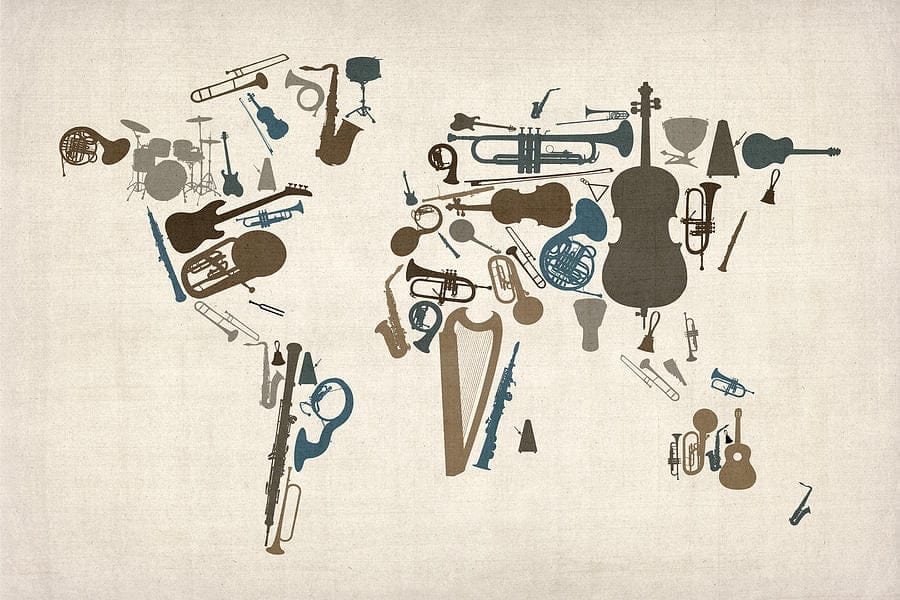
Artistic talent rarely stays in one lane. People who create in one medium often turn out to work in others, and musicians are a clear case. Many performers you already know for their records also paint, sketch, or design, and a good number have shared that work publicly.
Painting sits at the top of that list. With genuine curiosity, we write about some of those famous musicians who showed their painting skills to the world.
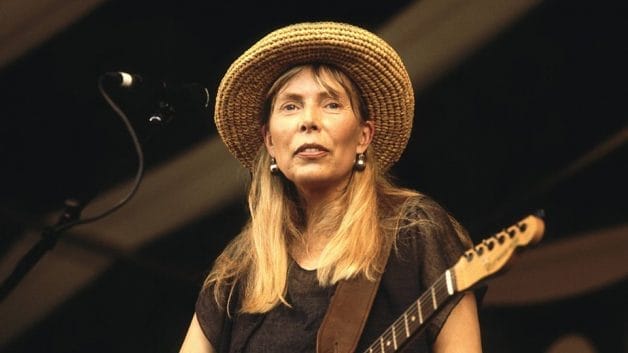
Joni Mitchell
Joni Mitchell moves fans with an unusual, affecting voice, but she is also a painter. She began her career as a painter and, as part of what makes her distinctive, designs her own album covers. She has always thought of herself as a painter first. Her voice placed her among well known musicians, and she is a songwriter of real standing.
Miles Davis
Miles Davis, called “The Prince of Darkness,” took up painting in his 50s. This respected musician became known as a painter too, and his artwork was eventually published. His painting drew on artists such as Picasso, and it also reflected the color trends associated with African culture. For Davis, painting was both an art and a way to relax when he stepped away from the music he loved.
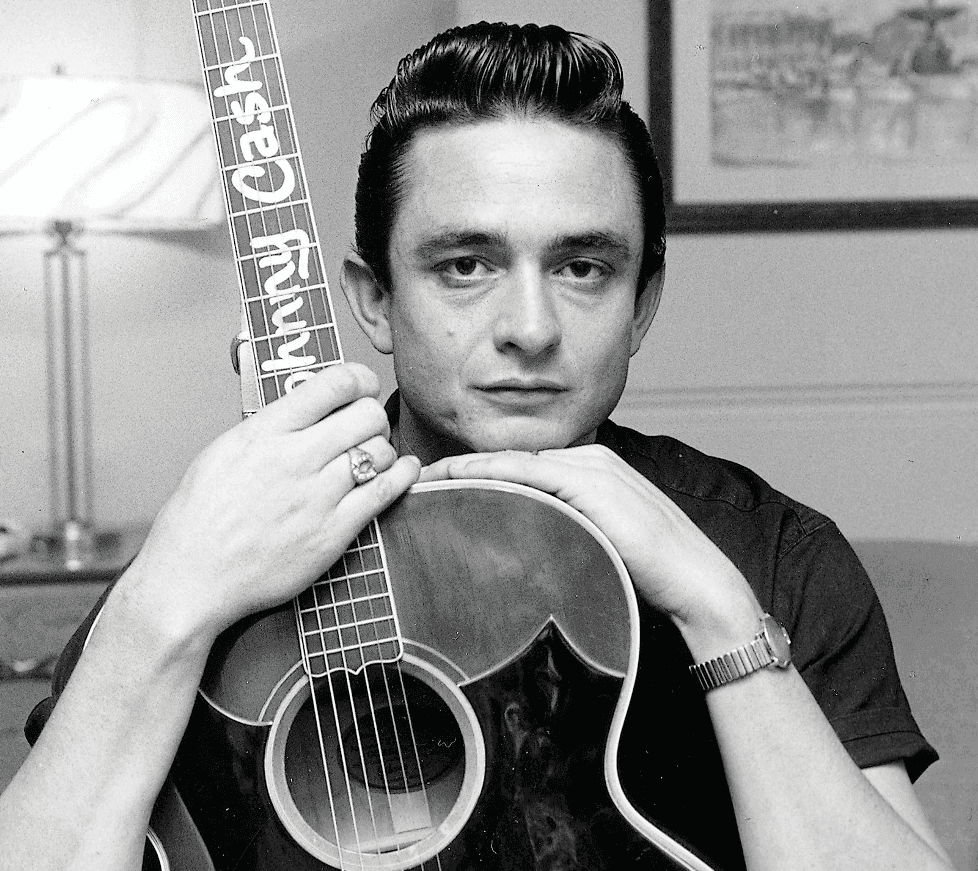
Johnny Cash
Cash always kept his heart in music and never saw himself as a painter, yet his work told a different story. His paintings were in demand, and even with little time to draw, what he made left an impression. Still, he is remembered mainly as the musician he was proud to be.
Johnny Depp
Most people know Johnny Depp as an actor, but he is also a musician and a painter. He paints poignant portraits in a style that is his own. Seeing that side of him is a reminder of how many layers a familiar public figure can have.
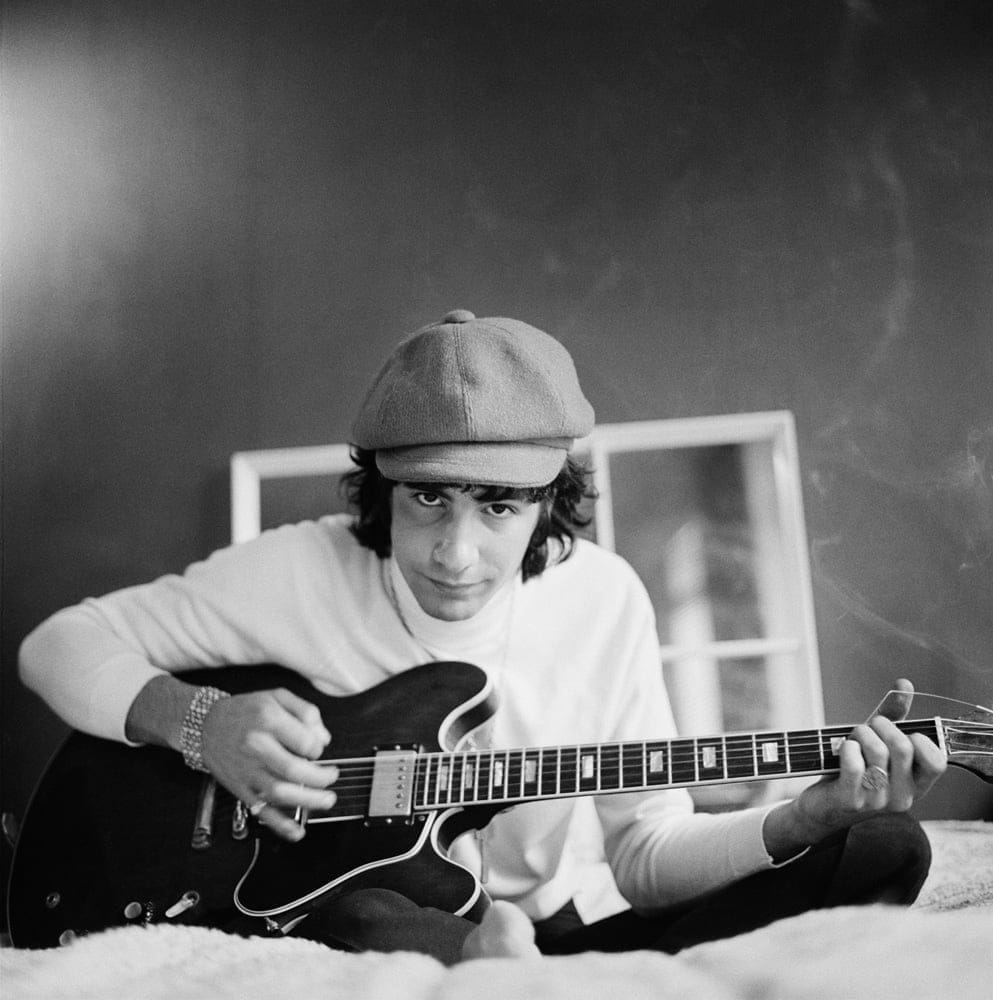
Cat Stevens
Known as Yusuf Islam since he embraced Islam in the late seventies, he was more recently inducted into the Rock and Roll Hall of Fame for his music. His goal had always been to be an artist, and once he found fame as a musician, he brought that art into his albums. Cartoons and children’s book illustrations sat alongside his songwriting. Over the years it has been plain that he is as much an artist as a musician.
David Bowie
For David Bowie, art was expression, and he used every ability he had to build an icon in music and in visual art. Both forms of art are intertwined in a creative process that makes the paintings reflect his music while his music reflected his painting. It was a mix he himself could not fully untangle, unsure which form of art begins until a completed work takes shape. The result might be a striking piece of music or a landscape.
Kim Gordon
Kim Gordon stands before fans as a bassist, but she has always considered herself more an artist than a musician. She has staged several art shows of her work, including The Show is Over, Design Office Coming Soon, and Sprayed. For her, visual art and music belong together.
Michael Jackson
It is strange how we assume we know someone when we know so little. Michael Jackson, famous his whole life as a musician, was also a talented painter, a skill that showed when he was barely nine years old. One portrait that mattered a great deal to him was a painting of Charlie Chaplin. “The King of Pop” was a painter, and a gifted one.
Why these second careers stay hidden
There is a practical reason most fans never see a musician’s paintings. A record label pushes one identity to the market, and that identity gets the marketing budget, the tour, and the press coverage. The painting sits in a studio, shown to friends or at the occasional gallery night. Discovery of a musician’s visual art tends to happen late, sometimes after a retrospective or a book, sometimes only after the artist has died and an estate opens the archive.
That gap between what a person makes and what the public sees is not unique to celebrities. It describes almost every small creative business. Work that no one can find might as well not exist, and being placed where interested people are already looking is often the difference between a hobby and a livelihood. Louis Rosenfeld, Peter Morville, and Jorge Arango make the point plainly in Information Architecture: For the Web and Beyond (2015): how information is organized, labeled, and categorized decides whether people can find it at all, and browsing structured categories works alongside searching as a way for people to locate what they want. A painting sitting on a personal site with no category and no listing is the online equivalent of a canvas in a locked room.
How reputation crosses over
When a musician’s paintings do reach the public, they arrive with something a first-time gallery artist would envy: an established name. That reputation shortens the distance between “unknown” and “worth a look.” Rachel Botsman describes this shift in Who Can You Trust? (2017), arguing that trust has moved into a third era of “distributed trust,” where ratings, reviews, and platform reputation let people extend confidence to those they have never met. A collector who trusts Joni Mitchell’s judgment as a songwriter is more willing to take her seriously as a painter.
The same logic runs in the opposite direction for anyone starting from zero. Without an existing name, you build credibility through visible evidence that other people value your work. That is why reviews, listings, and curated placements matter so much for small and independent sellers. Michael Luca’s study Reviews, Reputation, and Revenue: The Case of Yelp.com (2011) found that a one-star increase in a restaurant’s Yelp rating leads to a 5 to 9 percent rise in revenue, an effect driven by independent restaurants rather than chains, since chains already carry a known reputation. The parallel to art is direct. A famous musician is the chain; the unknown painter is the independent who needs every signal of quality that can be surfaced.
Talent needs a place to be found
These are only a handful of examples. Plenty of other musicians work as visual artists too. Some have shown their paintings to fans, while others kept the work private until it surfaced later and turned out to be genuinely good.
The lesson for anyone who makes more than one kind of thing is simple. Skill on its own does not reach an audience. If you paint, write, or build alongside your main work, put that second craft somewhere findable: a clear page, an honest description, a category listing, a place where people who want it can stumble onto it. The musicians above had fame to carry their art into view. Most of us have to arrange for the finding on purpose.
