Silviu Preda is a visual artist working in the western part of Romania, a recent graduate of the Arts and Design University in Timisoara. He came to photography through fashion and product work, and those two disciplines still shape how he frames a picture. What sets his personal projects apart is the subject matter. Rather than sell a garment, he uses the vocabulary of the fashion shoot to examine the things that unsettle him, drawing on his own frustrations and questions.
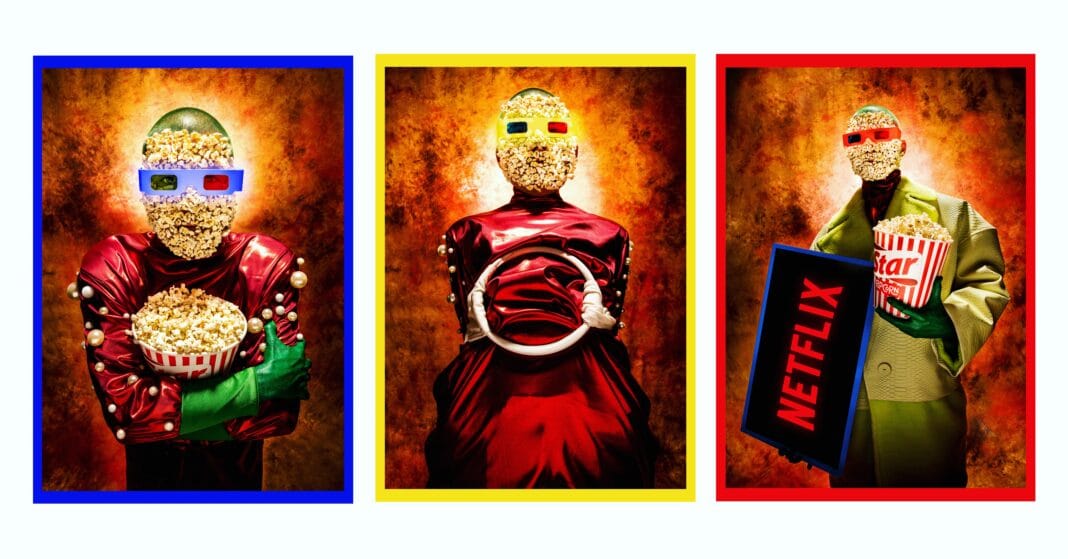
One of his recent photographic projects is called “Dionysus.” It grows out of two sources at once: an admiration for Baroque painting, and Caravaggio in particular, and a close, almost clinical attention to what he calls the “microbe” of the twenty-first century, namely consumerism. The pairing is deliberate. Preda borrows the drama and the deep shadows of the old masters, then turns that gravity on a very modern subject.
Borrowing the canon of Caravaggio
While using the canon of Western painting, Preda places the whole procedure inside a photographic reinterpretation, taking figures from Greek mythology such as Dionysus and Bacchus and staging them anew. The title works as a pun. In the foreground it plays on the idea of laziness, the lazy consumer at rest. In the background it reads as a satire on the “rank” of a god, on how the twenty-first century keeps building and worshipping idols, and on the kind of individual who settles for a comfort zone stitched together from television series.
He treats the project as modern portraiture, or symbolic portraiture, partly out of his own curiosity and his leaning toward studio and product work, especially in fashion, and partly because of strong influences from photographers who act as both image maker and director. Pol Kurucz, Erwin Olaf, Kimiko Yoshida, and David LaChapelle all work on themes with deep historical, social, or religious roots, and Preda follows that model. He is not just clicking a shutter. He builds a scene, casts it, lights it, and directs the meaning as much as the pose.
The triptych and its color logic
The approach takes the form of a triptych: three panels meant to illustrate, visually and as an argument, a fresh reading of the Bacchus myth set against the idea of resisting consumerism. Preda draws a wide correspondence of color between the traits of Dionysus and the clothing or window-dressing accents around him, working from the symbolism of each hue. The point is to place the character inside a supposed dream world, a staged universe built to intrigue the viewer and hold their attention.
That deliberate excess is where kitsch enters. Preda cultivates it on purpose, the way it is cultivated on the glossy pages of fashion magazines, until the image reaches a figure ready to open a Pandora’s box of obsessions, desires, fears, and anxious searching. Those anxieties are everywhere, and he argues they steer a society caught in a delirium of color that belongs to the apparent glamour of consumer advertising. “Dionysus” can be described as hyperrealist, precise, and preoccupied with the symbolism of its own elements.
The series is offered as a kind of alarm aimed at a contemporary society that trades conscious thinking for fanatic consumerism.
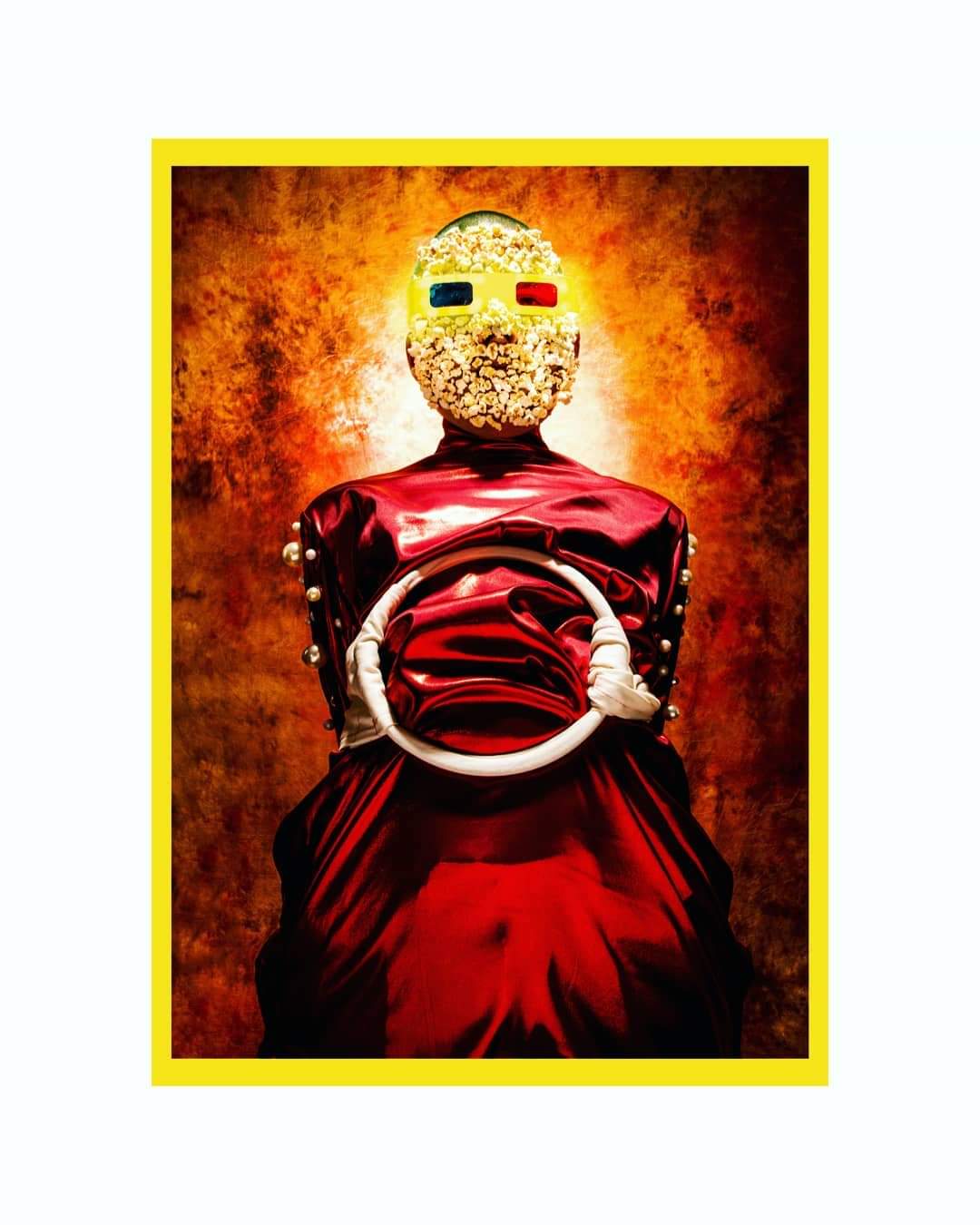
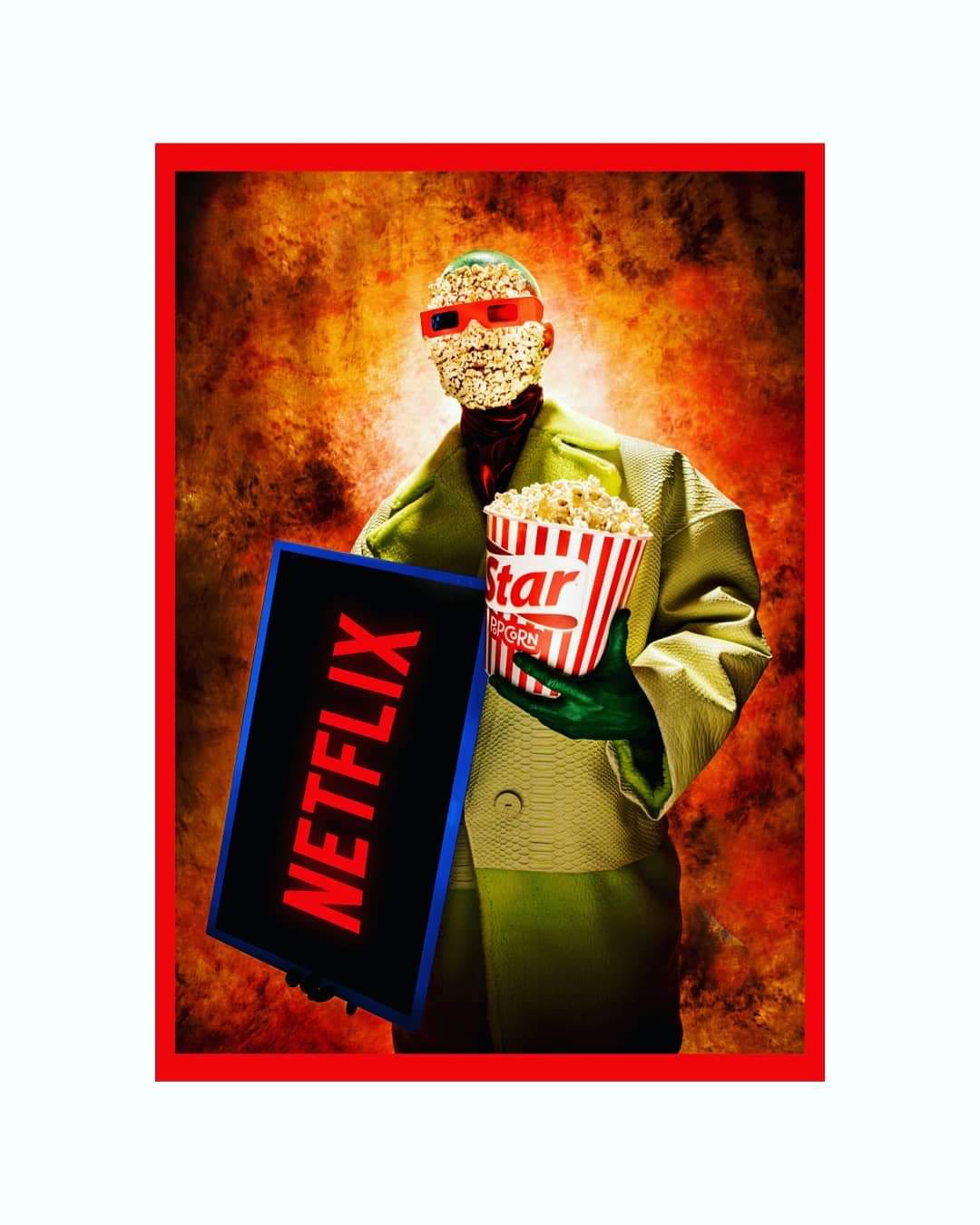
The three characters dominate one another in their attempts to fight off the pull of a consumer society, standing in as symbols of depersonalization and human decadence. Read together, the panels work as a visual metaphor, a contemporary stereotype meant to raise questions about the so-called comfort zones that grow out of each person’s anxious searching.
To hold the viewer’s own perspective up against that stereotype of the modern consumer, Preda uses makeup borrowed from film and special effects. The face becomes a mask. The character is a symbol, a reinterpreted figure and a satire on the way people are flattened by “contemporary toxicity,” the residue of advertising and television series built, in his telling, to wash the viewer’s mind under the pretext of globalization.
Why the subject matters beyond the gallery
Preda’s target is not new, but it is worth taking seriously. The commercial images he satirizes are also, increasingly, the images that decide what people buy. Purchase choices no longer rest on advertising alone. Itamar Simonson and Emanuel Rosen, in “Absolute Value: What Really Influences Customers in the Age of (Nearly) Perfect Information” (2014), describe an Influence Mix drawn from three sources: a person’s prior preferences, what marketers say, and what other people say. Their argument is that reviews, aggregated ratings, and other independent information are steadily displacing brand messaging as the decisive input. In other words, the polished consumer aesthetic Preda photographs is losing some of its old authority, even as it grows louder.
That shift is the quiet subject underneath the loud one. The consumer in the triptych is offered a fantasy, a curated surface. Outside the frame, the same person is learning to check that surface against other voices before parting with money. The tension between staged perfection and independent verification is precisely the tension Preda is exaggerating, and it is one anyone who evaluates businesses, products, or services online now lives with daily. The glossy page and the honest review sit on the same screen.
There is a practical lesson in that for artists and small studios too. Being seen at all depends on being findable, and being findable depends on being organized somewhere a person can browse. Rachel Botsman, in “Who Can You Trust?” (2017), argues that trust has moved into a third era she calls distributed trust, in which ratings, reviews, and platform reputation let strangers extend confidence to people and businesses they have never met. A young photographer benefits from the same mechanics: a clear portfolio, a credible listing, a trail others can vouch for. The reputation that once belonged only to established names is now something a newcomer can build in public.
What the project asks of you
Preda designs “Dionysus” as a visual appeal, half joke and half warning, against the consumerism and the stereotypes of this century, delivered through a photographic reinterpretation grounded in the canon of Western painting. He does not lecture. He seduces first, using the exact tools of the fashion image he distrusts, then lets the excess curdle into a question.
The takeaway is simple enough to carry out of the exhibition. The next time an image promises you a comfort zone, notice how it was built: the color chosen for its symbolism, the makeup borrowed from the movies, the god manufactured to be worshipped. Preda’s work asks you to keep looking after the surface has done its job, and to trust your own judgment, and the judgment of other people you can actually check, more than the picture wants you to.
