
Key Takeaways
- Alternative financing gives small businesses greater flexibility and easier access to capital.
- Technology is playing a critical role in making funding options faster and more streamlined than ever before.
- It’s crucial to weigh the pros and cons of each financing choice before committing to one.
For small business owners, securing appropriate funding is often one of the biggest challenges on the road to success. Traditional banks and lenders typically have strict requirements and slow approval processes, making it challenging for emerging entrepreneurs to access the essential capital they need. Fortunately, a range of innovative options, such as debt factoring solutions, has emerged, providing small businesses with greater flexibility and timely access to funds.
Many of these new financing avenues utilize advanced technology to streamline financing, expedite approvals, and tailor loan options to businesses of all sizes and backgrounds. Rather than getting bogged down by paperwork and outdated credit criteria, small companies now have more control to choose the best financial tools for their needs.
With innovative solutions readily available, business owners should focus not only on acquiring funds but also on understanding the unique risks, rewards, and long-term impacts of each method. Taking a strategic approach ensures that businesses are better positioned for stability, expansion, and new opportunities.
Peer-to-Peer Lending
Peer-to-peer (P2P) lending platforms have redefined the small business loan landscape by directly connecting entrepreneurs with investors willing to fund their ventures. These platforms bypass rigid mechanisms of traditional banks, offering faster decisions and—often—better terms.
For instance, businesses using P2P platforms like Biz2Credit can benefit from big data-powered matches that align their needs with the right investors. With simplified application procedures and fewer collateral requirements, P2P lending has become a go-to solution for growing businesses that may not yet meet conventional lending criteria.
Crowdfunding
The crowdfunding model enables businesses to collect small amounts of money from a large group of people, usually online. Start-ups and early-stage companies often find this model beneficial not only for funding but also for market validation and brand exposure.
By launching campaigns on platforms such as Kickstarter or Indiegogo, entrepreneurs can attract supporters who share their mission and believe in their products. A compelling crowdfunding campaign often leads not only to capital but a loyal client base—sometimes even turning early supporters into vocal advocates for the business.
Revenue-Based Financing
Revenue-based financing (RBF) is designed for growing companies that have robust sales projections but little credit history. In this model, investors provide upfront capital in exchange for a fixed percentage of the ongoing gross revenues, with repayment occurring once a certain amount is reached.
Companies like Rapid Finance have digitized and accelerated RBF approval, enabling more businesses to tap into capital and meet customer demand or scale operations quickly. Since payments are percentage-based, companies are not burdened with fixed monthly payments—a significant advantage during slow sales cycles.
Merchant Cash Advances
Merchant cash advances (MCA) offer immediate lump sums in return for a share of future credit card sales. Many retail and service businesses welcome the fast turnarounds and easy qualifications of MCAs—especially those with steady transaction volumes but limited collateral.
However, it’s critical to note that costs can be steeper than standard loans, with high effective interest rates and fees. Understanding the repayment structure and total cost is vital before entering any MCA agreement.
Invoice Financing
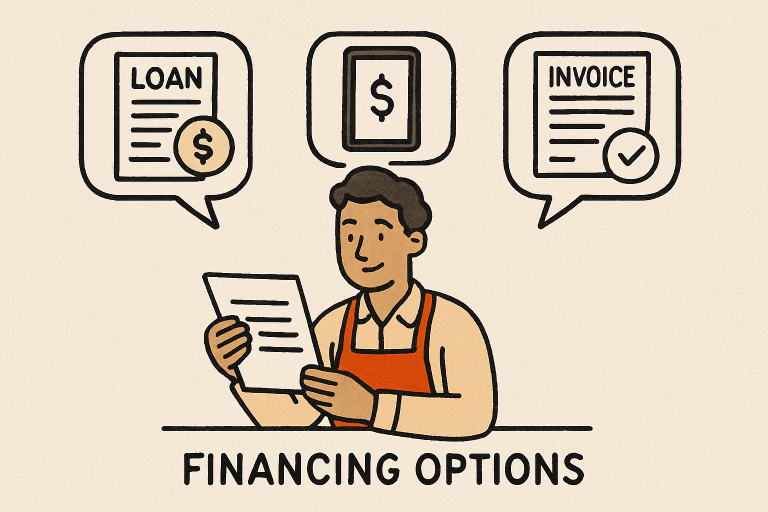
Invoice financing is a strategic tool for businesses that suffer from long payment terms or cash flow gaps. By selling outstanding invoices at a discount to a third-party provider, companies receive immediate liquidity and can continue their operations without interruption.
Service providers such as ScotPac specialize in this field, helping businesses convert unpaid invoices into working capital without incurring new debt. This method works exceptionally well for B2B companies with reliable clients and predictable accounts receivable cycles.
Government-Backed Loans
Many small businesses turn to government-backed lending programs for favorable rates and terms. The U.S. Small Business Administration (SBA), for instance, backed more than $56 billion in financing in 2024, signaling increased government support for entrepreneurs.
These loans typically offer lower interest rates, longer repayment periods, and require lower down payments than conventional financing. Eligibility standards tend to be rigorous, but for qualifying businesses, they can be a springboard for sustainable growth.
Choosing the Right Financing Option
Deciding which financing path to pursue starts by assessing your business’s unique situation—how much funding is needed, how quickly it’s required, the flexibility of repayments, and the total cost of capital.
Engaging a trusted financial adviser or accountant can help parse out details and fine print, ensuring you opt for a solution that aligns with your business goals. Knowing the advantages and downsides of each method fosters confident, informed decisions—allowing you to focus on what matters most: growing your venture.
By embracing modern financial solutions, small businesses can become more agile and responsive to changing market conditions. These tools streamline cash flow management, enhance access to capital, and facilitate more informed decision-making through real-time insights.
As a result, businesses are better equipped to seize growth opportunities, adapt to customer demands, and manage risk more effectively. In a rapidly evolving and competitive marketplace, leveraging innovative financial strategies empowers small enterprises to operate efficiently, scale confidently, and strengthen their long-term resilience and profitability.
