
Key takeaways
- Understanding the symptoms and risks of alcohol withdrawal is the basis of safe management.
- Supportive measures such as hydration and good nutrition can ease withdrawal symptoms.
- Professional medical advice is essential to staying safe through the withdrawal process.
Understanding alcohol withdrawal
Alcohol withdrawal syndrome is a potentially serious condition that develops when someone who has been drinking heavily for a long stretch suddenly stops or sharply cuts back. The sudden absence of alcohol upsets the brain’s chemical balance, and the result is a run of physical and psychological symptoms that range from mild to life threatening. If you or someone close to you is considering safe withdrawal at home, learn what to expect and how to respond before you begin. To read about professional support options, you can find out more now.
Withdrawal risk deserves real attention, because complications such as seizures and delirium tremens can occur. Not everyone develops severe symptoms, but you need to know when professional help is required. Understanding your own risk factors and drinking history is the first practical step toward managing withdrawal safely. Home withdrawal suits some people. It is not right for everyone.
For anyone whose drinking history makes complications likely, understanding what medically supervised detox involves is worth doing before deciding whether withdrawal at home is realistic.
A conversation with a healthcare provider helps you understand the process and prepare a backup plan in case symptoms get worse. Preparing for home withdrawal means clearing hazards from your surroundings, arranging support, and having a plan to reach medical help fast. Even mild withdrawal can turn dangerous without warning, so preparation buys you both safety and peace of mind.
Symptoms of alcohol withdrawal
Symptoms vary widely from one person to the next, but the common ones include:
- Anxiety and restlessness
- Insomnia and disrupted sleep patterns
- Nausea, vomiting, and loss of appetite
- Increased heart rate or palpitations
- Sweating and shaking
- Hallucinations (visual or auditory, in some cases)
- Seizures in severe cases
Symptoms usually begin within six to twelve hours after the last drink and can peak within a couple of days. Many people feel only mild effects, but you still need to recognize the signs of serious complications. If seizures, hallucinations, or a high fever appear, get medical attention immediately.
Why symptoms follow a timeline
Heavy, sustained drinking pushes the nervous system to adapt to a constant depressant. Take the alcohol away and the same system swings the other direction, becoming overexcited. That rebound is what produces the racing heart, the tremors, and the anxiety. Knowing roughly when each stage tends to arrive helps you and your support people tell ordinary discomfort apart from a warning sign. The first day is often the roughest for tremors and sweating, while the risk of seizures and delirium tremens tends to cluster in the second and third days. That is exactly why a plan that covers the first seventy two hours matters most.
Preparing for at-home withdrawal
If you choose to manage withdrawal outside a medical facility, take these steps first:
- Consult a healthcare professional. Before you start, speak with your doctor to weigh your health risks, get advice tailored to you, and confirm that proceeding at home is safe.
- Create a support system. Ask trusted friends or family to check in on a regular schedule and to be present if you begin to show signs of distress.
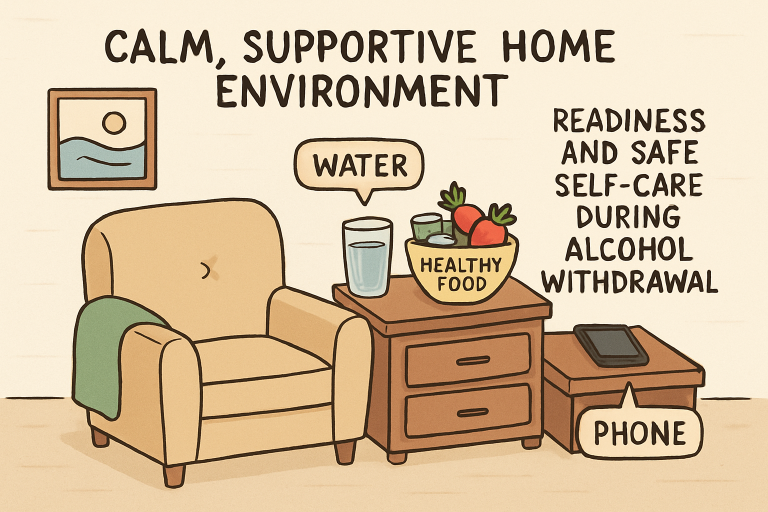
- Set up a safe environment. Remove all alcohol from your home, and clear away anything that could cause harm during confusion, agitation, or a seizure.
Completing these steps gives you the best margin of safety and a foundation to build recovery on.
Supportive measures during withdrawal
Good self-care through this stretch can relieve discomfort and speed recovery. The measures that help most:
- Hydration. Drink water and electrolyte-rich fluids to counter dehydration and replace minerals lost during withdrawal.
- Balanced nutrition. Eat wholesome meals even when your appetite is low, so your body has the nutrients it needs to recover.
- Rest. Get as much sleep as you can. Rest helps restore the systems that alcohol strained.
- Stress management. Use relaxation methods such as deep breathing, mindfulness, or meditation to lower anxiety and improve your comfort.
Get familiar with practical tools for handling cravings and emotional swings before they hit. Resources from the National Institute on Alcohol Abuse and Alcoholism offer further reading on supportive strategies and self-care during withdrawal.
When to seek medical help
Watch your symptoms closely throughout the withdrawal period. Many people manage mild discomfort at home, but certain warning signs call for immediate medical attention.
Get professional help if you experience seizures or an unexplained loss of consciousness, severe hallucinations such as seeing or hearing things that are not there, a high fever or heavy sweating, or confusion, severe agitation, or disorientation. Uncontrollable shaking or tremors are also serious indicators.
In any of these situations, call emergency services right away. Prompt action can save a life and help prevent lasting health damage. If you are unsure whether a symptom counts as serious, treat it as serious. The cost of an unnecessary call is small next to the cost of waiting too long.
Choosing where to get help, and trusting the source
Deciding whether home withdrawal is even appropriate usually starts online, with a search for local clinics, detox programs, or a doctor who treats substance use. That first page of results is not a neutral map of what exists. As Safiya Umoja Noble showed in Algorithms of Oppression: How Search Engines Reinforce Racism (2018), commercial search rankings are shaped by advertising and private interests, so treating the top result as the best option is a mistake. It pays to look past the ads and cross-check what you find.
This is where curated listings and reviews earn their keep. When you compare providers, other people’s experiences give you a check that no marketing page can. Rachel Botsman, in Who Can You Trust? (2017), describes a shift toward what she calls distributed trust: ratings, reviews, and platform reputation now let people extend confidence to businesses and professionals they have never met. Read a spread of reviews rather than a single glowing one, favor sources that verify who is posting, and give weight to directories and listings that are edited by people rather than assembled automatically. For something as high-stakes as withdrawal support, a few extra minutes of vetting is worth it.
Long-term recovery strategies
Withdrawal is the start of recovery, not the finish. Staying sober takes ongoing effort. Support groups such as Alcoholics Anonymous, along with online communities, offer encouragement and accountability. Therapy addresses emotional triggers and the underlying reasons for drinking through behavioral and cognitive techniques. Healthy lifestyle changes, such as regular exercise, hobbies, and an active social life, help fill the space alcohol once occupied and hold your progress in place.
Building new routines and relationships, and continuing to lean on professional support, raises your odds of lasting sobriety and personal growth. It also helps to write down a plan for high-risk moments, the times of day, the places, or the feelings that used to trigger a drink, so you are not improvising when one arrives.
Managing alcohol withdrawal at home is workable for some people, but professional help is always available and can make a real difference to both safety and outcomes. Looking after your health means reaching out the moment you need to, and keeping a doctor’s number within reach before the first difficult night.
