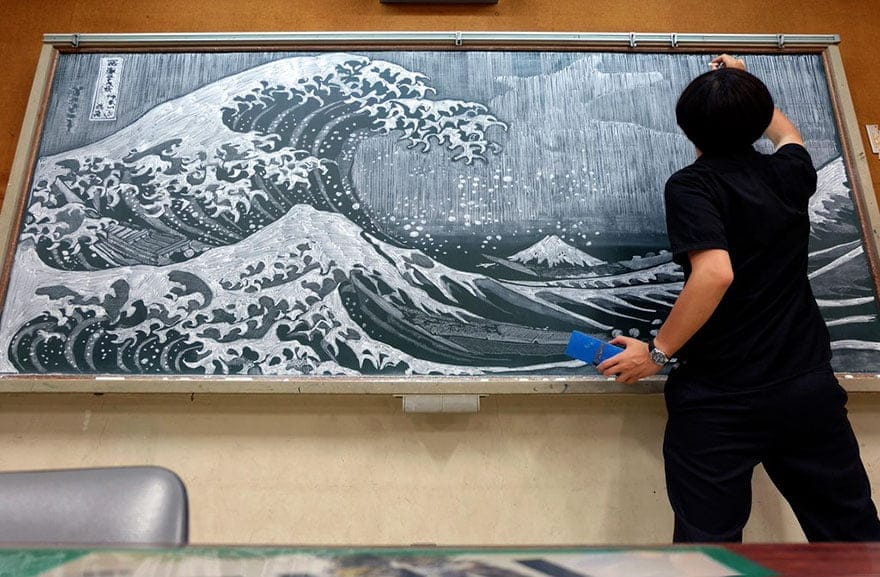
Chalk is an overlooked medium in the art world. Most people connect it with school chalkboards rather than with finished artwork, yet chalk has served artists since the 15th century. Leonardo da Vinci and Michelangelo used it to experiment with chiaroscuro and to sketch early outlines for many of their works. Over time, chalk settled into its more familiar role as a cheap, everyday writing tool.
Chalk has enjoyed a revival as an art medium in recent years, and it gave rise to 3D street art. Chalkboard art has also grown popular in shops and restaurants, where it works as a form of visual advertising and marketing. Plenty of artists now specialize in chalk murals and wall art.
Getting started without feeling intimidated
If you want to learn chalkboard art you do not have to start big or attempt complicated designs. Depending on your skill level, you can start small and work your way up as you improve. Top chalkboard artists have shared the following tips to help you create chalkboard art like a pro:
- Brand new chalkboards need to be seasoned. Seasoning reduces ghosting, which happens when you erase an image but a faint trace of it stays visible in the background. To season a board, run a full piece of chalk across the entire surface, rubbing it in well, then erase it. The board is now ready to use.
- Use wet chalk. Dip the chalk in water before you draw and keep it wet as you work, because wet chalk dries brighter and looks far better on the board.
- Keep designs simple, but mix up your font styles. The more you practice, the better you get. Varied lettering adds depth to a piece, so mixing things up makes the artwork more exciting and dynamic.
- Sketch first to work out the size and placement of your images and words. You can even use a level and measuring tape to keep your spacing even.
- Practice as often as you can. If you are not confident with your drawing skills, use a stencil and copy from clip art images. Start with basic shapes and figures, then experiment with shading. Colored chalk brings a piece to life, so add it once you feel comfortable.
Do not let other people’s polished work put you off. With enough practice you can master chalkboard art too. Your first attempts might look a little shaky, but as you keep working your hand steadies, and before long you will be sketching with real confidence.
Why the small stuff matters
Two details separate amateur boards from professional ones: contrast and legibility. Wet chalk gives you the crisp white lines that read well from across a room, and clean spacing keeps a busy design from turning into a smear. When you plan a board, think about the distance a viewer will read it from. A cafe menu on the pavement needs bolder strokes and larger letters than a small board propped on a kitchen shelf. This is the same instinct good web writers rely on: research from the Nielsen Norman Group found that most visitors scan a page rather than read every word, with 79% of test users scanning any new page and only 16% reading word by word, which is why subheadings, short lines, and highlighted keywords help people find what they need. A chalkboard follows the same logic. Give the eye a clear path, and the message lands.
Practical uses for chalkboard art
Chalkboard art has many practical uses. It fits in the home or in businesses like cafes and restaurants. Here are the top uses of chalkboard art:
- Instead of a traditional calendar, make a rustic chalkboard version to hang in the kitchen. Add small illustrations to remind you of tasks for the week, such as grocery shopping.
- A chalkboard is a nice addition to an office desk. Use calligraphy art to write down inspirational quotes or words, then hang it in front of your computer to brighten up your workspace.
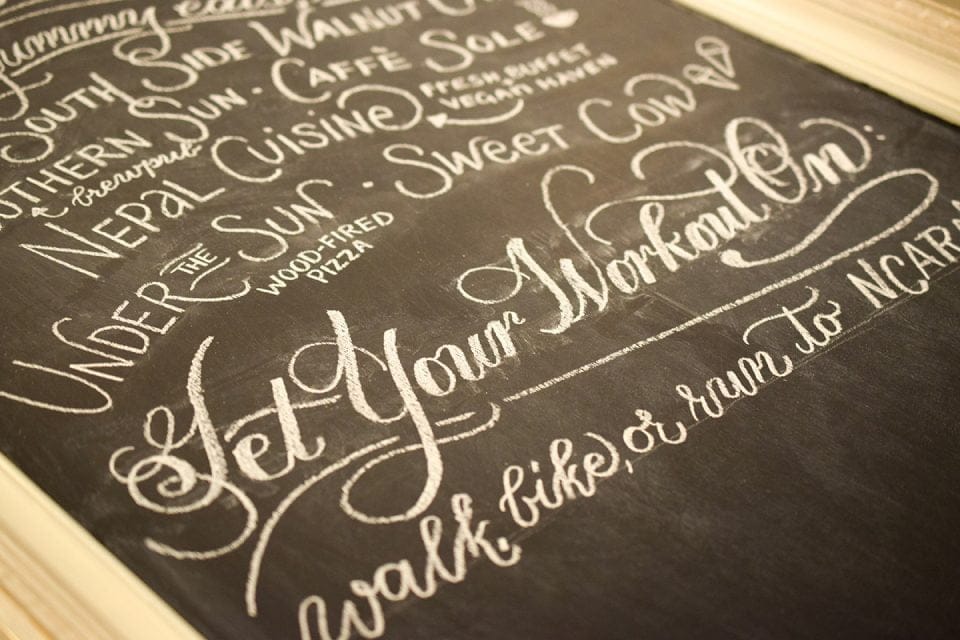
- Businesses use chalkboard art to greet and entice customers. You see it outside coffee shops and restaurants, where menu specials are written on boards displayed at the door.
- Inside a restaurant, chalkboards work well as menu boards. Use quirky lettering for menu items and swap in seasonal designs for Halloween, Christmas, Easter, and the like.
- Caterers use chalkboard art for themed parties. Small menu boards list dishes and other food items.
- It also makes a good reminder board at home or in the office. Retire the boring whiteboard and replace it with a fun, artistic chalkboard instead.
Chalkboards and how customers choose
For a small business, a well-made board does more than decorate a doorway. It signals care. A tidy, hand-lettered specials board tells a passer-by that someone inside pays attention to detail, and that impression feeds directly into the choice to walk in. John Jantsch, in Duct Tape Marketing (2011), describes marketing as moving people along a “know, like, trust” path before any sale, arguing that being consistently findable and referable matters more to a small firm than any single campaign. A board on the pavement is a quiet part of that path: it is often the first thing a new customer reads, and it shapes what they expect before they have tasted the coffee.
The board also works alongside the ways people already research places to eat and shop. Before they arrive, many customers look up a business online, browse a listing, and read reviews to decide whether it is worth their time. A chalkboard cannot do that work for you, but it can confirm the promise once someone is standing in front of your door. The two reinforce each other. Being easy to find in a curated directory or map gets people to the street, and a clear, appealing board closes the short distance from the pavement to the counter.
A versatile skill worth practicing
Chalkboard art is versatile and easier to master than it looks. You will spot it in places you visit every day, and you can adapt it just as readily to your own home or office. Start with one small board, a piece of chalk, and a simple message. Season the surface, keep the chalk wet, sketch before you commit, and give yourself room to redo a line that goes wrong. Do that a few times and the shaky first drafts give way to boards you are proud to hang up.
