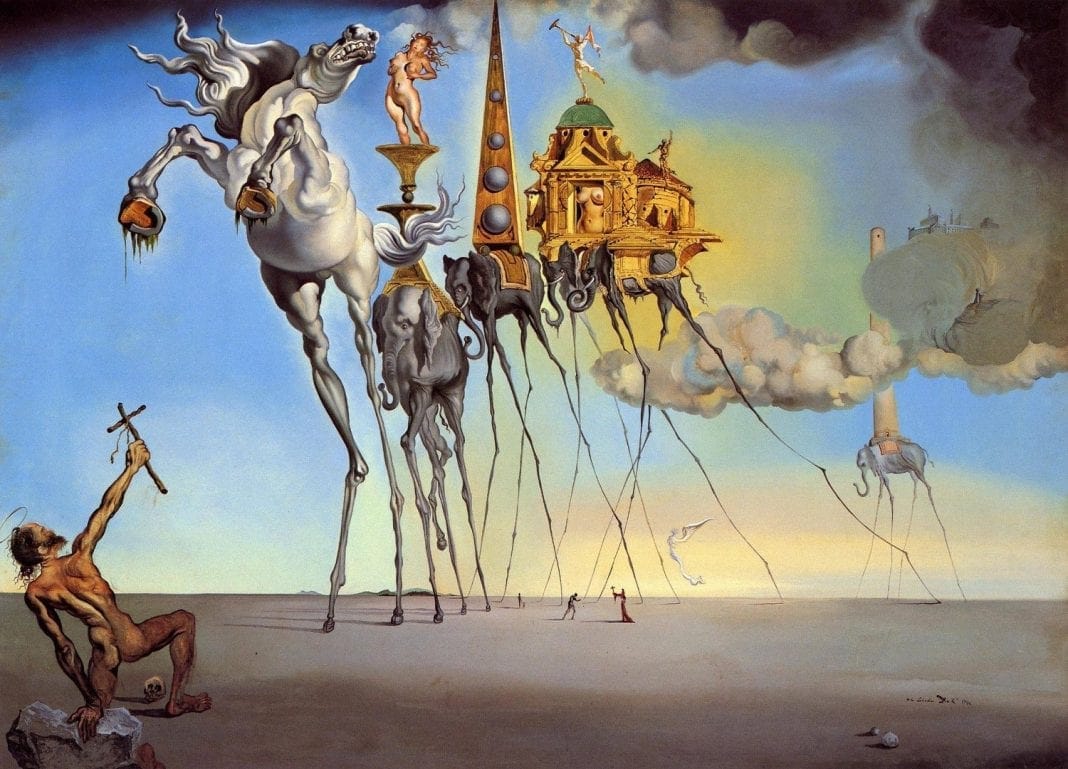
Art has gone through its own revolutions. The way it is made, and the ideas it chases, keep shifting from one generation to the next. One of the sharpest turns came when realism gave way to surrealism, where the subjects of a painting grow dream-like, drawn from the subconscious rather than the waking mind. Among the figures who defined that movement was the Spanish painter Salvador Dali.
You probably know him as a famous painter, but there is more to the late Mr. Dali than the work hanging in museums. Yes, plenty has been said about that mustache. Still, Dali is made of stranger and more interesting stories than the facial hair suggests. Here are a few things worth knowing about him.
Dali the child sadist
- Dali had a very early experience of being a child sadist.
From a young age, Dali believed that pain and pleasure were more or less the same thing, or at least that they came from the same corner of human experience. He was fascinated by what could cause either one, and he often set out to produce them himself. When he was five, he was walking across a bridge with a friend and noticed that a section of railing was missing.
What he did next was shocking. He pushed his friend off the bridge to see what would happen. The friend survived but was badly hurt. As the boy’s mother tended to him, Dali reportedly sat nearby, eating cherries, calm as anything. It is the kind of anecdote that colors everything you read about him afterward, whether or not every detail is literally true.
Avida Dollars
- Salvador Dali, also known as Avida Dollars.
Dali prided himself on making money, and he was well known for it. His name became the anagram Avida Dollars, coined by the surrealist writer Andre Breton as an insult about his hunger for cash. Several stories circulate about his greed, and about how far he would go to earn a dollar.
Some of it is famous. He designed the Chupa Chups logo, the wrapper on the lollipop you probably remember from childhood. He is also said to have asked Yoko Ono for $10,000 for a single strand of his mustache. When she paid, Dali sent her a dried blade of grass instead, apparently worried she might use the real strand for witchcraft.
The commercial side of Dali is easy to mock, but it also points at something ordinary that many creative people wrestle with: getting paid, and being findable by the people willing to pay. Long before online listings and search engines, an artist’s reputation traveled through word of mouth, gallery networks, and the occasional scandal. Rachel Botsman, in Who Can You Trust? (2017), describes how trust has moved from local reputation to institutions and now to distributed systems of ratings and reviews, where strangers extend confidence to people and businesses they have never met. Dali, a master of self-promotion, understood the older version of that game instinctively. He kept his name in circulation on purpose.
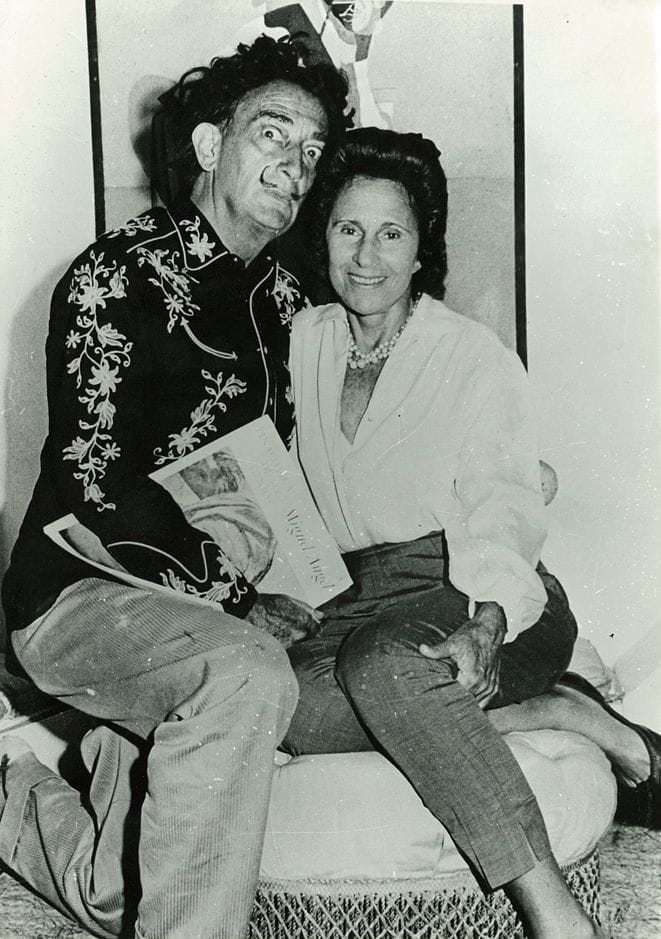
Gala, Dali’s muse
- Gala, Dali’s muse.
Dali met Elena Ivanovna Diakonova, known to everyone as Gala, when she was still married to the surrealist poet Paul Eluard. That did not deter a man as intense as Dali. After Gala divorced Eluard, Dali married her in 1934, becoming the ultimate rebound.
The partnership worked. Gala became his muse and his finance manager, her practical sense with money balancing his extravagant instincts as an artist. They continued to see other people, and the relationship was complicated, but it lasted until Gala’s death in 1982. The arrangement says something about how creative careers actually run. Talent needs someone to handle the ledgers, chase the payments, and keep the operation solvent. Behind the myth of the lone genius there is usually a manager, and in Dali’s case that manager was his wife.
Dali’s artistic method
- Dali’s artistic practices.
Art seemed to be everything to Dali. When you look at his paintings and try to work out how he arrived at those images, an obvious question comes up: was he on drugs? He insisted otherwise. His method involved a tin plate and a spoon.
He would sit in a chair holding the spoon over the plate, then let himself drift off to sleep. The moment he dozed, the spoon dropped and struck the plate with a clatter loud enough to wake him. He would then write down whatever he had glimpsed in that half-second of dreaming, feeding the surreal imagery straight into his work. It is a deliberate technique for catching the subconscious, and it fits a painter who wanted his canvases to feel like recorded dreams.
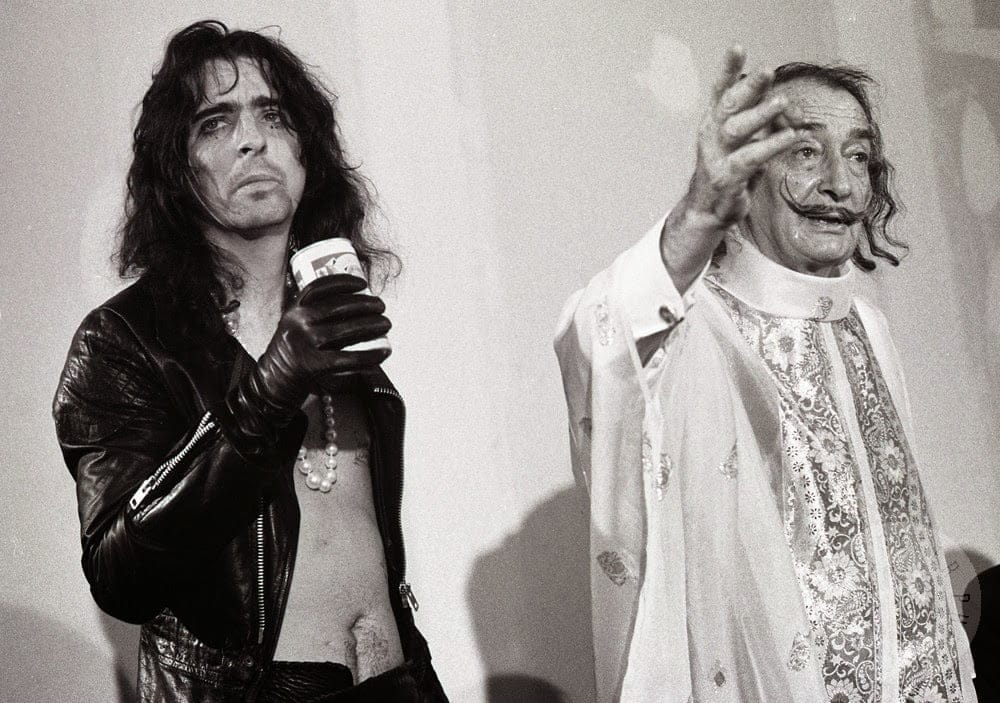
Dali and Alice Cooper
- Dali’s acquaintance with Alice Cooper.
Dali kept company with the rich and famous, which is no surprise given how theatrical his own life was. One of the odder friendships was with the rock musician Alice Cooper.
On one occasion Dali asked Cooper to model for him. Cooper agreed, but he did so under armed guard. The reason was a diamond-studded tiara worth $2 million, which Dali himself had provided. The finished piece was more than a simple portrait. Dali produced a hologram of Cooper, using lasers to capture a three-dimensional image. It was an early experiment with a medium most artists of the era had never touched.
Why the myth stuck
These five facts are hardly the only strange details about Salvador Dali. There is plenty more, including his fascination with Hitler, who became the subject of several of his works and drove a lasting rift between Dali and other surrealists. He was expelled from the movement’s inner circle partly over it.
What holds all of this together is how carefully Dali built and traded on his own reputation. He turned eccentricity into a brand decades before anyone used that word for a person. That instinct is worth noticing now, when reputation is measured and shared far more openly. Robert Cialdini, in Influence (2021), calls social proof the mechanism by which people decide what is correct by observing what others believe is correct, which is exactly the engine behind ratings and reviews today. A modern Dali would still need the eccentric story, but he would also need the listings, the profiles, and the reviews that let strangers find him and decide he is worth the trip.
For now, sit with these five facts and watch how they surface in the paintings. The dreams caught by a falling spoon, the muse who balanced the books, the friend on the bridge: each one leaves a fingerprint on the work of a man who was as much a performance as he was a painter.
