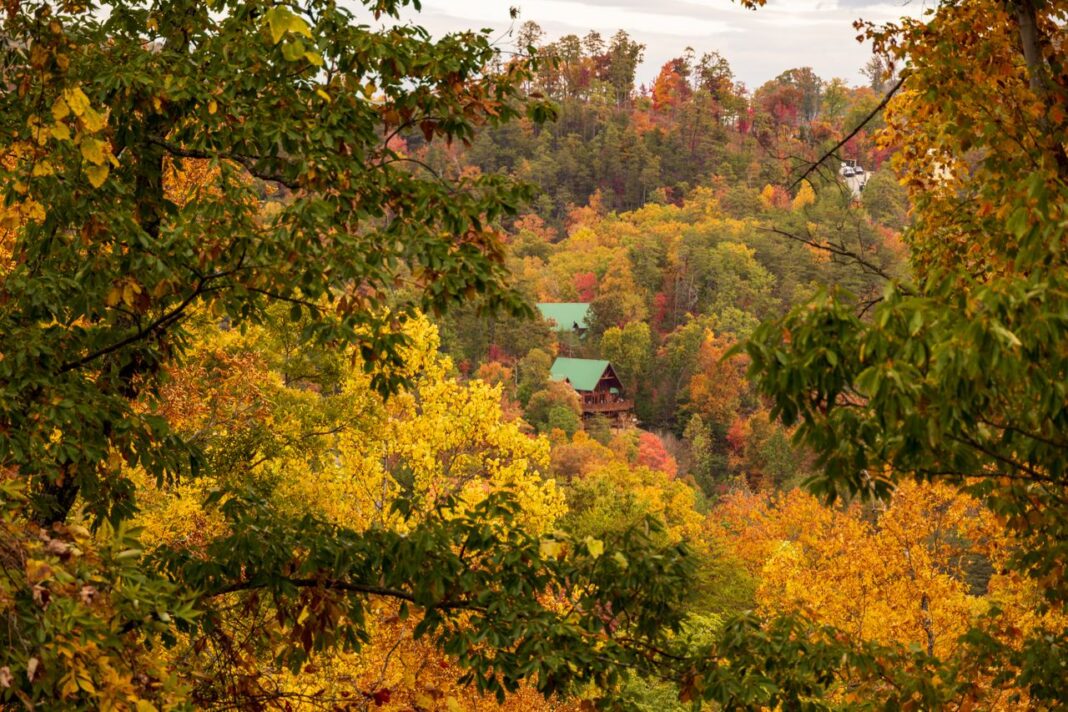
The Smoky Mountains reward thorough preparation more than most destinations. There is an enormous amount packed into a relatively small area, and visitors who arrive without a plan usually spend their first two days figuring out how the region works, rather than enjoying their holiday. Knowing when to visit, how the towns differ, where the crowds gather and how to organise your days turns a decent trip into an excellent one. None of this requires elaborate plans; it just requires finding out a few things before you leave home.
Sort out where you’re staying first
Nothing shapes a week here more than the place you return to each evening, and the range of options is vast enough to be downright bewildering. Prices, locations and facilities vary enormously, and comparing them property by property is a time-consuming task. The most efficient approach is to choose a cabin. Visit My Smokies offers some of the best cabins in the Smoky Mountains, complete with all the amenities you need for a safe and comfortable place to stay. With the accommodation side of your holiday sorted, the rest of the trip becomes a matter of deciding how you want to spend your days.
Get to know the three towns
Gatlinburg, Pigeon Forge and Sevierville are close to one another but feel quite different. Gatlinburg is compact and easy to get around on foot, right next to the entrance to the national park, making it ideal for visitors who want to leave their car parked. Pigeon Forge stretches along a busy main road and is home to most of the region’s major attractions and entertainment. Sevierville is quieter and more residential, with lighter traffic and convenient shopping, according to travellers who prefer a peaceful base and don’t mind a short drive to the livelier areas. Knowing which of the three suits your group best will save you a week of driving in the wrong direction.
Choose the right season
Summer brings warm weather, long days and the biggest crowds – a combination that works well for families tied to the school calendar, but requires an early start. October is by far the busiest month, when the colours of autumn attract visitors from all over the country and popular roads are gridlocked for hours. Spring is green, unpredictable and considerably quieter, with wildflowers in April and May. Winter offers the lowest prices and the quietest paths, whilst the bare slopes reveal sweeping views that are completely hidden in summer. Every season is genuinely worth a visit, but each requires a different plan.
Get to grips with traffic and parking
Congestion is the most common complaint amongst visitors, and almost all of it can be avoided. The main roads get busier towards the end of the morning, reach their peak in the afternoon and clear after dinner. Groups that set off early and structure each day around a single part of the region, rather than making repeated crossings, waste far less time. In busy towns, trolleybuses operate, completely eliminating the problem of parking during peak weeks. For the national park, any vehicle parked for more than fifteen minutes requires a parking permit, available on a daily, weekly or annual basis, and buying one in advance saves you a frustrating stop.
Make the most of the national park
The park is the reason the region exists as a destination and deserves more than just a quick afternoon visit. Early mornings offer the best wildlife sightings, the coolest temperatures and the only real chance of finding a parking space near the popular trails; by mid-morning, in peak season, the nearby car parks are full. The trails range from short, tarmac loops to challenging full-day hikes, so tailoring the route to the least experienced member of the group ensures everyone enjoys the outing. Mobile phone reception in the park is unreliable, which makes downloaded maps really useful, whilst water, layered clothing and sturdy footwear cover almost everything else.
Eat without queuing
Restaurants in the region fill up between six and eight in the evening, and waits of nearly an hour are common during busy weeks. Eating earlier or later avoids almost all of this. Where bookings are accepted, making one is the best two-minute investment of your entire trip. Cooking a few meals cuts costs significantly and eliminates the daily debate about where everyone wants to go. Families with young children usually find these meals more relaxed than any restaurant, and leisurely mornings tend to be popular with everyone.
Set yourself a realistic budget
Costs here add up gradually, rather than hitting you all at once. Entrance fees, meals, parking and souvenirs may seem small individually, but they add up to a substantial sum by the end of the week. An approximate daily limit, agreed upon in advance, keeps everyone comfortable without every decision turning into a negotiation.
Vouchers and discounts are widely available in the region and are best collected before you arrive, rather than afterwards. Many of the best moments cost nothing: scenic drives, viewpoints, riverside walks and long evenings outdoors are free and are often exactly what people talk about when they get home.
Be prepared for the weather
Rain falls regularly here in every season, and an itinerary built solely around outdoor plans will inevitably be disrupted at some point. Having a few indoor alternatives up your sleeve can turn a wet afternoon into a welcome change of pace, and most showers pass within a few hours. Elevation causes temperature swings that take first-time visitors by surprise: a pleasant morning at the base can be ten or fifteen degrees Fahrenheit cooler on the ridge, and evenings cool down faster than you’d expect. Layering your clothes manages the situation much better than a single thick coat.
Leave some space in your itinerary
The most common planning mistake is packing every day full. There’s more here than a single visit can cover, and trying to tick everything off results in tired travellers with few and hazy memories. Two or three genuine priorities and plenty of free time suit almost any group better. Returning visitors quickly learn the lesson: the first trip is usually overloaded, the second has a better pace, and by the third, most families have realised that the unstructured hours are exactly what they came for.
Too many options are exhausting before you’ve even set off
The key point of this guide is right at the start and is easily overlooked: comparing properties one by one is a laborious task. In 2000, in a study published in the Journal of Personality and Social Psychology, psychologists Sheena Iyengar and Mark Lepper measured what happens when the range of choice exceeds a shopper’s processing capacity. More passers-by stopped at a stall offering 24 varieties of jam than at one with just 6, but they bought nearly ten times fewer jars.
Abundance catches the eye and paralyses decision-making. The market for holiday cottages in the Smoky Mountains mirrors the large stall: thousands of properties, dozens of features each, prices that fluctuate daily, and the first-time visitor lacks the local criteria with which a local would narrow down the list in two minutes.
Subsequent research has nuanced this effect, and this nuance is worth mentioning. A meta-analysis published by Benjamin Scheibehenne and his colleagues in 2010 found that, on average, choice overload does not occur everywhere, but only under specific conditions: complex options that are difficult to compare, evaluated under time pressure and without prior expertise.
Booking a holiday in an unfamiliar region ticks all these boxes, which explains why the article’s practical advice – to sort out accommodation first through a source that has already done the sifting – is backed up by the data. This pre-selection is precisely the service sold by a category of accommodation providers in a curated directory: someone has whittled down the selection from 24 options to just one that a tired person, on a Tuesday evening, can get through without giving up.
The figures behind the crowds
The advice on early departures and parking permits has a simple statistical explanation: the Great Smoky Mountains is, year after year, the most visited US national park. The National Park Service recorded 12.2 million recreational visits in 2024 and 11.5 million in 2025. And visitor spending in the towns at the park’s gates was estimated by the same organisation at $2.2 billion for 2023. The parking permit for stays of more than fifteen minutes, introduced on 1 March 2023, is the administrative response to precisely this pressure.
For the traveller, the figures reveal an operational reality: you are not competing with a small mountain town, but with an annual influx the size of a medium-sized country, and the time you set off in the morning is the only lever entirely in your control. For local accommodation providers, these same figures explain why visibility does not sort itself out: in a market through which millions of foreigners pass, the choice of advertising channels based on geographical coverage determines whether your offering reaches tourists from other countries or remains known only to neighbours.
The figures translate directly into decisions about timing and budget. Twelve million annual visits are distributed unevenly: weekends in October and school holiday weeks account for a disproportionate share, meaning that the same footpath can be deserted on a Tuesday in April and impassable on a Saturday in October. You can buy a parking permit online a few minutes before setting off.
And the weekly option becomes better value than the daily one from the third day of your visit onwards – a simple calculation that saves you both money and a stop at the visitor centre. And for those who can reschedule their week with just a few changes to their calendar, these same statistics serve as a bargaining chip: during the lulls between peak periods, demand drops enough for chalet owners to respond to enquiries with different prices and a different tone.
Read a chalet listing as an editor would
Once the list has been narrowed down, each remaining entry is a statement that demands careful reading, and a few editorial guidelines are more helpful than any automatic filter. Photographs say more by what they omit than by what they show: a gallery containing no images of the bathroom, the kitchen or the access road rarely omits these by chance. And very wide angles and heavily manipulated lighting are warning signs, for a reason analysed at length in a guide to photographs in business listings.
The list of amenities requires the same careful reading: ‘fireplace’ might mean wood, gas or a screen showing filmed flames, and ‘near Gatlinburg’ might mean five minutes or twenty-five, along a mountain road. Data that can be cross-checked – such as the approximate address, distances and the actual number of bedrooms – is worth more than adjectives. And a property described in the same way across several independent sources inspires greater confidence than one that changes its story from one platform to another.
The same rigour also distinguishes the sources from one another. A database that automatically crawls every public listing—including inactive listings, duplicates and photos from 2016—and a collection where every entry has been reviewed by a human editor both make mistakes at times, but the latter makes them less frequently and corrects them more quickly. The difference between the two models, along with the arguments for each, is weighed up in an article about why discerning companies prefer curated directories, and its conclusion applies equally to the traveller: a source that filters at the input saves you evenings of sorting through results at the output.
That filtering matters twice over when a dozen people share one booking, and organising a group getaway to Gatlinburg brings its own scheduling and logistics questions.
The order of decisions reduces the pile
The jam study also hides a lesson, less often cited than its figures: the size of the stall is not inevitable, but a result of the order in which you make your decisions. Anyone who opens a booking portal and types in ‘Smoky Mountains cabin’ is presented with the entire range, comprising thousands of options.
Anyone who first decides on the destination, then the season, then the budget per night, and only finally compares cabins, cuts out the vast majority of options at every step without having read a single listing. The structure of this guide – with cities before the season and the season before the budget – is in fact an algorithm for narrowing down the options: each chapter sets a variable. And variables set early on exponentially eliminate combinations that you no longer need to consider at all.
The order matters for the group’s harmony too, because high-level decisions are easy to negotiate, whilst the finer details are difficult to agree on. Four adults can agree in five minutes that they want peace and quiet, so Sevierville, and that they’re going in May, so spring prices. Those same four adults can spend an entire evening debating between two almost identical holiday cottages, because when it comes to the finer details, everyone sees a different jar. The rule of thumb: negotiate the major variables early on, delegate the final choice to a single person with a clear mandate, and limit the final comparison to three options. Beyond three, the experiment shows, enthusiasm turns into procrastination.
Two rigorous cross-checks
The remaining shortlist warrants two checks that catch most issues with minimal effort. The first is the map check: take the approximate address or road name from the advert and trace the route from the main road to the property on satellite images, paying attention to the gradient, the hairpin bends and the final kilometre – the one the photos don’t show.
A superb chalet at the end of a ridge road that can only be tackled with four-wheel drive is the sort of information you want to have in February, before you pay, rather than in February, once you’re there. The second is to check the name: search for the exact name of the property along with the manager’s name outside the booking platform. A genuine property leaves consistent traces across multiple sources; a ‘ghost’ listing usually exists in only one place and disappears at the first cross-check.
Neither of these takes more than ten minutes, and together they cover precisely the risks that editorial screening cannot address from a distance: the road from last winter and the advert that appeared yesterday. Designed to complement the vetted source, these checks complete the cycle of preparation which, as the first paragraph of the guide states, the region rewards more generously than any other destination.
What the screening process covers and what remains your responsibility
A curated director narrows down the options and verifies the basic facts: the property exists, it belongs to the category in which it is listed, and the contact details lead somewhere. That is what they promise, and that is what they deliver. They cannot guarantee what the cleanliness will be like during your stay, nor that the neighbours up the hill won’t be chopping wood at seven in the morning, nor that the view from unit 214 will resemble the one in the photograph of unit 201.
It’s up to you to check these things, and you do so using simple tools: reading the reviews from the last three months before looking at the older ones, checking the cancellation policy before browsing the photo gallery, and making a quick phone call with two specific questions about the access road and the heating. This division of labour is, in fact, the moral of the whole guide. The region rewards preparation, and good preparation means letting the vetted sources do their bit and reserving your attention for the decisions that no one else can make for you.
