
Glass work has changed a great deal over the centuries. What started as a practical trade for making containers and household items grew into a discipline that mixes design, engineering, and artistic expression. Glass artisans and manufacturers now produce a wide range of lifestyle accessories that show both technical precision and creative thinking.
Modern glass products often pair traditional methods with advanced manufacturing. These tools let designers make items that look striking while staying durable and useful. As a result, glass has become a meaningful part of contemporary design in several industries, including home decor, lighting, and specialized lifestyle accessories.
The evolution of glassmaking techniques
The history of glassmaking reaches back thousands of years. Early civilizations found that heating certain minerals to high temperatures produced a translucent material they could shape while molten. Over time, artisans developed glassblowing, molding, and cutting to make more complex objects.
Glassblowing did much to shape decorative and functional glass. By using a hollow tube to inflate molten glass, an artisan could form delicate shapes and detailed structures. These methods built the foundation for the glass artistry we see now.
Contemporary studios often combine traditional glassblowing with modern equipment that brings greater precision and consistency to production. The result is work that keeps the hand of the maker while meeting the tolerances that mass markets expect.
Metal has gone through a comparable shift, and creative uses of metal wire now run from hand-bent one-off pieces to industrial steel cable.
Glass as both art and function
Modern glass design usually balances how a piece looks with how it works. Designers vary thickness, color, transparency, and shape to make objects that are visually interesting and practical to use.
Glass used in lifestyle settings often shows this balance directly. An item might carry a sculptural form or a decorative accent while still doing a job. In some cases, artisans focus on clarity, symmetry, and smooth finishes, letting the material speak for itself.
Collectors and enthusiasts tend to value these objects for two reasons: what they do, and the craft behind their making. That second reason is worth dwelling on, because it changes how such pieces get bought and sold. A handmade vessel is hard to compare on a spec sheet, so buyers lean on the maker’s reputation and on what other buyers say. Robert Cialdini’s principle of social proof, laid out in his book Influence (2021), captures the mechanism: people decide what is correct by finding out what other people think is correct, which is exactly what ratings and reviews do for goods you cannot easily judge at a glance.
Craftsmanship in specialty glass products
Some glass products demand especially careful work because of their structure and scale. Larger designs, for instance, have to hold structural balance while keeping their visual elegance.
In certain specialty categories, manufacturers try larger designs such as 16 inch bongs that emphasize both durability and detailed glasswork. Here the size and structure of the piece call for precise temperature control and shaping so the finished object stays stable and functional.
These items are a specific niche of glass production, but they show the technical skill needed to build larger glass structures without giving up clarity or strength.
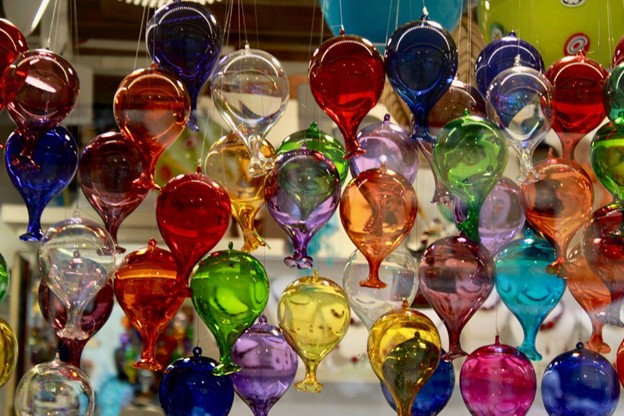
Innovation in modern glass design
Photo by eze cmf on Unsplash
Advances in production have opened new options for designers. Modern techniques allow better consistency, stronger material, and more complex shapes than were possible before.
Designers now build in layered glass structures, decorative color gradients, and detailed internal patterns. These methods let a glass object work as both an accessory and an artistic display.
Studios experiment with these ideas to make distinctive products that hold their own in design markets. The trade-off is real, though: more complexity means more ways for a piece to fail during cooling, and a higher price that has to be justified to the buyer.
That hidden difficulty is common across premium goods, where the processes and materials behind high-end products rarely show up in the finished object.
Glass accessories and lifestyle trends
Glass craftsmanship has shaped broader lifestyle trends too. Many contemporary accessories use glass elements because the material is versatile and pleasant to look at.
Transparent materials can lend a sense of minimalism and modernity to a product. Glass surfaces catch light in particular ways, adding interest without crowding the objects around them.
These qualities make glass popular in decorative objects and in everyday accessories used at home and in personal spaces.
The role of wellness brands in lifestyle markets
Alongside design trends, wellness-focused brands have shaped modern lifestyle products. Companies built around wellness or plant-based goods often work in markets where design, packaging, and presentation carry real weight.
Some brands, such as Medterra, operate in sectors focused on hemp-derived wellness products and related lifestyle goods. In these markets, product design and presentation meet broader currents in wellness, minimalism, and modern aesthetics.
The industries differ, but both glass craftsmanship and wellness branding show how design shapes what customers feel about a product. For smaller makers in either field, the harder problem is being found in the first place. Pew Research Center reported in 2011 that Americans looking for local businesses reach for the internet before any other source: 38% of adults turn to search engines for information on restaurants, bars, and clubs, and 36% use search engines for other local businesses. A studio that produces beautiful work but sits nowhere a searcher can reach is invisible, which is why being listed in curated, human-checked places still matters for independent producers.
The importance of skilled glass artisans
For all the new technology, glassmaking still leans on skilled artisans. Working with molten glass takes precise timing, steady control, and a feel for how the material behaves under heat.
Glass artists have to manage temperature shifts carefully to prevent cracking or distortion. Even a small design change means coordinating the heating, shaping, and cooling stages with care.
Because of that complexity, glass work is respected as a technical skill and an artistic discipline at once. It resists full automation in a way many crafts do not.
Glass craft as a cultural tradition
Glassmaking traditions survive in many parts of the world, and different regions developed their own styles and techniques. From Venetian glass in Italy to contemporary studio glass movements, artisans keep testing what the material can do.
Institutions such as the Corning Museum of Glass document the history of glass production and show how techniques changed over time. Their research points to the place of craftsmanship, innovation, and artistic experiment in shaping modern glass design.
The future of glass lifestyle accessories
As design trends shift, glass craftsmanship will probably stay a fixture of modern lifestyle products. Designers are exploring new materials, better production technologies, and more sustainable practices that cut environmental impact while keeping artistic quality.
From decorative objects to specialized accessories, glass keeps offering a rare mix of beauty, transparency, and structural strength. If you make or sell these pieces, the practical work is twofold: keep the craft honest, and make sure buyers can actually find and trust it, through clear listings, real reviews, and a visible track record. The long history of the trade and its steady innovation show that old techniques can meet current demands without losing the character that has defined glassmaking for centuries.
