
When people think about high-end products, their attention goes to the finished result. A luxury vehicle, a premium appliance, or a carefully designed consumer product draws the eye toward aesthetics, performance, and brand identity. What stays out of view, though it matters just as much, is the network of processes and materials that make these products possible.
Behind every polished surface lies a supply chain built on precision, consistency, and specialist knowledge. Understanding this hidden layer shows how different industries, some of them apparently unrelated, feed into the creation of premium goods.
Craftsmanship as the visible standard of quality
At the top of the value chain sits the final product, the point where engineering, design, and craftsmanship meet. In luxury automotive, this stage is the sum of countless decisions, each one shaping performance, durability, and visual appeal.
Luxury automotive brands trade on attention to detail. Every component, from interior materials to exterior finishes, is chosen and assembled with quality in mind. That level of execution is not accidental. It reflects a commitment to standards that reaches well past the visible elements.
Dealerships such as Bentley Denver show how this craftsmanship is presented and experienced by the buyer. The vehicles embody precise engineering, but they also mark the final stage of a much longer process, one that starts long before assembly.
The journey beneath the surface
Craftsmanship defines the finished product, yet it leans heavily on what happens earlier in the chain. Materials, treatments, and manufacturing methods all decide how a product holds up over time.
In automotive production this covers everything from metal treatments and coatings to adhesives, lubricants, and protective compounds. Each of these affects durability, safety, and day-to-day function.
What makes this stage easy to miss is that it stays invisible to the end user. A buyer rarely thinks about the chemical composition of a coating or the properties of a bonding agent, but those factors set the ceiling on how good the final product can be. Consider what happens when a bonding agent cures at the wrong rate, or a coating reacts poorly to temperature swings on a cold morning. The result shows up years later as a rattle, a fade, or a failure the customer blames on the brand, never on the supplier three tiers back.
The role of industrial expertise
Moving from raw materials to refined components takes specialist knowledge. Industrial providers work behind the scenes, supplying the materials and solutions that let manufacturers hit high standards.
Companies such as JennyChem show how this expertise supports a wide range of industries. By developing chemical solutions matched to specific applications, they help keep production consistent, efficient, and performing to spec at every stage.
This contribution gets overlooked, yet it is essential. Without dependable materials and precise formulations, even the most advanced designs would fall short of what they promise on paper.
Why consistency matters across the supply chain
A defining trait of high-end products is consistency. Buyers expect the same quality no matter when or where a product was made. Delivering that takes tight control over every element of production.
Consistency starts with materials. Variations in composition or grade lead to differences in performance, appearance, or lifespan. That is why manufacturers work with trusted suppliers who can deliver uniform results at scale.
It also runs through the processes. Standardized methods, rigorous testing, and quality checks keep each component within its required specifications. Taken together, these create a stable base for premium goods. A single weak batch of adhesive can undo months of design work, which is why serious manufacturers treat supplier selection as a core engineering decision rather than a purchasing one.
What industry research reveals
The value of joined-up supply chains shows up in broader research too. According to McKinsey and Company, firms that invest in end-to-end supply chain visibility and quality control are better placed to keep products consistent and to react when demand shifts.
The point is simple. Quality is not made at one stage. It comes out of coordinated work across many levels of production, from raw materials to final assembly.
Bridging science and design
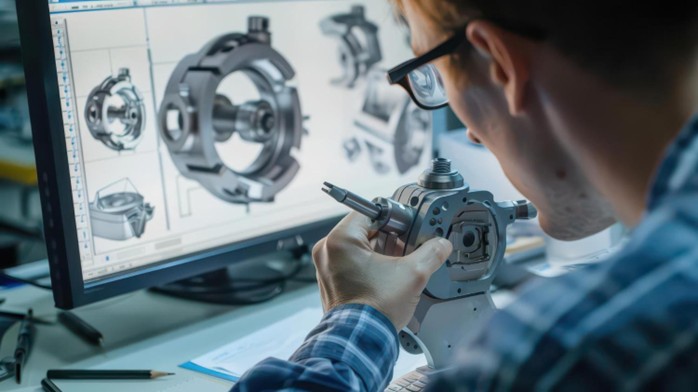
Image by faji on Freepik
The link between industrial inputs and finished products reflects a wider connection between science and design. Engineers and designers depend on material properties to realize their ideas, while chemists and manufacturers develop those materials to meet changing demands.
In modern industries, this collaboration is becoming more dynamic. Advances in material science open up new options in design, while feedback from finished products shapes the next round of innovation at the material level.
This loop of improvement keeps products moving forward, more efficient, more durable, and more refined over time.
How buyers find and judge the makers
All of this precision only pays off if a buyer can locate the maker and form a view of it before parting with money. That is where the supply chain meets the customer, and where trust does the heavy lifting. Rachel Botsman, in Who Can You Trust? (2017), argues that trust has moved into a third era she calls distributed trust, in which ratings, reviews, and platform reputation let strangers extend confidence to businesses and people they have never met. For a luxury dealership or a specialist chemical supplier, that reputation is now assembled in public, one review and one listing at a time.
Discovery matters just as much as reputation. Being present in curated, human-checked places, whether a business directory, a trade register, or a well-organized listing, is often how a specialist supplier gets found by the manufacturers who need it. A firm three tiers deep in a supply chain rarely advertises to consumers, but it still needs to be findable by the people who commission its work. Visibility, in that sense, is part of the quality story: a supplier that cannot be found and checked cannot be chosen.
A broader perspective on quality
From a distance, it is easy to pin quality on the final product alone. Look closer and you see it spread across the whole supply chain. Each stage adds to the outcome, and a weakness at any point shows up in the result.
This view supports a fuller reading of value. It puts weight not only on craftsmanship and design but also on the systems and expertise that stand behind them.
For businesses, that means investing in reliable partnerships and holding firm standards at every level. For consumers, it offers a deeper sense of what goes into the products they use every day.
High-end products get celebrated for their visible qualities: design, performance, and brand identity. Those qualities are only part of the story. Behind them sits a network of materials, processes, and expertise working together to deliver consistent results.
From the precision of luxury automotive craftsmanship to the scientific groundwork laid by industrial solutions, each element shapes the outcome. Reading this hidden supply chain shows how premium products come to be, and why quality has to hold at every stage rather than just the last one.
As expectations keep rising, it is this pairing of visible excellence and unseen precision that separates a genuinely good product from one that only looks the part. For anyone evaluating a maker, the practical takeaway is straightforward: look past the finish, ask who supplies the materials, and check whether the firm behind it can actually be found and verified.
