Key Takeaways
- LPR technology automates the identification process, optimizing parking operations and enhancing the overall user experience.
- Integration with artificial intelligence and machine learning makes modern LPR systems highly reliable and adaptable.
- Real-world adoption is driving significant improvements in efficiency, cost savings, and enforcement accuracy.
In recent years, parking management has undergone a dramatic transformation powered by new technologies. At the heart of this change is License Plate Recognition (LPR), an innovation that streamlines entries, enhances security, and improves convenience for both drivers and facility managers. Parking systems leveraging automatic license plate recognition for secure parking access are quickly becoming the gold standard in urban infrastructure, automating tasks that once required significant manual oversight.
Unlike traditional parking access tools—such as paper permits or access cards—LPR uses advanced optical technology to instantly identify vehicles, offering a seamless experience for authorized users. This automation not only reduces wait times and traffic bottlenecks at entry points but also provides robust security by enabling easy monitoring, recording, and management of vehicle flow.
Understanding License Plate Recognition Technology
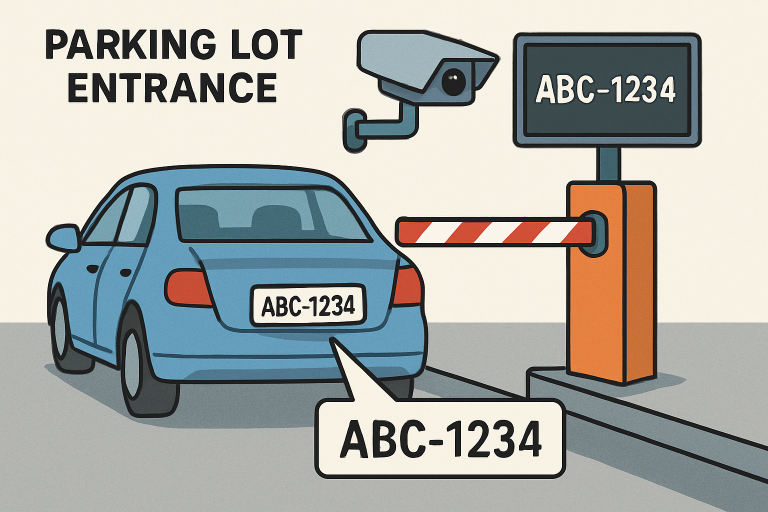
LPR operates by using cameras with optical character recognition (OCR) software to read and digitize license plate numbers. This process enables near-instantaneous identification of vehicles as they enter or exit parking facilities. The technology is highly versatile, enabling applications that range from frictionless access control to toll collection and digital enforcement.
One of the key advantages of LPR is its reliability. Modern systems can process plates from a diverse range of vehicle types and origins—even in challenging lighting, weather, or traffic conditions. As a result, operators can effectively manage both large and small parking environments, reducing personnel costs and operational overhead.
Advancements in AI and Machine Learning
The continued improvement of LPR is closely tied to advances in artificial intelligence and machine learning. Deep learning algorithms now enable detection and recognition rates of between 95% and 99% according to recent research. These algorithms adapt to local plate formats, memorable characters, and even recognize plates obscured by dirt, shadows, or inclement weather.
This enhanced accuracy transforms everyday operations. AI-driven LPR systems can differentiate between permitted and unauthorized vehicles within fractions of a second. They also adapt seamlessly to new plate designs without requiring labor-intensive updates, allowing parking managers to stay flexible as regulations evolve.
Real-World Applications and Benefits
The impact of LPR extends beyond theory into widespread real-world adoption. Colleges, airports, hospitals, and urban parking operators are deploying LPR to automate enforcement and improve efficiency. At Texas A&M University, for example, LPR powers a modernized parking infrastructure that manages over 36,000 spaces.
Deploying LPR cameras on enforcement vehicles and at facility entry/exit points has replaced manual permit checks, resulting in substantial cost and time savings.
Many parking systems have transitioned to gateless access using LPR, further streamlining entry/exit and allowing for a more natural traffic flow. These systems eliminate barriers, tickets, and physical permits, dramatically reducing maintenance and enhancing user satisfaction.
Enhancing Security and Compliance
Security remains a top priority in parking management, and LPR is a powerful preventative tool. By recording every entry and exit, LPR-equipped facilities can quickly identify vehicles of interest—whether enforcing parking regulations or supporting law enforcement.
This automated, real-time monitoring enables the immediate identification of potential rule violations or unauthorized cars, thereby reducing opportunities for theft or fraud. Data from the New York Times highlights how both private and public sectors increasingly use LPR to monitor security at critical infrastructure sites.
This constant monitoring not only improves compliance but also allows security personnel to focus on urgent alerts and higher-level tasks, making better use of human resources.
Challenges and Considerations
LPR systems, while transformative, do raise essential considerations. Privacy is a growing concern due to the continuous collection of vehicle data. Organizations require policies that outline the duration of data storage, the scope of access, and the safeguards in place to protect information. Balancing convenience with confidentiality is critical for maintaining public trust.
The cost of deploying LPR—including hardware, software, and ongoing support—can be a barrier, especially for smaller managers. Yet, these upfront investments are often offset by long-term savings in staffing, enforcement accuracy, and reduced maintenance of legacy systems.
Future Prospects
The evolution of LPR shows no signs of slowing down. Emerging trends include deeper integration with mobile payment platforms, digital permitting systems, and real-time analytics dashboards. As systems become even more accurate and capable, LPR is expected to enable new features, such as dynamic pricing, congestion management, and personalized parking experiences.
Advances in machine learning and cloud computing are likely to decrease costs further while increasing scalability and accessibility. Over time, LPR will become increasingly accessible to mid-size and small operators, leveling the playing field for organizations of all sizes.
Conclusion
The rapid evolution of License Plate Recognition is transforming modern parking operations, offering smoother experiences for drivers and greater efficiency for operators.
As AI and machine learning continue to enhance LPR capabilities, these systems are becoming more accurate, responsive, and adaptable to complex environments. Improved real-time data analysis enables faster entry and exit, automated fee calculation, and reduced congestion in busy facilities.
Additionally, advanced security features help prevent unauthorized access and ensure reliable monitoring. With ongoing technological advancements, LPR’s potential to deliver secure, streamlined, and highly scalable parking management solutions will continue to expand, setting new standards for convenience and operational performance. This growth positions LPR as a core tool for mobility.
