Rationale for the Exterior Approach
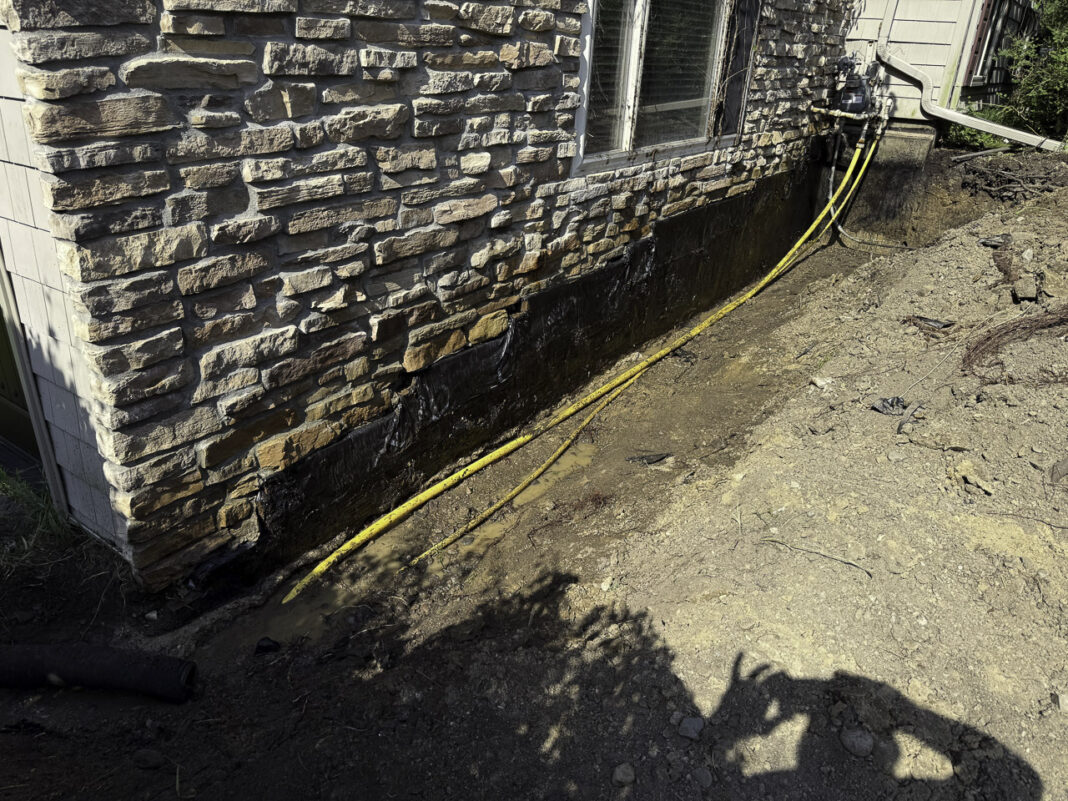
Of the available strategies for managing below-grade moisture, exterior waterproofing — the application of a continuous barrier to the outside face of the foundation wall before backfilling — is the only method that prevents water from ever contacting the concrete substrate. Interior systems intercept water after it has already penetrated; exterior systems deny it entry altogether.
This distinction is not merely theoretical. It determines whether the foundation concrete itself remains protected from the freeze-thaw cycling, chemical attack, and reinforcement corrosion that moisture enables over decades of service.
In a state where clay soils, elevated water tables, and over 80 annual freeze-thaw transitions converge on a single foundation, exterior basement waterproofing in Michigan represents the most technically defensible long-term investment a property owner can make.
Michigan’s Hydrological and Geotechnical Context
Michigan’s subsurface environment presents a confluence of moisture pressures that few North American markets experience simultaneously.
Liu and Vanapalli (2021) modelled lateral swelling pressure in unsaturated expansive soils and demonstrated that moisture infiltration into laterally constrained clay — the dominant soil type in Wayne, Oakland, and Macomb counties — generates pressures against foundation walls that significantly exceed static at-rest earth pressures. These pressures not only push water against the wall surface but can bow the wall inward, cracking the concrete and creating secondary pathways for moisture even where a barrier is present.
The Great Lakes proximity elevates regional water tables, particularly in communities along Lake St. Clair and Lake Erie. Spring snowmelt, combined with saturated clay that drains poorly, produces hydrostatic loading conditions that persist for weeks rather than hours.
Membrane Technologies for Exterior Application
The material portfolio for exterior basement waterproofing encompasses four principal categories, each with distinct performance characteristics.
Rubberised asphalt sheet membranes — self-adhering, factory-manufactured sheets applied to the primed exterior wall surface — provide a barrier of uniform thickness with reliable quality control. Fluid-applied elastomeric membranes, typically polymer-modified asphalt or polyurethane coatings, are sprayed or rolled onto the wall surface and cure to form a seamless, monolithic film that conforms to irregular substrates and bridges hairline cracks.
Song, Oh, Kim, and Oh (2017) evaluated below-grade membrane systems under simulated joint movement from settlement, thermal cycling, and external loads. Their findings revealed that membrane adhesion is significantly challenged in environments combining prolonged wet exposure with cyclic substrate movement — conditions that precisely describe Michigan’s freeze-thaw regime. The research underscored that material selection must account for dynamic substrate behaviour, not merely static water resistance.
Bentonite clay systems — sodium bentonite granules encapsulated between geotextile or HDPE carrier layers — exploit the clay’s capacity to absorb seven to ten times its weight in water and swell to form an impermeable seal when confined against the foundation. Their self-sealing properties around penetrations and minor punctures make them particularly suited to sites where backfill conditions are difficult to control.
Exterior basement waterproofing represents the most thorough approach to preventing water intrusion through foundation walls. Unlike interior systems that manage water after it enters the building envelope, exterior waterproofing stops water at the point of contact with the foundation, preventing penetration entirely.
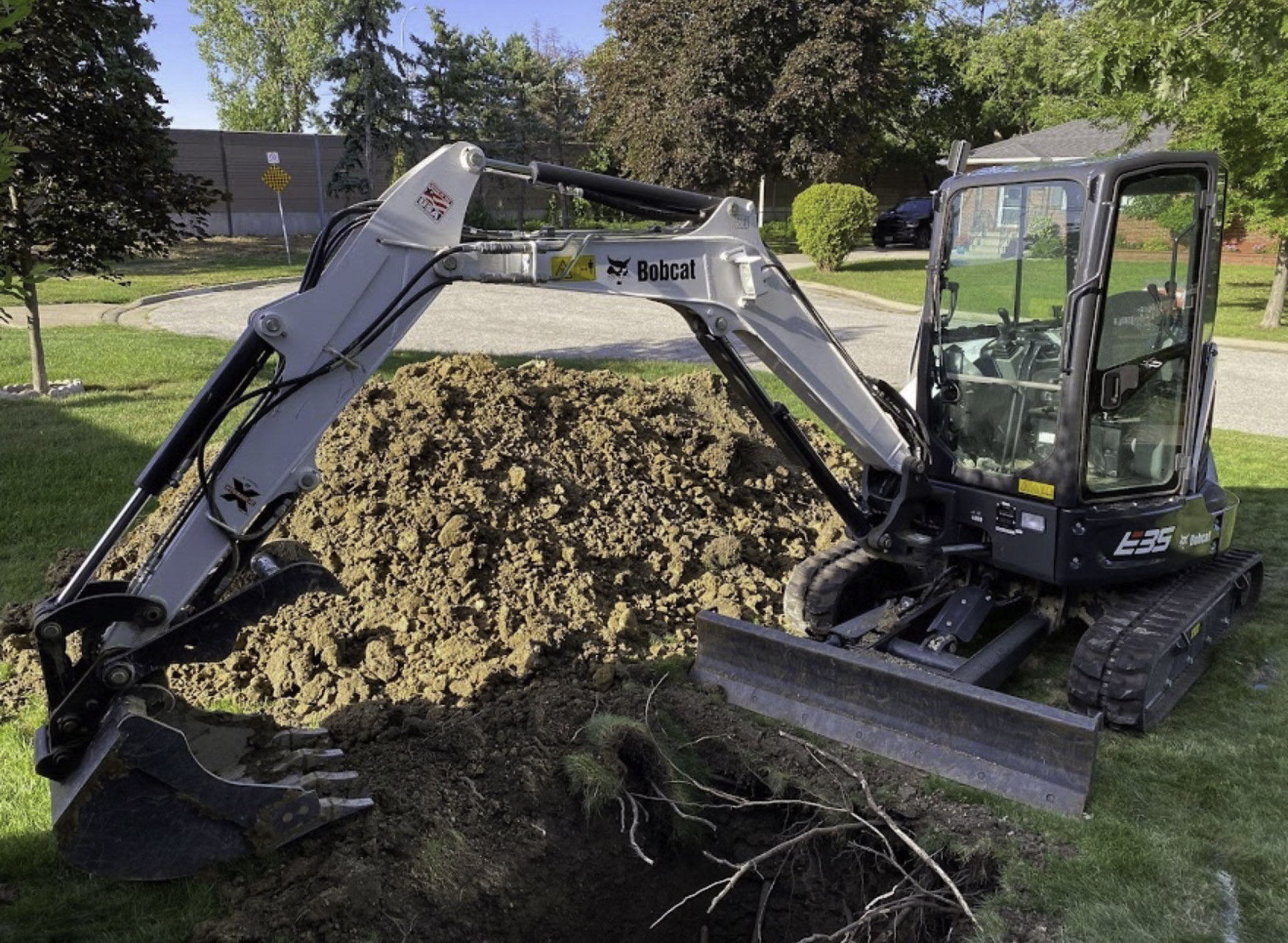
The process involves excavating the soil around the foundation down to the footing, cleaning and preparing the exposed wall surface, applying a waterproof membrane system, installing perimeter drainage tile at the footing level, and backfilling with proper compaction and grading correction.
Mansour’s Innovations performs exterior basement waterproofing using modern membrane systems, including rubber membranes and dimple board drainage layers. These materials represent the current standard for exterior foundation waterproofing, replacing older tar-and-bitumen coatings that were typical during the construction of most of Michigan’s existing housing stock.
The difference in performance and longevity between modern membrane systems and older coatings is substantial. Tar coatings become brittle over time, crack under soil pressure, and eventually fail as a moisture barrier. Modern membranes remain flexible, accommodate minor foundation movement, and provide a continuous waterproof barrier that maintains their integrity for decades.
The five-stage process documented on Mansour’s service pages reflects a contractor who understands the complexity and the stakes of exterior waterproofing work. The first stage is a comprehensive assessment of foundation condition, soil characteristics, existing drainage systems, and site constraints.
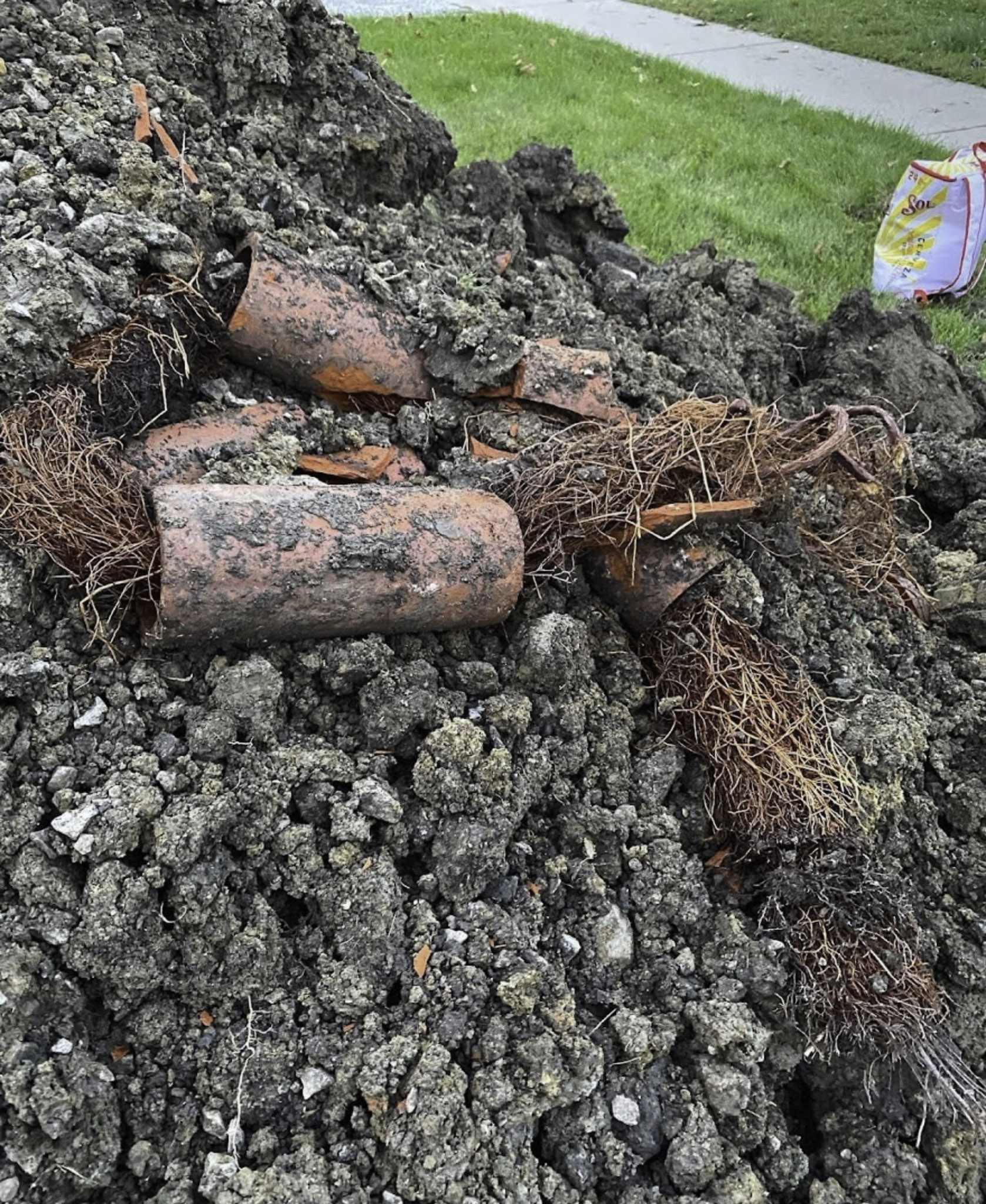
The second stage is careful excavation that protects existing landscaping, utilities, and adjacent structures. The third stage is membrane application using premium waterproofing products applied according to the manufacturer’s specifications. The fourth stage is drainage tile installation with proper connections to downspouts and discharge points. The fifth stage is backfill and site restoration with correct grading to ensure surface water flows away from the foundation.
Exterior waterproofing is best suited to homes with severe or persistent water problems that interior systems have not adequately controlled, visible foundation deterioration, high water tables, or situations where the homeowner wants the most complete protection available, regardless of cost. The company is transparent about the trade-offs: a higher upfront cost compared to interior systems, a project timeline of 5 to 10 days, temporary landscaping disruption, and weather-dependent limitations on exterior work during Michigan’s winter months.
Property Value and Real Estate Implications
The property value implications of exterior waterproofing deserve specific attention. A professionally waterproofed foundation with documented warranty coverage is a selling point during home inspections and real estate negotiations. Buyers and their agents routinely negotiate against suspected or documented water issues, and a completed exterior waterproofing system with a transferable warranty converts a potential liability into a documented asset.
Many homeowners wonder when an interior fix is enough and when exterior waterproofing becomes necessary. Our specialists weigh in on the key indicators:
In Michigan, protecting a basement from water damage starts with ensuring the ground around your house slopes away from the foundation. This means the soil should drop at least 6 inches in the first 10 feet, so water from rain, melting snow, or gutters can run off instead of collecting against the walls. This helps reduce the pressure that water can put on your basement walls, especially in areas with clay soil, as we have here. To take it a step further, we use downspout extensions and buried lines to carry water from your roof far away from your house. Sometimes, this water is directed into an exterior French drain, which is basically a trench filled with gravel and a special pipe that catches groundwater before it reaches your house. The pipe is wrapped in geotextile fabric to prevent dirt and debris from clogging it. But even with all these precautions, some water might still seep into your basement through cracks or the joint where the wall meets the floor.
Interior vs exterior — Interior work (most common here) is usually much more affordable because we don’t have to dig up your yard. Exterior waterproofing costs more due to excavation, but it’s sometimes needed for severe pressure problems.
Exterior options when needed — Dig and apply thick waterproof membranes, bentonite clay injection (no-dig version exists), or improved grading/drainage away from the house. – Mansour’s Innovations Owner.
Mansour’s 25-year transferable warranty is particularly relevant in this context. The warranty follows the property rather than the owner, which means that when the home is sold, the new owner inherits the warranty protection. In a real estate market where foundation and water issues are among the most significant inspection concerns, this warranty provides tangible value at the negotiating table. A buyer’s agent will recognize the difference between a seller’s verbal assurance that the basement is dry and a documented warranty from a twenty-year-old company with a 4.9-star rating.
The company’s project photo galleries document actual completed exterior waterproofing work at various stages, including membrane application, perimeter excavation, drainage tile installation, and finished restorations. Real project photography carries more credibility than stock imagery, and for homeowners trying to understand what the process will look like before committing to a multi-day yard disruption, this visual documentation provides genuinely useful context.
Mansour’s ownership of its own excavation equipment is an operational advantage that directly benefits homeowners during exterior waterproofing projects. The same team handles excavation, waterproofing installation, and site restoration, which means there are no scheduling gaps between subcontractors, no divided accountability when questions arise, and a compressed overall project timeline. For a homeowner facing five to ten days of work on their property, these operational efficiencies translate into meaningful reductions in disruption and uncertainty.
The Drainage Layer: An Integral Component
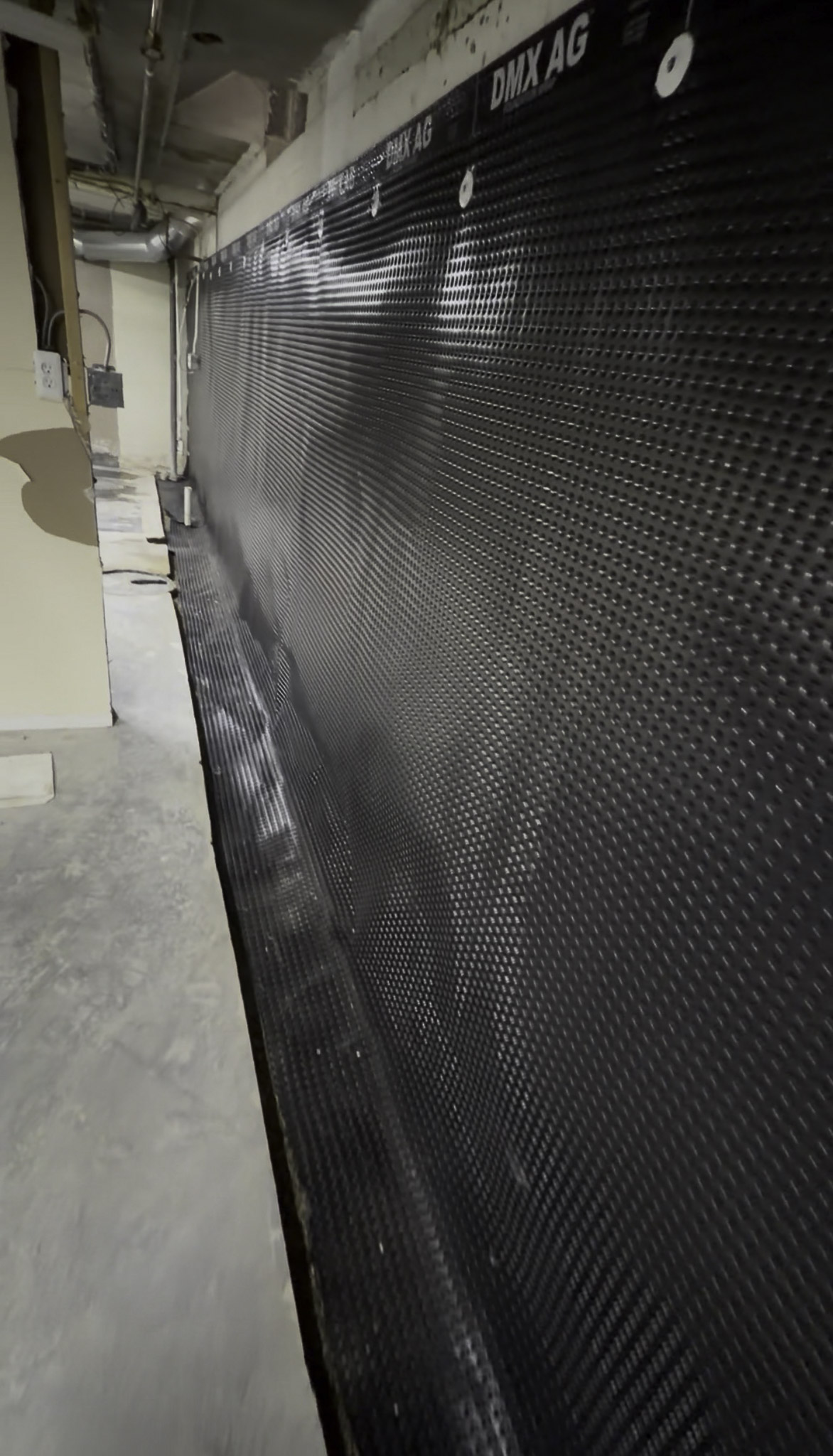
An exterior waterproofing membrane applied without a drainage layer is incomplete. The drainage plane — typically a geocomposite board consisting of a dimpled HDPE core bonded to a nonwoven geotextile filter fabric — serves two functions: it relieves hydrostatic pressure by channelling water downward to the perimeter footer drain, and it protects the membrane from mechanical damage during backfilling.
Chen, Li, and Wang (2022) investigated the filtration performance of nonwoven geotextiles under compressive stress representative of buried conditions and found that soil confinement pressure alters geotextile porosity and structure, affecting long-term drainage capacity. In Michigan’s fine-grained clay soils, filter clogging is a documented risk that can reduce drainage system effectiveness over time if geotextile specification does not account for the particle size distribution of the backfill material.
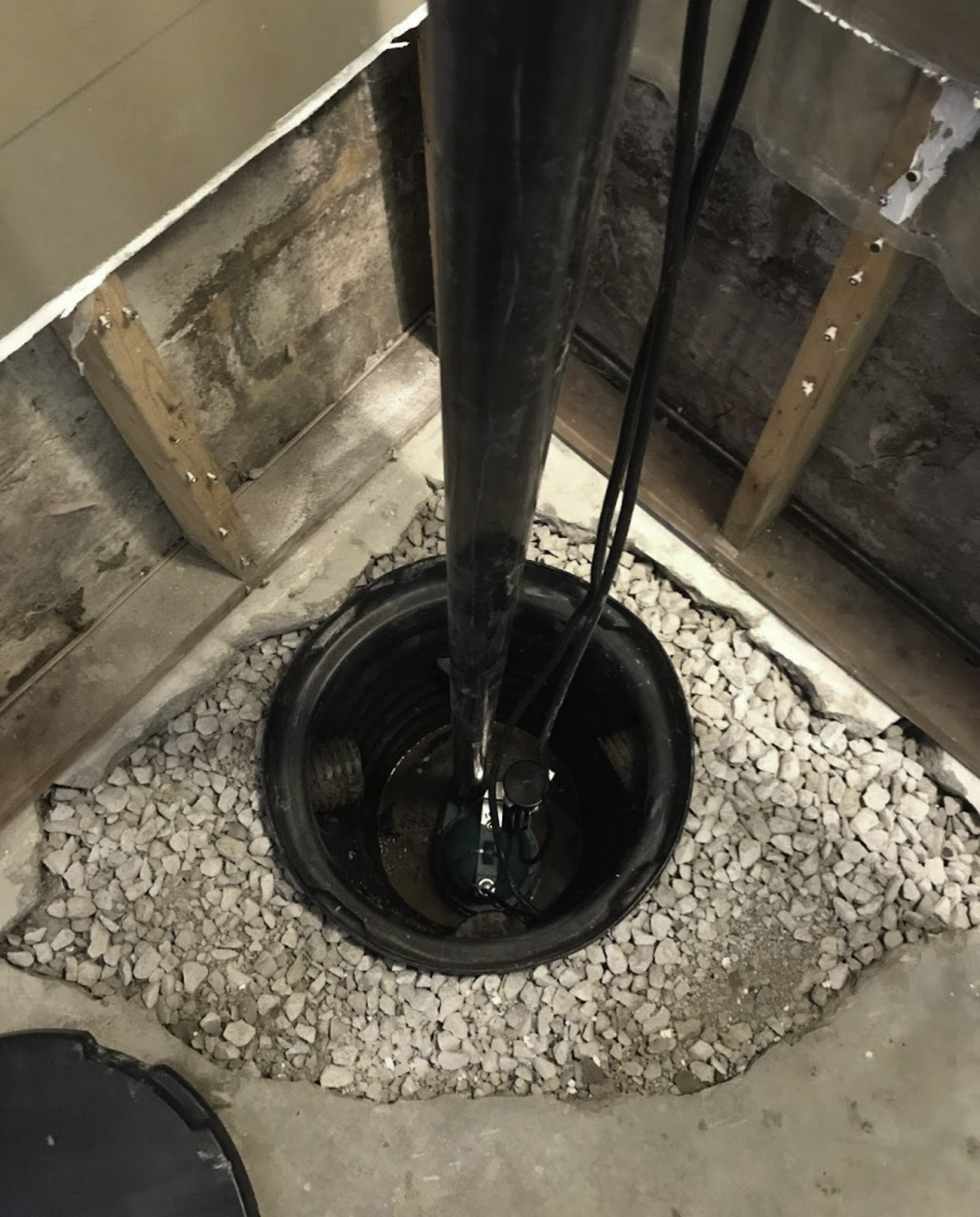
The drainage layer terminates at a perforated footer drain — rigid or flexible perforated pipe bedded in washed gravel at or below the footing elevation — which routes collected water to a sump basin and pump or, where topography permits, to a daylight outlet.
Excavation and Surface Preparation
The practical reality of exterior basement waterproofing begins with excavation — a process that is often the most disruptive and expensive phase of the project.
Full-perimeter excavation requires removing soil to the base of the footing, typically 1.2 to 1.5 metres below grade in Michigan’s 42-inch frost depth zone. Landscaping, walkways, driveways, and utility connections within the excavation corridor are necessarily disturbed.
Once exposed, the foundation wall must be cleaned of soil, efflorescence, and deteriorated parging. Szymanowski and Sadowski (2023) reviewed the mechanisms of crack formation in concrete structures and noted that cracks resulting from drying shrinkage, thermal contraction, and settlement must be repaired before membrane application — typically by epoxy or polyurethane injection — to prevent the crack from propagating through the membrane under subsequent loading.
Honeycombing, form tie holes, and construction joints require additional treatment with compatible patching compounds to create a substrate sufficiently smooth and uniform for membrane adhesion.
Michigan Climate and Exterior Waterproofing Timing
The timing of exterior waterproofing projects in Michigan is constrained by the state’s climate. Exterior work requires excavation around the foundation, which is impractical when the ground is frozen, typically from late November through March, depending on the specific winter. Membrane application and drainage tile installation also require temperatures above certain thresholds for proper material performance.
This means the exterior waterproofing season in Michigan runs roughly from April through November, with the best conditions generally occurring in the drier months of late summer and early fall.
Mansour’s Innovations schedules exterior waterproofing projects within this practical window, and its project planning accounts for weather contingencies that affect outdoor work in Michigan. Rain delays, unseasonably cold temperatures, and the abbreviated daylight hours of late fall all affect project timelines, and a contractor with two decades of experience managing these variables produces more realistic scheduling commitments than one operating in the region for the first time.
For homeowners who discover water problems during the winter months when exterior work is not feasible, interior waterproofing provides an immediate solution. Interior systems can be installed year-round because the work is performed inside the basement, unaffected by exterior weather conditions. Mansour’s ability to offer both interior and exterior solutions means the company can address urgent winter water problems with an interior system and, if warranted, follow up with exterior work during the appropriate season.
The property value impact of exterior waterproofing is particularly strong in Michigan’s real estate market because home inspections in this region specifically evaluate basement and foundation moisture conditions.
A documented exterior waterproofing system with a transferable warranty addresses the inspection findings that otherwise become negotiating points during home sales. Real estate agents in Southeast Michigan recognize the value of professional waterproofing documentation, and Mansour’s project documentation is designed to support these transaction scenarios with clear records of the work performed, the materials used, and the warranty terms.
Protection Against Freeze-Thaw Degradation
A principal advantage of the exterior approach in Michigan’s climate is that it shields the concrete itself from the moisture saturation that enables freeze-thaw damage.
Wang, Liu, Fu, Li, and Wang (2022) reviewed the deterioration mechanisms of concrete subjected to freeze-thaw cycling, identifying hydraulic pressure, osmotic pressure, and salt crystallisation as concurrent drivers of pore structure degradation, microcrack propagation, and surface scaling. By preventing moisture from reaching the concrete matrix, an exterior membrane interrupts this damage cycle at its source — a protective function that interior drainage systems, which manage water only after it has already entered, cannot provide.
Health and Habitability Implications
The consequences of moisture intrusion extend beyond structural deterioration into occupant health. Mendell, Mirer, Cheung, Tong, and Douwes (2011) confirmed through meta-analysis that indoor dampness and visible mould are associated with statistically significant increases in asthma development, respiratory infection, and allergic rhinitis across both adult and paediatric populations.
In Michigan, where basements are nearly universal in residential construction and increasingly finished as habitable space, exterior basement waterproofing in Michigan acquires a public health dimension that elevates the intervention beyond property protection.
Failure Modes and Quality Assurance
Mydin, Nawi, and Munaaim (2017), in their case-study assessment of waterproofing failures across multiple building types, identified three dominant failure factors: membrane deterioration, substrate cracking, and construction joint failure. Notably, material deficiency accounted for a minority of documented failures; the majority were attributable to installation error, inadequate surface preparation, and insufficient detailing at transitions between horizontal and vertical planes.
These findings carry direct implications for exterior basement waterproofing in Michigan, where the high cost of re-excavation means that installation errors are exceptionally expensive to correct. Third-party inspection during membrane application, drainage board installation, and backfill placement is therefore not a luxury but a rational risk management measure.
Conclusion
Exterior basement waterproofing in Michigan is the only technique that addresses moisture intrusion at its origin — the soil-structure interface — before water contacts the foundation concrete. It protects the substrate from the freeze-thaw degradation that Michigan’s climate imposes annually, manages hydrostatic pressure through integrated drainage, and establishes the moisture barrier necessary for healthy habitable space below grade.
The technique demands significant investment in excavation, surface preparation, and quality-controlled installation. Yet the empirical evidence consistently demonstrates that the dominant cause of waterproofing failure is not material inadequacy but workmanship deficiency — a finding that positions inspection and process discipline, rather than product selection alone, as the critical determinants of long-term system performance.
References
Chen, Y., Li, J., & Wang, Z. (2022). Filtration performance of nonwoven geotextile filtering fine-grained soil under normal compressive stresses. Applied Sciences, 12(24), 12638. https://doi.org/10.3390/app122412638
Liu, Y., & Vanapalli, S. K. (2021). Model for lateral swelling pressure in unsaturated expansive soils. Journal of Geotechnical and Geoenvironmental Engineering, 147(7), 04021060. https://doi.org/10.1061/(ASCE)GT.1943-5606.0002549
Mendell, M. J., Mirer, A. G., Cheung, K., Tong, M., & Douwes, J. (2011). Respiratory and allergic health effects of dampness, mold, and dampness-related agents: A review of the epidemiologic evidence. Environmental Health Perspectives, 119(6), 748–756. https://doi.org/10.1289/ehp.1002410
Mydin, M. A. O., Nawi, M. N. M., & Munaaim, M. A. C. (2017). Assessment of waterproofing failures in concrete buildings and structures. Malaysian Construction Research Journal, 2(2), 166–179.
Song, J., Oh, K., Kim, B., & Oh, S. (2017). Performance evaluation of waterproofing membrane systems subject to the concrete joint load behavior of below-grade concrete structures. Applied Sciences, 7(11), 1147. https://doi.org/10.3390/app7111147
Szymanowski, J., & Sadowski, Ł. (2023). The phenomenon of cracking in cement concretes and reinforced concrete structures: The mechanism of cracks formation, causes of their initiation, types and places of occurrence, and methods of detection — A review. Buildings, 13(3), 765. https://doi.org/10.3390/buildings13030765
Wang, Y., Liu, Z., Fu, K., Li, Q., & Wang, Y. (2022). Damage mechanism and modeling of concrete in freeze–thaw cycles: A review. Buildings, 12(9), 1317. https://doi.org/10.3390/buildings12091317
