Key Takeaways
- Annual chimney inspections and cleanings are crucial for preventing fires and maintaining optimal indoor air quality.
- Emerging technologies, such as inspection cameras and moisture meters, enhance the accuracy of chimney assessments.
- Environmentally responsible upgrades can significantly boost chimney performance and reduce emissions.
- Strict adherence to safety protocols lowers the risk of injury and property damage during routine maintenance.
Chimney safety is a vital concern for homeowners because it protects both property and loved ones from hazards that can result from improper maintenance or outdated practices. Unchecked chimneys can pose significant fire risks, compromise indoor air quality, and even present life-threatening dangers from carbon monoxide poisoning.
Each year, thousands of homes face chimney-related incidents, many of which could be easily avoided with proper care and attention. From annual inspections to adopting advanced technologies, several key steps can help ensure your chimney operates safely and efficiently.
Understanding the basics of chimney safety empowers you to make better decisions about maintenance, upgrades, and emergency preparedness. If you’re unsure where to begin or need expert advice about inspections, visit this link for helpful information and professional guidance. Building confidence in your chimney’s safety can bring peace of mind and significantly reduce long-term risks.
Regular maintenance and adherence to best practices extend the life of your chimney, enhancing safety and comfort. Routine inspections and proactive care prevent minor problems from escalating into serious hazards, such as fires or collapses.
Following standards, making eco-friendly upgrades, and using protective gear can reduce the risks of fires, CO leaks, and deterioration. Proper maintenance also improves indoor air quality by preventing blockages and smoke backups, forming the foundation of a dependable heating system.
Understanding Chimney Fires and Their Prevention
Chimney fire risk primarily arises from creosote buildup, a flammable residue resulting from burning wood. It accumulates inside the flue and can ignite at high temperatures, leading to fires that may damage homes and endanger residents.
Many of these fires can be prevented through regular maintenance practices, such as burning seasoned hardwood and ensuring good airflow, both of which help reduce creosote buildup. Installing chimney caps prevents debris and animals from entering, thereby lowering fire hazards.
Regular professional inspections can identify hidden problems, such as cracks or deteriorating mortar, that could potentially cause fires. Simple safety measures, including checking the damper and installing smoke alarms, enable early detection and response to potential issues.
Importance of Regular Inspections and Cleanings
Regular chimney inspections and cleanings are crucial for safety, as recommended by the National Fire Protection Association, which suggests inspecting at least once a year. These checks evaluate the condition of the flue liner, chimney stability, and potential blockages, ensuring a comprehensive safety assessment.
Prompt removal of soot and debris can prevent expensive repairs, reduce hazards, boost heating efficiency, and improve indoor air quality. Regular maintenance is, therefore, a wise investment for homeowners.
Modern Technologies Enhancing Chimney Safety
Recent technological advancements have transformed chimney inspection and diagnosis. High-resolution cameras now enable professionals to scan the whole interior of flues, detecting cracks, blockages, or hidden accumulation that would otherwise go unnoticed.
Rather than relying solely on eyesight or guesswork, these cameras enable the capture of detailed images and video footage, informing repair strategies and building comprehensive maintenance records. Moisture meters accurately gauge water infiltration in masonry—information vital for preempting structural compromise. Water penetration is a leading cause of chimney deterioration, eventually leading to brick spalling, mortar joint failure, and leaks into the home interior.
Embracing these modern tools yields more comprehensive safety evaluations and targeted preventive maintenance, helping homeowners save money and protect their investment over the long run.
Eco-Friendly Upgrades for Chimney Systems
Efficiency and sustainability are at the forefront of today’s chimney upgrades, making it easier to maintain a responsible and cost-effective fireplace. Top-sealing dampers, for instance, can drastically cut heat loss by forming an airtight seal when not in use, preventing warm air from escaping your home during winter and reducing energy bills.
EPA-certified fireplace inserts reduce emissions, maximize fuel efficiency, and often feature improved combustion technology, allowing for more complete wood burning and lower pollution production.
Not only do these upgrades reduce your utility bills, but they may also qualify for specific rebates or tax incentives, making them both financially appealing and environmentally beneficial. For more insights into eco-minded chimney improvements, sites like Angi offer actionable tips and case studies. These green options enable homeowners to enjoy the traditional ambiance of a fireplace while aligning with modern environmental values.
Essential Safety Measures During Maintenance
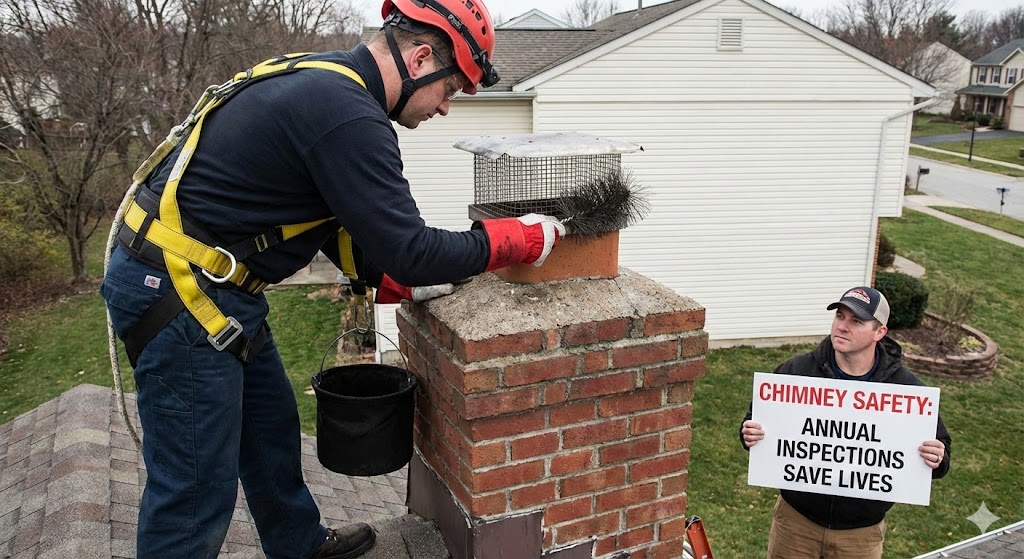
Key safety steps for chimney maintenance include wearing suitable PPE like respirator masks, gloves, safety goggles, slip-resistant shoes, and hard hats. Ensure climbing equipment is used correctly, with ladders secured and stable.
Following safety protocols and working in well-ventilated spaces can help lower risks. Having an assistant available can further reduce hazards. Following these guidelines during DIY chimney cleaning is essential to avoid accidents and injuries.
Professional vs. DIY Chimney Maintenance
Keeping your chimney properly maintained is essential for safety and optimal performance. Homeowners can handle small tasks, but certified chimney sweeps possess the expertise and specialized equipment necessary for comprehensive inspections and repairs.
They can detect significant problems, such as liner damage and blockages, ensuring safety standards are met. Regular professional inspections provide detailed reports and expert advice, enhancing the safety and reliability of your chimney throughout the year.
Conclusion
Modern chimney safety is about blending traditional practices with innovative technology and eco-friendly solutions.
By establishing regular inspections, adopting up-to-date cleaning methods, and making informed upgrades, you ensure your home remains safe, warm, and eco-conscious throughout every season. Small investments in prevention far outweigh the cost of fire damage or health complications, positioning you as a responsible and proactive homeowner.
By prioritizing preventive care and partnering with skilled professionals, you can enjoy the comfort of your fireplace for years without compromising on safety or sustainability.
