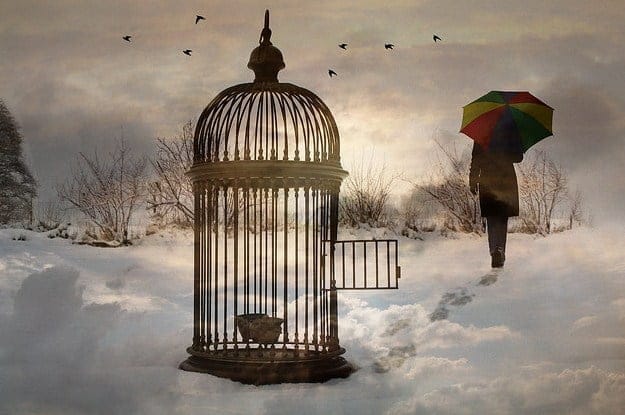
Even skilled artists hit stretches where nothing comes. The blank canvas, the empty frame, the day when every idea feels borrowed or dull. When that happens, you do not need a dramatic reinvention. A handful of small, practical habits can restart your imagination, sometimes in a matter of minutes. Here are techniques worth keeping close for the moments when your own well runs dry.
Feed your senses before you work
Listen to music. One of the reliable ways to find inspiration is to put on some of your favorite music. Doing so can trigger an idea for a new piece within minutes, sometimes seconds. Music helps many artists settle into a headspace where ideas move more freely. Some research suggests classical music in particular can lift brain activity and creative thinking. That said, the genre matters less than the effect: classical or heavy metal, whatever gets your mind loose is a good creative aid.
Take a walk. A jolt of inspiration can arrive from something as ordinary as stepping outside. A photographer might stumble across an interesting new subject worth a few frames, so bring your camera in case something catches your eye. If you draw, carry a pen and a pad of paper. The point is to be ready when the world hands you something.
Exercise. Think of creativity as an energy that runs through you and your brain, and remember that the brain performs best with a steady supply of oxygen. People often go stale because they sit too much. Aerobic movement, a run or a session of HIIT training, gets your heart pumping and blood flowing to the brain, which is another way to prime your creative output. You do not have to train hard. You just have to get moving.
Gather raw material on purpose
Take photos of places and subjects that interest you. For a photographer, volume helps. Shoot plenty of pictures of the things you actually care about. A city building with striking architecture, a stretch of quiet countryside, whatever pulls your attention. Think about what interests you most in the world and start capturing it. Keep at it long enough and inspiration becomes almost inevitable, because you are building a library your mind can draw from later.
Look at other artists’ work. Visit a gallery, or simply browse images online. Seeing what other people have made can wake up ideas of your own, and plenty of artists use this method precisely because it works. There is nothing wrong with letting another person’s work spark something in you. It happens constantly, and it has since the earliest days of any craft. The trick is to let it inform your voice, not replace it.
This is also worth remembering when you eventually put your own work in front of others. The way galleries, portfolios, and online listings are organized decides whether anyone finds you at all. In their standard reference Information Architecture: For the Web and Beyond (2015), Louis Rosenfeld, Peter Morville, and Jorge Arango argue that how information is labeled and categorized determines whether people can locate it, and they treat browsing structured categories and searching as complementary ways of discovering things. The same logic that helps you find other artists to study is the logic that helps clients and audiences find you. Being listed somewhere curated, tagged clearly by medium and style, is how you get discovered rather than overlooked.
Change the way you make things
Try a new style. Artists work in countless styles across drawing, painting, photography, and every other form. When you feel stuck, switching to an unfamiliar approach can shake something loose. Experimenting with different styles of photography is genuinely fun and often provokes ideas for new pieces. You might even find a style that shifts your entire perspective as an artist, the kind of change that reshapes what you make for years.
If you want structure while you experiment, give yourself a small constraint: one lens, one color, one hour. Limits force decisions, and decisions produce work. A style you adopt under pressure often teaches you more than one you drift into.
Talk yourself back into the work
Look up inspirational quotes. The internet holds thousands of quotes that can help nudge you toward making again, including many from famous figures and other artists. A good line can restore a sense of hope when you need it.
A common problem for photographers and other artists is letting negative thoughts get in the way of the process. The right words at the right moment can quiet that voice and restore some faith in your own ability. Here are ten quotes to spark your imagination:
- Imagination is the beginning of creation. You imagine what you desire, you will what you imagine, and at last, you create what you will. George Bernard Shaw
- Others have seen what is and asked why. I have seen what could be and asked why not. Pablo Picasso
- Creativity is allowing yourself to make mistakes. Art is knowing which ones to keep. Scott Adams
- If you hear a voice within you say, ‘You cannot paint,’ then by all means paint, and that voice will be silenced. Vincent Van Gogh
- Creativity is thinking up new things. Innovation is doing new things. Theodore Levitt
- Creativity is just connecting things. When you ask creative people how they did something, they feel a little guilty because they didn’t really do it, they just saw something. It seemed obvious to them after a while. That’s because they were able to connect experiences they’ve had and synthesize new things. Steve Jobs
- An idea that is not dangerous is unworthy of being called an idea at all. Oscar Wilde
- Creativity is inventing, experimenting, growing, taking risks, breaking rules, making mistakes, and having fun. Mary Lou Cook
- Make an empty space in any corner of your mind, and creativity will instantly fill it. Dee Hock
- There is a vitality, a life force, an energy, a quickening that is translated through you into action, and because there is only one of you in all time, this expression is unique. And if you block it, it will never exist through any other medium and will be lost. Martha Graham
Put a few of these to work
With so many ways for photographers and other artists to find ideas, the sensible move is to try as many as you can. Some of these methods may sound overly simple, even a little silly, but they work well for people who stay open to them. Keep a running note of which ones actually restart you. Over time you will build a personal shortlist, the specific walk, playlist, or gallery that reliably brings you back to the work when the ideas stop coming on their own.
