
Key Takeaways
- Selling your home without an agent eliminates commission fees, putting more money in your pocket.
- New real estate regulations in 2024 are making commission fees more flexible and negotiable.
- Going agent-free offers more control, but it also comes with challenges, such as limited market exposure and complex paperwork.
- Several alternative selling options, such as iBuyers and flat-fee MLS, provide new ways to sell quickly.
With home prices at record highs and selling costs on the minds of homeowners, many are turning to unconventional ways to sell their property faster while keeping more of the sale proceeds. Traditionally, the real estate selling process relied heavily on hiring agents—an approach that is rapidly evolving in today’s market. For those considering a direct sale, learning how to navigate the process without Realtor commissions can unlock significant benefits and savings. If you’re looking to sell your home quickly in the Lee’s Summit area, consider visiting https://www.kcpropertyconnection.com/mo/lees-summit/ to explore your local options and specialized services.
Skipping agents doesn’t just save on commission fees—it hands sellers greater autonomy over negotiations and marketing strategies. Yet, the ease of going it alone comes with its own set of risks, from tackling legal paperwork to managing pricing. Understanding the evolving landscape of real estate transactions is crucial before making a decision, especially as buyers gain more negotiation power in 2024 and beyond.
As homeowners explore their options, resources like https://www.kcpropertyconnection.com/ offer guidance and direct-sale solutions that can simplify the process and bypass traditional hurdles. These platforms provide invaluable support for sellers eager to move quickly and retain a larger share of their equity.
Understanding the Traditional Commission Structure
Real estate agents traditionally charge sellers a combined commission of 5% to 6% of the home’s sale price. For a house selling at $400,000, this means $20,000 to $24,000 in fees—split between the buyer’s and seller’s agents. While agents handle staging, marketing, negotiations, and legalities, these costs can significantly cut into your net proceeds, especially in higher-priced markets.
According to the National Association of Realtors, these commissions have long been the industry standard, mainly due to the agents’ access to the Multiple Listing Service (MLS) and established industry practices.
Recent Changes in Commission Practices
In 2024, the landscape shifted when the National Association of Realtors (NAR) settled an antitrust lawsuit, agreeing to a $418 million payout and implementing new rules around commission fees. Starting in mid-July 2024, sellers and buyers are no longer obligated by NAR to offer or pay set commission rates as part of the MLS process. This means homebuyers and sellers can fully negotiate (or even forgo) agent commissions, potentially saving them thousands on each transaction.
This shift brings increased flexibility for consumers, who can now negotiate more freely with agents or opt to conduct sales independently. While these changes promise to rein in housing affordability, they also pose new challenges for agents and traditional brokerages, who may see reduced earnings in the years ahead.
Pros of Selling Without an Agent
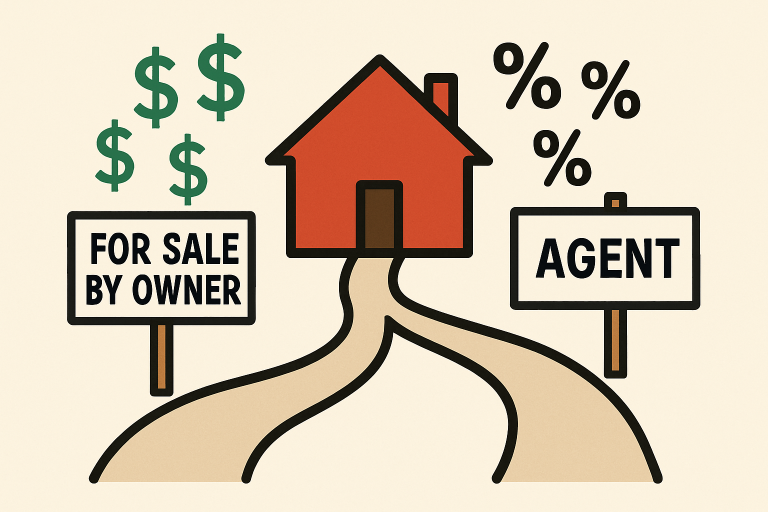
Cost savings are a significant advantage of selling a property independently, as it eliminates agent commissions, potentially saving sellers thousands of dollars at closing. Sellers gain control over the entire process, allowing them to set their own prices, devise personalized marketing strategies, and negotiate directly with buyers, which enhances transparency and may expedite the sale.
Additionally, direct communication with buyers can minimize misunderstandings, simplify negotiations, and facilitate quicker resolution of issues.
Cons of Selling Without an Agent
Real estate agents offer essential services for home sellers, including access to the MLS for broader market exposure, assistance with complex paperwork, and expertise in pricing based on market trends. Without these professionals, sellers may face difficulties in reaching qualified buyers, navigating legal disclosures, and accurately pricing their property, potentially leading to delays or financial losses.
Alternative Selling Methods
Sellers seeking alternatives to traditional agents have various emerging options. Flat-Fee MLS Services enable sellers to list their properties on the MLS for a fixed fee, ensuring broad market exposure without the associated commission costs.
The For Sale By Owner (FSBO) model lets sellers take complete control of the sales process, from marketing to negotiations, albeit with the added responsibility for all aspects. iBuyer Platforms, such as Opendoor and Offerpad, offer fast, cash sales, although these typically present lower offers than the market value, balancing quick sales against potential profit loss.
Legal and Financial Considerations
Foregoing an agent does not remove your obligation to comply with state and federal laws governing property transactions. Sellers are required to provide disclosures, manage contract deadlines, and ensure legal documents are accurate and complete. Missteps can be costly, making it wise to consult a real estate attorney for peace of mind and protection during the process.
Conclusion
Selling a house without an agent and skipping commissions can mean keeping more of your sale proceeds while moving the process along at your own pace. Yet, sellers need to balance these advantages against the potential risks: less exposure to buyers, increased responsibility, and complex transactional paperwork.
As the industry shifts and empowers both buyers and sellers, exploring alternative platforms and seeking reputable advice will help you make the best move for your goals and financial future.
