Businesses face steady pressure to cut their environmental impact while keeping their properties running efficiently. The roof is an easy part of the building to overlook, yet it drives a surprising share of energy costs, maintenance budgets, and how a company presents itself to customers and neighbors.
Roofing choices matter more than most owners expect. The options now range from bio-based systems to engineered materials that deliver energy savings and control stormwater, and each carries its own trade-offs in cost, lifespan, and climate suitability.
As owners research these options, many start by consulting a trusted commercial roofing contractor in central PA to compare the newer technologies against established industry practice. That research habit is worth respecting. Pew Research Center found that Americans looking for information about local businesses turn to the internet ahead of any other source, with 36% using search engines to learn about local firms, so the way a roofing contractor or supplier presents itself online often decides who gets the call.
The case for sustainable roofing goes past durability and code compliance. Better materials and designs can cut costs through improved insulation, higher energy efficiency, and lower maintenance. And because the roof is visible, choosing well is one of the clearest ways a company can show it takes sustainability seriously.
Green roofs
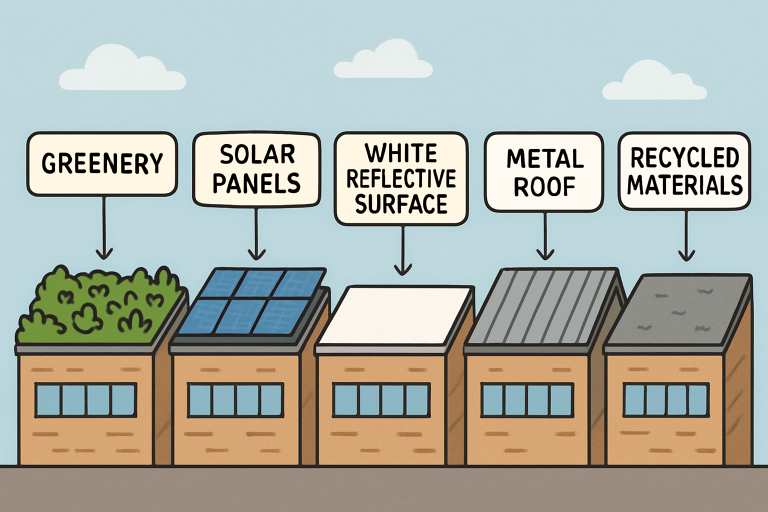
Green roofs, sometimes called living roofs, place vegetation across the rooftop and turn it into a small ecosystem on top of a commercial building. Along with the obvious visual appeal, they absorb rainwater, improve insulation, and reduce the urban heat island effect that makes city cores hotter than surrounding areas.
In hot climates, these systems have lowered roof surface temperatures by up to 30 degrees Celsius, which cuts cooling costs and eases the strain buildings put on the neighborhood. The trade-off is weight and structural load: a green roof needs a deck rated to carry saturated soil and standing water, so retrofitting an older building usually means an engineering review before anything is planted.
Solar roofing
Solar roofing combines electricity generation with the roof’s ordinary job of keeping weather out. Photovoltaic panels or integrated solar shingles convert sunlight directly into power and offset a company’s utility bills. Solar shingles now resemble conventional roofing, protecting the building envelope while generating electricity.
Solar shingle products are popular among commercial builders who want durability and clean energy in one system. Worth knowing before you commit: output depends on roof orientation, shading, and local sun hours, and the payback period varies widely from one region and utility rate to another. Ask any supplier for production estimates based on your actual roof rather than a national average.
Cool roofs
Cool roof systems use highly reflective, light-colored materials to keep heat from passing through the roof into the building. By reflecting more sunlight and releasing absorbed heat back outside, they lower both rooftop and interior temperatures, which improves comfort for occupants and reduces air conditioning demand.
This approach counters the urban heat island effect and extends a roof’s life by reducing the thermal stress that comes from repeated expansion and contraction. Cool roofs make the most sense in cooling-dominated climates; in colder regions the reflected heat you lose in winter can offset some of the summer gain, so the calculation is climate-specific.
Metal roofing
Metal roofing has long been part of sustainable construction thanks to its longevity, roughly 40 to 70 years, and its recyclability. Most modern metal roofs contain a significant share of recycled metal and are fully recyclable when they are finally replaced. Their natural reflectivity keeps roof decks cooler, which adds to the energy savings on large commercial sites where roof area is measured in acres.
Recycled materials
Using recycled-content materials is among the greenest options available. Shingles and membranes made from post-consumer plastics, rubber, and wood fibers keep tons of waste out of landfills, conserve raw materials, and lower a project’s carbon footprint.
These products are tough and fire-resistant, and they often match or beat the performance of conventional materials. They are increasingly available to commercial owners who want to put circular economy principles into practice rather than just talk about them.
Smart coatings
Coatings technology has moved quickly. The newer smart coatings add self-cleaning, water-repellent, and even pollution-reducing properties to a roof surface. A self-cleaning lotus effect finish minimizes dirt buildup, helps preserve solar reflectance, and stretches the interval between maintenance visits.
These coatings protect the roof and extend its service life, and they keep the building performing better by repelling the grime that otherwise dulls efficiency and leads to expensive repairs. On an existing roof in reasonable shape, a coating is often a lower-cost alternative to full replacement, which makes it a practical first step for owners not ready to tear off what they have.
Blue-green roofs
Blue-green roofs build on the green roof idea by adding a subsurface water retention layer that stores stormwater and releases it slowly beneath the vegetation. This hybrid manages urban runoff more effectively, cools the rooftop, and supports biodiversity while producing measurable stormwater and energy benefits.
They are most valuable in dense city centers, where flooding and heat both hit hardest. As with a standard green roof, the retention layer adds weight and needs deliberate structural planning, so it belongs in the design conversation early rather than as an afterthought.
Choosing a system and a contractor
No single roof is right for every building. The best choice depends on your climate, your structure’s load capacity, your budget, and how long you plan to hold the property. A green or blue-green roof suits a downtown building fighting runoff and heat; a metal roof or cool coating may serve a suburban warehouse better. Weigh the upfront cost against the expected lifespan and the annual energy savings, and be honest about maintenance you can realistically keep up with.
Picking the contractor matters as much as picking the material. Reviews and ratings do real work here, especially for the smaller independent firms that dominate roofing. Michael Luca’s study “Reviews, Reputation, and Revenue: The Case of Yelp.com” (2011) found that a one-star increase in rating raised revenue by 5 to 9 percent, an effect concentrated among independent businesses rather than chains with established reputations. For an owner comparing local roofers, that pattern is a reminder to read the reviews closely and to favor firms whose track record is documented in curated, human-checked places rather than self-published claims alone.
Modern businesses have more sustainable roofing options than at any point before, which means they can match a solution to both their environmental goals and their day-to-day operations. Living green roofs, recycled shingles, metal, cool coatings, and blue-green hybrids each bring distinct benefits and long-term value.
The concrete takeaway: get a structural assessment first, ask contractors for climate-specific performance figures rather than headline numbers, and confirm the roofer’s reputation before you sign. Do those three things, and you will pick a roof that improves efficiency and resilience without guessing.
