
Key Takeaways:
- Simple daily practices can meaningfully improve mental well-being.
- Technology and community resources make support for mental health easier to reach.
- Steady self-care routines build emotional resilience over time.
Introduction
Mental health matters for a balanced life, yet it often gets overlooked. Building practical tools and habits can boost emotional well-being and resilience. The options run from at-home practices to specialized support.A Inpatient mental health facility in Pompano BeachA provide tailored treatment for people facing serious mental health challenges. Small adjustments to your daily routine can improve mood, clarity, and stress levels. Approaches like mindfulness apps and social connections help you keep that well-being going. Finding the right mix is what lets you get the full benefit of mental health benefits.
Journaling: a path to self-discovery
Writing down your thoughts and emotions on a regular basis can reveal patterns, prompt reflection, and help you manage how you feel. The habit has been shown to ease anxiety, lower stress, and strengthen positive thinking. Recent research suggests that even a few minutes of journaling a day can make a real difference to your mental wellness.
Mindfulness and meditation apps
Mindfulness practice is easier to reach now than it has ever been. Plenty of mobile apps offer guided mindfulness exercises and meditation sessions for every experience level. Apps such as Sanvello use evidence-based methods to manage stress, sharpen focus, and steady your mood. With these tools you can fit short, restorative practices into your routine, which makes mental health care both convenient and personal.
Physical activity: a natural mood booster
Movement helps protect and improve mental health. Regular activity such as brisk walking, yoga, cycling, or dancing prompts the release of endorphins, the body’s natural “feel-good, chemicals. The effect is real: exercise reduces symptoms of depression and anxiety and supports emotional resilience over time. Even short high-intensity workouts have shown positive results, so you can add movement no matter how busy you are.
Social connections: building a support network
Human connection is a foundation of mental resilience. Keeping up caring relationships with friends and family, joining group activities, or signing up for a local support network can counter feelings of isolation. Small gestures, sending a check-in message, or sharing a coffee, offer comfort and a sense of belonging. Community participation in particular has been linked to higher levels of happiness and better mental health overall. These interactions keep reinforcing your emotional footing, which makes life’s harder moments easier to get through.
Sleep hygiene: restoring the mind
Quality sleepA is tied closely to cognitive function, mood stability, and how well you handle stress. Building healthy sleep habits, keeping a consistent sleep schedule, creating a calming bedtime setting, and switching off electronic devices, can noticeably improve how long and how well you rest. Winding down with reading, meditation, or breathing exercises before bed prepares your mind and body for restorative sleep. Good sleep hygiene is an essential pillar of lasting mental well-being.

Nutrition: fueling mental well-being
The link between diet and mental health is well established. Eating plenty of whole foods, healthy fats like omega-3s, and fresh fruits and vegetables supports how your brain works. Cutting back on ultra-processed and sugary foods helps steady your mood and energy. Nutrients such as vitamins B and D and magnesium matter a lot for mental clarity and emotional balance.
Diet is only one everyday input shaping mood and clarity; the rooms you sleep and work in matter too, which leads some people to consider lowering EMF exposure at home.
Professional help: seeking guidance
Sometimes self-help strategies aren’t enough. Mental health professionals offer expert support through therapy, counseling, or medication management, matched to your needs. Services like Cope Notes send daily positive messages and affirmations for ongoing encouragement. If symptoms persist or get worse, working with a specialist makes sure you get the right care and resources as you work toward better mental health.
We spend billions on physical health every year, yet the most effective mental health tools often cost nothing but intention. Recent research shows that simple, evidence-based practices can produce striking changes in psychological well-being, sometimes rivaling the effects of traditional therapy or medication.
1. The three-minute breathing space: your emergency reset button
When stress hijacks your day, the Three-Minute Breathing Space offers quick relief. For the first minute, you notice how you feel and put those feelings into words. For the second minute, you pay attention to your breath. For the third minute, you stay with the breath but widen your awareness to the whole body.
This technique, developed by pioneers of mindfulness-based cognitive therapy, works like a circuit breaker for anxious thinking. Take a client who spirals into worry over a work conflict. The therapist introduces the Breathing Space as a quick reset. In a session, they practice pausing, noticing the tightness in their stomach, and focusing on their breath for three minutes. At home, the client uses the same exercise after a tense email exchange and finds it calms the mind and cuts down on impulsive reactions. The appeal is its simplicity: no equipment, no special place, just three minutes of structured attention.

Quick Practice Guide:
- Minute 1: Notice your current emotional state without judgment
- Minute 2: Focus entirely on your breathing rhythm
- Minute 3: Expand awareness to include your whole body
2. Gratitude journaling: the five-minute mental health transformer
The evidence is strong. A 2024 gratitude study published in JAMA Psychiatry by Chen et al. found that respondents whose gratitude scores were in the highest third at the start showed a 9% lower risk of dying within the next four years than those in the bottom third. Its effect goes well beyond longevity.
A meta-analysis of 64 randomized clinical trials found that patients who went through gratitude interventions felt more gratitude, reported better mental health, and had fewer symptoms of anxiety and depression. Specifically, those participants scored up to 4% higher on feelings of gratitude, 6.86% higher on life satisfaction, and 5.8% higher on mental health, with anxiety and depression symptoms lower by 7.76% and 6.89% respectively.
The Evidence-Based Method: At night or in the morning, write down something that went well. Keep a dedicated notebook or journal for gratitude so you can look back and remind yourself of those moments. Research shows that practicing gratitude, 15 minutes a day, five days a week, for at least six weeks can improve mental wellness and may lead to a lasting shift in perspective.
3. The STOP technique: mindfulness in motion
When emotions threaten to take over, the STOP technique gives you structure. The acronym stands for four steps: Stop, Take a Breath, Observe, and Proceed Mindfully. Each step interrupts an automatic, often unhelpful response while building self-awareness and supporting more thoughtful decisions.
This tool, drawn from DBT, turns impulsive reactions into deliberate ones. STOP helps you recognize and accept your emotions without being ruled by them, so you respond to stressors in a more balanced way. With regular practice it becomes a skill that builds emotional resilience and a base for lasting well-being.
4. Sleep hygiene: the foundation of mental resilience
The link between sleep and mental health runs both ways and runs deep. A meta-analysis of 72 interventions that improved sleep quality against a control condition found that better sleep had, on average, a medium-sized effect on mental health, with clear evidence that improving sleep reduced depression, anxiety, and stress.
The statistics are sobering. Depression was significantly more common in the poor-hygiene group (75.8%) than among those with good hygiene practices (59.6%). Excessive or severe daytime sleepiness was also more common among people with poor hygiene (22.5% versus 11.7%, and 5.2% versus 1.2%).
Evidence-Based Sleep Strategies:
- Maintain consistent sleep-wake times (even on weekends)
- Avoid screens 1 hour before bed
- Keep bedroom temperature between 60-67 degrees F
- Exercise regularly (but not within the few hours before going to bed)
- Use your bed only for sleep, not for work or entertainment
5. Progressive muscle relaxation: the body-mind bridge
Progressive muscle relaxation (PMR) is a common relaxation technique in CBT for managing stress and anxiety. By tensing and then releasing different muscle groups in turn, you reach a state of deep relaxation. The practice sharpens your awareness of bodily sensations, which helps you spot signs of stress.
It works by teaching your nervous system the difference between tension and relaxation, a distinction that often blurs under chronic stress. Regular practice improves body awareness and helps you catch stress signals before they build.
When stress has settled into persistent anxiety, techniques like this work best alongside CBT and exposure therapy for anxiety guided by a trained therapist.
6. Cognitive restructuring: rewiring negative thought patterns
Our thoughts shape our experience more than we tend to notice. Research shows that mindfulness improves concentration, pain management, and emotion regulation. Mindfulness meditation can help significantly with difficulties like depression, anxiety, and addiction, leading to better emotional health.
The premise behind mindfulness-based interventions is that, by practicing mindfulness, you develop a different relationship to your thoughts and emotions, which reduces symptoms. The process involves:
- Identifying negative automatic thoughts
- Examining evidence for and against these thoughts
- Developing balanced, realistic alternatives
- Testing new perspectives through behavioral experiments
7. Digital mental health tools: technology as ally
Digital tools have widened access to mental health support. Mental health apps make it easier to practice evidence-based therapy exercises wherever you are. They give you extra support between therapy sessions or office visits, and they can keep supporting you after you finish therapy. Quality varies a lot, though.
Evidence-Based Digital Options:
- Apps using validated CBT techniques
- Programs incorporating mindfulness-based interventions
- Platforms offering structured gratitude exercises
- Tools providing sleep tracking with behavioral recommendations
Remember: mental health apps aren’t meant to diagnose a condition or replace care from a mental health professional.
Making it stick
Research keeps showing that combining several evidence-based techniques produces better outcomes than any one alone. Wong and Brown (2017) found that pairing a gratitude practice with counseling works better than either on its own, with the combined group reporting “significantly better mental health four and 12 weeks” after the intervention ended.
Creating Your Personal Mental Health Toolkit:
- Start with one technique for two weeks
- Add a second practice once the first becomes habitual
- Track your mood and symptoms to identify what works
- Adjust timing and frequency based on your response
- Remember: consistency trumps perfection
The dose-response relationship
One of the most encouraging findings is the dose-response relationship in mental health interventions. There was a dose-response link between improvements in sleep quality and later mental health: greater gains in sleep led to greater gains in mental health. So every small step counts, and you don’t need perfection to see benefits.
A note on professional help
These tools are useful, but they add to professional care for serious mental health conditions rather than replace it. CBT for insomnia (CBT-I) has a proven track record in reducing sleep problems. A large clinical trial also showed that CBT-I could reduce symptoms of many mental health conditions, improving emotional well-being and decreasing psychotic episodes.
The science of small changes
Several studies have shown that writing down the details of positive experiences from your day, week, or month can train your brain to appreciate what you have to be grateful for. A 2022 study by Sohal et al. found that a journaling intervention can offer a small to moderate benefit, with a 5% difference in the drop in scores on patient health measures between the control group and the experimental group.
The evidence reaches into the workplace too: 102 practitioners were split into three groups, and those who kept a work-related gratitude journal saw a decline in stress and depressive symptoms compared with the other two groups.
Bringing it together
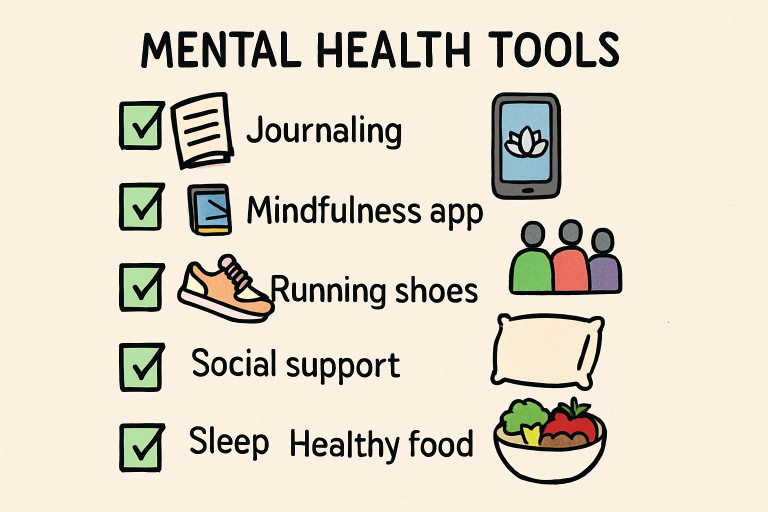
Building your own toolkit of mental health strategies helps you respond better to daily stress and stay on an even keel. Journaling, staying active, keeping up your connections, sleeping and eating well, and reaching out for professional support when you need it are all real steps toward lasting well-being. Every effort has a place, no matter how small, in building a more resilient and satisfying life.
Mental health is a practice, not a destination. These evidence-based tools give you practical, accessible ways to build psychological resilience. The research is clear: small, consistent actions can produce meaningful changes in mental well-being.
Start today. Choose one technique. Give it three weeks. Your future self will thank you.
