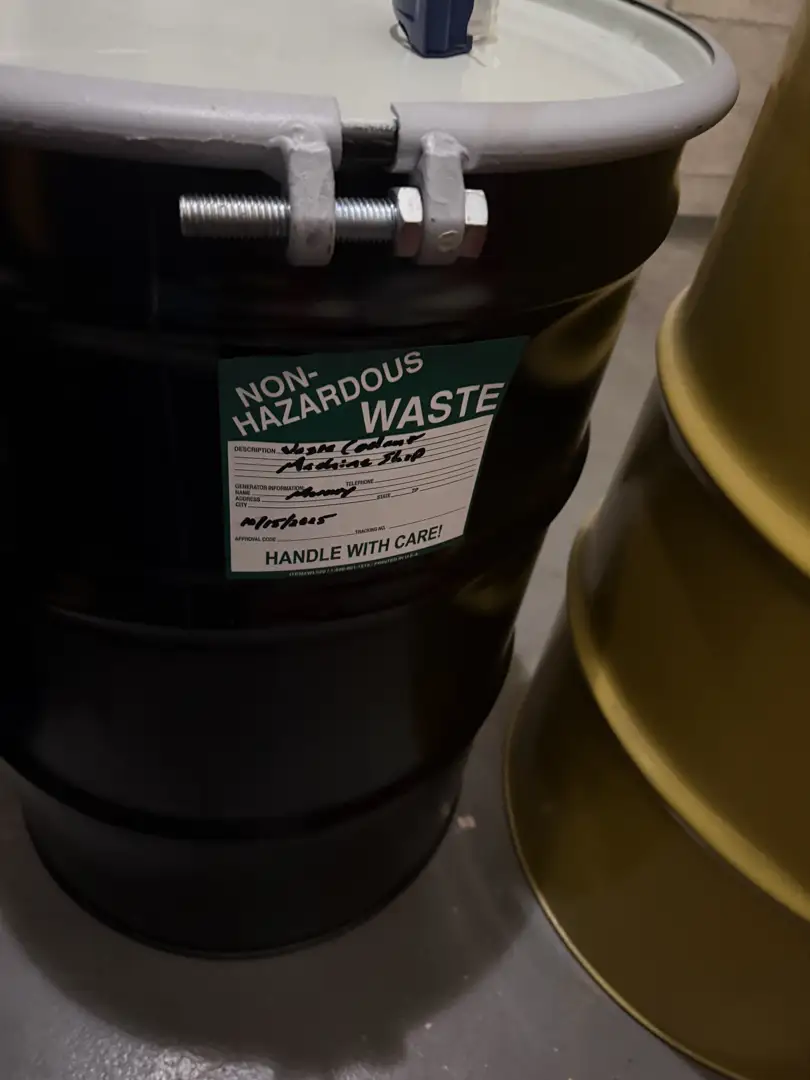
Industrial operations worldwide rely on drums to store and transport a vast array of materials, from essential chemicals to hazardous waste. While these containers are vital for various processes, their end-of-life management presents significant challenges. Improper drum waste disposal can lead to severe environmental damage, pose serious health risks to workers and communities, and result in hefty legal penalties for businesses.
Ensuring safe and compliant drum waste disposal is not merely a regulatory obligation; it is a fundamental aspect of environmental stewardship and operational integrity. Businesses must understand the nuances of managing these containers to protect their workforce, the surrounding environment, and their corporate reputation.
This comprehensive guide explores the critical aspects of drum waste disposal. It covers everything from identifying different drum types and waste classifications to navigating complex federal and local regulations. Readers will learn about the main steps in the disposal process, how to properly prepare drums for transport, and the crucial differences between handling hazardous and non-hazardous materials. Additionally, the guide will delve into available recycling and reconditioning options, specialized equipment, and best practices for achieving compliance.
Understanding these elements is essential for any organization that uses drums. It helps prevent costly mistakes, fosters responsible waste management practices, and promotes a safer working environment. To gain deeper insights into managing drum waste effectively and avoiding common challenges, businesses can consult expert resources on Environmental drum waste disposal.
Drum waste disposal refers to the systematic and safe management of used drums, which are containers that have held various materials, including chemicals, liquids, and hazardous substances. While the term “disposal” often implies discarding, in modern waste management, it encompasses a broader spectrum of activities, including reconditioning, recycling, and responsible landfilling. The importance of proper drum disposal cannot be overstated, extending far beyond simple compliance to touch upon critical environmental, economic, and social aspects.
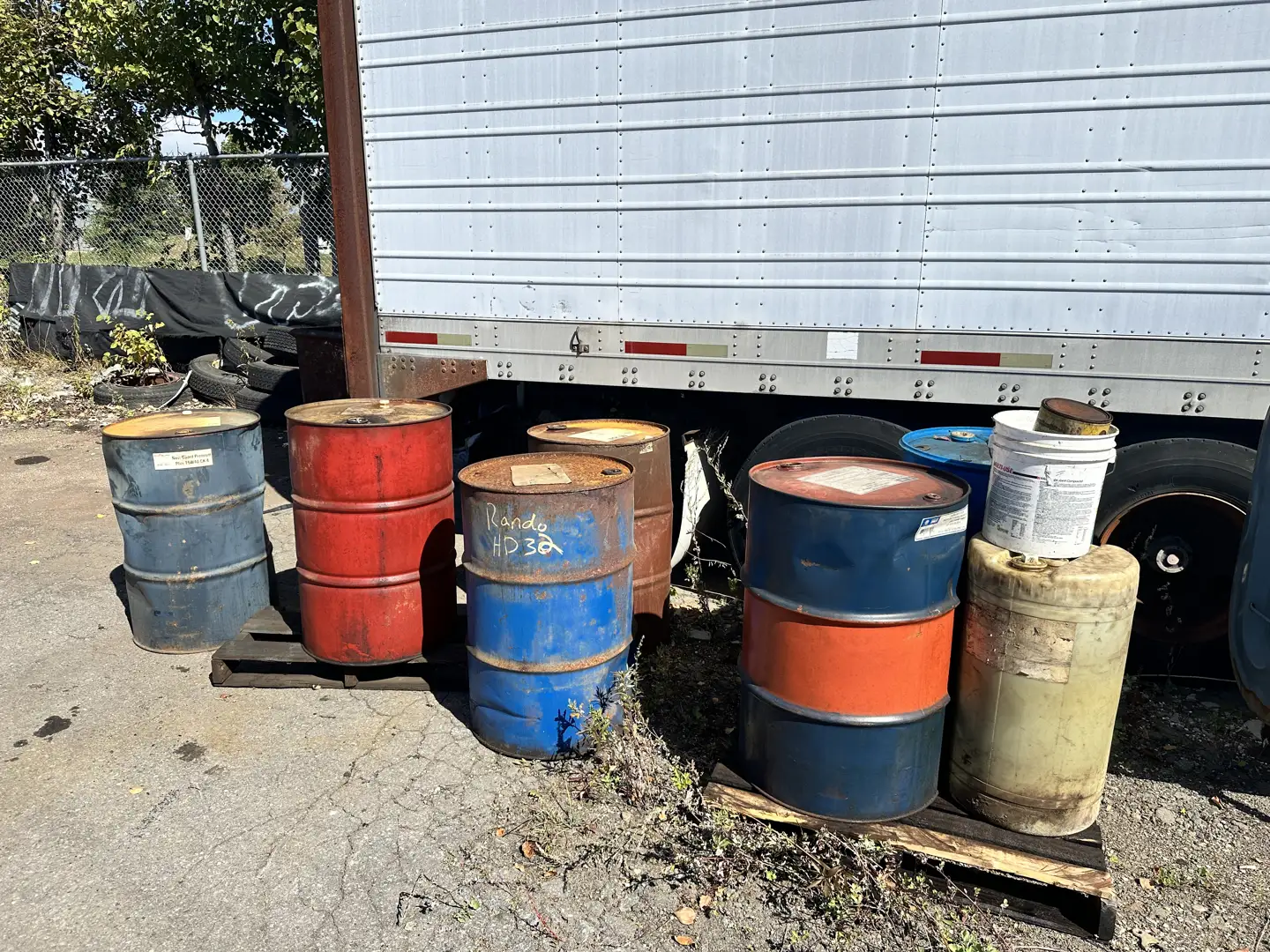
The environmental impact of improper drum disposal is a primary concern. Drums, particularly those that have contained hazardous materials, can leach harmful substances into the soil and groundwater if not handled correctly. This contamination can pollute ecosystems, endanger wildlife, and compromise drinking water supplies, leading to long-term ecological damage. For instance, drums left to rust or degrade in landfills can release their residual contents, contributing to soil contamination and water pollution. This not only affects the natural environment but also poses significant public safety risks to communities residing near contaminated sites.
Beyond preventing harm, proper drum disposal offers substantial benefits. It plays a crucial role in resource conservation by promoting the reconditioning and recycling of drums, reducing the demand for new materials and the energy required for their production. This approach aligns with the principles of a circular economy, where materials are kept in use for as long as possible, minimizing waste and maximizing value.
For businesses, adopting robust drum disposal practices enhances their corporate reputation, demonstrating a commitment to environmental stewardship and sustainability. It also contributes to worker risk reduction by ensuring safe handling procedures, and can even lead to cost savings through efficient waste management and material reuse.
The Role of Environmental Compliance in Waste Management
Environmental compliance is the cornerstone of responsible drum waste management. Adhering to regulatory standards, such as those set by the Environmental Protection Agency (EPA) in the United States, is essential for businesses to avoid legal penalties, fines, and reputational damage. These guidelines are designed to mitigate risks associated with hazardous waste, protect public health, and preserve natural resources.
Effective compliance involves more than just following rules; it’s about integrating environmental responsibility into core business operations. This includes conducting thorough waste profiling, implementing robust inventory tracking, and providing comprehensive employee training on safe handling and disposal procedures. Companies that prioritize compliance often see benefits beyond legal protection, including improved operational efficiency, enhanced public trust, and stronger community engagement. For example, a business known for its diligent environmental practices is likely to foster better relationships with local communities and attract environmentally conscious customers and employees.
Types of Drums and Waste Classifications
Drums come in various materials and sizes, each suited for different types of contents. The most common types are steel drums and polyethylene (plastic) containers. Steel drums are known for their strength and durability, making them ideal for transporting a wide range of materials, including oils, solvents, and certain chemicals. They can be lined with various coatings to prevent corrosion or reaction with specific contents. Polyethylene drums, often made from high-density polyethylene (HDPE), are lighter, more resistant to corrosion, and generally more cost-effective for transporting corrosive materials like acids and caustics.
The classification of the waste inside these drums is paramount, as it dictates the disposal procedures. Waste is broadly categorized into hazardous and non-hazardous. Hazardous waste, as defined by regulatory bodies like the EPA, includes materials that are ignitable, corrosive, reactive, or toxic. Examples include certain chemicals, paints, solvents, and industrial by-products. Non-hazardous waste, on the other hand, consists of materials that do not pose an immediate threat to human health or the environment, such as some food-grade liquids or non-toxic industrial residues.
The distinction between hazardous and non-hazardous waste is critical because each requires different handling, storage, transportation, and disposal methods. Hazardous waste is subject to stringent regulations, requiring specialized facilities and licensed transporters. Even “empty” drums that previously held hazardous materials can be classified as hazardous waste if they still contain significant residues, necessitating careful preparation and decontamination. Understanding chemical compatibility is also vital to prevent dangerous reactions when handling or mixing different waste streams, especially during the cleaning or consolidation of drums.
Key Regulations Governing Drum Disposal and Logistics
Navigating the regulatory landscape for drum waste disposal is complex, with a patchwork of federal, state, and local requirements. Businesses must adhere to these regulations to ensure safe operations, protect the environment, and avoid severe penalties. Key regulatory frameworks include the Resource Conservation and Recovery Act (RCRA) and the U.S. Department of Transportation (DOT) regulations.
Federal Standards for Environmental Compliance
The Resource Conservation and Recovery Act (RCRA), enacted in 1976, is the primary federal law governing hazardous waste in the United States. RCRA provides a “cradle-to-grave” framework for managing hazardous waste, from its generation to its final disposal. A critical aspect of RCRA for drum waste is the “empty container” rule, detailed in 40 CFR 261.7. This provision specifies the conditions under which a container that previously held hazardous waste can be considered “RCRA empty” and thus managed as non-hazardous waste. If a drum does not meet these criteria, it must be handled as hazardous waste, significantly increasing the complexity and cost of disposal.
The EPA actively enforces RCRA regulations. Recent findings, such as the EPA’s 2022 Damage Case Report, highlight ongoing issues within the drum reconditioning industry. This report documented various incidents, including fires, explosions, hazardous waste spills, and employee injuries, at a significant number of facilities. Out of approximately 181 drum reconditioning facilities identified nationwide, 86 (or 47.5%) had one or more reported damage cases. These incidents underscore the importance of strict adherence to RCRA empty container rules and other environmental safeguards throughout the entire lifecycle of used drums. The EPA continues to explore options, including potential new regulations, to address these issues and improve the safe management of industrial containers.
Transport and Labeling Requirements
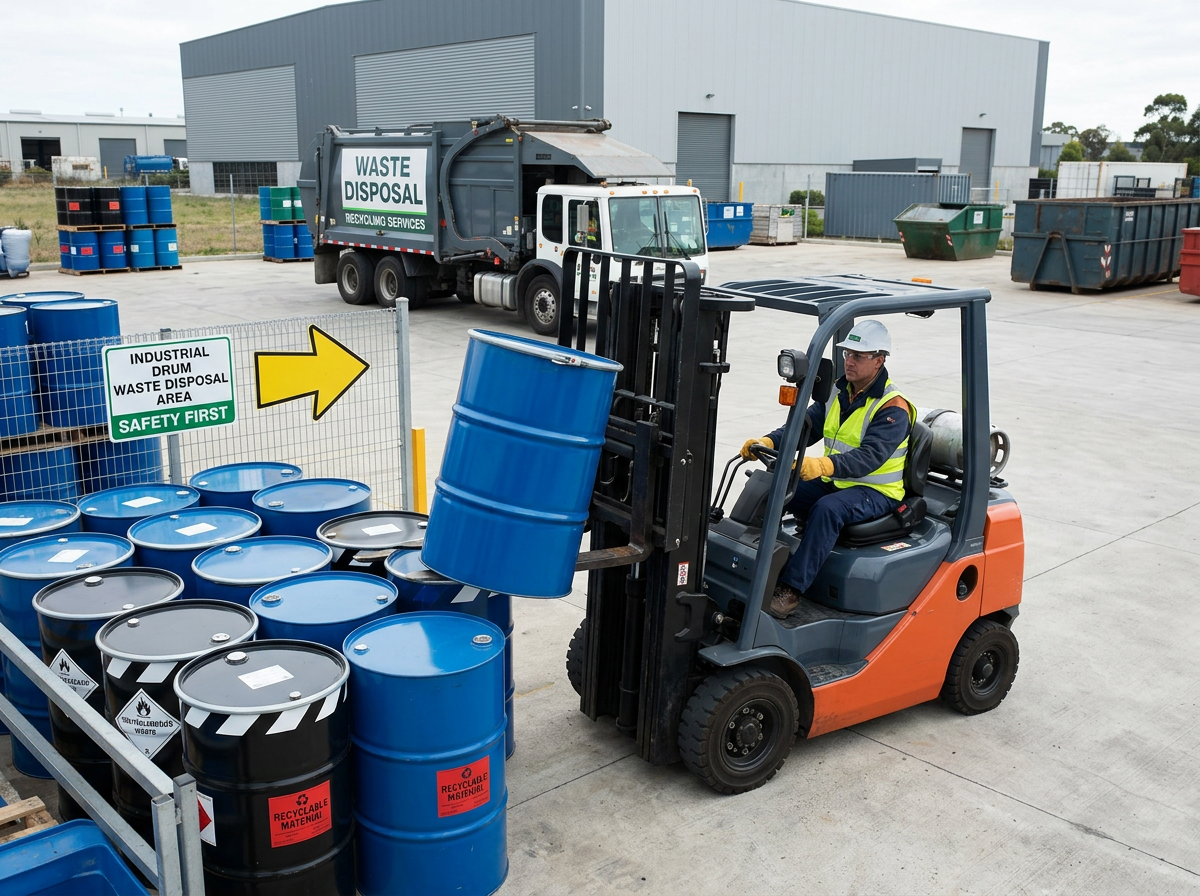
The U.S. Department of Transportation (DOT) regulates the transportation of hazardous materials, including drummed waste, to ensure public safety during transit. DOT regulations dictate specific requirements for packaging, labeling, placarding, and documentation. Drums containing hazardous waste must be properly marked with diamond-shaped hazard labels, typically at least 4×4 inches (100 mm), that clearly indicate the type of hazard (e.g., flammable, corrosive, toxic). Additionally, the drum must bear a “HAZARDOUS WASTE” notice, the generator’s name, and other pertinent information on a contrasting background.
For transport, drums must be in good condition—sealed, clean, and undamaged. If a drum has structural damage, it must be “overpacked” within a larger, undamaged container to maintain integrity during shipment. Shipping manifests, which are legal documents tracking hazardous waste from its point of generation to its final disposal facility, are also mandatory. These manifests ensure accountability and provide a record of the waste’s journey. Licensed transporters, who specialize in hazardous materials, are required for the movement of hazardous drum waste, ensuring that all DOT regulations are met.
When selecting drums for transport, the material often depends on the contents and logistical considerations.
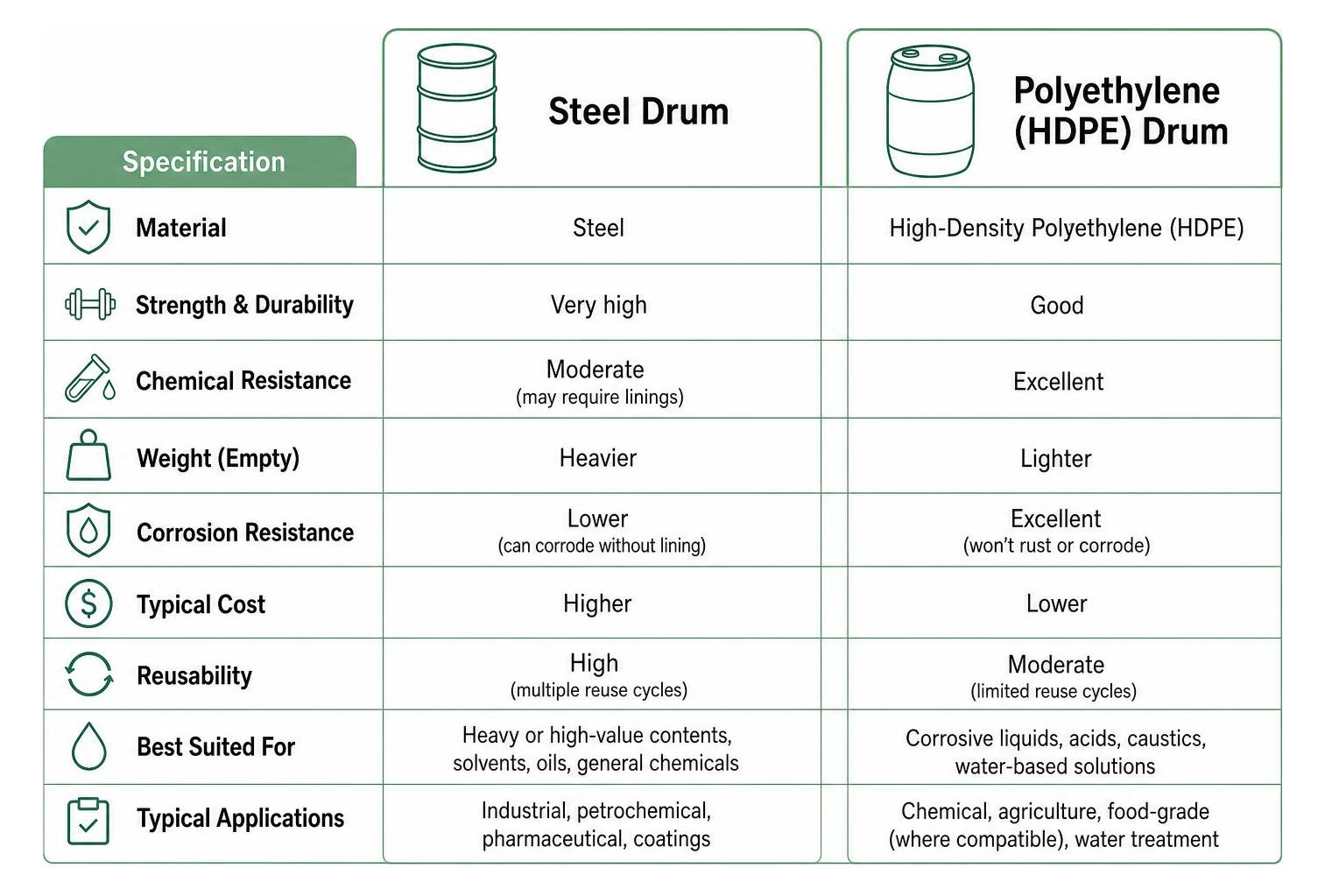
Steel drums offer superior strength and durability, making them suitable for heavy or high-value contents and multiple uses. However, they are heavier and can corrode with certain materials, sometimes requiring internal linings. Polyethylene drums, while lighter and less expensive, are excellent for corrosive liquids due to their chemical resistance. They are also easier to handle for some applications. The choice between steel and polyethylene often involves balancing strength, chemical compatibility, weight, and cost.
Step-by-Step Drum Preparation and Processing
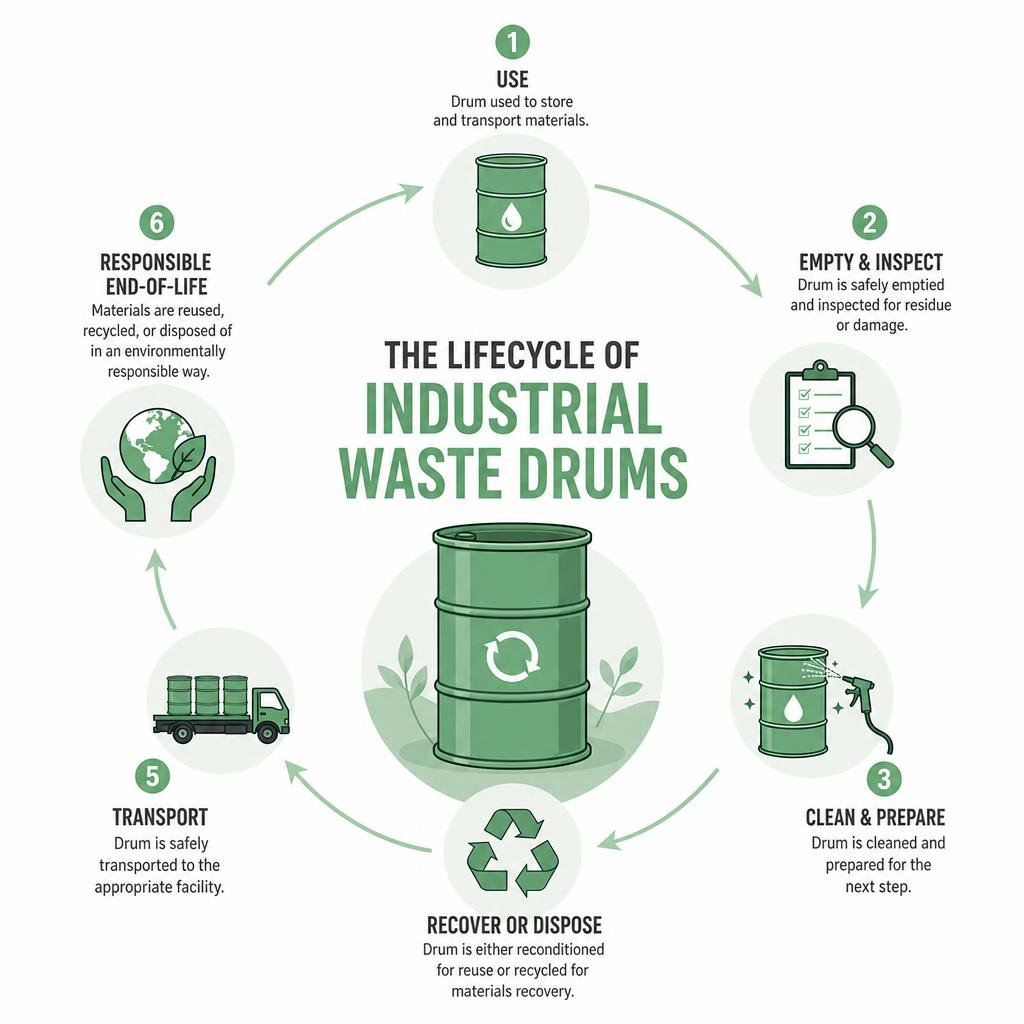
The proper preparation and processing of drums for disposal or recycling are critical steps in ensuring environmental compliance and safety. This multi-stage process involves careful cleaning, emptying, and, in some cases, physical alteration of the drums.
Achieving RCRA Empty Status
A primary goal in drum waste management, especially for drums that once contained hazardous materials, is achieving “RCRA empty” status. This classification, as defined by 40 CFR 261.7, allows drums to be managed as non-hazardous waste, significantly reducing disposal costs and regulatory burdens. The criteria for RCRA empty status vary depending on the type of hazardous waste:
- Non-Acute Hazardous Waste: For drums containing non-acute hazardous waste, all wastes must be removed by pouring, pumping, or aspirating. The container is considered empty if no more than 1 inch of residue remains on the bottom. Alternatively, for containers 119 gallons or less, the residue must be less than 3% by weight of the container’s total capacity. For containers greater than 119 gallons, the residue must be less than 0.3% by weight.
- Acute Hazardous Waste: Drums that held acute hazardous waste (a subset of particularly dangerous wastes) have stricter emptying requirements. They must be triple-rinsed with an appropriate solvent, or cleaned by an equivalent method, until no residue remains. The rinsate itself, if hazardous, must be managed as hazardous waste.
- Compressed Gas: For compressed gas cylinders, the container is considered empty when the pressure in the container approaches atmospheric pressure.
Achieving these standards often involves thorough cleaning and decontamination processes. This can include triple rinsing, where the drum is rinsed three times with a suitable solvent or water, with each rinse being collected and managed appropriately. Pressure cleaning or steam cleaning may also be used to remove stubborn residues. For drums that cannot be effectively cleaned to RCRA empty standards, they must be managed as hazardous waste. Proper rinsate management is crucial to prevent secondary contamination and ensure all hazardous materials are contained and disposed of correctly.
Reconditioning, Crushing, and Recycling Technologies
Once drums are emptied and, if necessary, decontaminated, various options exist for their management, ranging from reconditioning for reuse to crushing and recycling. These processes not only divert waste from landfills but also contribute to a more sustainable industrial ecosystem.
Drum Reconditioning: This process involves cleaning, restoring, testing, and certifying used drums for reuse. Reconditioning facilities utilize specialized equipment and techniques. Approximately 35% of drums are reconditioned using drum furnaces, where residual materials are burned off metal drums at high temperatures. The remaining 65% are reconditioned through washing methods, typically involving water and caustic solutions. Reconditioned drums offer an environmentally friendly and often more cost-effective alternative to new drums. However, as highlighted by EPA reports, ensuring that drums sent for reconditioning meet RCRA empty standards is vital to prevent environmental and safety incidents at these facilities.
Drum Crushing and Shredding: For drums that cannot be reconditioned or are deemed non-reusable (e.g., severely damaged, contaminated beyond practical cleaning), crushing is a common practice. Drum crushers compact empty drums, significantly reducing their volume. This reduction in volume saves valuable landfill space and lowers transportation costs for disposal. Plastic drums can be shredded into pellets, which are then used as raw material for manufacturing new plastic products, including new drums, industrial containers, and automotive parts.
Recycling: Both steel and plastic drums are highly recyclable. Crushed steel drums are sent to metal recycling facilities where they are melted down and reformed into new steel products. This process conserves natural resources and energy compared to producing steel from virgin ore. Similarly, shredded plastic from HDPE drums can be recycled into a variety of products. Specialized programs like drumMUSTER in Australia, for example, facilitate the collection and recycling of eligible agricultural chemical containers, ensuring they are properly cleaned and processed. Nationally, programs like ChemClear have collected over 500,000 litres of unwanted chemicals since inception, preventing them from entering the environment.
Best Practices for Maintaining Environmental Compliance
Maintaining environmental compliance in drum waste disposal is an ongoing commitment that requires a systematic approach. Businesses must implement robust best practices to safeguard their operations, protect the environment, and ensure regulatory adherence.
A fundamental best practice is comprehensive waste profiling. This involves accurately identifying and classifying all waste streams generated, determining whether they are hazardous or non-hazardous, and understanding their specific chemical properties. Accurate profiling is essential for selecting appropriate handling, storage, and disposal methods.
Effective inventory tracking is another critical component. Keeping detailed records of all drums, their contents, accumulation dates, and disposal pathways helps businesses manage their waste efficiently and provides an audit trail for regulatory inspections. Many modern waste management services offer online platforms for 24/7 tracking, manifest management, and inventory control.
Employee training is paramount. All personnel involved in handling drums, from those generating waste to those preparing it for transport, must receive regular and thorough training on safe handling procedures, waste classification, labeling requirements, and emergency protocols. This reduces the risk of accidents, spills, and non-compliance.
Finally, a well-developed spill response plan and readily available emergency equipment are indispensable. This plan should detail procedures for containing, cleaning up, and reporting spills, along with designated roles and responsibilities. Having spill kits, personal protective equipment (PPE), and trained responders on-site can mitigate the impact of unforeseen incidents and prevent minor spills from escalating into major environmental hazards. Regular drills and updates to the plan ensure its effectiveness.
Common Pitfalls in Drum Logistics and How to Avoid Them
Despite best intentions, businesses can fall into common traps that lead to non-compliance, environmental damage, and costly penalties. Awareness of these pitfalls is the first step toward avoiding them.
- Improper Labeling: Incorrect or missing labels are a frequent cause of DOT violations and can lead to dangerous situations during transport or storage. Labels must accurately reflect the contents, hazard class, and generator information. Always ensure labels are legible, securely attached, and meet federal and local standards.
- Non-Compliant Residues: Failing to achieve RCRA empty status for drums that contained hazardous waste is a significant pitfall. This can result in drums being improperly disposed of as non-hazardous, leading to contamination and fines. Thorough cleaning, triple-rinsing, or using specialized cleaning equipment is essential.
- Structural Damage: Transporting drums with dents, rust, or other structural damage can lead to leaks and spills. Drums should be inspected before filling and before transport. Damaged drums must be repaired, overpacked, or disposed of as non-reusable waste.
- Incompatible Mixing: Mixing incompatible hazardous wastes, even in small quantities, can cause dangerous reactions, fires, or explosions. Always verify chemical compatibility before combining any waste streams or reusing drums for different materials.
- Lack of Documentation: Incomplete or inaccurate manifests, shipping papers, and waste profiles can lead to regulatory scrutiny. Maintain meticulous records for all waste streams, ensuring they are accessible and up-to-date.
- Outdated Knowledge: Environmental regulations are subject to change. Failing to stay informed about the latest federal, state, and local requirements can lead to inadvertent non-compliance. Regular training and consultations with waste management experts are crucial.
By diligently adhering to best practices and consciously avoiding these common mistakes, businesses can establish a robust and compliant drum waste disposal program, protecting both their operations and the environment.
Frequently Asked Questions about Drum Waste Logistics
Here are answers to some common questions regarding drum waste logistics, drawing from the regulatory and practical insights discussed.
What makes a drum legally empty under RCRA?
Under the Resource Conservation and Recovery Act (RCRA), a drum is considered “legally empty” (or RCRA empty) if it meets specific criteria outlined in 40 CFR 261.7, which depend on the type of waste it previously held:
- For non-acute hazardous waste: The drum must have had all wastes removed by pouring, pumping, or aspirating. Additionally, for containers 119 gallons or less, no more than 3% by weight of the original contents can remain. For containers over 119 gallons, this limit is 0.3% by weight. A simpler way to meet this is if no more than 1 inch of residue remains on the bottom of the container.
- For acute hazardous waste: The drum must be triple-rinsed with an appropriate solvent, or cleaned by an equivalent method, until no residue remains. The rinsate itself must be managed as hazardous waste if it exhibits hazardous characteristics.
- For compressed gas containers: The container is empty when the pressure inside approaches atmospheric pressure.
Meeting these conditions allows the drum to be managed as non-hazardous waste, significantly reducing disposal costs and regulatory burdens.
How do steel and plastic drums compare for hazardous shipping?
Steel and plastic (polyethylene) drums each have distinct advantages and disadvantages for shipping hazardous materials:
- Steel Drums:
- Strength and Durability: Excellent for heavy, dense, or high-value contents. More resistant to physical impact.
- Corrosion: Can corrode with certain chemicals or moisture, often requiring internal linings.
- Weight: Heavier than plastic, leading to higher shipping costs.
- Reusability: Highly reconditionable and recyclable, offering long-term value.
- Typical Use: Solvents, oils, paints, some acids (with appropriate lining).
- Polyethylene Drums (HDPE):
- Corrosion Resistance: Highly resistant to a wide range of corrosive chemicals like acids and caustics.
- Weight and Cost: Lighter and generally less expensive than steel drums, reducing transport costs.
- Durability: Less robust than steel; can be susceptible to damage from impacts or extreme temperatures.
- Reusability: Can be reconditioned and recycled, though sometimes less frequently than steel depending on material.
- Typical Use: Acids, bases, water-based chemicals, food-grade liquids.
The choice depends on the specific hazardous material, transportation conditions, and regulatory requirements.
What are the penalties for non-compliant drum disposal?
Non-compliant drum disposal can lead to severe consequences for businesses, encompassing legal, financial, environmental, and reputational repercussions:
- Legal Penalties and Fines: Regulatory bodies like the EPA and DOT can levy substantial fines for violations of hazardous waste management and transportation laws. These fines can range from thousands to tens of thousands of dollars per day per violation. In severe cases, responsible individuals within the company may face criminal charges, including jail time.
- Environmental Damage: Improper disposal can result in soil and water contamination, harming ecosystems, wildlife, and human health. Businesses may be held liable for extensive cleanup costs, which can be astronomical and ongoing.
- Health Risks: Exposure to hazardous substances from improperly disposed drums can cause serious health problems for workers, emergency responders, and nearby communities.
- Reputational Damage: Violations can severely tarnish a company’s public image, leading to a loss of customer trust, investor confidence, and difficulty in attracting and retaining talent. This can have long-term negative impacts on business viability.
- Operational Disruptions: Regulatory investigations, cleanup efforts, and legal proceedings can divert significant company resources, leading to operational inefficiencies and costly downtime.
These penalties underscore the critical importance of adhering to all drum waste disposal regulations and implementing robust waste management practices.
Conclusion
The effective management of drum waste is a complex yet vital aspect of modern industrial operations. As this guide has illustrated, it extends beyond mere compliance, touching upon critical issues of environmental stewardship, public safety, and operational efficiency. From understanding the nuanced classifications of hazardous and non-hazardous waste to navigating the intricate web of RCRA and DOT regulations, every step in the drum waste disposal process demands meticulous attention to detail.
By embracing best practices—such as thorough waste profiling, diligent inventory tracking, comprehensive employee training, and robust spill response planning—businesses can mitigate risks, prevent costly mistakes, and avoid severe penalties. Furthermore, leveraging advanced technologies for drum reconditioning, crushing, and recycling not only reduces environmental impact but also contributes to a more sustainable, circular economy.
In July 2026, with an increasing global focus on sustainability and corporate responsibility, prioritizing proper drum waste disposal is more crucial than ever. It is an investment in the health of our planet, the safety of our communities, and the long-term success and reputation of any enterprise. By committing to responsible drum waste logistics, businesses demonstrate a profound dedication to environmental stewardship, ensuring a safer and more sustainable future for all.
