
Building an Integrated Local Search and Social Media Strategy
The traditional view of local search optimization (SEO) and social media marketing as separate disciplines is outdated. In August 2026, a truly effective strategy for small businesses recognizes that these two forces are intrinsically linked, forming a powerful, cyclical discovery loop. Customers rarely follow a linear path; they might see a social media post, then search on Google Maps, check reviews, and finally visit the business. Our goal is to ensure your business is visible and compelling at every touchpoint.
The synergy between local SEO and social media hinges on consistent information, amplified reach, and authentic engagement. While local SEO focuses on optimizing your presence for search engines, particularly Google’s local pack and map results, social media excels at building brand awareness, fostering community, and driving recommendations. Together, they create a robust ecosystem where each channel feeds into and strengthens the other.
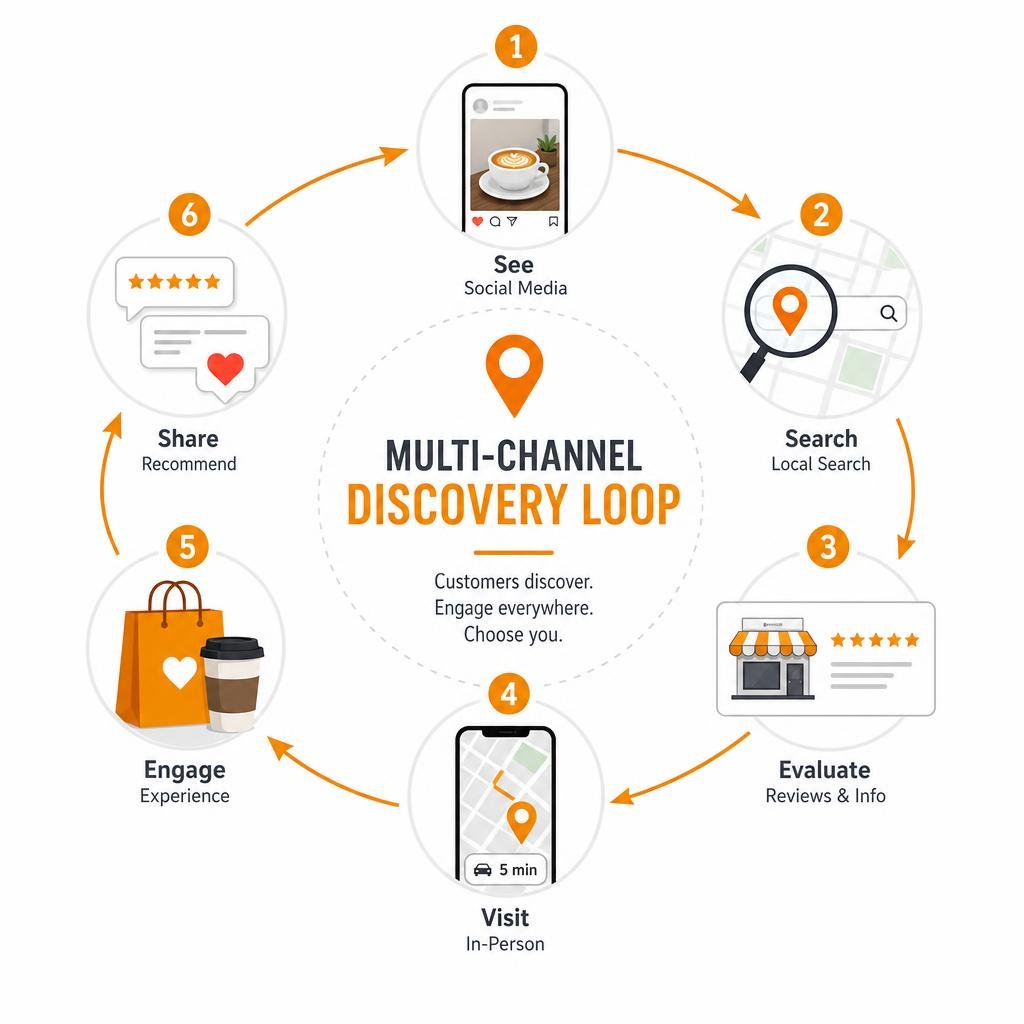
Core Fundamentals of a Local Search and Social Media Strategy
At the heart of an integrated strategy lies cross-channel synergy. This means ensuring that your brand’s presence is cohesive and mutually reinforcing across all platforms. When a customer searches for your business by name (a branded search) on Google after seeing an Instagram Reel, that positive signal tells search engines you’re relevant and trustworthy. Social media drives these branded searches and direct traffic, which, while not a direct ranking factor for local SEO, contributes to overall prominence and authority.
We must view “nearby search” not as a channel, but as a behavior. Whether someone is looking for “coffee shops near me” on Google Maps or “best brunch spots [city name]” on TikTok, they have local intent. Our strategy must cater to this behavior by ensuring local relevance is baked into every piece of content and every profile. This amplification of traffic, both direct and indirect, ultimately boosts your overall digital footprint and helps you capture customers at various stages of their decision-making journey.
Here’s a comparison of how local SEO and social media typically function, highlighting their complementary nature:
Feature/Goal Local SEO Focus Social Media Focus Primary Objective Visibility in local search results (maps, local pack) Brand awareness, community, engagement, referrals Key Assets Google Business Profile, website, citations, reviews Social profiles, content, community groups, ads Ranking Factors Relevance, distance, prominence, reviews Engagement (likes, shares, comments), followers Content Type Optimized text, structured data, local keywords Visuals (photos, video), interactive posts, stories Customer Journey Initial discovery, information gathering Recommendation, social proof, ongoing engagement Measurement Directions, calls, website clicks, profile views Reach, impressions, engagement rate, DMs Google Business Profile, Citations, and On-Page Alignment
The cornerstone of any local search strategy is a fully optimized Google Business Profile (GBP). Think of your GBP not just as a static directory listing, but as a dynamic social landing page. It’s often the first point of contact for potential customers searching on Google Maps or local search. We need to ensure it’s complete with accurate Name, Address, Phone (NAP) information, business hours, services, photos, and regular updates through GBP Posts. These posts can highlight specials, events, or new products, much like a social media feed.
Local citations – consistent mentions of your business’s NAP on other websites, directories, and social media platforms – are crucial for building search engine trust and verifying your location data. Yelp, Yellow Pages, industry-specific directories, and even your social media bios all contribute to your citation profile. Inconsistent data across these platforms can confuse search engines and erode trust, so accuracy is paramount.
On your website, implementing schema markup (specifically LocalBusiness schema) helps search engines understand critical details like your operating hours, departments, and services. This structured data makes your information more readily digestible for search engines and can enhance your appearance in search results. By meticulously managing your GBP, ensuring consistent citations, and optimizing your website’s local signals, you can significantly improve local search rankings and lay a solid foundation for your integrated strategy. This foundational work ensures that when social media efforts drive interest, search engines can easily validate and present your business to high-intent local customers.
Aligning Social Channels with Authentic Local Content
Once your local search foundation is strong, the next step is to strategically align your social media presence to amplify your local discoverability. This involves platform prioritization, understanding evolving user behaviors, and creating content that resonates deeply with your local audience.
Platform Selection for Local Business Discovery
Choosing the right social media platforms isn’t about being everywhere; it’s about being where your target customers are and where you can genuinely engage them. While only 1% of consumers start their local business discovery on social media, a significant portion uses these platforms for recommendations later in their journey. For instance, 55% of consumers use Facebook to find local business recommendations, with 20% relying on Facebook Groups. Instagram is also a strong contender, with 43% of consumers using it for local recommendations.
The rise of video-first platforms is particularly noteworthy. Both TikTok and YouTube are used by about 34% of consumers for local recommendations. This trend is especially pronounced among Gen Z, with 40% preferring TikTok and Instagram over Google Search for discovery. This shift means businesses must consider short-form video as a primary content format. Even Reddit, often overlooked, is used by 25% of consumers for local recommendations, particularly in city-specific subreddits where users actively seek and share local insights.
Our approach should involve:
- Google Business Profile Posts: As discussed, these act as a mini-social feed directly on your search listing, reaching users with high local intent.
- Instagram & TikTok: Ideal for visual storytelling, showcasing your location, products, and team through Reels, Stories, and engaging posts.
- Facebook (Pages & Groups): Excellent for community building, events, customer service, and leveraging local groups for recommendations.
- YouTube: For longer-form content, tutorials, behind-the-scenes, or answering frequently asked questions visually.
- Reddit: For engaging in authentic community discussions and offering value without overt self-promotion.
The key is to select a manageable mix based on where your customers are making decisions and where you can consistently produce high-quality, relevant content.
Creating Shareable and Hyperlocal Content
Authentic, shareable content is the engine of your social media strategy. For local businesses, this means focusing on “hyperlocal hooks” – references to specific neighborhoods, landmarks, local events, or even common community jokes that resonate instantly with nearby residents. Storytelling is powerful; instead of just selling, tell the story of your business, your team, and your connection to the community.
Consider repurposing a single local insight into multiple content formats. For example, a local festival could inspire an Instagram Reel, a Facebook event post, a GBP update, and a blog post on your website. User-generated content (UGC), where customers share their experiences with your business, is incredibly valuable. Encourage customers to tag your location, use specific hashtags, and share their photos or videos. This not only provides authentic social proof but also expands your reach.
Reviews themselves are a rich source of content. They reveal real customer language and frequently asked questions, which can inspire video scripts, social media captions, and even website FAQ sections. Partnering with local businesses or micro-influencers can also generate authentic content and cross-promotional opportunities. For a more in-depth look at crafting your content strategy, exploring a comprehensive social media content strategy guide can provide valuable frameworks and ideas tailored to your business needs.
The goal is not just to post, but to create content that sparks conversations, encourages shares, and ultimately drives local discovery and trust.
Measuring Performance, UGC, and AI-Driven Search Optimization
An integrated local search and social media strategy is only as effective as our ability to measure its impact and adapt to evolving digital landscapes. This involves tracking the right metrics, leveraging user-generated content, and preparing for the future of AI-driven search.
Essential Metrics for Your Local Search and Social Media Strategy
Moving beyond “vanity metrics” like likes and follower counts is crucial. While engagement is valuable, we must focus on high-intent actions that directly contribute to business growth. For local businesses, these include:
- Google Business Profile Insights: Track direct phone calls, requests for directions, website clicks, and profile views. These are strong indicators of local search performance.
- Website Analytics: Monitor local organic traffic, conversions from local search (e.g., appointment bookings, online orders), and user behavior on location-specific pages.
- Social Media Analytics: While engagement metrics have their place, prioritize direct messages (DMs) inquiring about services, clicks to your website or GBP, event RSVPs, and mentions/tags from local customers.
- Review Volume & Sentiment: Track the number of new reviews, your average star rating, and the overall sentiment expressed by customers.
- Conversion Tracking: Implement robust conversion tracking across your website and paid ad campaigns to attribute leads and sales directly to your local marketing efforts.
By focusing on these actionable metrics, we can understand what’s truly driving customers through your door or to your digital storefront, allowing for continuous optimization of your strategy.
User-Generated Content, Reviews, and AI Search Adaptation
User-generated content (UGC) and online reviews are powerful drivers of local discovery and trust. They provide authentic social proof that resonates more deeply with potential customers than traditional advertising. When customers share photos of your products, tag your location, or post glowing reviews, they become advocates for your brand. We should actively encourage and share this content, always with permission, across our social channels and even on our website.
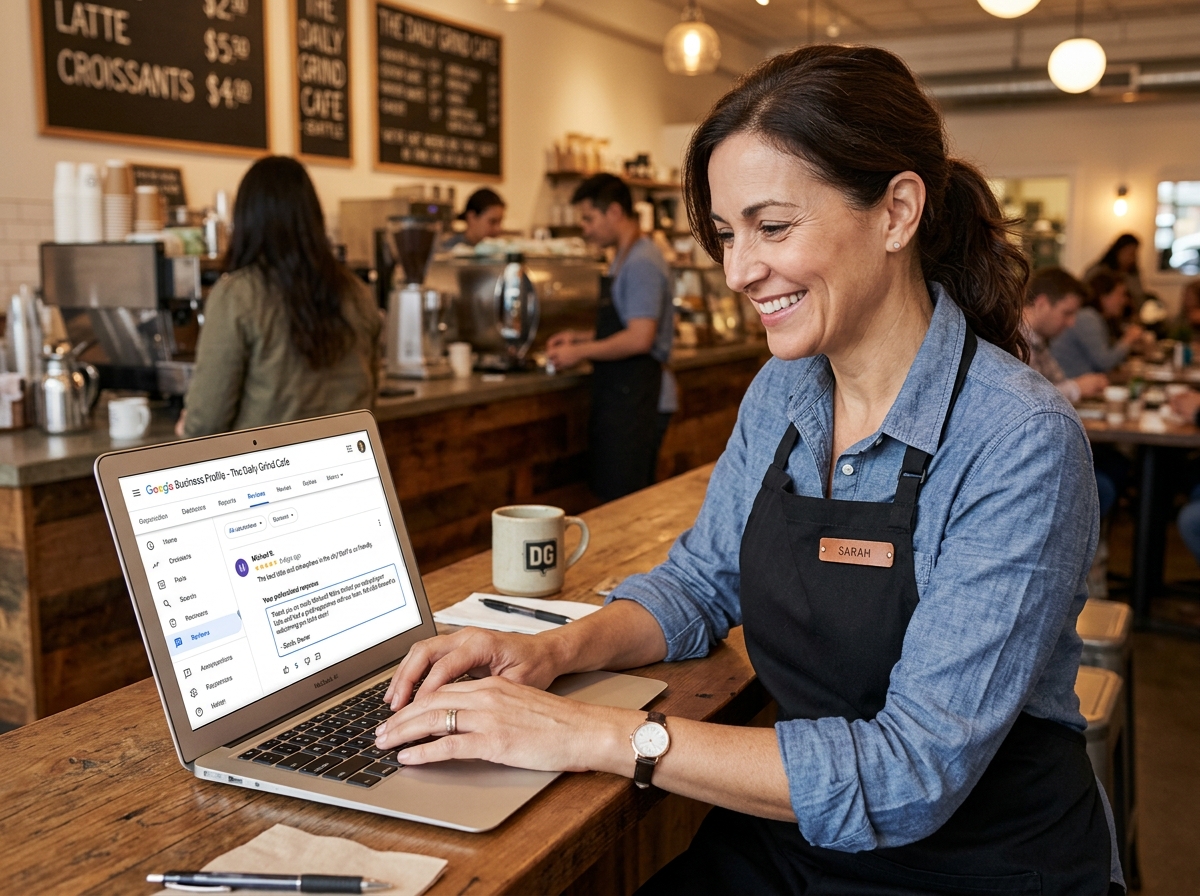
Reviews, in particular, are a goldmine. They’re not just reputation management; they’re a searchable layer of customer language that can inform your content strategy. The words customers use in reviews can be incorporated into your social media captions, hashtags, and even website copy to better align with how people search. Responding to reviews, both positive and negative, demonstrates excellent customer service and builds trust. A prompt, professional response to a negative review can often turn a bad experience into a positive brand interaction.
As voice search and AI-driven search continue to evolve, optimizing for these technologies becomes paramount. Mobile users increasingly rely on voice assistants for “near me” queries. To adapt, we must ensure our content directly answers common questions about our business, services, and location in a natural, conversational tone. Implementing structured data (schema markup) on your website provides clear, machine-readable information that AI systems can easily interpret. This includes details like FAQs, business hours, and service areas. By anticipating how users might ask questions verbally and providing clear, concise answers across all our digital touchpoints, we position our business for future success in an AI-first world.
30-Day Action Plan and Common Pitfalls
Implementing a cohesive local search and social media strategy doesn’t have to be overwhelming. By breaking it down into manageable steps, even small businesses with limited resources can see significant progress within a month. Equally important is understanding and avoiding common mistakes that can derail your efforts.
A 30-Day Step-by-Step Implementation Roadmap
Here’s a practical, weekly workflow to build a cohesive local search and social media presence:
Week 1: Audit and Align
- Audit Your Digital Footprint: Review your Google Business Profile, website, and all social media profiles (Facebook, Instagram, Yelp, etc.).
- Ensure NAP Consistency: Verify that your Name, Address, and Phone number are identical across all platforms. Update any discrepancies immediately.
- Optimize GBP: Complete every section of your Google Business Profile, add high-quality photos, and ensure your services/products are accurately listed.
- Competitor Analysis: Identify 2-3 local competitors. Analyze their GBP, website, and social media presence to understand their strengths and weaknesses.
- Keyword Brainstorming: Research geo-targeted keywords relevant to your business (e.g., “best coffee [your city]”, “[service] near me”).
Week 2: Publish Your First Local Content Cluster
- GBP Post Strategy: Plan and publish 2-3 Google Business Profile Posts highlighting a special, event, or recent customer success.
- Social Content Creation: Based on your keyword research and hyperlocal hooks, create 3-5 social media posts (e.g., Instagram Reel showcasing a local landmark near your business, a Facebook post about a community event, a TikTok answering a common customer question).
- Website Optimization: Incorporate your target geo-keywords naturally into your website’s home page, service pages, and meta descriptions. Ensure your website is mobile-friendly.
- Local Citation Building: Start or continue building profiles on 2-3 relevant local directories or industry-specific sites, ensuring NAP consistency.
Week 3: Measure and Refine
- Monitor Performance: Check Google Business Profile Insights for calls, direction requests, and website clicks. Use Google Analytics to track local organic traffic.
- Social Engagement Review: Analyze which social posts generated the most engagement, comments, or direct messages.
- Review Management: Actively respond to all new reviews on Google, Yelp, and Facebook. Encourage satisfied customers to leave reviews.
- Content Repurposing: Take a high-performing social post or a great review and repurpose it into a short blog post or an FAQ section on your website.
Week 4: Systematize and Scale
- Establish a Weekly Workflow: Formalize a routine for content creation, posting, and engagement (e.g., Monday: plan content, Tuesday-Thursday: create & schedule, Friday: engage & respond).
- SOPs (Standard Operating Procedures): Create simple guidelines for managing your GBP, responding to reviews, and creating social content.
- Explore UGC: Actively prompt customers to tag your business in their social posts. Consider a simple contest or incentive.
- Future Planning: Brainstorm ideas for influencer partnerships or community events for the coming months.

This structured approach helps you establish a consistent operational rhythm and build momentum for your local marketing efforts.
Common Local Marketing Mistakes to Avoid
Even with the best intentions, local businesses can fall into common traps. Being aware of these pitfalls can save you time, resources, and potential customer frustration:
- Inconsistent Business Data (NAP Mismatch): This is perhaps the most critical error. Conflicting Name, Address, or Phone numbers across different online listings (GBP, website, directories, social media) confuse search engines and customers, leading to lost trust and lower rankings. Always double-check for accuracy.
- Dormant or Incomplete Profiles: An abandoned Google Business Profile or social media page sends a signal that your business is not active or attentive. Keep all profiles up-to-date, even if you prioritize one or two. An incomplete GBP misses out on crucial visibility.
- Ignoring Reviews (Both Positive and Negative): Failing to respond to reviews is a missed opportunity. Positive reviews deserve thanks, and negative reviews require a professional, empathetic response and an offer to resolve the issue offline. Ignoring them damages your reputation.
- Posting Without Local Purpose: Generic, non-local content on social media or GBP Posts wastes attention. Every piece of content should have a local hook or relevance, speaking directly to your nearby audience. A viral post outside your service area might feel good, but it won’t drive local business.
- Keyword Stuffing: Over-optimizing your GBP description or website content with too many keywords makes it unreadable and can be penalized by search engines. Focus on natural language.
- Neglecting Mobile Optimization: With most local searches happening on mobile devices, a slow or non-responsive website and clunky social experience will drive customers away.
By proactively addressing these common mistakes, your small business can ensure its integrated local search and social media strategy remains effective and customer-centric.
Frequently Asked Questions
Navigating the complexities of local search and social media can lead to many questions. Here, we address some of the most common inquiries from small business owners.
Does social media directly improve local search rankings?
While social media signals (like shares, likes, and comments) are not a direct Google ranking factor for local SEO, they play a crucial indirect role. Social media activity can lead to increased brand awareness, which in turn drives more branded searches for your business on Google. More branded searches signal to Google that your business is popular and relevant, contributing to overall prominence. Furthermore, social media can drive traffic to your website and Google Business Profile, encourage customers to leave reviews, and build local citations—all of which are direct or indirect local SEO ranking factors. So, while not a direct “ranking signal,” social media undeniably contributes to a stronger local search presence by amplifying your brand and driving valuable user interactions.
How should small businesses prioritize social platforms versus local SEO?
For most local businesses, the foundational priority should be local SEO, specifically optimizing your Google Business Profile and ensuring NAP consistency across the web. This is because the vast majority of consumers (only 1% start on social media) begin their local business discovery process on search engines like Google. A well-optimized GBP ensures you appear in those critical “near me” searches and map results.
Once that foundation is solid, social media becomes your amplification and engagement engine. It adds current proof, local personality, visual content, and recurring reasons for customers to remember and choose your business. We recommend starting with a minimal, manageable mix of platforms—your GBP, Instagram for visuals, and Facebook for community engagement—and expanding as you gain comfort and see results. The key is to build a strong local search presence first, then use social media to nurture and expand that visibility.
What is the most effective way to handle negative local reviews?
Effectively handling negative reviews is a critical component of reputation management and can actually build trust. Our approach should be:
- Respond Promptly: Aim to respond within 24-48 hours. A quick response shows you’re attentive and care about customer feedback.
- Maintain Professionalism: Never get defensive or emotional. Thank the reviewer for their feedback, apologize for their negative experience, and express empathy.
- Offer a Solution (Offline): Publicly acknowledge the issue, but then suggest taking the conversation offline to resolve it. Provide a direct contact method (phone number, email) so you can address their specific concerns privately. For example: “We’re truly sorry to hear about your experience. Please call us directly at [phone number] so we can make this right.”
- Learn from Feedback: Use negative reviews as an opportunity to identify areas for improvement in your business operations or customer service.
By responding constructively, you demonstrate to both the original reviewer and prospective customers that your business values feedback and is committed to customer satisfaction. This transparency can actually enhance your brand’s credibility.
Conclusion
The digital landscape for small businesses in August 2026 is one of integrated discovery. Maximizing your visibility means understanding that local search and social media are two sides of the same coin, each amplifying the other to create a powerful, cohesive strategy. We’ve explored how a robust Google Business Profile, consistent local citations, and a mobile-optimized website form the bedrock of your local SEO efforts. Simultaneously, a thoughtful social media presence, focused on authentic, hyperlocal content and strategic platform selection, builds community, drives recommendations, and fuels branded searches.
By tracking high-intent metrics, leveraging the power of user-generated content and reviews, and adapting to the nuances of voice and AI-driven search, small businesses can not only survive but thrive. The 30-day action plan provides a tangible roadmap to get started, while awareness of common pitfalls ensures you stay on the right track.
Success in the local digital arena is about building a system of local trust. It’s about ensuring that every potential customer, whether they start their journey on a map app, a social feed, or a voice assistant, finds accurate, compelling, and trustworthy information about your business. Embrace this integrated approach, and you’ll unlock sustained growth and a stronger connection with your local community.