Big brands often have advantages: established domain authority, larger marketing budgets, and name recognition. But local businesses have strengths of their own. They know their markets, they can generate genuine local reviews, and they can write content aimed squarely at specific communities.
Did you know? According to Thrive Agency’s analysis, about 91% of large, multi-location businesses invest in optimising websites for local searches. They know local visibility matters, even with a national presence.
Google’s algorithms have grown better at reading user intent and serving results that suit local searchers. That change creates both problems and openings for businesses of every size competing to be seen in local results.
This article looks at how big brands and local businesses compete in search rankings. It offers evidence and practical strategies for any business trying to improve its local visibility, whatever its size or budget.
Practical benefits for industry
Understanding how big brands and local businesses compete in rankings gives you a few concrete advantages, whatever your field.
Level playing field opportunities
Local SEO is one area where smaller businesses can compete with larger rivals, and sometimes beat them. That happens because proximity to the searcher often matters more than brand authority in local results, especially for “near me” queries.
- Localised content advantage: Small businesses can write content aimed directly at local audiences, covering community needs that national brands miss.
- Authentic local presence: Real community involvement produces local signals that search engines value.
Quick Tip: Build location-specific landing pages that speak to the needs, concerns, and interests of your local community. According to Red Alkemi’s research, localising your keywords is one of the last important steps in local SEO keyword research.
Cost-efficiency for small businesses
Local SEO usually costs less than competing for national keywords, which makes it an affordable channel for small businesses:
- Targeted reach: Focus your resources on the areas that matter most to your business
- Higher conversion rates: Local searches carry higher intent, which tends to mean better conversion and ROI
- Reduced competition: Competing inside one locality narrows the field
Google Business Profile as an equaliser
Google Business Profile (formerly Google My Business) evens the odds in local search, giving businesses of any size a similar shot at the local pack:
- Visibility boost: A well-optimised profile can show up prominently in local results no matter how big the business is
- Review advantage: Local businesses tend to do well at collecting genuine customer reviews, which weigh heavily on local ranking
Big brands may dominate general search results, but the local pack and map results often favour relevance, distance, and standing in the local community. Those are areas where a small business with the right approach can win.
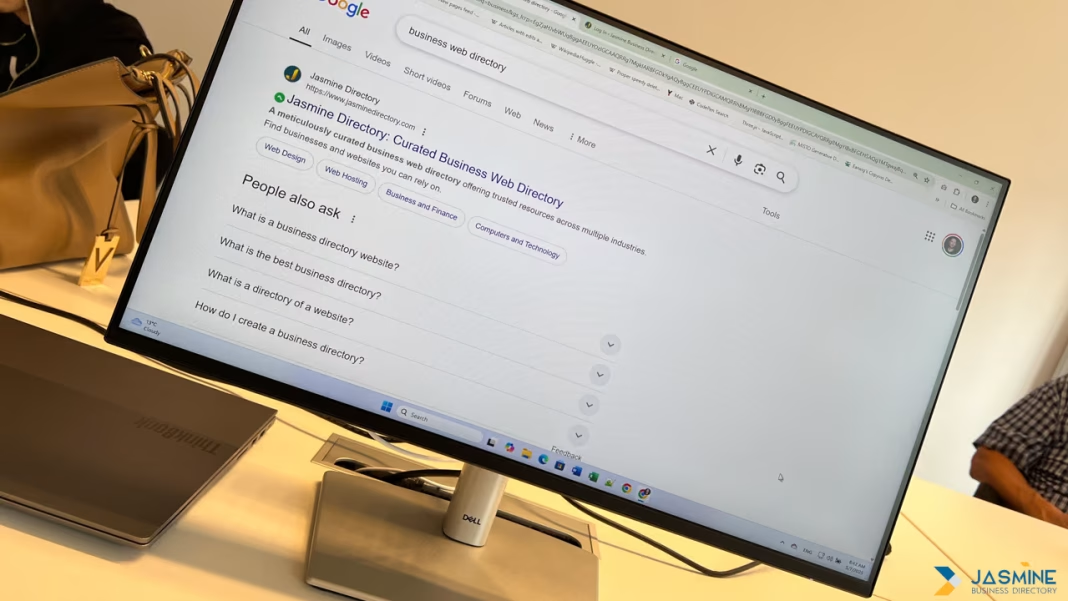
A listing in a reputable jasminedirectory.com like Jasmine Directory can help your local SEO by creating authoritative citations that search engines use to verify your business information and legitimacy.
Practical case study for industry
Kickscrew: how a speciality retailer outranked global shoe brands
Kickscrew, a speciality footwear retailer, is a good example of a local business beating major competitors. It outranked global shoe brands through careful local SEO.
According to The HOTH’s case study, Kickscrew, though much smaller than global competitors like Nike and Adidas, ran a thorough link-building strategy that sharply improved its search visibility for valuable keywords in its market.
The challenge
Kickscrew faced a few real obstacles:
- Competing against established global brands with huge marketing budgets
- Limited domain authority to start with, compared to the industry giants
- The need to build credibility in a market run by well-known names
The strategy
Kickscrew’s approach came down to a few things:
- Strategic link building: Instead of chasing random backlinks, they went for quality over quantity, targeting sites with high domain authority relevant to their industry.
- Localised content: They wrote content that spoke to the interests and needs of their target market.
- Consistent NAP information: They kept their Name, Address, and Phone number consistent across every platform and directory.
- Community engagement: They took part in local events and built relationships with local influencers.
The results
These strategies paid off:
- A big jump in rankings for competitive keywords
- Organic traffic up by more than 85%
- Higher conversion rates from local searches
- Real competition against major global brands in specific local markets
Key takeaways
The case study offers a few lessons for local businesses:
- Local businesses can compete with major brands by focusing on quality, strategic SEO
- A well-run local SEO strategy can level the field whatever your size
- Consistency across your online listings, including business directories and citation sources, matters for building local search authority
What if… your business used similar local SEO tactics? Could you get comparable results in your market, even against much larger competitors?
Valuable facts for market
Knowing the current state of local search gives useful context for competing with big brands.
Local search behaviour statistics
| Local Search Behaviour | Percentage | Impact on Business |
|---|---|---|
| Searches with local intent | 46% | Nearly half of all Google searches have local intent, creating significant opportunity |
| Users who search for local businesses on mobile devices | 88% | Mobile optimisation is critical for local search success |
| Local searches that lead to store visits within 24 hours | 78% | Local search has high conversion potential |
| Consumers who read online reviews before visiting a business | 93% | Review management is essential for local businesses |
| Large multi-location businesses investing in local SEO | 91% | Big brands recognise the importance of local search visibility |
Did you know? Research from Outerbox Design shows local SEO has become a key digital marketing strategy for both local businesses and service-area companies trying to outrank rivals in the same region.
The local pack reality
Google’s local pack (the map and three business listings that show up for local searches) has become prime space in results, with a few important traits:
- Prominence factor: Big brands often have the edge in traditional organic results, but the local pack algorithm weighs relevance, distance, and prominence, which gives local businesses a fighting chance.
- Review impact: The number and quality of reviews strongly affect local pack rankings, and that is where local businesses can shine through personal service.
- Multi-location factor: Big brands with many locations have to optimise each one separately, which can spread their resources and attention thin.
Ranking factors comparison
Seeing how ranking factors differ between traditional and local search helps explain why the competition varies:
| Ranking Factor | Traditional Search Advantage | Local Search Advantage |
|---|---|---|
| Domain Authority | Big Brands | Neutral |
| Proximity to Searcher | Neutral | Local Businesses |
| Content Volume | Big Brands | Neutral |
| Local Citations | Neutral | Can Favour Either |
| Review Quantity/Quality | Neutral | Often Local Businesses |
| Local Content Relevance | Neutral | Local Businesses |
Myth Debunked: Many believe you cannot outrank major platforms like Yelp in local searches. But according to SEO professionals discussing this on Reddit, it is possible, if hard, to outrank directory sites for specific local terms through good content, proper schema markup, and building local relevance signals.
These facts show that even where big brands hold advantages, the local search ecosystem gives smaller businesses several ways to compete when they use the right strategies.
Actionable analysis for strategy
To compete with big brands in local search, you need to understand the specific factors behind rankings and put targeted strategies to work.
Comparative strengths analysis
Knowing the built-in advantages of both big brands and local businesses helps you spot strategic openings:
| Factor | Big Brand Advantage | Local Business Advantage | Strategic Implication |
|---|---|---|---|
| Domain Authority | Higher established authority | Can build niche authority | Focus on building authority in specific local topics |
| Content Resources | Larger content teams | Deeper local knowledge | Create hyper-relevant local content that big brands can’t match |
| Local Presence | Multiple locations | Deeper community integration | Leverage community connections for engagement and backlinks |
| Review Generation | Higher volume potential | More personal customer relationships | Implement systematic review solicitation from satisfied customers |
| Technical SEO | Dedicated technical teams | More agile implementation | Prioritise mobile optimisation and page speed improvements |
Strategic gap analysis
A full local SEO strategy has to cover a few key areas:
- Google Business Profile optimisation: This is often the single most important element for local visibility.
- Complete every section of your profile
- Add high-quality images regularly
- Respond promptly to all reviews
- Use relevant categories and attributes
- Citation building and management: According to BrightLocal’s research on multi-location businesses, consistent business information across directories and citation sources is key to building trust with search engines.
- Keep NAP (Name, Address, Phone) consistent across all platforms
- Prioritise industry-relevant directories
- Audit citations for accuracy regularly
- Local content strategy: Write content that addresses local needs and interests.
- Develop location-specific service pages
- Create content about local events and news
- Address local challenges and opportunities
Quick Tip: Build a local link-building strategy by sponsoring community events, joining local business associations, and forming relationships with complementary local businesses for cross-promotion.
Competitive analysis approach
Understanding what your competitors do is essential for finding openings:
- Identify local competitors: Focus on the businesses ranking in the local pack for your target keywords.
- Analyse their GBP profiles: Note categories, attributes, posting frequency, and review management.
- Review their citation profile: Find where they are listed and where you are missing.
- Evaluate content strategy: See how they cover local topics and needs.
According to Thrive Agency’s analysis, a thorough local SEO analysis of competitors gives insights that help businesses develop strategies to outrank local rivals, whatever their size.
The most effective local SEO strategies focus on differentiation rather than imitation. Find gaps in how big brands serve local communities and position your business to fill those needs better.
Strategic insight for industry
To compete with big brands in local search, you need more advanced strategies that use your own advantages while limiting your weaknesses.
The proximity paradox
Proximity to the searcher is a major ranking factor, but its weight changes by industry and query type:
- High-need services: For emergency services like plumbers or locksmiths, proximity heavily influences rankings.
- Destination businesses: For restaurants, retail shops, and entertainment venues, quality and reputation often outweigh proximity.
- Service area businesses: Companies that travel to customers have to prove relevance across their whole service area, which is its own challenge.
What if… you could pin down the exact balance between proximity and reputation in your industry? How would that change your local SEO approach?
Strategic content differentiation
Content is one of the biggest chances for local businesses to beat big brands:
- Neighbourhood-specific content: Build dedicated pages for each neighbourhood or district you serve, covering the local details and needs.
- Local resource development: Put together thorough guides to local resources tied to your industry (a dentist, for example, might create a guide to emergency dental care options in the community).
- Community stories: Feature customer success stories that show local connections and community impact.
According to SEO practitioners on Reddit, writing quality content that follows SEO best practices is still one of the most effective ways to outrank competitors, whatever their size or resources.
Review velocity strategy
Reviews matter for local rankings, and local businesses can often get ahead through good review management:
- Systematic solicitation: Set up a consistent process for asking satisfied customers for reviews.
- Response strategy: Build templates for replying to positive and negative reviews, but personalise each one.
- Review diversity: Work to collect reviews across several platforms, not just Google.
Quick Tip: Set up a simple follow-up system that sends review requests to customers 24 to 48 hours after service, while the experience is still fresh.
Technical SEO priorities
Big brands often have dedicated technical SEO teams, but local businesses can concentrate on the high-impact technical elements:
- Local schema markup: Add LocalBusiness schema so search engines understand your business details.
- Mobile optimisation: Make sure your site works well on mobile, since most local searches happen on phones.
- Page speed: Speed up loading times, which especially affect mobile users and can give you an edge over slower corporate sites.
The most successful local businesses treat their whole digital presence as one thing, so that their website, Google Business Profile, directory listings, and social media all work together to present a consistent, authoritative local presence.
A listing in a reputable jasminedirectory.com like Jasmine Directory can add citation power and backlink authority that helps small businesses compete with larger brands in local results.
Valuable research for market
Recent research says a lot about how the competition between big brands and local businesses is changing.
Algorithm evolution impact
Google’s algorithm updates have increasingly rewarded factors that can help local businesses:
- E-A-T emphasis: The focus on Expertise, Authoritativeness, and Trustworthiness lets local businesses show deep subject knowledge in their communities.
- User experience signals: Core Web Vitals and other user experience metrics give agile local businesses a chance to beat slower corporate sites.
- Intent recognition: Better understanding of search intent has produced more nuanced local results that match what users want.
Did you know? Research indicates Google’s local algorithm weighs relevance, distance, and prominence differently depending on the query type and industry, which makes the competition vary across business categories.
Multi-location brand challenges
Recent studies point to specific problems big brands hit in local search:
- Scalability issues: Managing and optimising hundreds or thousands of locations is a big resource drain.
- Content customisation: Writing genuinely relevant content for each location is hard for a centralised marketing team.
- Review management: Corporate policies often stop teams from replying quickly and personally to reviews.
According to BrightLocal’s research on multi-location businesses, brands need scalable ways to track, rank, and manage all their locations. That shows how hard it is for big brands to keep consistent local visibility across many sites.
The rise of zero-click searches
A growing share of local searches get answered right in the results, with no click through to a website:
- Information display: Google Business Profiles now show more complete information directly in results.
- Action buttons: Call, directions, and booking buttons let users act without visiting a website.
- Q&A features: Questions and answers shown in results reduce the need to visit sites for basic information.
What if… your Google Business Profile mattered more than your website for bringing in local business? How would that shift your marketing priorities and budget?
Local pack evolution
The local pack (map results) has changed in ways that affect the competition:
- Variability in results: The number of businesses shown can change with query type and device.
- Increased ad presence: Paid listings now often appear in local packs, adding another competitive layer.
- Filter options: Extra filters let users refine local results by specific criteria.
Myth Debunked: It is not impossible to outrank directory sites like Yelp in local results. According to SEO professionals on Reddit, it is hard but doable to outrank these platforms for specific local terms through thorough local SEO.
Essential facts for strategy
To compete with big brands in local search, you need to understand and use a few essential elements.
The three pillars of local search success
Research keeps pointing to three fundamental elements behind local visibility:
- Google Business Profile optimisation: How complete, accurate, and active your GBP is has the most direct effect on local pack rankings.
- Citation consistency: Consistent business information across the web builds trust with search engines.
- Website localisation: Your website has to clearly signal local relevance through content, structure, and technical elements.
Quick Tip: Audit your Google Business Profile at least monthly, checking for outdated information, unanswered questions, and new features you could use.
Local search ranking factors
Knowing the specific factors behind local rankings helps you prioritise:
| Ranking Factor Category | Impact Level | Big Brand Advantage? | Local Business Opportunity |
|---|---|---|---|
| Google Business Profile Signals | Very High | Neutral | More agile management and faster responses |
| Review Signals | High | No | Higher response rates and more personal engagement |
| On-Page Signals | High | Yes | More targeted local content opportunities |
| Citation Signals | Medium | Yes | Focus on quality over quantity |
| Link Signals | Medium | Yes | Local relationship-based link building |
| Behavioural Signals | Medium | Neutral | Higher engagement through local relevance |
| Personalization | Medium | No | Stronger local connections and history |
According to Red Alkemi’s research, making keywords local is an important final step in local SEO keyword research, and it helps businesses target their geographical market more effectively.
Local link building opportunities
Big brands often have the upper hand in traditional link building, but local businesses have their own openings:
- Community sponsorships: Supporting local events, sports teams, and charities can earn valuable local links.
- Local business associations: Chamber of Commerce and business improvement district memberships provide authoritative local links.
- Local media coverage: Building relationships with local journalists can lead to coverage and links.
- Educational institutions: Partnerships with local schools, colleges, and universities can bring high-authority links.
One of the most overlooked local SEO opportunities is using internal linking to pass link equity to location-specific pages, which helps them rank better for local searches.
Reputation management integration
Bringing reputation management and local SEO together gives you a strong competitive advantage:
- Review response strategy: Build templates for different kinds of reviews, but keep each response personal and genuine.
- Review generation system: Set up a systematic way to ask for reviews at the best moment in the customer journey.
- Reputation monitoring: Use tools to track mentions across the web and deal with issues quickly.
A small independent coffee shop in Manchester outranked major coffee chains in local search by running a thorough review strategy that generated over 200 positive Google reviews in six months. They trained staff to mention reviews during good customer interactions and used QR codes on receipts to make leaving a review easy.
Local SEO checklist
- (yes) Fully optimised Google Business Profile
- (yes) Consistent NAP information across all directories and citations
- (yes) Location-specific pages with unique, valuable content
- (yes) Local schema markup in place
- (yes) Mobile-optimised website with fast loading
- (yes) Regular posting of local content and events
- (yes) A systematic way to generate and respond to reviews
- (yes) Local link building strategy
- (yes) Monitoring and responding to competitor activity
These strategies lay a foundation for local search success, whether you are up against big brands or other local businesses.
Bringing it together
Whether big brands automatically outrank local businesses has no simple yes or no answer. It depends on many factors: search context, industry, how well you apply SEO best practices, and your strategy.
Key insights summary
- Competitive balance: Big brands often have the edge in domain authority and resources, but local businesses have their own strengths in community connection, local knowledge, and speed.
- Algorithm evolution: Google’s growing skill at reading local intent has opened more chances for local businesses to compete well in their own areas.
- Strategic focus: Success in local search calls for a targeted approach that uses local factors rather than trying to beat big brands on their own ground.
Did you know? According to Outerbox Design, local SEO has grown into a specialised digital marketing strategy built to help local businesses outrank rivals within the same region.
Actionable takeaways
- Focus on local differentiation: Identify what makes your business uniquely valuable to your community and lead with it.
- Prioritise Google Business Profile: Make GBP optimisation and management a cornerstone of your local marketing.
- Build local content authority: Write content that shows a real understanding of local needs, challenges, and opportunities.
- Use community connections: Build relationships with other local businesses, organisations, and influencers to strengthen your local footprint.
- Run systematic review management: Set up processes for generating, monitoring, and responding to customer reviews.
The most successful local businesses do not see big brands as unbeatable. They see them as players in a different game. By focusing on local relevance and community connection, local businesses can carve out their own space in results.
Where things are heading
A few trends suggest local businesses may get more room to compete in search:
- Voice search growth: Voice search often favours local results and conversational content, which suits local businesses.
- User experience focus: Google’s growing weight on user experience metrics helps agile local businesses.
- AI-powered personalisation: More sophisticated personalisation may push genuinely relevant local businesses further up.
What if… search became even more localised and personalised? How would that change the balance between big brands and local businesses?
The contest for local visibility will keep changing, but one point holds: with the right strategy, local businesses can compete and even outrank larger rivals in their own areas.
If you want stronger local visibility, a solid online presence on authoritative platforms is essential. A listing in a reputable jasminedirectory.com can provide citation signals that help search engines verify your business information and lift your local rankings.
Apply the strategies here and keep an eye on how search trends shift, and a business of any size can build a local SEO approach that produces real results in its community.
