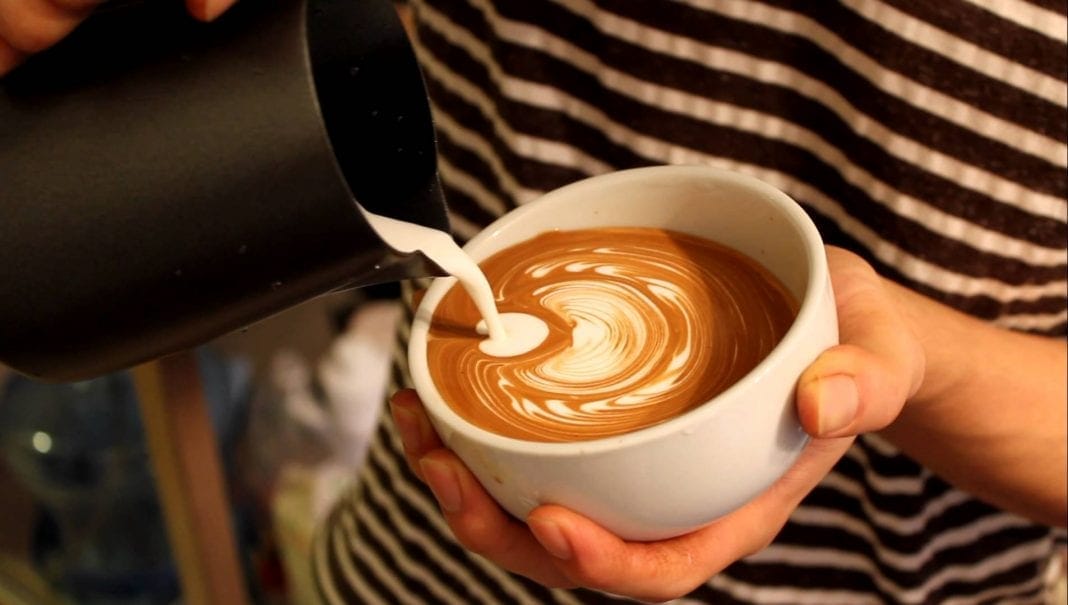
You love the designs a barista draws in the foam on top of your cappuccino or latte at your favorite coffee shop. Are those patterns just a bit of fun, or are they a form of coffee art? Is coffee art really considered art?
By looking at how those designs are made with milk foam, cream, and espresso, we can work toward an answer. Along the way, you might pick up enough technique to try it yourself.
Why latte art shapes what customers think they are tasting
Lattes and cappuccinos sit at the pricier end of the coffee menu, and they are not necessities. Because of that, people pay close attention to appearance, presentation, and the whole experience of drinking one. A well-made latte is a small luxury for most of us, and a luxury comes with higher expectations.
When a coffee shop hands you a drink in a beautifully crafted package, it builds a connection that turns casual buyers into regulars. Receiving a cup with a carefully poured design triggers an emotional response: you register a sense of quality and flavor before you take the first sip. Customers notice the work and the skill behind the pattern, and through latte art baristas add real value to the experience.
That reaction is not vanity. It is close to what Robert Cialdini calls social proof in Influence, New and Expanded: The Psychology of Persuasion (2021): people work out what is good partly by reading the signals others leave behind. A confident, practiced pour reads as a signal that the person making your coffee cares about the craft, and you extend a little more trust to the cup because of it. The same instinct is why we scan ratings and reviews before we walk into a place we have never tried.
Learning the process takes patience
Coffee art is not rocket science, but you still need a grasp of the basics. Understanding how milk foam and crema interact with espresso means understanding a little about how liquids behave. You also have to let your inner artist show up. Reaching anything close to a clean design takes practice and a stubborn willingness to keep going after each failed attempt.
You cannot make a good latte by dropping foam on top of the espresso and hoping. The foundation is microfoam, which you get by steaming milk at high heat until it turns glossy and fine-textured. Pour that into the cup over the espresso so the liquid milk goes in first and the foam follows. Watch the height and angle of the pitcher as you pour the steamed milk. With control, you can make leaves, a rosetta, a heart, or a flower. It also helps to know your equipment. Do some online research and look at a site about coffee makers so you can choose a brew method that produces an espresso strong enough to hold the milk foam.
For a flower pattern, start pouring the milk about two or three centimetres above the surface of the espresso. When the cup is roughly half full, shake the pitcher slowly in a steady back-and-forth motion. Keep moving backward as you go, so the flower print pushes forward and fills the cup. The movement comes from your wrist, not your whole arm, and that small wrist wobble is what draws the petals.
Building your own style
Once you have the basic pour, you can develop your own designs by experimenting with different movements and by using tools such as stencils. Vary the height you pour from to change the texture of the foam. Small adjustments produce very different results, and no two baristas end up pouring exactly the same way.
A toothpick lets you draw fine detail directly into the foam, whether that is a character or an animal face. If you like Disney, try a Mickey Mouse outline in the milk. The skill is yours to own, and the point is to keep making it your own.
Experiment and treat mistakes as practice
You can sprinkle a little brewed coffee over the milk foam to sketch fantasy characters. You can also play with alternating layers of coffee and milk inside the drink itself. Pour the espresso, add cold milk over it, add another layer of espresso, then finish with milk foam on top. A dusting of cinnamon or chocolate powder over the foam helps pick out the shapes you have poured and adds a sense of depth. Prioritize experimenting over getting it perfect, because the perfect pour only arrives after a lot of imperfect ones.
Percolation is part of the craft
Good design starts with good espresso, and that comes down to percolation. To make the best-tasting espresso for your latte, get the level of percolation right. The coffee grind has to be prepared so the water moves through it correctly, producing a well-balanced espresso bed for the milk to sit on.
To keep the milk from stirring into the espresso, add it at a colder temperature than the coffee. That temperature difference helps it settle over the espresso in a clean white layer. Handle the black and the white deliberately and you set up the contrast that makes a good canvas for your coffee art.
So is it art?
The strict answer depends on how you define art, but the practical answer is easier. Coffee art asks for technique, attention, repetition, and a personal touch, which is roughly what any craft demands. It is temporary by nature, gone the moment you drink it, and that impermanence is part of the appeal rather than a flaw. A latte pattern will not hang in a gallery, but the skill behind it is genuine.
It is worth remembering that the design in the cup is one signal among many that a coffee shop is worth your time and money. People increasingly choose where to spend based on what other customers report. The BrightLocal Local Consumer Review Survey 2026 found that 31% of consumers now say they will only consider a local business with an average rating of 4.5 stars or higher, up from 17% the year before, with Google still the most used place to read those reviews. A beautiful rosetta will not carry a shop that gets the coffee or the service wrong, but it reinforces the impression of care that keeps regulars coming back and encourages them to leave the kind of review that brings in the next customer.
If you want to decide the question for yourself, the honest way is to make the coffee. Steam a jug of milk to a fine microfoam, pull a decent shot, and try to pour a heart. You will fail a few times, learn what your wrist is doing, and end up with a much clearer sense of whether the thing in the cup counts as art. Either way, you will drink the evidence.
