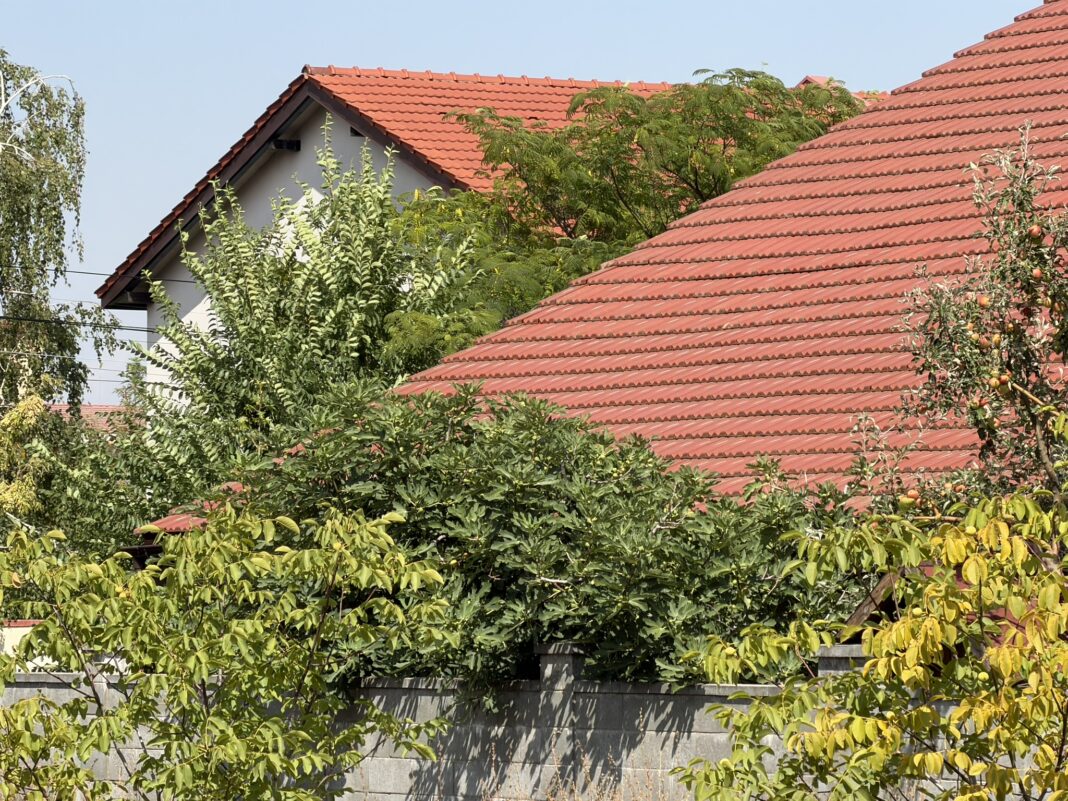
The roof battens, the wooden framework to which the roofing material is fixed, form the structural base that supports the roofing materials and protects the house from damp, wind and the elements. A sound roof deck keeps the tiles or any other roofing system secure and allows the entire roof to function as intended, year after year. Regular roof inspections also reveal hidden problems with the roof deck before they affect the entire structure.
Visible or hidden deterioration can lead to costly problems if left untreated, which makes roof deck repair an important part of roof maintenance. This article explains the signs of roof deck deterioration, the choice between repair and replacement, and the professional services that restore the roof to long-lasting performance. A clear understanding of these factors helps homeowners make informed decisions before minor issues turn into major repairs.
Look out for early warning signs
A damaged roof rarely fails without warning. Minor problems usually appear before major structural issues. Taking prompt action at the first signs can reduce repair costs and protect the roof structure.
Common signs
- Soft or springy patches on the roof
- Sagging slopes or ridges
- Water stains on ceilings
- Mould or damp in the loft area
- Loose or damaged roof tiles
- Recurring leaks
A prompt inspection following the appearance of these signs prevents more extensive repairs. Early assessment allows specialists to determine whether the damage is limited to the surface of the roof or has spread to other structural elements.
Find out when a repair is sufficient
Minor damage to the roof boarding does not always require complete replacement. Small sections affected by limited damp or isolated structural wear can be repaired on a spot-by-spot basis if the surrounding boarding remains sound. This approach preserves the healthy material and restores only the damaged areas.
A professional inspection assesses the condition of the timber, the fixing system and the surrounding roofing materials. An accurate assessment preserves the sound sections and restores the damaged ones. Repair carried out at the right time can also extend the lifespan of the existing roofing system.
Recognise when replacement is the right solution
Some roofs reach a point where replacement is the safest and most practical solution. Prolonged exposure to damp, extensive rot or severe structural damage can weaken large sections and reduce the roof’s stability. Older systems that have undergone repeated repairs may also benefit from a complete replacement of the roof as part of a re-roofing project.
Situations that usually require replacement
- Long-standing water ingress
- Multiple layers of old roofing material
- Major storm damage
- Severe wood rot
- Structural movement
- Extensive areas of weakened roof boarding
Complete replacement creates a stronger foundation for the new roofing system and extends the life of the roof. It also allows builders to inspect hidden structural elements and rectify any issues before installing new materials.
Choose professional roofing services
Professional services usually begin with a full roof inspection, prior to any repair recommendations. Experienced teams assess the roof structure, metal flashings, ventilation, the underlayment and structural elements to determine the solution best suited to the condition of the house. Careful planning ensures that repairs address the actual condition of the roof, rather than just the visible symptoms.
Residential roofing services often include roof replacement, repairs, roof deck restoration, bituminous shingles, metal roofing, flat roof systems and ventilation improvements. A thorough assessment prior to the work ensures that the new system is installed on a stable and durable roof structure, in accordance with current installation standards. Correct installation methods and high-quality materials, in turn, support long-term performance and structural reliability.
Whoever makes the diagnosis also prescribes the treatment
The article places the decision between repair and replacement on the specialist’s shoulders, and rightly so: only they can see the timber beneath the cladding. Yet this is precisely where the awkward part of the transaction lies. The person who makes the diagnosis is, more often than not, also the one who sells the solution, and the price difference between a spot repair and a complete replacement can be several times the cost of the former. The owner cannot verify the diagnosis either beforehand, as the timber is hidden beneath the cladding, or afterwards, as the new cladding covers it up again. The work remains invisible precisely at the point where it is most expensive.
Economists have a name for services of this kind: trust goods, a category coined as far back as the 1970s, when it became clear that some services cannot be assessed by the customer even after purchase. Roof repairs fall deeper into this category than car repairs: a poorly repaired engine is noticeable on the very first journey, whilst a poorly repaired roof remains silent for years. The most frequently cited analysis of the issue, however, comes from Uwe Dulleck and Rudolf Kerschbamer, who published a study in 2006 in the Journal of Economic Literature with the telling title: ‘On Doctors, Mechanics, and Computer Specialists’. The two authors show that any market in which the expert both diagnoses and treats the problem gives rise to three temptations. The first is overtreatment, that is, replacement where a repair would have sufficed. The second is undertreatment, patching up where replacement was required. The third is overcharging, billing for more work than was actually carried out.
In the case of a roof, the second temptation is the truly dangerous one, and it is worth explaining why in practical terms, not just in theory. A roof batten softened by water no longer holds nails or staples: the grip on the shingle weakens precisely when gusts of wind test it, and the shingle sags between the rafters, collecting water instead of draining it. Such a sheet, patched up and covered with new roofing material, only gives way after a few years, when the warranty has expired and the team is hard to find. Over-treatment costs money; under-treatment costs the roof.
The same literature also describes what keeps such temptations in check, and the list translates directly into roofing practice. The first safeguard is the separation of diagnosis from treatment: a separately paid-for inspection, carried out by someone who is not competing for the job – exactly the procedure set out in the inspection guide cited above. The second is verifiability: dated photographs of the exposed roof structure, taken before and after the work, kept alongside the invoice. These transform an invisible job into a documented one, are useful in any warranty discussions, and make selling the house easier, as the buyer’s surveyor will ask exactly the same questions. The third is accountability, through planning permission where required by law, a licence and insurance. The fourth is reputation, which, however, only works where the tradesperson returns.
The model has its limitations. Analyses of this kind work with stylised markets and identical customers, and the experiments that have tested them have yielded mixed results: many experts do not cheat even when they could, either out of professional ethics or because they rely on repeat customers and word-of-mouth recommendations. This analysis is not an indictment of a profession, but a map of the points where trust requires verifiable support. The following section examines the point where this support most often fails.
Reputation stops at the edge of the neighbourhood
Word-of-mouth recommendations, the main factor usually influencing the choice of a tradesperson, have a timing flaw: they fail precisely when they are most needed. Data from the Insurance Information Institute in the United States shows that approximately one in 18 insured homes files a claim each year, and one in 35 files a claim for wind or hail damage – the most common cause of property damage to homes. Of all the parts of a house, the roof is the first to bear the brunt of these impacts. However, wind and hail strike entire neighbourhoods at once. The demand for repairs therefore comes in waves that overwhelm the capacity of local firms. The gap is filled by teams arriving from afar, whom nobody knows.
This phenomenon is also quantified by official figures. The National Insurance Crime Bureau, the US organisation that tracks fraud in the sector, reported in 2026 a 38 per cent increase in reports of contractor fraud between 2023 and 2025, largely linked to storms, tornadoes and floods. The pattern described in the bureau’s warnings is always the same. Unsolicited door-to-door offers immediately after a storm, pressure to sign on the spot, a large cash deposit, followed by shoddy work or none at all. The bureau’s recommendations all begin with verification: first the insurer, then the licence, then several written quotes. One simple detail quickly sets the offers apart: the licence number should appear on both the quotation and the contract, and any firm that hesitates to put it in writing has already answered the question through its hesitation.
Checking out an unknown company follows a time-saving procedure. Existence and category come first: the company exists, has a permanent registered office and address, and genuinely carries out home improvement work – it didn’t just materialise last week from a van. A directory curated by experts answers precisely this first question. In an editorial section dedicated to home improvement services, every listing has undergone a human verification process prior to publication: a functional website, genuine business activity, and correct categorisation. The licence is then checked against the register of the issuing authority, as most US states keep public records of authorised contractors, including any penalties, and proof of insurance is required in the form of a certificate, not just a verbal assurance.
For sums on the scale of a complete replacement, there is another inexpensive option: a second opinion. A separately paid independent inspection costs a tiny fraction of the cost of the work and, by its very existence, acts as a check on the initial assessment. This is precisely the separation of diagnosis and treatment recommended by economists, which the Insurance Fraud Bureau arrives at on its own when it requests multiple written quotations. When the theory and practice of fraud investigations independently recommend the same course of action, it is worth taking.
What a verified listing does not state must be made equally clear. It confirms that the firm exists, that it can be contacted, that it operates in the stated sector, and that it can still be found a year from now. It does not guarantee the quality of the work, does not serve as a recommendation, and does not replace the licensing authority’s register – the only document that certifies the legal right to operate. Each section answers a different question, and the real time-saving comes from going through them in order, with the photographs of the finished work requested at the end, as proof of the work paid for.
Early warning signs also exist for a company’s public profile
The logic of the article – small signs preceding a major collapse – also works in the opposite direction, with regard to roofing firms. A firm’s public presence deteriorates just as quietly as a roof: an old telephone number left on a directory site, a dead link, an incorrect category listing. None of these matters much today; but they all come back to haunt you at the first sign of trouble, when dozens of homeowners are searching at the same time and choosing from the firms they find and can trust. An analysis of companies that opt for curated directories over automated ones shows why editorial filtering carries greater weight precisely in sectors where demand and fraud come in waves: an automated index lists anyone who appears, whilst a human editor rejects what they cannot verify.
Checking the public record is like a seasonal roof inspection and takes about as long. Once a season, the firm searches for its name as a stranger would, notes where it appears, with which telephone number, what address and what category in each source, then first corrects the sources it controls directly – that is, its own website and the profiles it owns – and only then requests corrections from the others, keeping a record of each request. The history of these checks also shows how quickly data becomes inaccurate between two checks, and therefore exactly how often the exercise should be repeated.
The importance of this data maintenance has grown in line with the way customers search. The search engines and assistants that generate responses rely on sources where the data has already been verified and is consistent across them, and the criteria by which a listing in a directory becomes trustworthy – namely, editorial provenance, consistent data and a stable history – are public and can be met methodically. A company that appears identically across three independent sources is, for both humans and machines alike, a company that exists. The rest – that is, the expertise on display – is substantiated by photographs, references and past work that stands the test of time.
Even the distinction between repair and replacement has its equivalent here. A few incorrect details scattered across sources can be corrected on a case-by-case basis, just as one would patch an isolated circuit board. A presence built up over the years on automated listings bought in droves demands something else: discarding the compromised layer and rebuilding on the basis of a few verifiable sources, just as rotten roof boarding over large areas can no longer be patched up, but must be replaced.
Conclusion
The roof boarding is the structural foundation of any roofing system and deserves attention throughout the life of the house. Early inspections, accurate assessment of damage and high-quality repairs prevent major structural problems before they become costly projects. When repairing the roof battens no longer provides a reliable solution, complete replacement creates a secure basis for the roof’s long-term protection. A professional assessment helps in choosing the right option, depending on the condition of the roof battens and the overall performance of the roof. A well-maintained roof structure means durability, reliable protection against the weather and preserved value for the whole house.
