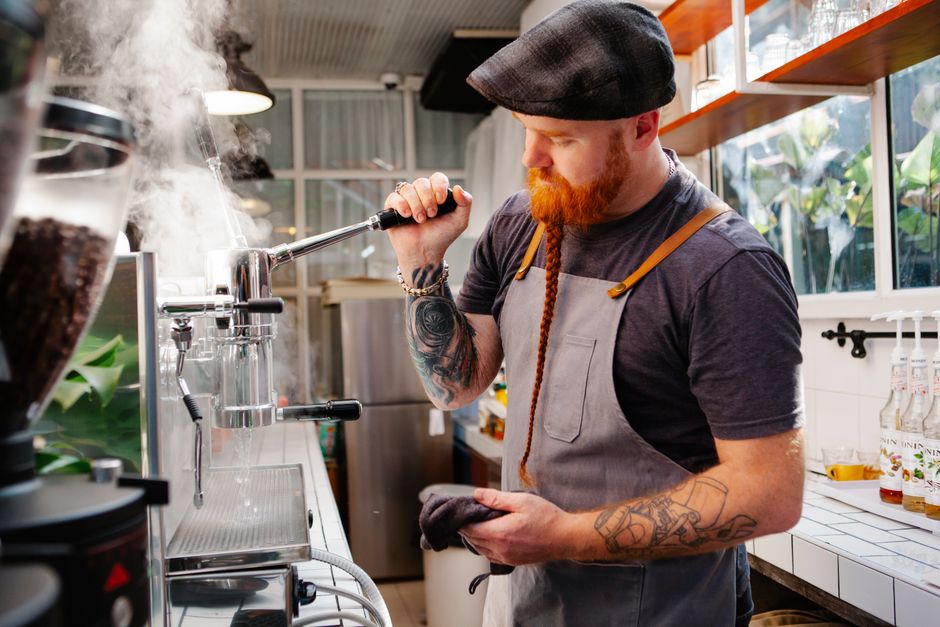
The Role of Premium Coffee in Modern Office Breakroom Solutions
In today’s competitive landscape, employee retention, a vibrant company culture, and seamless collaboration are paramount. Forward-thinking organizations recognize that workplace amenities play a crucial role in achieving these goals. Among these, the quality of office coffee stands out as a surprisingly powerful differentiator. Gone are the days when a basic drip coffee machine sufficed. Employees in July 2026 expect more – they seek experiences that mirror their daily lives, including access to premium, barista-quality beverages.
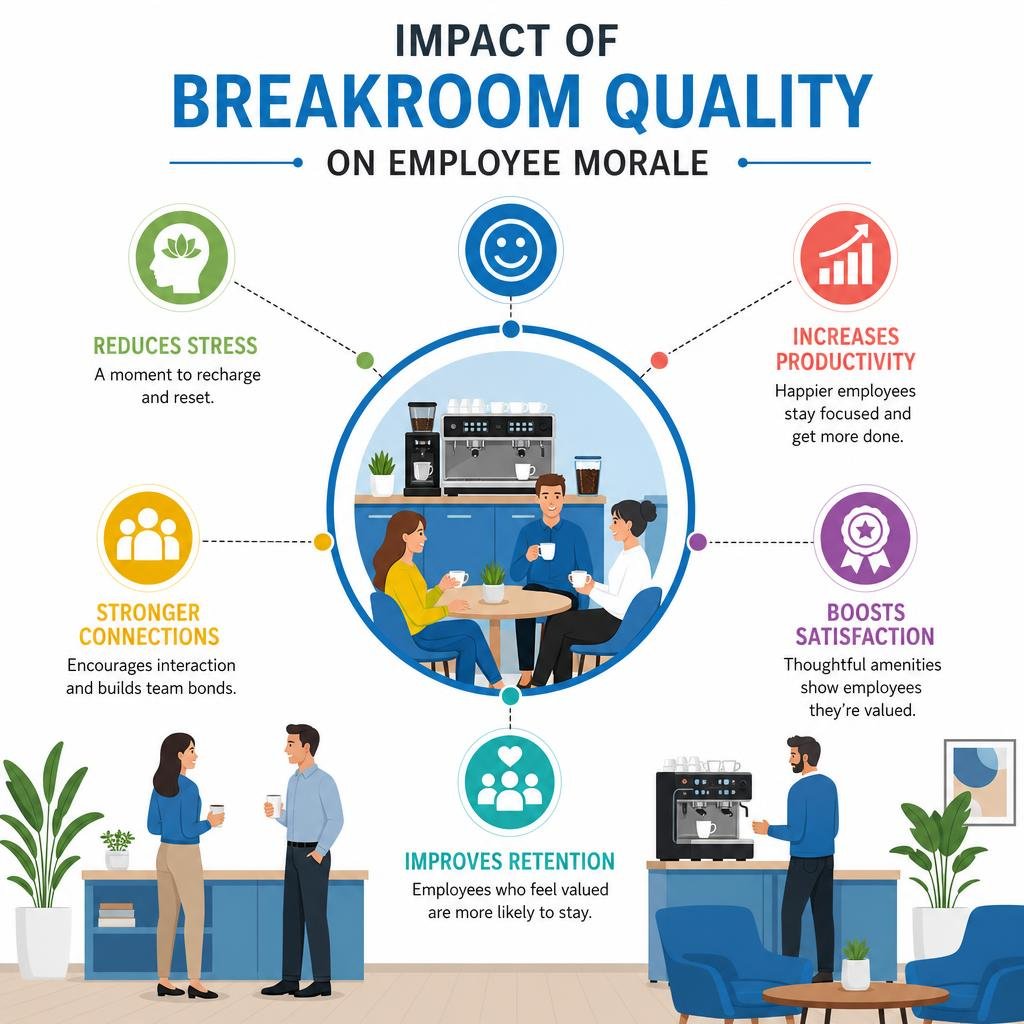
Providing a commercial espresso machine in your office breakroom isn’t just about offering a perk; it’s a strategic investment in your people. A well-equipped coffee station becomes a natural hub for informal meetings, fostering spontaneous collaboration and strengthening team bonds. The act of preparing a personalized espresso or latte offers a moment of respite, a mental break that can significantly reduce stress and improve focus.
This small luxury signals to employees that their well-being is valued, contributing to higher job satisfaction and, ultimately, better retention rates. When employees feel appreciated and have access to high-quality amenities, their morale soars, directly impacting productivity and the overall positive atmosphere of the workplace.
Selecting the Right Commercial Espresso Machine for Your Office Volume
Choosing the perfect commercial espresso machine for your office hinges primarily on your anticipated daily coffee volume. The “group head” count is a key indicator of a machine’s capacity. A group head is the component where the portafilter locks in, and water is dispensed for brewing espresso. More group heads mean more shots can be pulled simultaneously, directly impacting how quickly your team can get their caffeine fix during peak hours.
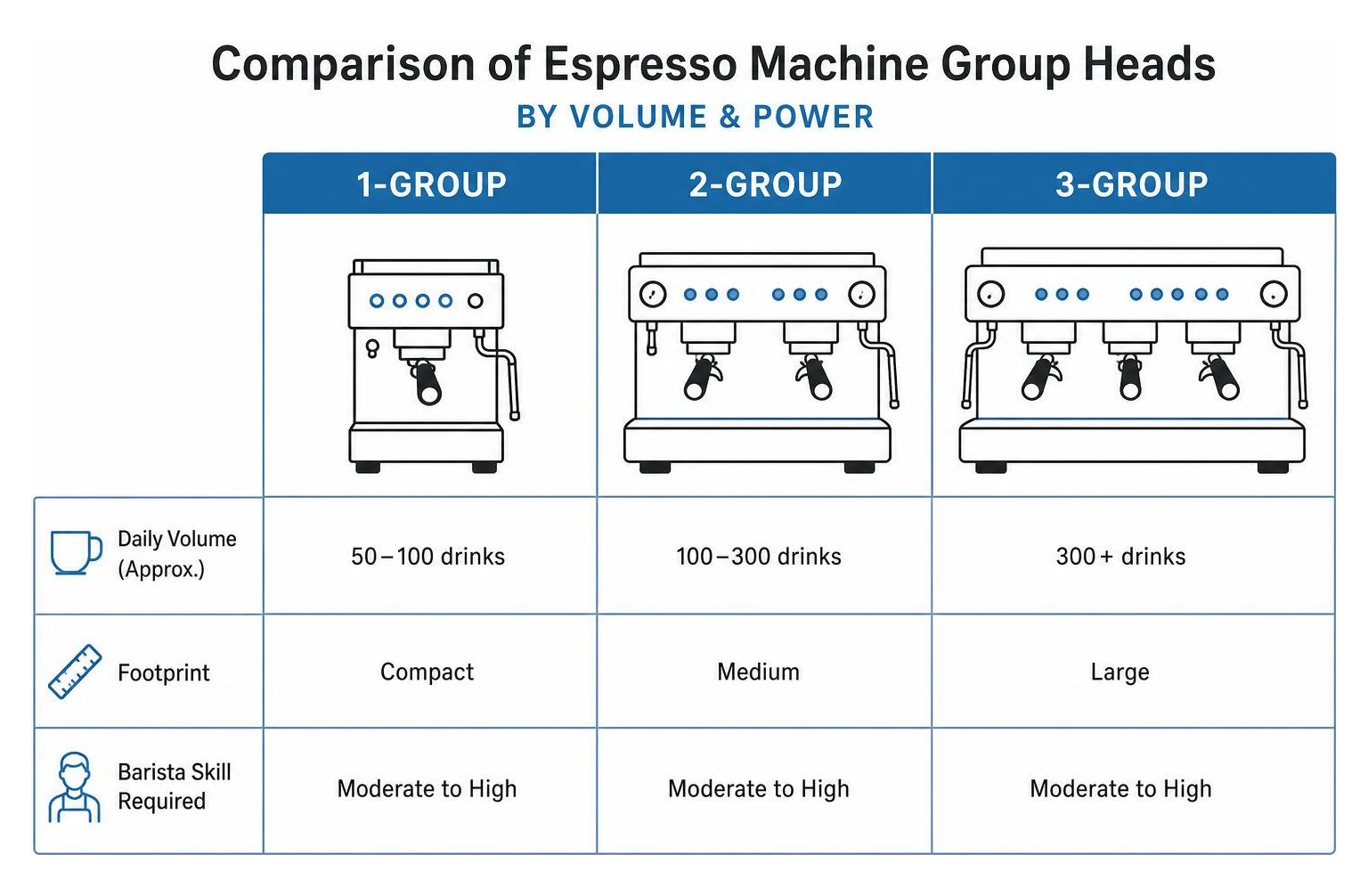
To determine the ideal number of group heads, consider your office size, the number of coffee drinkers, and the peak times for coffee consumption. A small office might only need a single group, while a large corporate environment with hundreds of employees would benefit from a multi-group system. We’ve found that accurately assessing your daily cup volume helps prevent bottlenecks and ensures a smooth, enjoyable experience for everyone.
Low-Volume Spaces: 1-Group and Prosumer Setups
For boutique offices, smaller teams, or environments with lower daily coffee demand, a 1-group commercial espresso machine or even a high-end prosumer model can be an excellent choice. These machines offer a compact footprint without compromising on beverage quality. They are designed for environments where consistency and flavor are prioritized, but the sheer volume of drinks isn’t the primary concern.
A 1-group machine, such as the Ascaso Baby T Plus, provides professional-grade performance in a smaller package. These machines often feature robust components and precise temperature control, ensuring delicious espresso every time. For an even more accessible entry point, certain advanced prosumer models, like the Breville Barista Express, can deliver remarkable results. The Barista Express, for instance, boasts a 15-bar Italian pump and a Thermocoil heating system engineered to deliver water at exactly 200°F, crucial for perfectly balanced flavors.
While not a multi-group commercial powerhouse, its integrated grinder and manual microfoam capabilities make it a strong contender for smaller offices seeking a hands-on, quality experience. These setups empower employees to engage with the coffee-making process, adding a personal touch to their daily routine.
High-Traffic Hubs: Multi-Group Systems
In bustling corporate environments, large offices, or high-traffic breakrooms, a 2-group or 3-group commercial espresso machine is essential to keep up with demand. These multi-group systems are true workhorses, built for speed, consistency, and durability under continuous use. They allow multiple baristas (or employees) to prepare drinks simultaneously, drastically reducing wait times during morning rushes or afternoon slumps.
Consider the Rocket Espresso RE Doppia, a machine specifically designed for venues running 200–400+ drinks per day with consistent shot-to-shot thermostability. The Rocket Doppia DE model, for example, features an impressive 13-liter total boiler capacity (4 liters for steam and 9 liters for coffee) and a powerful 5000 W heating element, ensuring rapid recovery and ample steam power. Similarly, the Faema E71E is another excellent choice for high-volume settings, with its steam boiler boasting a 7-liter capacity and independent coffee boilers of 600 cc each per group (e.g., 2 x 600 cc for a 2-group model).
For the ultimate in capacity, a 3-group machine like the La Marzocco Strada X (AV) can handle even the most demanding environments, featuring a coffee boiler capacity of 3.9 liters and a steam boiler capacity of 11.8 liters in its 3-group configuration. These machines are engineered to deliver high performance and reliability, making them indispensable for offices where coffee is a central part of the daily rhythm.
Feature / Group Head 1-Group 2-Group 3-Group Daily Volume (Approx.) 50-100 drinks 100-300 drinks 300+ drinks Footprint Compact Medium Large Barista Skill Required Moderate to High Moderate to High Moderate to High Simultaneous Shots 1-2 2-4 3-6 Boiler Capacity (Steam) Smaller (e.g., 1.5-3L) Medium (e.g., 4-9L) Large (e.g., 7-12L) Power Consumption Lower (e.g., 1500-3000W) Medium (e.g., 3000-5000W) Higher (e.g., 5000-8800W) Cost Range Entry-level to Mid-range Mid-range to High-end High-end Best For Small offices, boutique spaces Medium-large offices, busy breakrooms Large corporate HQs, high-traffic cafeterias Understanding Espresso Machine Types and Automation Levels
Beyond the number of group heads, the level of automation fundamentally changes the user experience and the consistency of the coffee produced. Commercial espresso machines generally fall into three categories: semi-automatic, automatic, and super-automatic. Each offers distinct advantages depending on the skill level of your staff and your desired workflow. Regardless of the type, key features like thermal stability, PID (Proportional-Integral-Derivative) control, and multi-boiler systems are crucial for consistent extraction and overall beverage quality.
Thermal stability ensures that the brewing temperature remains constant, which is vital for extracting the full flavor profile of the coffee. PID control allows for precise temperature adjustments, often accurate to 0.1 degrees Fahrenheit, while multi-boiler systems separate the steam and brew functions, preventing temperature fluctuations during simultaneous use.
Semi-Automatic vs. Automatic Systems in Office Breakroom Solutions
Semi-automatic machines require the user to manually start and stop the espresso shot, giving them complete control over the extraction time. This level of control is often preferred by trained baristas who want to fine-tune each shot based on the coffee beans and desired outcome. While this offers immense flexibility, it also demands more skill and attention.
Automatic machines, on the other hand, incorporate volumetric dosing. This means you can program the machine to dispense a precise volume of water for each shot, and it will stop automatically once that volume is reached. This significantly enhances consistency across different users, as the main variable of shot timing is removed. While users still need to grind, tamp, and steam milk manually, the automated shot volume simplifies the process, making it ideal for office environments where various employees might operate the machine.
The La Marzocco Strada X, for example, offers various operational modes, including AV (automatic volumetric) mode, allowing for programmable, consistent shots. Its independent boilers and PID controllers enable precise temperature management for each group head, ensuring excellent extraction consistency.
Super-Automatic Bean-to-Cup Office Breakroom Solutions
For the ultimate in convenience and consistency, super-automatic bean-to-cup machines are unparalleled. These machines automate virtually every step of the coffee-making process, from grinding fresh beans to tamping, brewing, and even frothing milk. With just the touch of a button, employees can enjoy a wide range of espresso-based beverages, including lattes, cappuccinos, and macchiatos, without any prior barista training.
Super-automatic machines are particularly well-suited for high-volume office breakrooms where ease of use, speed, and minimal staff involvement are priorities.
They eliminate the need for manual dosing, tamping, and milk steaming, ensuring consistent quality regardless of the user. Many advanced models, such as those from Franke, feature built-in grinders, fresh milk systems, and intuitive touchscreens. These premium super-automatic models can range from approximately $9,500 to over $27,000, reflecting their advanced automation and fresh milk capabilities.
The Faema E71E, while not fully super-automatic, incorporates advanced features like SmartBoiler Technology, which reduces heat loss for daily energy savings of up to 40%, demonstrating how technology can enhance efficiency even in more traditional machines. For those seeking truly comprehensive breakroom solutions that prioritize ease of use and consistent quality, super-automatic machines are an excellent investment.
Key Technical Features and Installation Requirements
When selecting a commercial espresso machine, several technical features directly impact performance, drink quality, and operational efficiency. Beyond the core brewing capabilities, factors like steam power, recovery time, and ergonomic design are critical, especially in a busy office setting.
Steam power and recovery time are particularly important for milk-based drinks. A robust steam boiler and efficient heating elements ensure that the machine can produce high-quality microfoam quickly and consistently, even during peak demand. Machines like the Rocket Espresso RE Doppia, with its 9-liter steam boiler, are designed to handle continuous steaming without significant drops in pressure. Ergonomic features, such as cold-touch steam wands (like those found on the Faema E71E), improve barista comfort and safety, preventing burns and making cleaning easier.
Water Supply and Filtration Needs
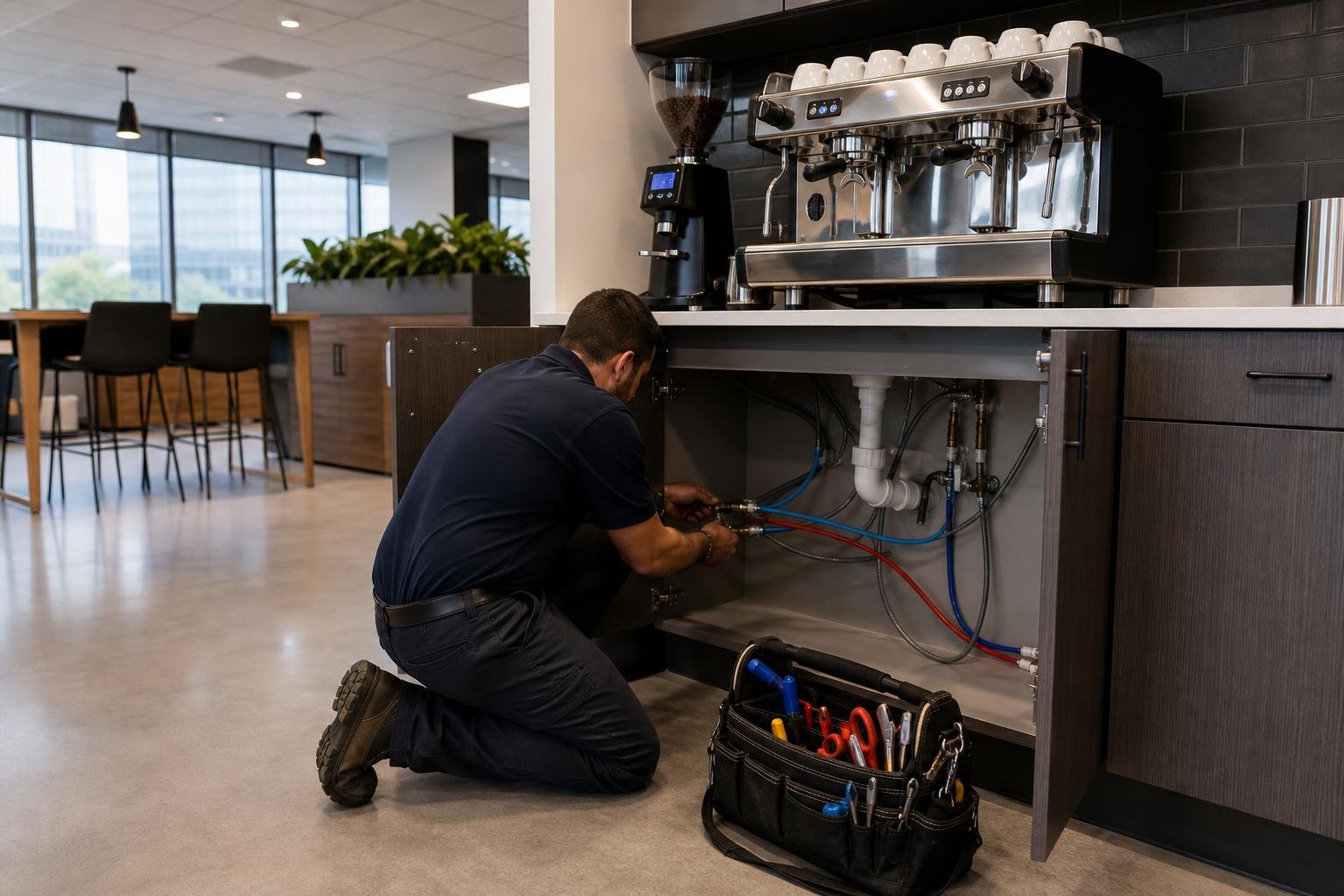
One of the most critical considerations for any commercial espresso machine is its water supply. You generally have two options:
- Plumbed-in: This involves directly connecting the machine to your building’s water line. It offers continuous water supply, eliminating the need for manual refilling and ensuring consistent water pressure. Most high-volume commercial machines are designed for plumbed-in operation.
- Reservoir Only: These machines have an internal water tank that needs to be manually refilled. They are more portable and don’t require plumbing, making them suitable for smaller offices or temporary setups.
- Switchable: Some models offer the flexibility to operate with either a plumbed connection or a reservoir.
Regardless of the system chosen, water filtration is non-negotiable for commercial espresso machines. Untreated water contains minerals that can lead to scale buildup, which clogs internal components, reduces heating efficiency, and can cause costly damage over time.
Proper water filtration not only protects your investment and ensures longevity but also significantly improves the taste of your coffee. We always recommend a multi-stage filtration system to remove impurities and soften the water to optimal levels.
Electrical and Space Specifications
Commercial espresso machines are powerful appliances, and their electrical requirements can vary significantly. Most high-performance multi-group machines operate on 220V or 240V power, often requiring a dedicated circuit. For example, a 3-group Faema E71E can require up to 8,800W, while a Rocket Doppia DE needs 5000W and a 30 Amp circuit.
It’s crucial to verify your office’s electrical infrastructure can support the machine you choose. Some smaller 1-group or prosumer models might run on standard 110V outlets, but their capacity and recovery times will be lower.
Beyond electrical, consider the physical space required. Measure your counter depth, width, and the vertical clearance. Remember to account for adequate ventilation around the machine and space for baristas to work comfortably. A 3-group La Marzocco Strada X, for instance, weighs 101 kg and has specific dimensions that need to be accommodated. Ensure there’s enough room for accessories like grinders, knock boxes, and cup storage. Planning these details upfront prevents installation headaches and ensures a functional, efficient coffee station.
Essential Maintenance and Cleaning for Equipment Longevity
To ensure your commercial espresso machine continues to deliver exceptional coffee and operates reliably for years to come, regular maintenance and cleaning are paramount. Neglecting these routines can lead to poor coffee quality, machine malfunctions, and expensive repairs.
Daily Cleaning:
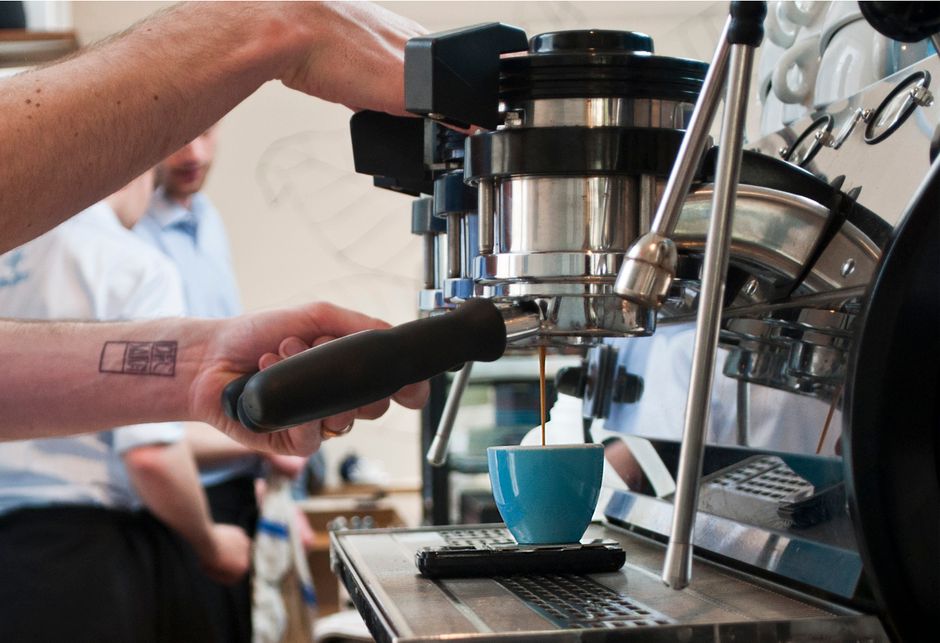
- Backflushing: This involves cleaning the group heads by running pressurized water through them with a blind portafilter and a cleaning detergent. This removes built-up coffee oils and grounds, preventing blockages and ensuring clean extraction.
- Steam Wand Purging and Wiping: After each use, steam wands should be purged (a quick blast of steam) and wiped clean with a damp cloth to remove any milk residue. This prevents milk from baking onto the wand, which can affect steam quality and harbor bacteria.
- Drip Tray and Grate: Empty and clean the drip tray daily to prevent odors and bacterial growth.
- Portafilters and Baskets: Remove and thoroughly clean portafilters and filter baskets. Soak them in a cleaning solution periodically to remove stubborn coffee oils.
Weekly/Bi-Weekly Cleaning:
- Deep Clean Group Heads: A more thorough cleaning of the group heads, often involving brushes and specific espresso machine cleaning tablets.
- Hopper and Grinder Burrs: Clean the coffee bean hopper to remove stale oils and wipe down the grinder chute. Periodically, the grinder burrs may need to be cleaned or replaced, depending on usage.
Monthly/Quarterly Maintenance:
- Descaling: While water filtration significantly reduces scale, periodic descaling might still be necessary, especially in areas with harder water. This involves running a descaling solution through the machine to dissolve mineral deposits in the boilers and pipes. Always follow the manufacturer’s instructions.
- Water Filter Replacement: Adhere strictly to the recommended schedule for replacing your water filters. This is often every 3-6 months, but can vary based on water hardness and usage volume. A fresh filter is crucial for both machine health and coffee taste.
Many modern commercial machines, particularly super-automatics, feature auto-cleaning programs that simplify some of these tasks, improving long-term machine reliability and reducing the manual effort required. By establishing a consistent cleaning schedule, you protect your investment, maintain optimal performance, and ensure every cup of coffee is as delicious as the first.
Frequently Asked Questions about Office Coffee Systems
We often receive questions from businesses looking to upgrade their office coffee experience. Here are some of the most common inquiries regarding commercial espresso machines:
How much does a commercial espresso machine cost?
The price of a commercial espresso machine can vary dramatically based on its type, brand, features, and group head configuration.
Entry-level 1-group commercial machines can start around $5,000.00, while high-end 3-group volumetric models from top brands might cost upwards of $15,100, and even up to $28,000 for advanced systems like the Slayer Steam LPx. Premium super-automatic models, such as those from Franke, can range from approximately $9,500 to over $27,000 depending on their level of automation and fresh milk systems. For a more accessible entry point, some prosumer dual boiler machines are available for around $3,000.
The cost is influenced by factors such as boiler capacity, thermal stability, build quality, and integrated technologies. It’s important to consider your budget alongside your volume needs and desired features.
What is the difference between plumbed and reservoir espresso machines?
The primary difference lies in their water supply method. A plumbed espresso machine connects directly to your building’s water line, providing a continuous supply of water. This is ideal for high-volume environments as it eliminates the need for manual refilling and ensures consistent water pressure. A reservoir espresso machine, on the other hand, uses an internal water tank that must be manually refilled.
These machines offer greater flexibility in placement as they don’t require a direct water connection, making them suitable for smaller offices or mobile setups. Some machines are switchable, offering the convenience of both options. For most commercial office settings, a plumbed-in system is preferred for its convenience and uninterrupted service.
How do steam recovery times affect beverage service during peak hours?
Steam recovery time refers to how quickly an espresso machine can reheat its steam boiler and restore optimal steam pressure after it has been used. This is a critical factor for offices with high demand for milk-based drinks (lattes, cappuccinos). If a machine has a slow steam recovery time, baristas will experience delays between steaming milk for different beverages, creating bottlenecks during peak hours.
This can lead to longer wait times for employees and a less efficient workflow. Machines with larger steam boilers and powerful heating elements, like the Rocket Espresso RE Doppia with its 9-liter steam boiler, are designed for rapid recovery, ensuring consistent steam power and high drink throughput even when serving 200-400+ drinks per day. Prioritizing a machine with excellent steam recovery is essential for maintaining smooth, fast beverage service.
Conclusion
Investing in a commercial espresso machine for your office breakroom is more than just purchasing equipment; it’s an investment in your company culture, employee well-being, and overall productivity. By carefully considering your office’s volume, understanding the different types of machines and their automation levels, and paying attention to key technical features and maintenance requirements, you can select the perfect system to meet your needs.
A premium coffee experience fosters a positive work environment, encourages collaboration, and provides a valuable perk that contributes to employee satisfaction and retention. In July 2026, a well-equipped breakroom is no longer a luxury but a strategic asset. By making an informed decision, you can ensure your commercial espresso machine becomes a long-term asset, boosting morale and fueling success for years to come.
