Every year, motor vehicle accidents disrupt lives, cause injuries, and drain the finances of families and individuals. Crashes leave behind property damage, emotional distress, and long-term disabilities. Many of these incidents can be prevented, and research ties them to the choices drivers make. Safe driving is a personal responsibility and a public duty that matters for road safety.
It takes more than obeying laws. It calls for a responsible, proactive attitude. Drivers who wear seat belts, avoid distractions, keep their vehicles in shape, and stay alert protect themselves and set a good example for others. When everyone adopts these habits, the risk of crashes drops sharply.
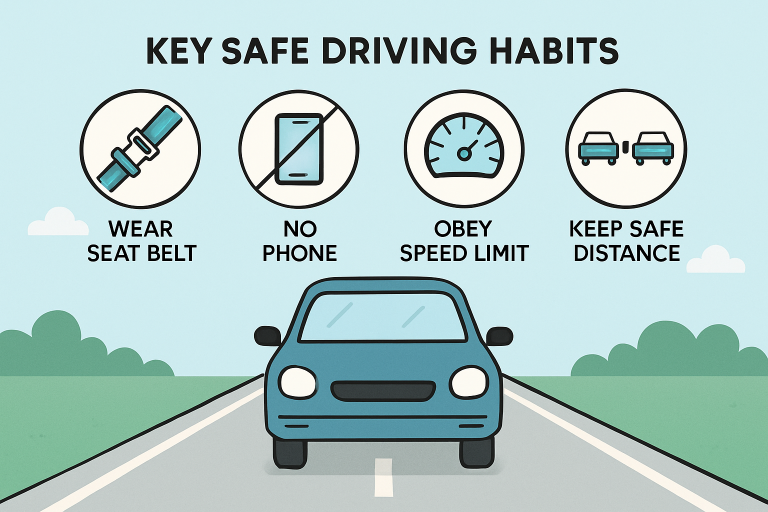
Consistent seat belt usage
Wearing a seatbelt is one of the simplest and most effective ways to cut injuries and deaths in crashes. The NHTSA estimates that seatbelts saved nearly 15,000 lives in 2017, which makes them one of the most valuable safety features in any car.
Even so, complacency or the belief that “it won’t happen to me” leads some people to skip this step, especially on short trips or familiar routes. Occupants who are not buckled are far more likely to suffer severe or fatal injuries from crash forces, even in minor accidents.
Making it a personal rule to always buckle up before you drive keeps everyone safer, on short trips and long ones alike. If a collision does happen, help from a qualified car accident attorney can be important for protecting your rights and securing fair compensation.
Avoiding distractions
Distracted driving is a deadly threat that people often underestimate. In 2021, more than 3,000 people died in crashes involving distraction, and that figure is probably underreported. Distractions include texting, talking, using in-car tech, eating, grooming, and daydreaming. Any of them can slow your reaction to traffic hazards such as pedestrians or braking cars.
Campaigns remind drivers that “it can wait.” Simple steps help: silence your phone, set the GPS before you leave, and keep your attention on the road instead of your meal.
Maintaining a safe following distance
Keeping a safe following distance is a core defensive driving habit, yet drivers often skip it in traffic or when they are impatient. A proper gap buys you the seconds you need to spot hazards like sudden stops, debris, or erratic drivers. A common recommendation is at least three seconds: pick a stationary object as the car ahead passes it, then make sure three seconds pass before you reach the same spot.
Bad weather such as rain, fog, or ice calls for even more distance, since slick roads stretch out your stopping time. Slowing down and leaving room to react prevents many rear-end collisions.
Obeying speed limits
Speeding is a major cause of traffic deaths and serious injuries. In 2021, more than 12,000 people died in speed-related crashes in the United States, according to the Insurance Institute for Highway Safety. Excessive speed limits your ability to steer around curves or objects, lengthens your stopping distance, and makes any crash more severe.
Following posted speed limits matters everywhere, and especially in school zones, construction sites, and residential neighborhoods. Smart drivers adjust their speed for traffic, visibility, and weather rather than treating the posted number as the only rule. Handling your speed responsibly lowers the odds of a crash.
Practicing defensive driving
Defensive driving is more than obeying traffic signals. It means staying alert, expecting the unexpected, and reacting early. Good drivers check their mirrors, watch their blind spots, scan the road ahead, and keep their distance from aggressive drivers. Patience and focus matter most around unpredictable drivers.
Courses online and at community colleges teach how to handle emergencies, avoid collisions, and lower your risk. Finishing one can also cut your insurance premiums, so it helps both your safety and your wallet.
Regular vehicle maintenance
A well-maintained vehicle is essential for safe and reliable travel. Inspect the key systems regularly, including brakes, tires, lights, steering, and wipers, to head off breakdowns. Routine checks and timely repairs improve safety, fuel efficiency, and how long the car lasts. Checking tire tread, pressure, and fluids, along with scheduled oil changes, helps you avoid dangers like blowouts and engine failures. Time spent on maintenance protects drivers, passengers, and everyone else on the road.
Avoiding impaired driving
Impaired driving, whether from alcohol, drugs, or fatigue, is dangerous. Alcohol crashes account for nearly a third of U.S. traffic deaths each year. Even small amounts of alcohol or medication can slow your reactions and cloud your judgment, which raises the chance of a collision. Beyond the legal fallout, the consequences include injuries, deaths, and lasting guilt. Planning ahead with a sober driver, rideshare service, or public transportation saves lives. Watching out for friends and speaking up can prevent tragedies. Community efforts to curb impaired driving keep streets safer for everyone.
The psychology of safe driving
Safe driving starts with mental preparation before you turn the key. A defensive mindset accepts that driving means assessing risk constantly and anticipating hazards early. That mental habit turns driving from passive transportation into active safety management.
Controlling your emotions matters for preventing accidents. Anger, frustration, and impatience push drivers toward aggressive behavior that sharply raises the risk of a collision. Drivers who recognize their emotional triggers and use calming techniques make better decisions under pressure.
A sense of responsibility separates safe drivers from reckless ones. Once you understand that every driving decision affects several lives, you set natural limits that steer you away from dangerous choices. That awareness goes beyond the law into an obligation toward the people you share the road with.
Speed management and control
Speed is the leading factor in how often crashes happen and how bad they are. Driving at sensible speeds gives you the reaction time you need when something unexpected happens. Every 10 mph you shave off cuts the risk of a fatal accident by roughly 30%.
Speed limits are maximum safe speeds under ideal conditions. Rain, fog, construction zones, and heavy traffic call for slowing down below the posted number on your own. Safe drivers ease off before they need to rather than after.
The two-second following rule prevents rear-end collisions by keeping enough stopping distance. That buffer grows to three or four seconds in bad weather or when you follow motorcycles and large trucks. The extra space lets you brake smoothly instead of hard, which helps prevent chain-reaction pileups.
Eliminating distractions
Using a mobile phone while driving raises the risk of a crash by 400%. Even hands-free conversations slow your reactions to a degree comparable to drunk driving. Safe drivers silence their phones or turn on driving mode features that block notifications.
Distractions inside the car go beyond phones. Adjusting the navigation system, eating, applying makeup, or reaching for something all pull your attention off the road. Handling these tasks before you drive or during a safe stop prevents the brief lapses that cause accidents.
Managing passengers, especially children, means setting clear boundaries. Safe drivers pull over to handle a passenger’s needs rather than trying to reach back while driving. That habit models responsible behavior and keeps you in control of the car.
Defensive driving techniques
Expecting other drivers to make mistakes prevents crashes no matter who is legally at fault. Safe drivers assume others might run red lights, merge without signaling, or brake without warning. That cautious approach builds a protective buffer against unpredictable behavior.
Scanning means constantly checking your mirrors, blind spots, and the road ahead. The “12-second visual lead” means looking as far ahead as you will travel in 12 seconds, which lets you spot hazards early and respond smoothly.
Planning an escape route keeps you aware of where you can go in an emergency. Knowing where to steer if an obstacle appears turns a panic reaction into a calculated move. This mental mapping runs continuously and updates as traffic changes.
Weather adaptation strategies
Rain cuts tire traction by up to 50%, so you need more following distance and lower speeds. The first 30 minutes of rain are the most dangerous, because oil residue makes the surface slick before the water washes it away.
Snow and ice call for extreme caution, and stopping distances on ice can grow tenfold. Safe drivers test their braking in an empty area to gauge conditions. Gentle acceleration, gradual turns, and early braking help you keep control.
Fog brings its own problems and calls for low beam headlights and a speed that matches how far you can see. Safe drivers resist the urge to follow taillights closely, since that habit sets up multi-vehicle pileups when the lead car stops suddenly.
Vehicle maintenance impact
A properly maintained car responds predictably in an emergency. Worn tires lengthen stopping distances and lose grip in wet weather. Safe drivers check tire pressure monthly and replace tires before the tread wear indicators show.
Brake maintenance spares you the helpless feeling of a pedal that fails. Regular inspections catch worn pads, low fluid, or damaged lines before they give out entirely. Strange noises or vibrations mean it is time for a professional to take a look right away.
Visibility equipment directly affects whether you avoid a crash. Clean windshields, working wipers, and properly aimed headlights give you a clear view. Safe drivers replace wiper blades every year and clean their headlights regularly to keep the light strong.
Impairment recognition and prevention
Alcohol impairment starts at blood alcohol levels below the legal limit. Even one drink affects your judgment and reaction time. Safe drivers pick a sober driver or use a ride-sharing service whenever they drink at all.
Fatigue can impair driving as much as alcohol does. Drowsy driving causes approximately 100,000 accidents annually. Safe drivers watch for warning signs like frequent blinking, drifting, or missing exits, and stop at a safe rest area as soon as they notice them.
Medications, including over-the-counter ones, can dull your driving ability. Safe drivers read the warning labels and avoid driving when they start a new medication until they know how it affects them. The same caution applies to legal marijuana use where it is permitted.
Intersection navigation safety
Intersections are where 40% of all accidents happen, so careful navigation is essential. Safe drivers scan cross traffic even on a green light, watching for red-light runners or turning vehicles that fail to yield.
Coming to a full stop at stop signs gives you time to check for pedestrians, cyclists, and cross traffic. Rolling stops save a couple of seconds while sharply raising the risk of a collision. A full stop shows respect for traffic laws and for other people on the road.
Turn signals tell nearby drivers what you plan to do, which prevents confusion and keeps traffic flowing. Signaling early gives others enough warning, while a last-second signal leaves them too little time to react.
Night driving adjustments
Poor visibility at night calls for lower speeds and sharper attention. High beams help you see, but you must switch to low beams as you approach other vehicles. Safe drivers keep their headlights clean and properly aimed.
Drowsiness peaks at night, especially between midnight and 6 AM. Planning trips to avoid those hours or sharing the driving with someone else cuts the risk of a fatigue-related crash.
Wildlife is more active at dawn and dusk, especially in rural areas. Scanning the roadsides for reflective eyes and slowing down in marked wildlife zones helps you avoid animal collisions that can cause serious injuries.
Parking lot vigilance
Parking lots pack pedestrians, especially children, into areas with limited visibility. Safe drivers stay at walking speed and keep scanning for movement between vehicles.
Backing accidents are common in parking situations. Using a backup camera while still checking your mirrors and blind spots gives you the full picture. Parking in pull-through spots removes the need to back out at all when you can manage it.
Watching how you open your door prevents “dooring” accidents with cyclists and dents in the car beside you. The “Dutch reach” technique uses your far hand to open the door, which naturally turns your shoulder to check for approaching traffic.
Technology integration
Driver assistance systems add to safe habits but do not replace them. Blind spot monitors, automatic emergency braking, and lane departure warnings give you extra safety layers when you understand and maintain them.
Leaning too hard on technology breeds dangerous complacency. Safe drivers know the limits of these systems and keep the main responsibility for controlling the car themselves. The technology helps an attentive driver, not a distracted one.
GPS navigation lowers crash risk by cutting confusion and last-minute lane changes. Programming your destination before you leave and using voice commands keeps your focus on driving.
Young driver development
Teen drivers face higher crash risks because of inexperience and brain development. Plenty of supervised practice in different conditions builds skill before they drive on their own.
Graduated licensing systems lower crash rates by limiting high-risk situations while new drivers build their skills. Night driving restrictions and passenger limits protect young drivers during the vulnerable learning period.
Parents shape lifelong driving habits by example. Children who watch safe driving absorb those habits more effectively than they would from instructions alone, and that influence carries across generations.
Commercial vehicle awareness
Large trucks have big blind spots and need extra room to stop. Safe drivers avoid lingering beside a truck and give it more space when it turns or merges.
Knowing what trucks can and cannot do keeps you from making dangerous moves around them. Cutting in close in front of a truck takes away its safety buffer and can lead to an underride crash with catastrophic results.
Respecting the challenges commercial drivers face helps everyone stay safer. These professionals handle difficult conditions while managing heavy loads. Courtesy and patience around commercial vehicles benefits everyone.
Conclusion
Motor vehicle accidents can be devastating, but drivers can cut the risk with steady habits: wearing seatbelts, avoiding distractions, keeping safe distances, respecting speed limits, driving defensively, and staying away from the wheel when impaired. These choices protect you and the people around you, and they help build communities where everyone gets home safely.
