As the construction industry evolves, project owners are seeking efficient solutions that streamline delivery and minimize risks. Click here to learn how design-build construction is transforming the process by merging design and construction under a single contract, paving the way for greater collaboration and clarity.
In contrast to traditional methods that separate these roles, design-build reduces misunderstandings and accelerates timelines, making it a preferred choice for both the private and public sectors.
This integrated approach has gained popularity among developers, municipalities, and institutions for its ability to maximize project value and eliminate redundancies. With a design-build team, stakeholders can benefit from a more cohesive workflow, fewer delays, and reduced administrative burdens.
In fact, the growing role of digital tools and new technologies in design-build is further optimizing project efficiency and quality, making it a compelling alternative to design-bid-build and construction-manager-at-risk models.
Design-build’s value is becoming increasingly evident in publicly funded projects, public-private partnerships, and complex infrastructure developments. As more agencies and organizations recognize the advantages, the method’s market share continues to grow, inspiring new trends and innovations across the construction landscape.
For additional guidance on project delivery models and insights from industry professionals, this ENR resource offers a comprehensive look at evolving best practices.
What Is Design-Build?
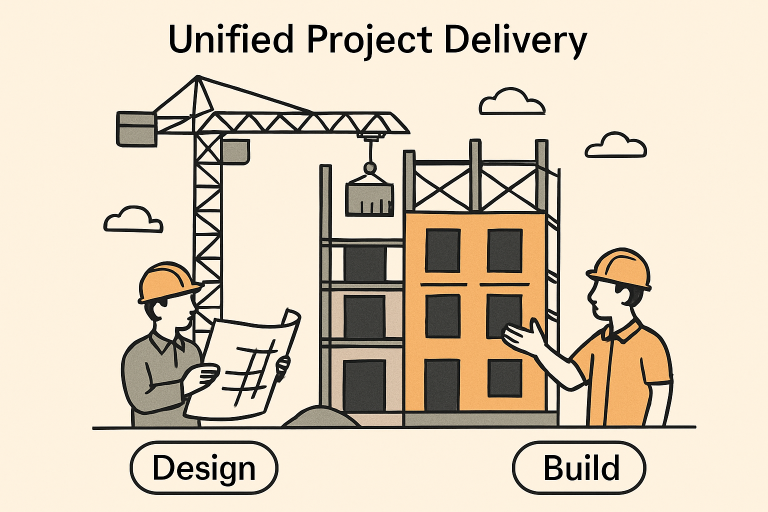
Design-build is a project delivery method in which a single entity, the design-build team, manages both the design and construction phases. By consolidating these responsibilities, design-build eliminates the silos that traditionally exist between architects, engineers, and contractors. This reduces the risk of conflicts and miscommunication that can slow progress or inflate costs.
Unlike traditional design-bid-build, design-build fosters early collaboration, enabling all parties to address challenges, vet ideas, and streamline workflows from project inception. This unified approach is particularly valuable for complex projects requiring innovative solutions and ongoing adjustments during development.
Benefits of Design-Build
Owners, architects, and builders are turning to design-build for its many advantages:
- Faster Project Completion: Data from the Design-Build Institute of America shows projects are typically completed 12% faster than those delivered using traditional methods.
- Cost Savings: Early collaboration often uncovers opportunities to reduce expenses, control budgets, and prevent costly changes during construction.
- Enhanced Collaboration: Unified teams foster open communication, accountability, and shared goals, consistently leading to improved project outcomes and stakeholder satisfaction.
These benefits have proven valuable in both commercial and infrastructure projects, as confirmed by McKinsey & Company’s research on construction productivity.
Design-Build in Public Projects
Government agencies and public entities are increasingly adopting design-build to boost efficiency and meet tight deadlines. New York City serves as a prime example: by implementing design-build across 42 projects, the city saved an estimated 50 years of project time and $1.4 billion in costs. These results demonstrate the impact of design-build on expediting delivery and optimizing budgets for major public works.
This method’s transparency and accountability also appeal to public-sector project managers who face heightened scrutiny and stringent regulatory requirements. By identifying and resolving potential issues early, as a unified team, agencies can deliver complex infrastructure with greater confidence and fewer change orders.
Technological Advancements in Design-Build
The integration of emerging technologies within design-build is further enhancing project performance. Building Information Modeling (BIM), for example, enables seamless visualization and coordination among all stakeholders by creating accurate, data-rich digital representations of projects. Digital twins, virtual replicas of physical assets, allow for real-time monitoring and predictive analysis, minimizing surprises during construction and operation.
Advanced software tools and cloud-based collaboration platforms are breaking down barriers between field and office teams, enabling updates, clash detection, and plan adjustments in real time. These innovations are driving efficiency gains, reducing rework, and supporting precise quality control.
Challenges and Considerations
Despite its many benefits, design-build is not without challenges. Clearly defining contractual roles and risk allocation is paramount: without well-drafted agreements, misunderstandings or disputes may arise over scope, costs, or responsibilities. Owners and design-build teams must invest time in carefully structuring contracts to protect all parties and clearly delineate expectations.
Quality control remains another key consideration. Even with the enhanced collaboration design-build promises, stringent oversight and continuous communication are necessary to ensure finished projects meet or exceed required standards. Proactive quality management, both during and after construction is essential for delivering long-term value.
Future of Design-Build
Industry forecasts indicate that design-build is poised for continued expansion, with the method expected to account for more than 47% of U.S. construction spending by 2028. This growth is further fueled by the increasing complexity of modern projects and owners’ demand for delivery methods that balance speed, cost, and quality.
The design-build market is estimated to exceed $1.1 trillion in spending in the coming years, underlining its critical role in shaping the industry’s future.
As digital integration, sustainability, and modular construction continue to evolve, design-build stands out as an adaptable framework for tackling new challenges while delivering predictable, high-value results. By fostering stronger partnerships, aligning incentives, and integrating the latest tools, design-build is set to remain at the forefront of construction delivery methodologies.
