You run a beauty clinic, maybe a small one still finding its footing, and clients ask for the same thing every day: something that actually works on their hair for good. Electrolysis permanent hair removal is that answer. It is the one method the FDA calls truly permanent, because it treats each follicle one at a time until it stops producing hair.
Permanent hair removal types
People come in tired of the same cycle. They shave and deal with stubble the next day. They wax and wait for the redness to fade. They try creams that smell odd and barely last a week. You know the routine because you have heard it all.
Then there is laser and IPL, which sound ideal on paper. Laser fires light at dark hairs on lighter skin and covers large areas like legs or backs in minutes. Sessions sting a little, like a rubber band snap, and the costs stack up to around $1,600 for a full run, but hair returns thinner over time rather than disappearing.
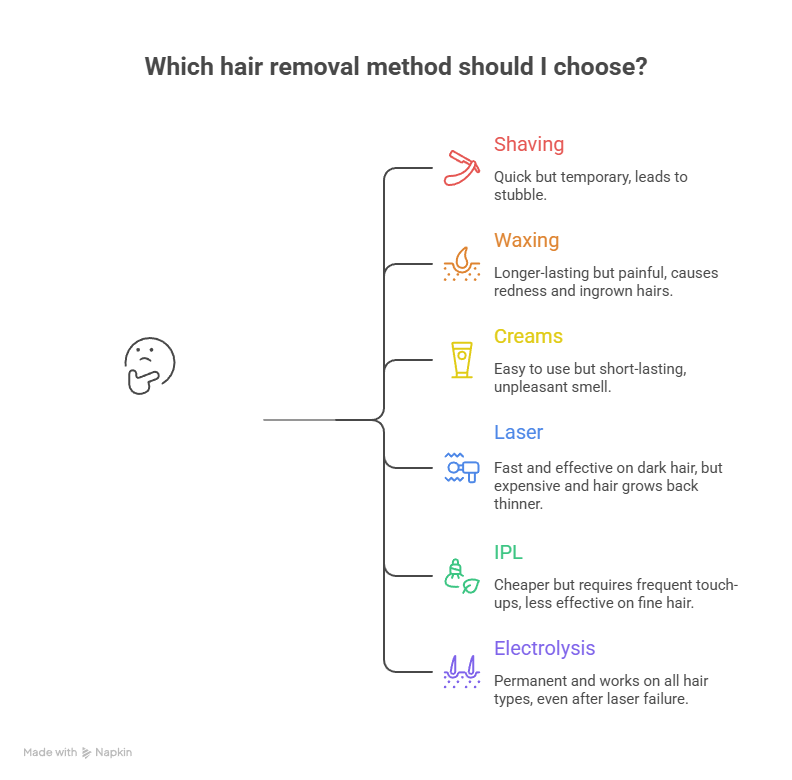
IPL spreads the light wider and handles coarser hair reasonably well, but it skips finer blond or gray strands. It is cheaper per treatment, up to $500 a go, yet you still book touch-ups every few months.
Waxing brings quick cash for you, but clients dislike the pain, the ingrowns, and the way it tugs at the skin. The wider hair removal category pulls in billions. Laser alone reached $1.58 billion in 2025 and keeps climbing as people chase smooth skin.
Clinics profit because clients pay for professional results they cannot get at home. Dermatology practices grow the fastest. Beauty clinics hold over half the market share, because people trust hands-on locations for safety.
Electrolysis permanent hair removal works on faces, bikini lines, and everywhere else, even after laser fails or backfires, as happens in cases where the light triggers more growth rather than less.
Small clinics see this pay off. Sessions run $50 to $150 each, 15 to 60 minutes on modern machines. Clients return 10 to 20 times for facial work and more for larger areas, but they stay because the results hold. There are no yearly top-ups the way laser demands. Margins stay healthy once word spreads.
Add electrolysis, and you are no longer just another wax salon. Clients tell friends. Reviews accumulate. Bookings fill months ahead.
How directory listings help your business
The market values permanence, and dermatology clinics build steady businesses on it. Your clinic can too, especially when locals search for permanent hair removal and find you first.
Picture a new client typing electrolysis permanent hair removal near me into Google. Your clinic appears in the map pack. They click because your name matches everywhere: same address, phone, and hours. That consistency is not luck.
Directory listings make it possible. Treat them like business cards placed exactly where searches land. Google reads them when it ranks local results. Get your Name, Address, Phone (NAP) wrong in one place, and trust slips. Keep it identical across 50 solid directories, and you rise. This is not new territory. Louis Rosenfeld, Peter Morville, and Jorge Arango argue in Information Architecture: For the Web and Beyond (2015) that how information is organized, labeled, and categorized decides whether people can find it at all, and that browsing structured categories and searching are complementary ways users locate what they need. A clean listing gives Google both.
Citations from directories count for a lot in local SEO. Not the spammy kind, but clean ones with real reviews and human checks. Look for places that:
- verify businesses
- write neutral descriptions
- add maps
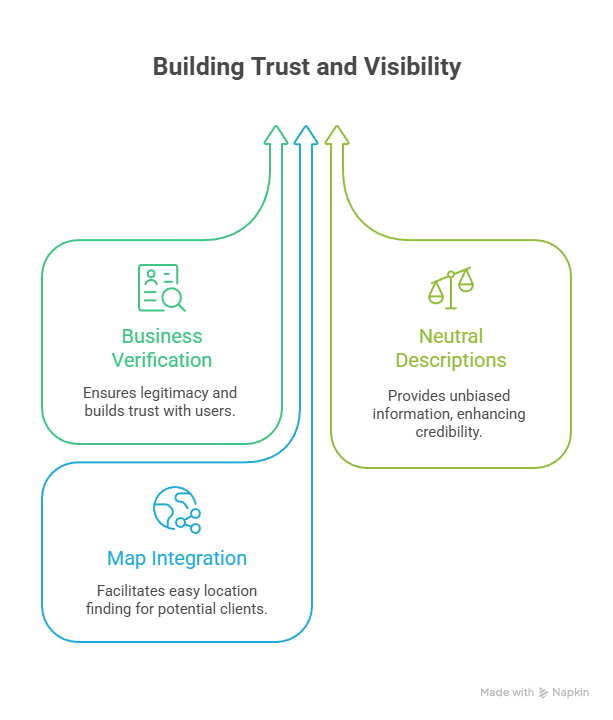
Your electrolysis page gets found because search engines read you as legitimate. Clients see the green verified badge and think, this place is serious. No fly-by-night feel. That verification is doing real work. Dina Mayzlin, Yaniv Dover, and Judith A. Chevalier, in Promotional Reviews: An Empirical Investigation of Online Review Manipulation (2014), compared hotel reviews on TripAdvisor, where anyone can post, with Expedia, where only verified customers can. The properties with the strongest reason to fake reviews, small independent ones, had disproportionately more positive reviews on the open platform. Verification mechanisms matter, and a directory that checks businesses gives your honest listing an edge over padded ones.
How to begin
Start simple. Open a spreadsheet. List your NAP. Check 20 directories: Yelp, Google Business Profile, and niche beauty ones. Match everything. No typos on street names. Same hours everywhere.
Next, strengthen your photos and media. Skip stock shots. Photograph your own setup: a clean station, a smiling technician, a probe in hand, nothing gory. Before-and-after images do the heavy lifting: a client’s chin in week one, smooth by month six.
Get permission and blur faces if needed. Video is even better. Thirty seconds of a session, with a voiceover saying, watch one follicle go for good. Upload it to listings that accept it.
Write descriptions that sell without hype. Something like: Our certified technicians handle electrolysis permanent hair removal for all skin types. Faces, legs, back: permanent results in 10 to 20 sessions. Book a free consult. Neutral and factual. Editors on good directories may tweak wording for fit, but you control the facts. Add testimonials: Cleared my beard in eight months, worth every minute. Use real names where clients agree. Include phone, site link, and social profiles.
Reviews are not decoration here. Michael Luca, in Reviews, Reputation, and Revenue: The Case of Yelp.com (2011), matched Yelp ratings with Washington State restaurant revenue and found that a one-star increase in rating raised revenue by 5 to 9 percent, an effect driven by independent businesses rather than established chains. A small clinic is exactly the kind of independent business that gains most when its ratings climb, so the reviews on your listings are part of the revenue engine, not a vanity metric.
Pick directories with intent. Free ones first for basic listings. Paid ones for premium placement, verified status, and top spots. Aim for beauty and health categories, then track the activity.
After updates, watch Google Analytics. Are searches for electrolysis rising? Map views up? Calls coming from listings? Fix what lags. One small firm did 15 listings, added media, and reached the local pack top three within weeks. Bookings doubled by the end of the quarter.
Do not overlook categories. List under beauty clinics, dermatology, and hair removal specialists. Add sub-niches like permanent solutions where they fit. Google uses these for specific searches.
This works because clients trust what Google shows them. Clean directories feed that trust. Your electrolysis service reads well when the profile matches reality.
Here is one more case that could be yours. A full beard cleared on a man who lived hours away. Monthly three-hour sessions. Photos told the story. Directories carried it. The clinic filled from a mix of referrals and search.
A concrete first step
You can copy this approach and get results. Start today. Pick five directories. Update your NAP, add three photos, and one testimonial. Watch the calls arrive, then scale to 50. Turn electrolysis from a side offering into your main draw.
Clients stay loyal. Revenue climbs steadily. You stop chasing trends when directories keep you found. Do the five-directory version this week, measure the calls next month, and expand from what already works.
