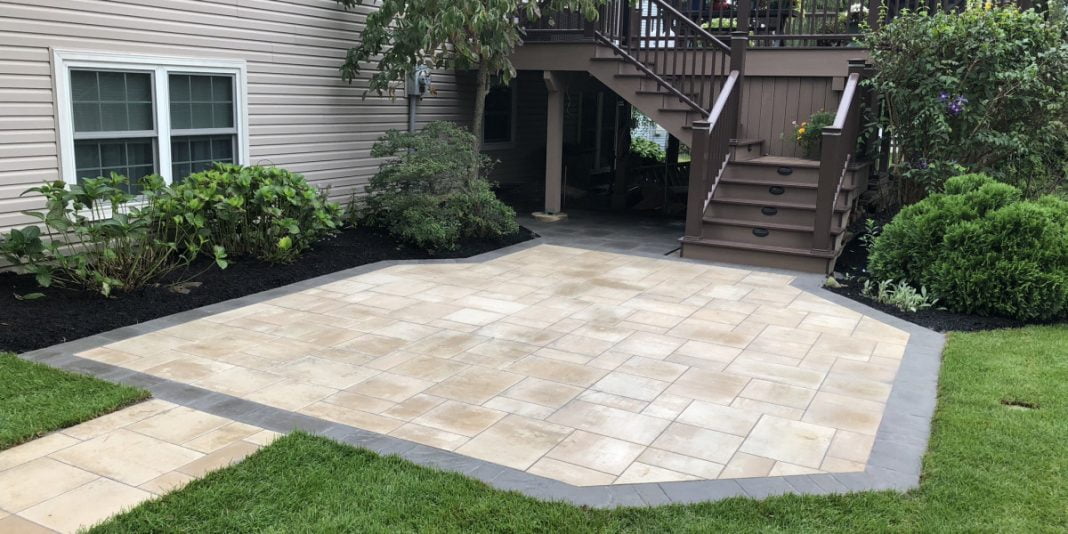
Sunny days pull us outdoors to sit in the sunshine or eat outside in the evening. That is where an outdoor patio and landscaped area come in. Fitting a patio into your home is worth the investment for a fresh look and feel in your garden.
Paved patios are durable, good looking, and low maintenance. If you are going to invest in one, here is our guide to the advantages and disadvantages of paved patios.
Advantages
Long lasting
An unpaved surface can develop bumps and turn into a muddy mess after rain. That leads to uneven ground, which is a safety concern. Paved patios last a long time once they are installed correctly and maintained regularly. A paved patio should last at least 20 years when it is looked after.
Longevity is one of the main advantages. Concrete, stone, and asphalt are some of the most durable paving options that last. Regular maintenance such as filling in gaps and cracks can prevent further damage and save you money even after various weather conditions.
Low maintenance
Patio paving needs very little upkeep, which makes it a good material to choose. It does not require sealing or staining to protect it from harsh weather. If the patio becomes damaged, you can replace pieces without disturbing the ones near it. Once the paving is installed correctly, it should keep offering plenty of durability.
Customisable
Many people use paving for patios because it’s available in a wide range ofA colours, materials, shapes, and sizes. Paving gives homeowners the scope to produce a unique and attractive patio in their garden.
Patio paving comes in different materials, including concrete and clay brick. You can make a patio with one kind of material or combine several materials andA coloursA into a bold pattern.
Types of patio paving’s
Creating your own patio in the garden gives you a whole new dimension to enjoy. There are many paving options to choose from. Whatever design you have in mind, here are some options.
Paving slabs
Paving slabs are large paving stones commonly used in paths or patios. They are a good way to cover a bigger space more efficiently and create a clean look. Paving slabs come in various packs, from single size packs to multiple packs, so you can build a more unique style.
Paving blocks
Paving blocks are shaped like bricks and are commonly known as block paving. They’re thicker and smaller than slabs, so they are ideal for decorative edging around patios. You can buy paving blocks in single or mixed sized packs, depending on the look you want.
Carpet stones
Carpet stones are stone cobbles laid onto an adjustable mat that you can trim to the shape and size you need. They give you a simple way to get a cobbled rustic look without laying each stone on its own. Carpet stones work well for awkwardly shaped areas, such as around a pond or along curvy garden paths.
Easy to repair
Paved patios are easy to repair because they are made of lots of small parts. Rather than replacing the whole thing or doing patch up work, you just replace the broken paving parts. This saves you money and time and keeps your patio looking good. Expansions and changes can be done so that they are indistinguishable from the original space. That ease of additions and repairs makes these changes cheaper than with poured concrete.
Paved patios are better in seasonal changes and varying climates
Winter weather can affect your patio. In the winter months, when the moisture in the ground freezes and thaws, the ground contracts and expands. Pavers are installed piece by piece, so there are more seams across the surface. That lets the pavement flex individually, and when the expansion recedes, it goes back into its original position. With proper construction, there should be minimal movement.
Disadvantages
More expensive than other options
Patio paving can be pricey compared to other options such as concrete or natural stone. A paved patio will cost you a lot more than gravel. If you are on a small, tight budget, a paved patio may not be the option for you.
The installation costs will be higher at the start, but you will still save some money in the long run because the paving costs less to maintain than other patio options. Another cost factor is the equipment and materials needed to install the patio. These are all additional costs on top of the paving itself, which makes the initial investment higher for a paved patio.
Longer installation
Because of the installation process, a paved patio takes a lot longer to put in, at least 3-5 days from start to finish. Installing paver patios is more involved than other patio options. Here is a brief run-down of paved patio installations.
- Grass/dirt must be removed from the installation area
- The subsoil should be leveled out in the area
- Pour the gravel and level the area
- Install bedding sand
- Install the paving
- Lay out and hold the edging in place
- Fill in the joints
- Clean and seal the patio
Once the patio is installed you can walk on it immediately.
Paved patios are prone to growing weeds over time
Patios are made of individual small pieces with slits between them. Sand can fill the joints, but it can easily get washed away with rain or regular cleaning. Weed seeds and other debris work their way in instead and, over time, take over the paving. Weeds will spoil the look of your patio. They can speed up wear and tear and damage the patio material over the long run. You need to top up the sand in the joints to stop weeds and debris from growing.
They are delicate
Some paving types are fragile. They can crack or break under heavy pressure. If you want to place furniture or heavy items like BBQs, make sure the patio is strong enough to handle them. In extreme temperatures or weather, the patio will be prone to cracking.
How to clean your patio
Cleaning your patio regularly keeps it maintained and looking its best. Brushing the paving often keeps the surface clean and clear of debris. Staining and dirt build up over time.
Clean your patio with warm soapy water. Scrub the area with a hard bristled brush. Rinse with water and leave to dry for 24 hours.
You can also use a pressure power washer to clean your patio. This is one of the easiest ways to clean patio slabs and paving. Start on a low setting first, because you don’t want to damage the patio with high power.
