
Key Takeaways
- Invoice factoring turns unpaid invoices into immediate cash without adding debt.
- It improves cash flow, which makes it easier to keep operations running and invest in growth.
- It suits industries with long payment terms or cash flow gaps, including manufacturing, transportation, and service sectors.
- Before proceeding, companies should weigh the costs, the effect on client relationships, and the eligibility criteria.
Understanding invoice factoring
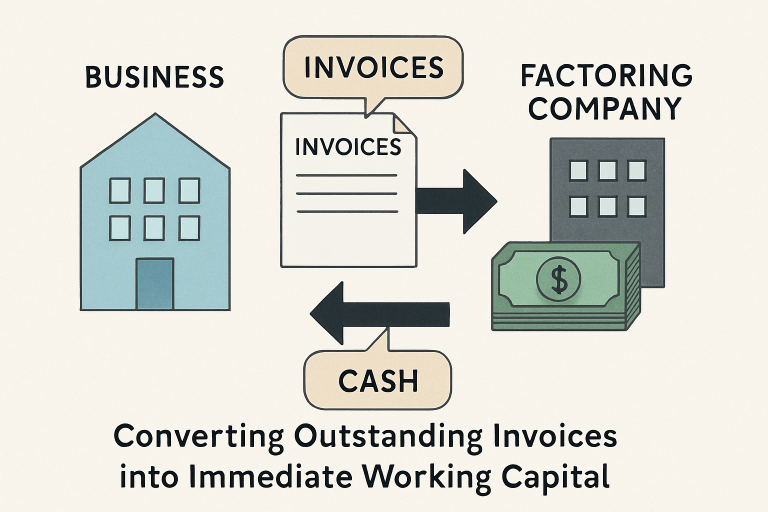
Managing cash flow is hard for many businesses, especially when clients take a long time to pay. Invoice factoring is one way around this. A company sells its outstanding invoices to a third-party factor at a discount and gets working capital straight away for the expenses that matter, instead of waiting for clients to pay. If you want ongoing support from a partner you trust, a trade finance loan company can turn receivables into cash and keep operations moving.
Traditional loans can add debt and require collateral. Factoring gives you liquidity without adding liabilities to the balance sheet. It is especially useful for small and mid-sized companies that need fast funding to keep daily operations going, hire employees, or take on new business.
How invoice factoring works
The process is straightforward, which is part of why so many companies use it:
- Issuing services or goods: The business delivers its products or services and sends invoices to customers, often with terms of 30, 60, or even 90 days.
- Selling the invoice: Instead of waiting, the company sells these pending invoices to a factoring provider and gets a quick advance, usually 70% to 90% of the invoice’s value.
- Receiving funds: The factoring company deposits the advance, so the business can cover payroll, inventory, or other essential expenses right away.
- Customer payment: The factoring company collects payments directly from the invoiced customers when they come due.
- Final payment and fees: Once it has collected, the factor releases the rest of the invoice value to the business, minus an agreed service fee.
This closes the gap between delivering a service and getting paid, a gap that otherwise slows a business down and limits how much it can invest. Investopedia notes that many growing businesses choose factoring to free up resources and avoid the strain of slow-paying clients.
Benefits of invoice factoring
Factoring has a few clear advantages:
- Better cash flow: Immediate payment for outstanding invoices lets a company pay suppliers, plan updates, and move faster.
- Debt-free solution: Factoring is not a loan, so it doesn’t affect the company’s leverage or credit rating.
- Scalable and flexible: It grows with the business. Depending on what you need, you can factor specific invoices or use it as a regular funding source.
- Operational freedom: Releasing working capital gives you more room to respond to market changes, invest in promotions, or take on new projects.
Industries that benefit from invoice factoring
Several sectors gain from how factoring is structured:
- Manufacturing: Funding for ongoing projects and bulk material purchases without waiting on client payments reduces production bottlenecks.
- Transportation: Logistics and transport firms often deal with slow-paying clients while facing regular costs such as fuel and fleet maintenance. Factoring bridges that gap.
- Service providers: Marketing agencies, consulting firms, and business service providers can use factoring to cover payroll and project costs when clients stretch out their payment cycles.
Forbes points out that these industries often face long payment windows and cyclical cash flow problems, which makes factoring a good fit.
Considerations before choosing invoice factoring
Factoring is not right for every business. A few things are worth weighing first:
- Fees and costs: Factoring companies charge service fees that eat into profit margins. The cost varies widely depending on industry risk, invoice volume, and how creditworthy your customers are.
- Relationship impact: Because customers pay the factoring company directly, keeping trust and transparency in those relationships matters.
- Approval criteria: Factors care more about your clients’ financial stability and payment reliability than about your own business. If your clients are creditworthy, you’ll usually get better terms.
Outstanding invoices are trapped value. You’ve delivered the goods or services, but the cash is still out of reach: profitable on paper, cash-poor in practice. This guide looks at how to turn those pending receivables into working capital you can use now.
The hidden cost of waiting
Every outstanding invoice carries an opportunity cost. Take a EUR 100,000 invoice with 60-day payment terms. While you wait, you can’t put that capital into inventory, equipment, or growth. At a conservative 12% annual return, the delay costs EUR 2,000 in lost opportunities. Multiply that across your whole receivables portfolio and the total adds up quickly.
The cash conversion cycle, the time between paying suppliers and collecting from customers, drives your working capital needs. Most businesses run with a 45 to 90 day gap and have to bridge it with reserves or outside financing.
Invoice financing: the primary solution
Factoring is the most established method. You sell your invoices to a factoring company at a discount, usually getting 80% to 90% right away and the rest (minus fees) when your customer pays. The factor takes over collection, which helps if your business doesn’t have strong credit management of its own.
Invoice discounting gives you more control. You borrow against your invoice value while keeping your customer relationships and collection processes. It usually costs less than factoring but calls for stronger in-house credit management.
Selective invoice financing is flexible. Instead of committing your entire ledger, you pick specific invoices to finance. This works well for businesses with mixed customer profiles where only some receivables need speeding up.
The same products go by a different label in Australia, where debtor finance for Australian businesses works on the same principle of freeing capital tied up in unpaid invoices.
Modern digital solutions
Technology has opened invoice financing up to more businesses. Platforms like MarketInvoice, Fundbox, and BlueVine use algorithms to assess creditworthiness in hours rather than weeks. They read your accounting data, payment history, and customer profiles to make an instant financing decision.
Supply chain finance works well for established relationships. Your customer’s bank pays you early at a discount, then collects the full amount from your customer at maturity. Because it relies on your customer’s stronger credit rating, financing costs go down.
Alternative strategies
Dynamic discounting rewards early payment through graduated discounts. Offering 2% for payment within 10 days versus net 30 might look expensive, effectively a 36% annual rate, but immediate cash often justifies it, especially compared with overdraft rates or missed opportunities.
Asset-backed lending uses your whole receivables portfolio as collateral for a revolving credit facility. Unlike factoring, you keep full customer control while accessing up to 85% of eligible receivables value.
Revenue-based financing ties repayment to your income. It isn’t invoice-specific, but it provides working capital based on predictable receivables patterns, with repayments that rise and fall with your cash flow.
Implementation considerations
Receivables financing works best when it’s structured carefully. First, sort your invoices by customer creditworthiness, payment history, and how likely a dispute is. Finance only clean, undisputed invoices from reliable customers.
Look past the headline rate to the true cost. Account for service fees, credit protection charges, and the effect on customer relationships. Some customers see factoring as a bad sign, which can strain a commercial relationship.
Keep stakeholders informed. Banks often need to know about factoring arrangements, since they affect the bank’s security position. Some customer contracts prohibit invoice assignment, so you may need to renegotiate before you can finance.
Optimizing the process
Prevention beats cure. Tighten credit control with thorough customer vetting, clear payment terms, and active collection. The better your receivables, the better the financing terms you’ll get.
Take a graduated approach. Start with selective financing for problem accounts, then expand as you learn the costs and benefits. Many businesses get the best results by using several tools at once: factoring for difficult accounts, discounting for regular customers, and dynamic discounting for strong relationships.
Technology makes it smoother. Modern accounting systems connect directly with financing platforms and automate the funding process. That cuts the admin work and gets cash in faster.
Strategic perspective
Invoice financing is more than a cash flow tool. It’s a strategic lever. By speeding up receivables, you can take on larger orders, offer competitive payment terms, and chase growth without giving up equity.
My opinion: too many businesses treat invoice financing as distressed funding and miss its strategic value. In industries with long payment cycles, construction, manufacturing, wholesale, receivables financing should be part of the business model from the start, not bolted on during a cash crunch. The cost of financing is often small next to the opportunity cost of growth you can’t fund.
The point is to see outstanding invoices not as passive assets waiting to be collected, but as active tools that can drive growth. Structured well and deployed deliberately, your receivables become a reliable source of working capital and turn cash flow from a constraint into an advantage.
Receivables work best alongside the other basics of adapting to cash flow challenges: regular forecasting and a reserve fund that cushions the tight months.
Wrapping up
Invoice factoring turns unpaid invoices into working capital you can use now, supporting liquidity without adding debt or requiring collateral. When you understand how it works, weigh the benefits against the trade-offs, and partner with an experienced trade finance loan company, you get more operational freedom, steadier cash flow, and a better footing to pursue your goals.
