What is the film Work At Hand all about?
Michael K. Paxton: As most things go, the very early beginnings of what would become this film started innocently enough. My long time and close friend Peter Hartel came up to Racine, Wisconsin to shoot some footage of the installation of my huge seventy-four-foot-long mural so I would have a record. After that, each time I had an opening or artist talk, Peter would show up, and as the good friend he is, would shoot some more footage for my records.
Fast forward about twenty years and one day Peter mentioned that we had this old footage and we should put it together as a film. Once down this road, the project went from a short about old work to a trip to the heart of my home West Virginia, complete with interviews with my family, a trip to Marshall University, interviews with collectors and curators, transferring early reel to reel video, innumerable slide transfers, and scans of collections of photos of coal camps, childhood, and a great many images from my over forty-year long career.
Once this was all gathered, Peter ran into Libi Hake at the dog beach here in Chicago, mentioned the film and the need to edit it. More than two years later, with Libi now as Editor and Co-Producer, Work at Hand, Michael K. Paxton is a full broadcast length documentary film that humbles me. That is no small feat. With no huge funding and a dedication of true professionals, this film now moves to the next step of folks getting to see it. My wife Jeanne Nemcek, a wonderful artist herself and my partner for now close to thirty-seven years, is the true star of the film. My Aunt Lelia Given, now sadly gone, is interviewed and shows what real class looks like at 97. June Kilgore, who made me the artist I am today, is remembered, as she should be. Lastly, my work in all its developmental stages speaks for itself.
Now the website and trailer for the film are online and the finished film begins its search for a spot in festivals and traveling to screenings. The nearly four years of diligent work by Peter and Libi has shown that they believe in me even more than I believe in myself. The fact that I started as a sixth generation West Virginian from the coalfields of deepest Appalachia has flavored everything I have done or will do. But alongside this, and an equally strong factor, are the decades of working and living as a Chicago artist.
From private archive to public documentary
Paxton’s account describes something many artists recognize: the record you keep for yourself can become the record other people rely on. The footage began as a personal archive, a way to remember a mural that would never fit inside one room again. Two decades later, that same material carried enough weight to build a broadcast length film around. This is how most independent documentaries actually get made, out of accumulated fragments rather than a single funded plan, with the edit itself doing the work of shaping a life into a story.
The practical labor behind that shift is easy to underestimate. Transferring reel to reel video, scanning slides, and digitizing decades of photographs is slow, unglamorous work, and it is the part that determines whether older material survives at all. Coal camp photographs, childhood images, and early exhibition documentation only stay usable if someone takes the time to convert them into formats a modern editing suite can read. Once that groundwork is done, a film can move between Appalachia and Chicago, between family kitchens and university halls, without the seams showing.
Why the release matters as much as the making
Finishing a documentary is only half of it. The next stage, getting people to see it, runs on the same logic that governs almost anything online: a work has to be findable before it can be judged. A website and a trailer give a film an address, a place people can point to when they recommend it to a festival programmer or a friend. That echoes a much older shift in how audiences discover work. As David Meerman Scott has argued across successive editions of The New Rules of Marketing and PR (2022), the web replaced the old model of buying attention or begging for coverage; any organization, however small, can now earn attention by publishing useful content that people find when they search. For an independent film with no large budget, that principle is the whole game.
It also explains why being listed and referenced in curated places carries real value for artists. A festival listing, a gallery’s roster, a directory entry, or a museum’s records all function as points of trust that a stranger can lean on. When someone encounters an artist’s name for the first time, the surrounding context, who has exhibited or funded the work, where it has been shown, tells them whether to keep reading. In Paxton’s case, that context includes support from the Adolph and Esther Gottlieb Foundation, the Illinois Arts Council, and institutions like Marshall University and Columbia College. Each of those associations is a small signal, and signals accumulate.
There is a broader point here about how niche work reaches its audience. Chris Anderson, in The Long Tail (2006), argued that when online platforms remove the limits of physical shelf space and help people find niche offerings, the many low-demand works can collectively rival the few hits, provided the aggregator makes them findable. A documentary about a sixth generation West Virginian painter is precisely the kind of work that once had nowhere to go and now has festivals, streaming, and searchable listings to carry it to the people who want it. Findability, not scale, is what closes the gap.
A practical takeaway
The lesson embedded in Paxton’s answer is worth stating plainly. Keep the record while you can, because the footage you shoot as a favor may become the source material for something larger. Do the unglamorous archival work so nothing is lost to obsolete formats. And when the work is done, treat distribution as its own project, with a website, a trailer, and a clear path into the listings and screenings where audiences actually look. A finished film that no one can find is only half finished.
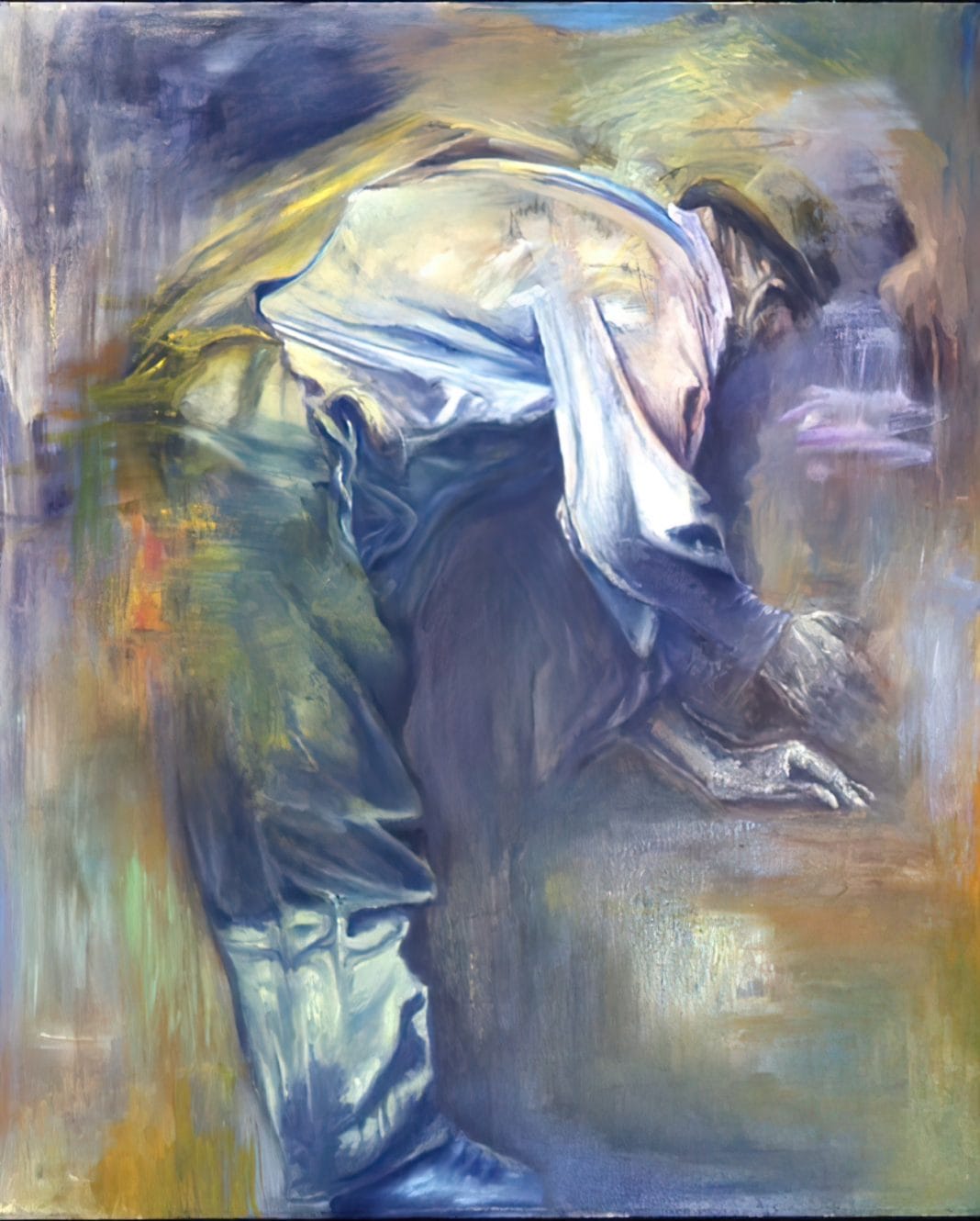
Top image: Michael K. Paxton, Bob’s Wood Hick
Michael K. Paxton is a Chicago-based artist and sixth generation West Virginian with a career that spans more than 40 years. Michael has produced one-person exhibitions, received national and international grants and fellowships, private and public commissions, and much critical support for his work. His supporters include the Adolph and Esther Gottlieb Foundation, Inc., Illinois Arts Council, Air le Parc, Project and Research Center, Jentel Artist Residency Program, Chicago Federation of Labor, Marshall University, and Columbia College.
Michael is an adjunct faculty member of Columbia College, Chicago since 2005. He holds a B.A. in Art from Marshall University, 1975, and an MFA in Drawing and Painting from The University of Georgia, 1979.
