A managing partner in Parramatta rang me last October. His firm had spent four years on the same directory mix that worked beautifully in 2019: a paid Lawyers.com.au listing, a free FindLaw profile, the NSW Law Society directory, and twelve scattered citations on aggregators he could not remember signing up to. Calls had dropped 40% year on year. His SEO consultant told him to “post more blogs”. His marketing manager told him to “do TikTok”. I told him his directory strategy had quietly stopped working sometime in 2024, and he had not noticed because nothing visibly broke.
That conversation is the reason I started writing down what actually works. Australian legal directories changed more between 2023 and 2025 than they had in the previous fifteen years. Google’s helpful content updates rewrote the rules for YMYL content. Half a dozen state-level directories merged, sold, or quietly turned off their indexing. Then AI-native firms arrived to confuse the competitive picture further.
This guide gives you a framework I call TRUST-AU. I will show you where the old playbook fails, define each pillar, and finish with a Brisbane litigation firm worked end to end. The framework is opinionated. Some of it will annoy you. Good.
Why traditional directory tactics fail Australian firms
The NAP-only mindset and its blind spots
For about a decade the prevailing wisdom on directory SEO was straightforward: get your Name, Address and Phone consistent everywhere, accumulate citations, and let the algorithm do the rest. That advice was reasonable in 2015. It is now actively misleading.
requirementDiagram
  requirement nap_consistency {
    id: 1
    text: firm NAP shall be identical across all placements
    risk: high
    verifymethod: inspection
  }
  requirement topical_cluster {
    id: 2
    text: 70 percent of placements shall match primary practice area
    risk: medium
    verifymethod: analysis
  }
  requirement schema_stack {
    id: 3
    text: LegalService and Attorney schema shall be present and valid
    risk: high
    verifymethod: test
  }
  requirement quarterly_refresh {
    id: 4
    text: all listings shall be audited on a quarterly cadence
    risk: low
    verifymethod: demonstration
  }
  element citation_audit_tool {
    type: audit
  }
  element schema_validator {
    type: measurement
  }
  citation_audit_tool - satisfies -> nap_consistency
  citation_audit_tool - satisfies -> topical_cluster
  citation_audit_tool - satisfies -> quarterly_refresh
  schema_validator - satisfies -> schema_stack
The problem is that NAP consistency is a hygiene factor, not a growth lever. Once you are above the baseline (and most established firms are), more NAP citations do nothing. I have audited firms with 180 consistent citations ranking below firms with 40. The 40-citation firm wins because its directory mix matches its practice areas, not because it has more pins on a map.
NAP-only thinking also blinds firms to what directories now actually do. Modern legal directories are not just citation sources. They are review aggregators, schema providers, and increasingly, training data for AI assistants answering legal queries. If you treat them as phonebooks, you optimise for the least useful thing they offer.
What changed when Google rolled out E-E-A-T for legal
Legal content sits squarely in Google’s Your Money or Your Life category, which means the E-E-A-T bar (Experience, Expertise, Authoritativeness, Trustworthiness) is higher than for almost any other vertical. According to Digital Nomads HQ, Google treats legal content with the same scrutiny it applies to medical and financial advice.
In practice, directory listings that confirm a lawyer’s credentials, admission year, practice scope, and client outcomes carry real algorithmic weight. A bare listing with a phone number does not. The state law society directories suddenly matter more than they did, because they verify admission. So do practice-specific directories that require credential checks.

I tested this on three firms in 2024. The firm that added verified state society listings, an Australian Bar Association profile, and a Law Council of Australia member entry climbed two positions for its core keywords within ninety days. The firm that simply added more generic business directories went nowhere. Same effort, very different outcome.
Did you know? Research from Digital Nomads HQ shows that 96% of potential clients turn to Google first when seeking legal help, yet only 28% of Australian law firms invest in professional SEO support, while 74% maintain a website. That gap between presence and visibility is where directory strategy lives or dies.
The 2024-2025 directory consolidation nobody planned for
Between mid-2024 and late 2025 the Australian legal directory market quietly reshaped itself. Several state-specific platforms shut down or merged into national aggregators. LawTap expanded its booking integration and started outranking some firm websites for branded queries. A handful of free directories that used to send modest referral traffic stopped indexing entirely after Google’s spam updates flagged them as low quality.
If you set your directory strategy in 2022 and have not revisited it, you are almost certainly paying for at least one listing that no longer ranks, and missing at least one that now matters. I cannot tell you which without an audit, because the answer depends on practice area and state. I can tell you that running last year’s playbook this year is more expensive than doing nothing.
Introducing the TRUST-AU framework
Six pillars: topical, reciprocal, updated, schema, tiered, authority-mapped
TRUST-AU is six pillars, each addressing a specific failure mode I have watched firms walk into repeatedly. The acronym is a bit cheeky, but it is also the actual signal you are trying to send to Google and to clients.
classDiagram
  class TRUST_AU {
    +topical : string
    +reciprocal : string
    +updated : string
    +schema : string
    +tiered : string
    +authorityMapped : string
    +auditDirectories()
    +buildCluster()
  }
  class TopicalCluster {
    +primaryArea : string
    +clusterScore : float
    +tier1Placements : int
    +tier2Placements : int
    +tier3Placements : int
    +calcScore()
  }
  class DirectoryTier {
    +name : string
    +tier : int
    +annualCostAUD : int
    +enquiriesPerMonth : int
    +verified : bool
  }
  class SchemaStack {
    +legalService : bool
    +attorney : bool
    +aggregateRating : bool
    +faqPage : bool
    +validate()
  }
  TRUST_AU --> TopicalCluster : builds
  TRUST_AU --> SchemaStack : deploys
  TRUST_AU --> DirectoryTier : manages
  TopicalCluster --> DirectoryTier : assigns
- Topical: directory placements clustered around your real practice areas, not your wishlist.
- Reciprocal: citation parity, where information about you matches across every platform.
- Updated: a refresh cadence that catches silent drift before it costs you rankings.
- Schema: structured data on your own site that mirrors and reinforces directory claims.
- Tiered: a deliberate split between paid flagship placements and supporting authority listings.
- Authority-mapped: the whole structure benchmarked against the firms currently outranking you.
Why each pillar maps to a specific ranking signal
Each pillar exists because of a specific signal Google reads. Topical clustering feeds entity association: if you appear in family law directories, Google associates your firm entity with family law. Reciprocal consistency feeds entity verification. Updates feed freshness signals and prevent dead-link decay. Schema feeds the knowledge graph directly. Tiered placement balances PageRank flow against budget. Authority mapping keeps your link profile competitive, not just present.
This is not theory. It is what I have watched move rankings, in that order of effect size, across roughly forty Australian firm audits since 2022.
Adapting the framework for sole practitioners versus multi-office firms
Sole practitioners should run a compressed version: pick two practice areas maximum, four Tier 1 directories, eight Tier 2, and skip multi-location schema entirely. The Updated pillar matters disproportionately, because solo profiles drift faster (one address change, one number ported to a mobile, and your whole citation web cracks).
Multi-office firms need the full version with one addition: per-location pages, per-location schema, and per-location directory profiles where the platform allows it. Lawyers.com.au and FindLaw both support multi-office listings; the state society directories generally do not, and trying to force them creates duplicate entity problems that take months to unwind.
Pillar one: topical directory clustering
Matching practice areas to directory verticals
The most common mistake I see is firms listing themselves under every practice area they technically handle. If your firm does conveyancing 60% of the time, family law 30%, and the occasional commercial matter, do not list yourself as a general practice. Cluster your directory presence around conveyancing, then family law, in roughly that proportion. Google reads the aggregate.
radar-beta
  title AU Directory Strength by Practice Area
  axis tpc["Topical Fit"], cred["Credential Check"], vol["Enquiry Volume"], conv["Conversion Rate"], cost["Cost Efficiency"]
  curve LawSociety{0.9, 1.0, 0.2, 0.9, 0.95}
  curve LawyersCom{0.7, 0.4, 0.8, 0.5, 0.5}
  curve LawTap{0.8, 0.5, 0.85, 0.7, 0.8}
  max 1
  min 0
This feels counterintuitive because partners want to attract any matter that walks in. But the directory layer is where you tell search engines what kind of firm you are. Be specific. The marketing brochure can stay broad.
Lawyers.com.au versus FindLaw versus niche family law directories
Here is a comparison I run for every audit, updated for current performance:
| Directory | Best for | Approx annual cost (AUD) | Realistic referral volume |
|---|---|---|---|
| Lawyers.com.au (premium) | Generalist firms, capital city visibility | $2,400 – $4,800 | 8-20 enquiries/month |
| FindLaw Australia | Mid-tier firms wanting national footprint | $1,800 – $3,600 | 4-12 enquiries/month |
| LawTap | Firms with online booking, family/criminal | $0 – $1,200 + commission | 6-25 bookings/month |
| State Law Society listing | Credential verification, E-E-A-T signal | Member benefit (often free) | 1-3 enquiries/month, high intent |
The numbers vary by city and practice area, so treat them as ranges, not promises. The Law Society line looks weak on volume but converts at roughly triple the rate of paid directories, because anyone who clicks through has already self-qualified.
Cluster scoring with a worked Sydney conveyancing example
Take a Sydney conveyancing firm targeting the Inner West. The topical cluster I would build:
- Tier 1: Lawyers.com.au premium (conveyancing category), LawTap (conveyancing booking widget on firm site), Law Society of NSW directory.
- Tier 2: FindLaw, three Inner West suburb-specific business directories that still rank, Real Estate Institute of NSW affiliated listings.
- Tier 3: niche conveyancing comparison sites, two property investor community directories.
Cluster score is the proportion of placements that mention “conveyancing” in the primary category. I aim for 70%+ on the primary practice area for a specialist firm, 50% for a firm where conveyancing is one of two main practices. Below 40% and you are diluting the topical signal so much that Google reads you as a generalist, which is the worst position to be in for local search.
Quick tip: Before you sign up for any new directory, do this in a spreadsheet. List every existing placement, mark its primary category, calculate the percentage matching your top practice area. If you are below 50% on your money-maker, fix the existing mix before adding anything new.
Pillar two and three: reciprocal signals and update cadence
Citation parity across LawTap, Doyles, and state law society listings
Citation parity means the same information about your firm appears consistently across every platform. Name spelt the same way (including punctuation in “Smith & Associates” versus “Smith and Associates”), address in the same format, phone number in the same format, business hours matching, partner names spelt identically.
This sounds trivial. It is not. I audited a Melbourne firm last year that had its address listed as “Level 12, 360 Collins Street” in seven places and “Level 12/360 Collins St” in eleven others. Google reads those as two different entities until proven otherwise, and the proof requires manual review that may or may not happen.
Doyles Guide is its own animal. Inclusion is editorial, not paid, and being listed in Doyles for a practice area carries genuine weight with both clients and Google. The catch is you cannot directly edit your Doyles entry the way you can a paid directory, so your job is to make sure the information Doyles pulls (firm name, partner names, locations) matches what is everywhere else.
Quarterly refresh schedules that actually move rankings
Most firms update directories when something visibly changes (a partner leaves, the office moves). That is too infrequent. My standard recommendation is a quarterly cycle:
- Q1: refresh practice area descriptions, add any new partner bios, update photos older than 18 months.
- Q2: full citation audit, fix any drift detected, update business hours for the financial year.
- Q3: refresh case studies and testimonials where directories allow, add new awards or rankings.
- Q4: review tier allocations, drop underperforming paid placements, plan next year’s directory budget.
Quarterly refreshes do two things. They send freshness signals to Google. They also catch silent drift before it spreads. A directory that has changed your phone number because their system auto-pulled it from an outdated source costs you calls every day until you notice.
Detecting and fixing silent NAP drift
Silent NAP drift is when your information changes on a platform without you doing anything. Causes include directory data partnerships (one aggregator updates and the change propagates), automated scraping from outdated sources, or platform redesigns that mishandle your existing data.
Detection requires either a paid tool (BrightLocal, Whitespark, Yext all work in the AU market with varying coverage) or a manual quarterly check of your top twenty placements. I prefer manual checks for firms with under thirty placements, because the tools sometimes miss state-level Australian directories that matter.
The fix is usually a support ticket and a polite email. Allow two to six weeks for changes to propagate; longer if the change is on a directory that syndicates to others.
Myth: More directory listings always means better SEO results. Reality: Past a certain threshold (roughly 25-40 quality citations for most AU firms), additional listings produce diminishing returns and can actively hurt if they introduce inconsistencies. The Web Directory makes this point explicitly: quantity does not equal quality outcomes.
Pillar four and five: schema layering and tiered placement
LegalService, Attorney, and Review schema stacking
Schema markup is the structured data on your own website that tells Google what your pages are about. For law firms in 2026, the relevant schema types are LegalService (for the firm), Attorney (for each lawyer), Review/AggregateRating (for testimonials), and FAQPage (for practice area pages with common questions).
flowchart LR
    client["Prospective Client"]
    gbp["Google Business Profile"]
    tier1["Tier 1 Directories"]
    doyles["Doyles Guide"]
    firm["Law Firm Website"]

    client -->|searches for lawyer| gbp
    client -->|browses listings| tier1
    gbp -->|links to| firm
    tier1 -->|citation and referral| firm
    doyles -->|editorial backlink| firm
Stacking means using multiple schema types on the same page where appropriate. A lawyer bio page might carry Attorney schema for the individual, LegalService schema for the practice areas they handle, and Review schema for their client testimonials. Done correctly, Google reads this as a single rich entity. Done incorrectly, you get validation errors and nothing happens.
I have seen firms pay developers thousands to add schema that contradicts what their directory profiles say. If your website schema says you serve five practice areas but your Lawyers.com.au listing says you serve three, Google has to choose which to believe. It usually believes neither very confidently.
Tier 1 paid directories worth the spend in 2026
Tier 1 is your money tier: the directories where you pay for premium placement and expect direct ROI. For Australian firms in 2026, the defensible Tier 1 list is short:
- Lawyers.com.au premium (for any firm doing consumer-facing work)
- FindLaw Australia premium (for mid-market and commercial)
- LawTap (where booking integration suits your intake)
- Your state Law Society directory enhanced listing where available
I am deliberately conservative here. Firms regularly ask me about a dozen other paid platforms; most fail the ROI test in 2026. Track every Tier 1 placement with a unique phone number or call tracking, and review after six months. If it is not paying for itself in attributed matters, cut it.
Tier 2 and 3 placements that build supporting authority
Tier 2 placements do not need to pay for themselves directly. Their job is to feed authority signals: backlinks, citations, entity associations. The right Tier 2 mix includes industry association directories (Law Council of Australia, Australian Bar Association, specialist associations like the Family Law Section), reputable general business directories with editorial standards, and chamber of commerce listings in your service area.
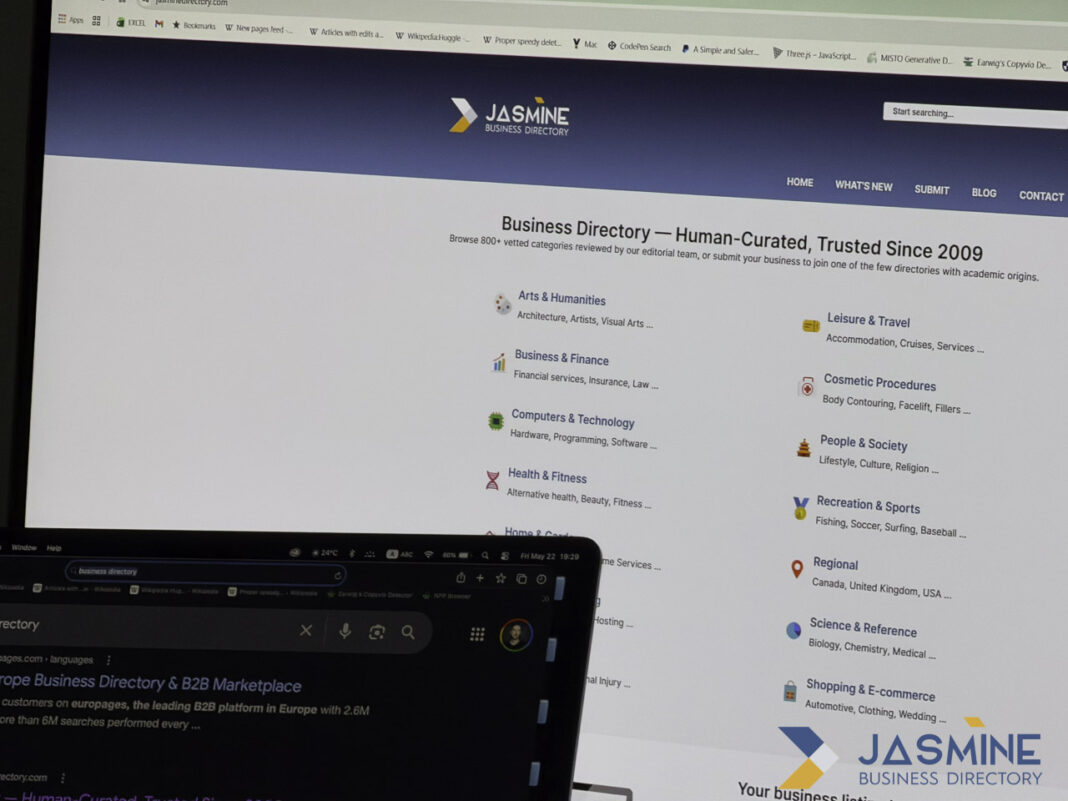
For curated general business listings, I keep one or two well-maintained options in the mix, including Jasmine Directory, because human-reviewed directories continue to send modest but real authority signals that the auto-approve directories lost when Google updated its spam detection.
Tier 3 is hyperlocal and niche: suburb directories, practice-area-specific community sites, alumni networks for law schools. Cheap or free, individually low impact, collectively meaningful. Cap your Tier 3 effort at a few hours per quarter; spend more and you are throwing time at diminishing returns.
Did you know? Martindale-Hubbell, still one of the most authoritative legal directories globally, traces its roots to 1868. For Australian firms with US or international referral relationships, a Martindale profile remains a Tier 2 worth maintaining despite the platform’s age.
Pillar six and full walkthrough: a Brisbane litigation firm
Authority mapping against the top three SERP competitors
The sixth pillar, authority mapping, is the one that pulls the whole framework together. Pick your two highest-value commercial keywords. Identify the firms ranking in positions one to three. Audit their directory presence completely: which platforms they are on, what tier, what their review counts and ratings look like, what schema their sites carry.
sequenceDiagram
  participant Firm as Brisbane Firm
  participant Audit as Citation Audit
  participant Dir as Tier 1 Dirs
  participant Dev as Developer
  participant Review as Review System
  Firm->>Audit: Weeks 1-2: document 22 placements
  Audit-->>Firm: NAP inconsistencies identified
  Firm->>Dir: Week 3: upgrade to Lawyers.com.au premium + FindLaw
  Dir-->>Firm: Enhanced listings live
  Firm->>Dev: Week 4: implement LegalService + Attorney + Review schema
  Dev-->>Firm: Schema validated in Rich Results Test
  Firm->>Dir: Weeks 5-6: add 12 Tier 2 placements
  Dir-->>Firm: Law Council, QLS, 4 association dirs added
  Firm->>Review: Week 7: launch review-request workflow
  Review-->>Firm: Reviews grow from 9 to 31 by week 16
  Firm->>Audit: Week 12: measure + set quarterly refresh
  Audit-->>Firm: Position 14 -> 6 confirmed
You are not trying to copy them. You are establishing the baseline cost of admission. If all three top-ranking firms have 60+ reviews on Google Business Profile and you have 11, you know reviews are part of the gap. If they all carry LegalService and Attorney schema and you carry neither, you know schema is part of the gap.
Let me walk through a real example. Last year I worked with a Brisbane litigation firm, four partners, mid-market commercial disputes, ranking position 14 for “commercial litigation Brisbane” against three established competitors in positions one to three.
Authority map results:
- Top three averaged 47 quality citations; client firm had 22.
- Top three averaged 4.7 stars across 38 Google reviews; client firm had 4.9 across 9 reviews.
- Top three all had Doyles Guide recognition for commercial litigation; client firm had Doyles for one partner only.
- Top three all carried full schema stacks; client firm had basic Organization schema only.
- Top three averaged three Tier 1 paid placements; client firm had one (Lawyers.com.au, basic tier).
Twelve-week implementation timeline with weekly tasks
We ran a twelve-week sprint. Weekly cadence:
- Weeks 1-2: full citation audit, document current state, fix NAP inconsistencies across existing 22 placements.
- Week 3: upgrade Lawyers.com.au listing to premium, add FindLaw Australia premium placement.
- Week 4: implement LegalService, Attorney, and Review schema on website (developer task, validated in Google’s Rich Results Test).
- Weeks 5-6: add 12 Tier 2 placements (Law Council, Queensland Law Society enhanced, three specialist commercial litigation directories, two curated business directories, four industry association directories, Brisbane chamber of commerce).
- Week 7: launch internal review-request workflow targeting recently concluded matters with satisfied clients.
- Week 8: submit partner profiles for Doyles Guide consideration across commercial litigation and dispute resolution categories.
- Weeks 9-10: build practice area pages with FAQ schema targeting long-tail queries identified in keyword research.
- Week 11: add 8 Tier 3 placements (Brisbane suburb directories, alumni networks, niche industry sites).
- Week 12: measurement, documentation, set up the quarterly refresh schedule.
Measured outcomes: rankings, calls, and matter intake
Results after sixteen weeks (twelve weeks of work plus four weeks for signals to settle):
- Primary keyword ranking moved from position 14 to position 6.
- Google reviews grew from 9 to 31.
- Tracked phone calls from directory sources rose 180% month on month by week 16 versus baseline.
- Attributable matter intake from directories went from roughly one per month to four per month, with two being significant commercial disputes that justified the entire annual marketing budget on their own.
The interesting part: the firm did not crack the top three. Position six was the ceiling within sixteen weeks because the gap on Doyles recognition takes longer to close (annual cycle), and review accumulation is slow even when you systematise it. We projected another twelve months to reach top three on the primary keyword. That is honest. Anyone promising you faster has not done this work.
What if… you ran this twelve-week sprint and got nothing? It happens. The two most common reasons: you skipped the authority-mapping step and built a strategy that matched a generic template rather than your actual competitive context, or your website itself has technical issues (slow loading, poor mobile experience, thin content) that no amount of directory work can compensate for. Always run a website health check before the directory sprint; if your Core Web Vitals are red, fix that first.
Edge cases the framework does not solve
Migration firms competing nationally from one location
Migration law is the edge case I get asked about most often. A Sydney-based migration practice may genuinely service clients in Perth, Adelaide, and overseas, but Google’s local algorithm wants to associate a firm with a physical location. TRUST-AU as written assumes local search relevance.
For nationally competing migration firms, modify the framework: drop the local citation emphasis, double down on topical authority via migration-specific directories (the Migration Institute of Australia directory is the obvious one), invest heavily in content that shows knowledge across visa categories, and use schema to assert national service area explicitly. Paid search probably has to do more of the heavy lifting than for locally bound practices.
Brand-new practices with zero review history
A brand new firm has nothing for the framework to work with. No reviews, no citations, no Doyles recognition, no authority to map. Trying to run the full TRUST-AU framework on a four-week-old firm is like trying to brew coffee with no beans.
The pre-framework playbook for new practices: launch Google Business Profile correctly on day one, claim the obvious Tier 1 free or low-cost placements, focus the first six months on delivering excellent work and systematically requesting reviews, and add directory complexity once you have 20+ reviews and demonstrable client outcomes. The framework is a scaling tool, not a launch tool.
When directory investment plateaus and what to do next
Every firm hits a plateau where additional directory investment stops moving the needle. For most Australian firms this happens somewhere between 50 and 80 quality placements. Beyond that, your bottleneck is something else: content depth, link authority from non-directory sources, brand search volume, or the plain business reality that there are only so many commercial litigation matters in Brisbane.
Myth: Directory reviews only influence consumer-level clients; sophisticated corporate clients ignore them. Reality: Sophisticated clients absolutely read reviews, they just read them more carefully and weight them differently. General Counsel teams routinely cross-reference firm reputation across directories before adding firms to panels. The 2026 directory list from Jasmine Directory challenges this assumption directly, and my own experience with mid-market commercial firms confirms it.
When you hit the plateau, the framework’s job is done. Shift budget to thought leadership content, conference speaking, contributed articles in legal trade press, and PR-led link building. Directories got you to the second page of the SERPs and then onto the first. Getting to position one usually requires something the directory layer alone cannot deliver.
The AI-native firm wildcard
One more honest caveat. The recent launch of an AI-native law firm directory by Matt Pollins (former CMS partner and Lupl co-founder) signals something the TRUST-AU framework does not yet address. As of March 2026 there are 27 “NewMod” firms tracked, with new ones appearing roughly monthly. These firms compete on a different basis: technology stack, pricing models, response time. Traditional directory strategies were not built for them, and they are starting to nibble at the edges of certain practice areas, particularly contract review and routine commercial work.
My current view is that NewMods are a credible threat in three to five years for transactional work, less so for advisory and litigation. The implication for directory strategy: keep watching the AI-native directory category, and if your firm is investing in its own AI capabilities, claim a presence in the relevant AI-native directories early. Being a “law firm that uses AI well” may become its own differentiator worth listing for.
Did you know? According to SEO for Small Business Australia, the top three organic search results capture over 80% of all clicks. Combined with Digital Nomads HQ’s finding that 42% of legal searchers click Google Map Pack listings, the addressable visibility for a firm outside the top three plus the Map Pack is brutally small.
The one thing I would do tomorrow
If you read this and only act on one thing, run the citation audit. Open a spreadsheet, list every place your firm appears online, check each entry for accuracy, and fix the inconsistencies. It is unglamorous, it takes a day or two, and it is the single highest-ROI directory activity available to most Australian firms in 2026. Everything else in TRUST-AU builds on a foundation of clean data; without that foundation, the rest is decoration.
Run the audit. Book the next one for ninety days from today. Then start working through the pillars in order. The Parramatta managing partner from October? He is back to 2019 call volumes as of last month, with a directory mix that costs slightly less than what he was spending before. That is what a working framework looks like.
